Is Harness Dead? Why the Creator of T3 Code Says Stop Obsessing Over AI Coding Tools

The Harness debate is pointless: models and Harness are converging, the gap is only a few points, and developers should focus on higher-level value.
The article explores the AI coding community's debate over Harness. Citing the T3 Code creator, it argues that Harness is declining in importance as models are trained for specific Harness environments and performance gaps shrink to a few percentage points. T3 Code is clarified as an ADE, not a Harness, using MCP for cross-Harness data access. The piece criticizes engineers' tendency to over-focus on tech stack details and concludes that Harness is becoming invisible.
Introduction: An Argument About the "Kitchen"
Recently, discussions in the AI coding community about "Harness" have become heated. Some have publicly declared that Harness doesn't matter at all, comparing it to the boring "tabs versus spaces" debate among programmers. This remark came from a well-known YouTuber, and pushback came from the creator of T3 Code—a developer deeply involved in building AI coding tools.
According to this creator in the video, he was once one of the most committed defenders of Next.js, yet now he is personally putting an end to the "Harness debate." His core point is surprising: Harness is becoming irrelevant, and developers should stop wasting energy on choosing which Harness to use.
What Is Harness? A Kitchen Analogy
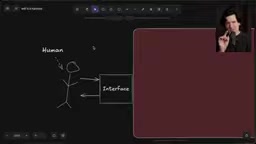
To understand this debate, we first need to clarify what Harness actually is. An LLM (large language model) essentially does only one thing: generate text. But in the news we see AI writing code, fixing bugs, and even discovering architectural flaws in enterprise systems—where do these abilities come from?
The answer lies in Harness. You can think of an LLM as a top chef, and Harness as the kitchen equipped with pots, pans, knives, and stoves. Without a kitchen and tools, even the best chef can only stare blankly at the menu. Similarly, an LLM needs Harness to provide a syntax it can understand, allowing it to read files, modify code, execute commands, and call APIs. An LLM without Harness is like a chef standing in an empty kitchen: it can only tell you what it "would" do, but can't actually do anything.
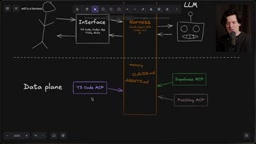
The creator further distinguishes several easily confused concepts: Claude Code's CLI is an interface, while the Agent SDK is the Harness. T3 Code is neither—it positions itself as an "ADE" (Agentic Development Environment), an interface layer that interacts with both humans and Harness.
MCP (Model Context Protocol) is an open protocol proposed by Anthropic at the end of 2024 to standardize how AI models connect to external data sources and tools. You can think of it as the "USB-C port" of the AI world: whether the backend is a database, an analytics platform, or a file system, as long as an MCP server is implemented, an Agent can access it in a unified way. The core value of MCP lies in decoupling—models and Harness no longer need to write custom integration code for every data source; instead, they dynamically discover and invoke capabilities through the protocol. This is precisely the technical foundation that allows T3 Code in this article to let Agents access external systems such as Supabase and PostHog, and it is also the key middle layer for enabling "one Harness to control another Harness."
Why Engineers Always Care About What They Shouldn't
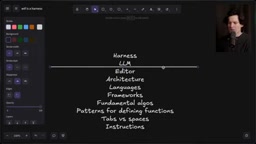
The creator offers a sharp observation: engineers are naturally inclined to obsess over details they shouldn't obsess over. From instruction sets to programming languages, from framework battles to formatting tools, the abstraction level of the tech stack has been moving upward all along.
He recalls that when he entered the industry, he happened to catch the "framework wars"—Next.js versus SvelteKit, Solid.js, and Nuxt. Earlier, when he was in college, the hot topic was programming language debates. And now, even new Next.js releases are rarely discussed.
"As engineers, we just love to care about these trivial, unnecessary things that the world tells us don't matter," he says in the video. This tendency becomes especially dangerous in the AI era, because the things at the top of the stack—models, Harness, interfaces—are changing faster and faster.
He even gives a firsthand example: he recently noticed failures in logs that shouldn't have happened, so he asked Claude to help investigate. Claude built a complete alerting, monitoring, and tracing system, pinpointed where and when the failures occurred, and generated a report. That report was later requested by Cloudflare's CTO to fix pipeline issues they had not previously noticed.
"A YouTuber found errors in logs, asked Claude, and got a report that Cloudflare's CTO wanted. If you think these things aren't changing, you're going to lose your job within three months."
Models and Harness Are Converging, With Only a Few Percentage Points Between Them
Why does Harness matter less and less? The creator gives two key reasons.
First, models are being trained for specific Harness environments. In the past, models first had tool-calling capabilities, and then Harness adapted around the model. Now it's the reverse—models are starting to train on data generated by Harness. Claude models perform better in Claude Code, and OpenAI models perform better in Codex; this is determined by training data.
Second, the performance gap between different Harness setups has become negligible. He states bluntly that the gap between Claude Code and Codex when using Codex models is "probably only three to five percentage points," and that this may even be measurement error. "If the gap were bigger than that, it would be an LLM-layer failure, and it would be fixed."
He uses his own skateboarding experience as an analogy: skateboarders deliberately practice "Switch" (riding with the opposite foot forward), even though it is much harder than their normal stance, purely because the challenge itself is worthwhile. But software engineering is not skateboarding—being an expert in a specific technology pays far more than being a generalist who knows a little about everything. Therefore, when the abstraction layer moves upward, those who stubbornly stay on the old layer are often the first to be eliminated.
"I'd bet that at least half of the people using Vim today will still be using Vim five years from now, and most of them will no longer be doing software development. The other half who leave will earn significantly more money."

Agent SDK is one concrete implementation form of Harness, usually provided as a software development kit that encapsulates underlying capabilities such as tool calling, context management, file operations, and command execution for developers building their own Agent applications. Unlike a CLI (command-line interface), the Agent SDK is oriented toward programmatic invocation rather than human interaction. Claude Code's CLI is the interface users operate directly, while the Agent SDK behind it is the Harness layer that actually drives the model to execute tasks. Understanding this distinction helps clarify T3 Code's positioning: it is neither a CLI nor an SDK, but a development environment sitting above both.
What Is T3 Code? Not a Harness, but an ADE
An important backdrop to this discussion is the widespread misunderstanding of T3 Code in the community. Many people think T3 Code is a Harness, and the creator repeatedly clarifies that it is not.
T3 Code does not add new tools to Harness; instead, it focuses on the "data plane"—using MCP (Model Context Protocol) to let Agents access data and systems outside Harness. Supabase MCP and PostHog MCP are typical examples: they allow Agents to query product databases or analytics platform data, and that data itself does not belong to Harness.
This design brings a practical benefit: if you have Claude Code installed on your computer and subscribe to the corresponding plan, T3 Code automatically reuses your subscription and all skill plugins. At the same time, T3 Code's MCP layer can also let one Harness control another Harness—for example, using Claude Code to launch a sub-Agent that uses another model, because the MCP layer acts as an intermediary rather than actually controlling another Harness.
"T3 Code is an ADE—an Agentic Development Environment. It is to Agents what an IDE is to code editing," he says.
Interestingly, he admits that the concept of the ADE itself may soon become unimportant too, just as people stopped caring whether you use Vim or VS Code. But "right now, I care, we built the best one, and it's free and open source."
ADE (Agentic Development Environment) is a new concept that emerged with the rise of AI coding, analogous to the traditional IDE for code editing. A traditional IDE integrates tools such as an editor, debugger, and version control for human developers; an ADE shifts the object of interaction from code to Agents, providing capabilities such as task orchestration, multi-Agent collaboration, and data-plane access. An ADE does not directly participate in the underlying implementation of model inference or tool calling; rather, it serves as a coordination layer between humans and Harness. T3 Code in this article is exactly a practice of this idea: it reuses existing Harness (such as Claude Code) and extends the boundaries of data access through MCP.
Conclusion: Stop Arguing About Harness
Back to the original question: Is Harness dead? The creator's answer is more nuanced—Harness is not dead, but it is becoming invisible. Just as ordinary users don't know that Twitter uses React Native Web, T3 Code users are beginning not to perceive the existence of Harness. They only care whether the model can get work done, not which Harness wraps the model.
"Harness should be like the restaurant you go to—you care whether the food is good and the price is reasonable, not what pots are used in the kitchen."
For those still arguing about which Harness is stronger, his attitude is direct: "Congratulations, you won by three percentage points. I'm genuinely happy for you. But I'm focused on doing things that are actually productive."
Perhaps next time you see someone insist that T3 Code is a Harness, or get into a heated argument about whether Claude Code or Codex is better, you can forward this article to them. After all, even the creator himself says: "I'm tired, I've said my piece, I'm done."
One-line Summary
The Harness debate is meaningless: models and Harness are converging, the gap is only a few percentage points, and developers should focus on higher-level value.
Paragraph Summary
The article centers on the debate in the AI coding community about Harness. Drawing on the views of the T3 Code creator, the author points out that Harness, as the bridge between LLMs and tools, is declining in importance: models are beginning to be trained for specific Harness environments, and the performance gap between different Harness setups has narrowed to three to five percentage points. The creator clarifies that T3 Code is not a Harness but an ADE (Agentic Development Environment), enabling cross-Harness collaboration through an MCP data layer. The article also criticizes engineers' tendency to over-focus on tech stack details, arguing that as the abstraction layer keeps moving upward, those who cling to old layers face the risk of being left behind. The ultimate conclusion is that Harness is becoming invisible, and users only care about model capabilities and results, not which Harness is used underneath.
Related articles

From Programmer to AI Architect: The Silent Shift in the Programming Role
AI coding tools like Cursor are transforming software development: developers shift from manual syntax to high-level system architecture. This article analyzes the efficiency gains, technical debt risks, and the trend of architectural judgment becoming the new scarce resource.

ClaudeMD: The Config File That Makes AI Code Assistants Follow Your Rules
ClaudeMD is a project-root config file that lets AI coding assistants like ClaudeCode and Cursor auto-read team conventions—naming rules, test commands, forbidden patterns—at session start, enabling versioned, shareable rules.

One Command Does It All: Connect Relia to Cursor, VS Code, and Other Mainstream AI Coding Tools
The official Relia tutorial shows how one command connects Relia to Cursor, VS Code, Windsurf, Codex, and Gemini CLI, auto-detecting installed tools, writing MCP configs, and supporting project-level setup and connection management.