Isomorphic Labs Raises $5B Series C as AI Drug Discovery Moves Toward Clinical Trials

Isomorphic Labs raises a $5B Series C to advance its drug candidates into clinical trials.
Isomorphic Labs, the AI drug discovery company spun out of Google DeepMind, has closed a $5 billion Series C round to advance candidate drugs into clinical trials. The article traces its origin inheriting AlphaFold-era structural biology capabilities and frames the raise as a shift from platform validation to clinical validation. While the scale shows capital's continued bet on AI drug discovery, the high failure rate in clinical trials remains a real risk.
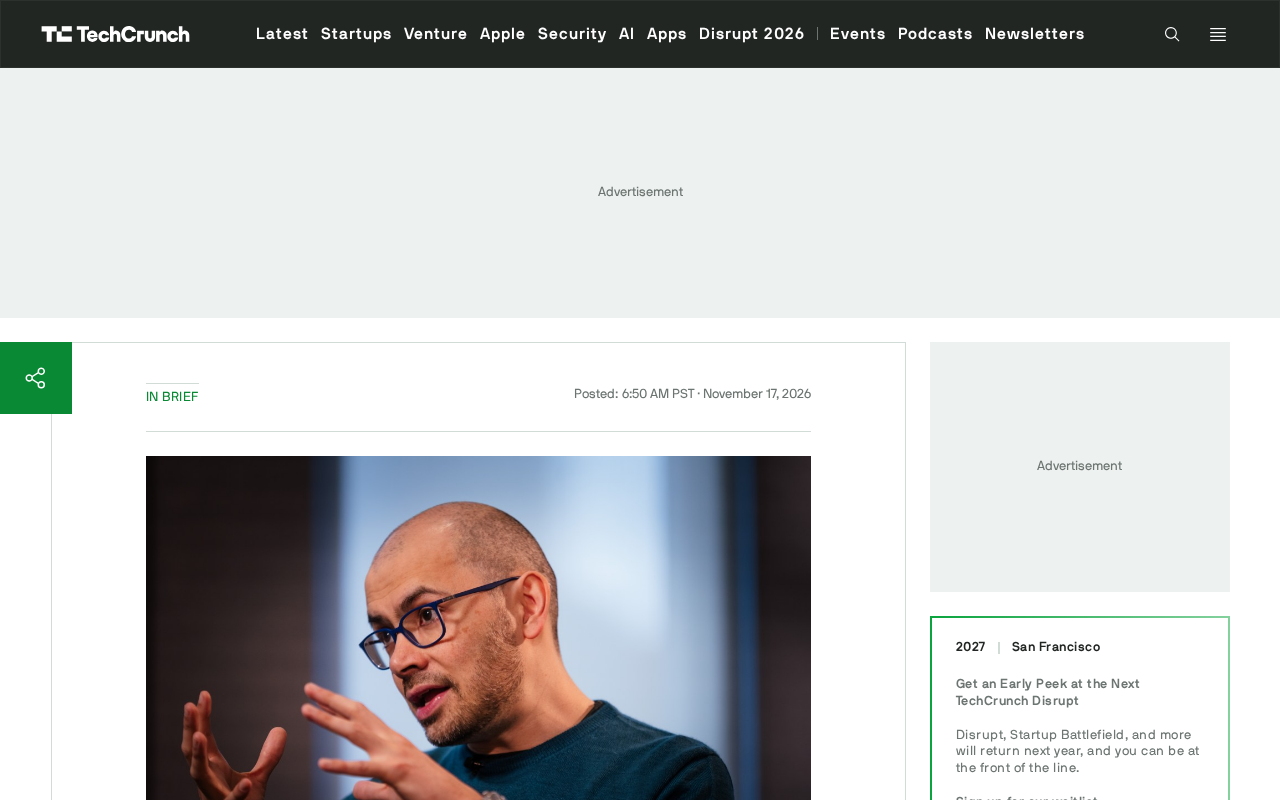
The AI drug discovery space has landed a landmark funding round. Isomorphic Labs, the AI drug discovery platform spun out of Google DeepMind, has announced the completion of a $5 billion Series C round, with the capital earmarked to push its drug candidates into clinical trials. It has been only a few years since the company began operating independently in 2021, yet the round's size already places it among the largest in the AI application sector.
An AI Drug Discovery Company Born from DeepMind
Isomorphic Labs has an unusual origin. It is not a startup built from scratch, but a team incubated inside and then spun out of DeepMind, inheriting the latter's accumulated expertise in deep learning and protein structure prediction. When it became independent in 2021, its goal was clear: turn structural biology tools like AlphaFold into a commercial capability that can genuinely shorten drug discovery timelines.
This background gives it natural credibility in capital markets. Traditional drug discovery takes years and enormous sums, and AI's involvement is expected to dramatically compress time and cost in areas such as target screening and molecule design. Isomorphic Labs represents one of the most closely watched strands of the "AI-native" pharma path.
AlphaFold is a protein three-dimensional structure prediction system developed by DeepMind. In 2020 it reached near-experimental accuracy in the CASP14 assessment and is regarded as a milestone in structural biology. Traditionally, resolving a single protein structure requires months or even years of experimental work, whereas AlphaFold can deliver high-confidence predictions in a short time and has released a large-scale structure database as open source. For drug discovery, knowing the precise structure of a target protein means small molecules that can bind to it can be designed more deliberately — precisely the core capability Isomorphic Labs is trying to commercialize.
"AI-native" pharma refers to making machine learning models a core productive force from the very beginning of R&D process design, rather than layering AI tools onto traditional workflows. Such companies typically start with an algorithm platform and then gradually build their own drug pipelines; their organizational structure and decision-making logic are closer to tech companies, in contrast to traditional pharma firms centered on wet-lab experiments.
What a $5 Billion Series C Means
As originally disclosed, this is a Series C round of $5 billion. For a company that has yet to bring a drug into clinical trials, this scale shows that investors' bets on the long-term value of AI drug discovery have not weakened with the industry cycle.
More important is how the money will be used. Isomorphic Labs has stated explicitly that the funds will be used to advance candidate drugs into clinical trials. This means the company is shifting from the "platform and algorithm validation" stage to the "pipeline and clinical validation" stage — the latter being where AI drug discovery is truly put to the test. An algorithm finding a molecule does not mean that molecule will be safe and effective in humans; the clinical stage is a threshold that cannot be bypassed.
In biomedicine, funding rounds typically proceed through seed, Series A, B, and C, with Series C generally corresponding to a stage where a company has fairly mature technical validation and needs substantial capital to expand. A single round of $5 billion is extremely high in the history of global biotech financing, far exceeding the IPO proceeds of most clinical-stage biotechs, so this capital is often interpreted as a concentrated bet on the platform's long-term value.
Getting a drug from discovery to market typically involves target validation, lead compound optimization, preclinical research, and Phase I, II, and III clinical trials. The overall success rate has historically been cited at under 10%. The clinical stage accounts for the bulk of total R&D costs, and failures mostly occur around Phase II. "Entering clinical trials" means candidate molecules are being evaluated in humans for safety and dosage for the first time — the point at which AI's predictive capability first faces real physiological conditions.
The Next Exam for AI Drug Discovery Is Clinical
Over the past few years, the narrative of AI drug discovery companies has mostly centered on platform capabilities, partnership deals, and early discovery efficiency. The signal from Isomorphic Labs' financing is that leading players are beginning to concentrate resources on advancing clinical programs.
This is both an opportunity and a risk. The clinical stage has an inherently high failure rate; if a candidate drug stumbles in trials, it will hit the company's valuation and industry confidence. Conversely, if AI-assisted candidate drugs can demonstrate feasibility in early clinical trials, the valuation logic of the entire sector will be on firmer ground. A $5 billion war chest at least gives Isomorphic Labs a longer trial-and-error window at this stage.
Preclinical research is mainly conducted in cell and animal models, focusing on indicators such as toxicity and pharmacokinetics. Clinical trials proceed in three phases: Phase I evaluates safety and tolerable doses in a small number of healthy volunteers or patients; Phase II preliminarily verifies efficacy in a patient population; and Phase III confirms efficacy in a large population and compares it with existing therapies. AI's advantages in molecule generation and affinity prediction do not directly translate into safety and efficacy in humans — which is why the industry repeatedly stresses that "clinical trials are the touchstone."
A trial-and-error window is a key resource for biotech companies: the more ample the capital reserves, the better a company can withstand the failure of a single pipeline and continue advancing other candidates. Historically, several AI drug discovery companies saw sharp valuation drawdowns after early clinical setbacks, so capital scale alone does not guarantee success, but it determines whether a company can survive failures and accumulate data to iterate its models.
Industry Watch: Capital Still Betting on the Intersection of AI and Biology
Against a backdrop of generally cooling financing in the AI application layer, the scale of Isomorphic Labs' Series C stands out. It shows that capital remains intensely focused on the "AI + biology" intersection, especially companies with top-tier research pedigree that have already entered the pipeline advancement stage.
For the industry, this financing will have knock-on effects: on one hand, it raises financing expectations for peer companies; on the other, it makes the market press more urgently for clinical progress in AI drug discovery. The platform story has been told enough times — what comes next is clinical data.
(This article is based on the original report; the screenshot comes from the RSS source page.)
One-line Summary
Isomorphic Labs completes a $5 billion Series C to advance its drug candidates into clinical trials.
Paragraph Summary
Isomorphic Labs, the AI drug discovery company spun out of Google DeepMind, has announced the completion of a $5 billion Series C round, with the funds to be used to advance candidate drugs into clinical trials. The article traces its unusual origin inheriting structural biology capabilities such as AlphaFold, and notes that the financing marks a shift from platform and algorithm validation to pipeline and clinical validation. For a company with no drug yet in clinical trials, the scale shows capital's bet on the long-term value of AI drug discovery has not diminished, though the high failure rate of the clinical stage poses a real risk. The article argues that leading players are concentrating resources on clinical advancement, and that after the platform narrative, the industry will wait more urgently for clinical data to test the mettle of AI drug discovery.
Related articles

Gemini 4 Neon Review: Benchmark Scores Rival Carbon, API Pricing and Quota Breakdown
Google Gemini 4 Neon is now live, benchmark scores closely tracking Carbon, API pricing 3/15 at twice Hydrogen's rate. This article compiles Bilibili creator testing: Neon can replace 90% of Carbon scenarios, AntiGravity quota consumption is only one-third of Carbon, plus subscription channel restrictions and 2API ban risks.

Gemini 4 Helium Coming Soon? Signals of Google Loosening Subscription Restrictions
Google team member hints releases will continue; community speculates Gemini 4 Helium (Flash Lite) may be next. Subscription ban controversy gets a response as product lead says "Soon," suggesting restrictions may be lifted. This article covers Gemini developments, OpenAI Coding Agent and risk management, Doubao real-time audio-video API, and compute business dynamics.

AI-Assisted React Development in Practice: Optimizing a Video App and Handling Errors
A 14-year veteran developer demonstrates AI-assisted React video app optimization: compressing video from 80MB to 5MB (~94%) via ImageKit, plus reliable error handling and retry mechanisms. Includes planning, code understanding, and verification methods for working with AI.