Jack Dorsey's Bitchat Banned in India, Removed from App Stores

Jack Dorsey's Bluetooth Mesh app Bitchat banned in India for failing to meet traceability requirements.
Bitchat, the decentralized messaging app driven by Jack Dorsey, uses Bluetooth Mesh networking to enable offline peer-to-peer communication — bypassing carriers and platforms at the architectural level. India's government responded by ordering its removal from domestic app stores, citing national security and message traceability concerns. The episode highlights a fundamental tension between decentralized communication tools and sovereign regulatory systems: technical censorship-resistance is often treated as legal unregulability, triggering outright bans. Notably, delisting only cuts off distribution — locally installed devices may still communicate via Mesh, revealing the structural limits regulators face against decentralized networks.
Overview
Bitchat, a decentralized messaging app championed by Jack Dorsey, has been pulled from app stores across India following a government order, making it largely inaccessible within the country. The app, which markets itself on Bluetooth-based proximity communication and internet-free connectivity, has once again brought the tension between decentralized communication tools and regulatory compliance into sharp focus.
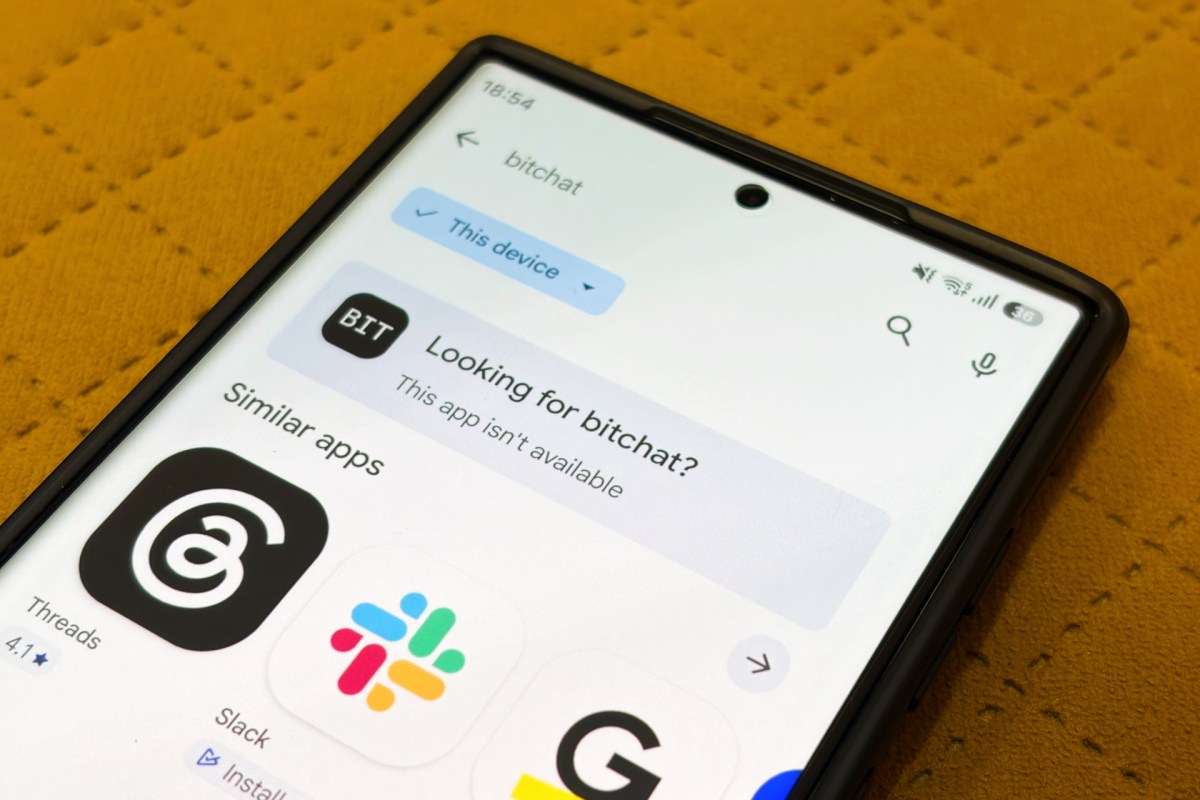
Based on available information, India's regulatory authorities issued a restriction order against Bitchat, causing it to disappear from the Indian regional app stores. For ordinary users, this means there is no longer a conventional channel to install or update the app.
What Is Bitchat
Bitchat was developed under the direction of Jack Dorsey, co-founder of Twitter (now X), and is positioned as a decentralized, privacy-focused instant messaging tool. Its defining feature is peer-to-peer communication between devices via a Bluetooth Mesh network — meaning that, in theory, users can send and receive messages within a certain range even without internet or cellular connectivity.
This architecture holds natural appeal for censorship-resistant and connectivity-disrupted scenarios — whether in network-restricted regions, large public gatherings, or emergencies involving infrastructure failure, Mesh communication offers an alternative information channel. But it is precisely this ability to "bypass centralized infrastructure" that makes it difficult to regulate in the eyes of some governments.
A Bluetooth Mesh network is a many-to-many wireless communication topology. Unlike traditional Bluetooth's one-to-one pairing, it allows every device on the network to act both as a message recipient and as a relay node, forwarding messages further along to other devices. In theory, given sufficient device density, messages can "hop" far beyond the range of a single Bluetooth connection (typically 10–100 meters). This architecture is technically similar to early wireless Ad-hoc Networks and requires no fixed infrastructure nodes. By leveraging this feature, Bitchat sidesteps carriers and internet service providers at the physical layer — leaving regulators unable to intercept communications at the transmission level, or compel a platform to produce message records, fundamentally circumventing the control mechanisms that apply to traditional centralized messaging apps.
Why India Acted
India has significantly tightened its regulation of messaging applications in recent years. For decentralized apps that cannot provide message traceability or cooperate with law enforcement requests, regulators frequently cite national security and information controllability as grounds for restrictions. Tools like Bitchat — which emphasize end-to-end encryption and decentralized transmission — hit a regulatory nerve.
Based on currently available information, the Indian government issued a direct takedown order rather than pursuing a gradual negotiation-and-remediation process, signaling a firm regulatory stance. This is consistent with the logic India has previously applied to certain VPNs and encrypted messaging services: when a technical architecture makes compliant traceability practically impossible, an outright ban becomes the regulator's preferred instrument.
India's regulatory framework for digital communication tools is primarily grounded in the Information Technology Act (IT Act 2000) and its amendments, as well as the Information Technology (Intermediary Guidelines and Digital Media Ethics Code) Rules, 2021. The latter explicitly requires "significant social media intermediaries" with a substantial Indian user base to be able to identify the "first originator" of a message upon law enforcement request, and to appoint resident compliance officers within India. For end-to-end encrypted, decentralized applications, this requirement is technically near-impossible to fulfill, putting such apps in an immediate regulatory dead end. India has previously been embroiled in legal disputes with WhatsApp over similar requirements and has issued remediation orders to multiple VPN providers. Bitchat's ban is a continuation of this regulatory logic, not an exception.
Implications for Decentralized Communication
The difficulties Bitchat has encountered in India reflect a broader challenge facing decentralized communication tools. The very "censorship-resistance" that defines them technically tends to get classified as "unregulatable" in real-world legal environments, triggering wholesale bans.
For technological idealists like Dorsey, Bitchat represents a vision of escaping platform-centric control; but for sovereign regulatory systems, communication tools that lack traceability and law enforcement cooperation pose a clear governance challenge. These two logics have collided head-on in the Indian market, with the result being the app's ejection from legal distribution channels.
Notably, because Bitchat relies on the peer-to-peer nature of Bluetooth Mesh, even after being delisted from app stores, devices that have already installed it may still be able to communicate locally. This further illustrates that "banning" a decentralized app can only cut off the distribution entry point — it cannot fully shut down an already-deployed network. This is precisely the enduring dynamic of the cat-and-mouse game between regulators and decentralized technology.
What to Watch Next
Official details regarding the specific legal basis for the ban, or whether there is any avenue for appeal or remediation, have yet to be disclosed. Whether the Bitchat team will adjust its strategy for the Indian market, or continue offering service through other channels, remains to be seen.
This episode also serves as a warning to other decentralized communication projects: before entering strictly regulated markets, finding a balance between censorship-resistance principles and local compliance requirements will directly determine a product's room to survive.
Related articles

Cursor AI Programming in Practice: Build a Student Management System from Scratch in 30 Minutes
A Bilibili creator demonstrates Cursor AI programming: generating a student management system in 30 minutes with natural language. Details on Agent mode, Claude selection, prompt techniques, and thresholds.

Top 20 AI Coding Tools Ranking: From Rock-Solid to Lackluster, a Scored Matrix
Bilibili creator releases top 20 AI coding tools ranking, tiered T0–T4 from rock-solid to lackluster, with Claude Code and Codex tied at T0. This article details the scoring dimensions (capability, reliability, robustness, durability, cost, domestic availability) and tool performances to help developers choose the right AI coding assistant.

Vibe Coding Systematic Tutorial: Master AI-Assisted Programming from Zero
A three-month Vibe Coding tutorial from a Bilibili creator covering Codex, ClaudeCode, and Cursor, from core logic to commercial project practice for beginners.