Jackbox's New Game 'Hear Say' Preview: A Party Game Where Weird Sounds Rule
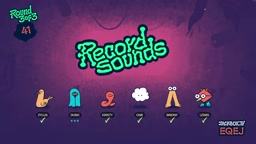
Hear Say is Jackbox's chaotic new party game where absurdly short recording windows force hilariously unfiltered vocal improv.
Hear Say is Jackbox's latest party game, challenging players to interpret prompts using only their voice in an absurdly short recording window. The time pressure strips away all second-guessing, producing raw, ridiculous first reactions that become the game's main source of laughs. A callback reward system encourages players to riff on each other's jokes, while the scoring logic favors genuine spontaneity over polished technique. Though the rules are minimal, players report surprising physical fatigue from committing fully with their faces and bodies. It's a low-barrier, high-laughs social game purpose-built for parties and live streaming.
A Party Game Where Making Strange Noises Is the Whole Point
The Yogscast crew recently got their hands on Jackbox's latest title, Hear Say, and judging by the reaction throughout the stream, this is a party game that turns "public humiliation" into a core mechanic. The concept is wonderfully simple: the game presents a prompt, players have an absurdly short window to record themselves interpreting it out loud, and then everyone votes for the most accurate or funniest response.
One thing the hosts kept coming back to during the stream was just how short the recording window is. "You barely start and it's already over" — one player even complained that "by the time I finish taking a breath, the recording's gone." That time pressure turns out to be the whole joke: it forces players to blurt out their first instinct without thinking, which consistently produces bizarre, unfiltered, and genuinely funny results.
Prompt-Driven Improv at Its Most Chaotic
The prompts span a surprisingly wide range — from "say something a kid shouldn't do" to "a two-word life motto," "a rude voicemail greeting," and "the sound of angry bees." These deceptively simple setups are where the game's design really shines: the barrier to entry is almost nonexistent, but the creative ceiling is unlimited.
The stream had no shortage of standout moments. Someone answered "watch YouTube (in the UK)" for the "things kids shouldn't do" prompt, while another player repeatedly delivered an exaggerated "I'm a little kid, I'm selling drugs." During the voicemail greeting round, one player's "don't shove the phone you're calling from up your ass, stop calling me" brought the house down — her teammates praised her for "really knowing her audience."

The game also rewards callbacks — recycling a previous joke for extra points — which encourages players to build on shared moments rather than performing in isolation.
The Social Tension Hidden in Simple Rules
Interestingly, players on the stream started debating strategy on their own. Some opted for the "just first try" approach — hitting record and going with whatever comes out, treating themselves like an "obedient robot." Others tried to "cheat" by using synthesizers or real instruments for a more polished sound.
That "effort," however, didn't always pay off. One player (Doug) who brought in a synth and instruments was teased by his teammates for being a "try-hard," and the group gradually landed on a consensus: "nobody likes random synth noise." This reveals something about Hear Say's scoring logic — it rewards genuine, spontaneous, funny performances over technically refined ones. That design choice keeps the playing field level in the way a great party game should.

An Exhausting — in the Best Way — Experience
By the end of the stream, players widely agreed the game takes more out of you than expected. Someone noted they were "surprisingly drained after just 20 minutes," and another pointed out that "you really use your whole face doing this." Committing to exaggerated expressions and physical gestures to sell your audio clip turns what looks like a casual game into something that genuinely wears you out.
First-time players summed it up well: "I've never played it before, but it gave me a genuinely surreal experience," "total chaos," and "absolutely unhinged." Hear Say succeeds at creating an absurdist, joyful atmosphere built on one simple premise: get friends to make dumb sounds at each other without shame, and let the laughter follow naturally.

Who Is This Game For?
Based on the Yogscast playthrough, Hear Say's audience is clearly defined: it's built for in-person gatherings, live streaming, and casual social settings. The fast-paced recording mechanic makes it instantly accessible even for non-gamers, while the "weird voice + improv" core guarantees fresh laughs every single round.
For fans of earlier Jackbox titles like Quiplash and Fibbage, Hear Say carries on the tradition of "simple rules, endless creativity" while introducing voice performance as an entirely new dimension of expression. If your group doesn't mind cutting loose on camera, this could easily be the highlight of your next stream or game night.
Jackbox Games is a US-based developer specializing in party games, built around the philosophy of "phone as controller" — players join a room by scanning a code in their mobile browser, no extra hardware or app required. That design dramatically lowers the barrier for multiplayer sessions and makes it easy for spectators to jump in, which is especially well-suited for live streaming (audiences can participate as third-party voters). Quiplash is built around fill-in-the-blank text battles, while Fibbage mixes real and fake information for players to sort through — both have earned devoted followings through that same "simple rules, infinite creativity" formula. Hear Say builds on that foundation by bringing voice into the mix, marking Jackbox's first attempt at making "vocal performance" the central mechanic. For veteran fans of the series, it feels both familiar and genuinely fresh.
Related articles
AI Agent Terminology Too Confusing? One Interactive Concept Map to Untangle 40+ Core Terms
Confused by AI Agent terms like MCP, harness, orchestration, and skills? AI Concept Atlas is an interactive map visualizing 40+ concepts and their relationships, with cited sources.
Meta's Broken Promise: Community Demands to Know Where the Muse Spark Weights Are
Meta promised to open-source Muse Spark model weights over a month ago, but still hasn't delivered. The community questions how this squares with Zuckerberg's "can't delay even a month" stance.
Running Qwen3 27B Locally on a Single RTX 5090: What Can It Actually Do?
A developer runs Qwen3 27B locally on a single RTX 5090 via the Row-Bot Agent framework, generating an 8-scene, 105-second interactive animation from one prompt — including real-time math, fractals, and physics.