Jaron Lanier: What We Call AI Is Fundamentally Just People

Lanier argues AI is just human creativity recombined, and anthropomorphizing it obscures contributors and diffuses accountability.
Virtual reality pioneer Jaron Lanier contends that so-called AI systems are fundamentally an aggregation and recombination of human-generated work, possessing no genuine understanding or creativity of their own. He warns that anthropomorphizing AI as an autonomous intelligence systematically obscures the real human contributors behind training data — leaving them uncredited and uncompensated — while shifting blame for failures onto abstract "algorithms" and shielding the companies that design and profit from these systems. His argument echoes his long-held advocacy for data dignity and poses concrete challenges to intellectual property frameworks, AI panic narratives, and industry terminology. While the question of whether emergent model capabilities can be fully explained as "recombination" remains contested, Lanier's insistence on anchoring technological responsibility in human actors carries significant ethical weight in the era of generative AI.
A Counterintuitive Claim: There Is No AI, Only People
Virtual reality pioneer and computer scientist Jaron Lanier has put forward a view that runs sharply against the current AI hype: "There is no AI — it's just people." The statement sounds simple, but it cuts to the heart of a core problem in today's technology narrative. We have grown accustomed to anthropomorphizing large language models and generative systems, draping them in the language of "intelligence," "thinking," and "creativity." Lanier argues that this framing is fundamentally misleading.
In his view, what we call AI today is essentially a product of aggregating and recombining vast quantities of human-generated text, images, and code, then presenting the results in a new form. The system itself doesn't "understand" anything. Every capability it appears to have can be traced back, at its root, to the labor and expression of countless real human beings. Rather than saying a machine is generating content, it is more accurate to say that collective human intelligence is being rearranged and invoked in a new way.
Why the Anthropomorphic Narrative Deserves Scrutiny
Lanier has long maintained a critical stance toward Silicon Valley's techno-utopian storytelling. His central concern is this: when we describe AI as an autonomous, independently intelligent "entity," we effectively obscure the real human contributors behind it and sidestep the question of accountability.
Hiding the People Behind the Data
Calling a system "intelligent" causes people to stop asking where the training data came from. Behind every fluent answer and every photorealistic image are human works that were scraped and used without permission. When those contributions are abstracted into "model capabilities," the original creators receive neither credit nor compensation. Lanier has argued across multiple books for the concept of data dignity — the idea that people should receive recognition and payment for the data they contribute.
Data dignity is a concept Lanier developed systematically in his 2013 book Who Owns the Future? His core argument is that the internet economy is built on the free extraction of user data, even though that data constitutes the core asset of platforms. He proposed establishing a micropayment mechanism for every piece of data used commercially — so that when a comment, a photo, or a piece of writing is used to train a model and generate commercial value, the original creator receives a small but real payment. This idea feels especially relevant now that generative AI companies are scraping the web at massive scale. Companies like Stability AI and OpenAI have both faced copyright lawsuits from artists and authors, with the licensing and compensation of training data at the center of each dispute. While micropayments face enormous challenges in technical implementation and scalability, Lanier's proposal was among the first to bring "data contributor rights" into mainstream discourse.
The Displacement of Responsibility
Once AI is treated as an independent agent, it becomes easy, when things go wrong, to blame the "algorithm" or the "model" rather than the companies and individuals who designed, deployed, and profited from the system. Returning the technology to its status as "a human product" is, in essence, a move to restore accountability to human actors.
What This Framework Means for the Industry
Lanier's framing does not deny the practical value of these systems. It asks us to describe them with greater clarity. This perspective offers at least three important insights.
First, it pushes us to rethink intellectual property and the data economy. If AI output is fundamentally a reprocessing of human work, then questions about compensation mechanisms and copyright around data sourcing are not peripheral — they are central.
Second, it challenges the panic narrative around "AI replacing humans." If a system's capabilities come from people, then the real dynamics of competition and collaboration exist between people, not between people and machines. Technology is simply a tool that amplifies and mediates human capability.
Third, it reminds practitioners to be honest about terminology. Using words like "intelligent," "understanding," and "conscious" to describe statistical models can imperceptibly distort public perception, with downstream effects on policy-making and social expectations.
A Debate About Language and Cognition
It is worth noting that Lanier's position is contested in both academic and industry circles. Supporters see it as a necessary corrective to tech hype that helps build a healthier framework for technology ethics. Some researchers, however, argue that regardless of how we name these systems, the emergent abilities they display are — at a functional level — genuinely beyond what a simple "recombination" explanation can account for, and deserve study in their own right.
At its core, this debate is a philosophical question about how we should understand intelligence and how we should characterize technology. Lanier chooses to stand on the humanist side — no matter how complex the technology becomes, its origins and meaning must ultimately return to people.
Emergent abilities in AI research refers specifically to capabilities that appear suddenly when a model surpasses a certain scale threshold — capabilities that were entirely absent in smaller models — such as multi-step reasoning, code debugging, or few-shot analogy. The phenomenon was first documented systematically in the 2022 Google Brain paper Emergent Abilities of Large Language Models, and has been cited as key evidence that LLMs possess some capacity beyond statistical recombination. However, subsequent research from Stanford suggested that "emergence" is partly a statistical artifact of discontinuous evaluation metrics — use different evaluation methods, and capability gains turn out to be smooth and gradual. The debate remains unresolved, but it directly bears on the limits of Lanier's claim: if emergent abilities are real, the explanation that "the system is merely recombining human content" requires more nuanced qualification; if emergence is a measurement illusion, Lanier's framework gains stronger support.
Conclusion
"There is no AI, only people" is not a technical judgment — it is a statement of values. As generative AI sweeps across industry after industry, this kind of reminder may be more valuable than ever: technology does not generate wisdom out of thin air. It carries the contributions, choices, and responsibilities of each of us. When we talk about the future of AI, what we always need to examine are the people standing behind the system.
Related articles

Codex vs. Claude Code: A Beginner's Guide to AI Coding Agents
Codex vs. Claude Code: which AI coding agent should you use? This guide compares both tools and walks beginners through GPT account setup, virtual number platforms, US App Store switching, and subscription cost-saving tips.
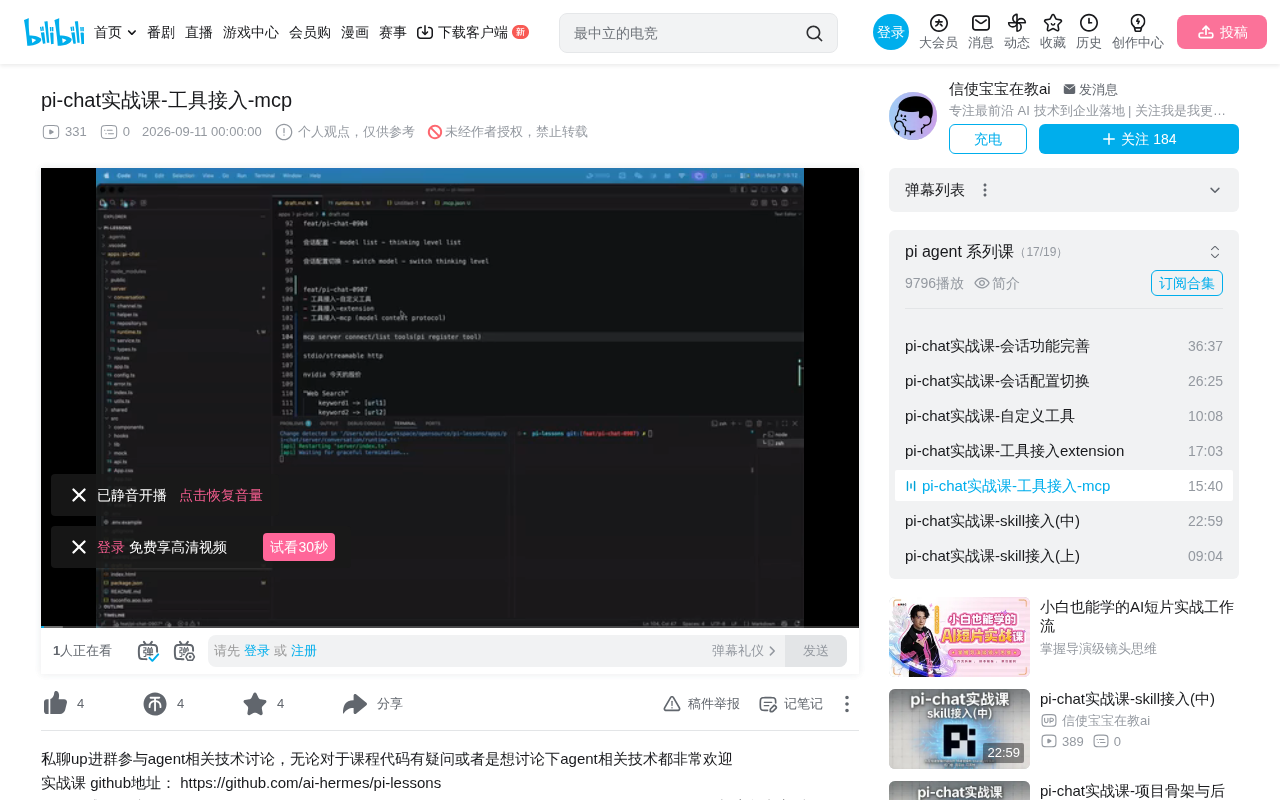
Pi-chat in Practice: Connecting External Tools to AI Agents via MCP Protocol
Learn how to integrate external tools into AI Agents using MCP protocol with Pi framework. Covers pi-mcp-adapter setup, .mcp.json config, Extension Factory initialization, and a live 12306 train ticket query demo.
AI Large Model Engineering Careers Decoded: Algorithm Research vs. Engineering Deployment — Which Path Is Right for You?
AI large model jobs split into algorithm research and engineering deployment. Learn the skill requirements, core competencies like RAG and Multi-Agent, and why Harness architecture is the 2026 interview differentiator.