Jensen Huang Broke NVIDIA's Code of Conduct, and Employees May Not Forget

NVIDIA's code of conduct mirrors its culture; CEO deviations amplify the crisis of trust in rules.
Starting from the observation that NVIDIA's code of conduct is seen as a mirror of corporate culture, this article discusses the cultural signal significance when CEO Jensen Huang's personal behavior comes into tension with the code. It points out that in tech companies with a strong founder culture, senior behavior has an amplifying effect on employees' trust in rules, and deviations first impact middle managers' executive authority and gradually erode institutional binding force. Against the backdrop of NVIDIA's rapid expansion and cultural dilution pressure, the code's credibility damage will push up management costs. The article emphasizes limited source information and makes no factual inferences, only general logical analysis, believing that whether employees "forget" depends on substantive institutional responses rather than public attention.
The Mirror Relationship Between Codes of Conduct and Corporate Culture
For most companies, a code of conduct is just a PDF hanging on the official website, used to satisfy compliance reviews. But at NVIDIA, the code of conduct is seen by outsiders as a direct mirror of the company's culture—it's not just written for regulators to see, but also, to some extent, shapes employees' sense of identification with the company.
When the CEO's own behavior comes into tension with this code, the problem is no longer a technical flaw at the "compliance" level, but becomes a cultural signal: employees will judge based on it whether the rules apply to everyone, or only to certain levels. The title of the original material points out an easily overlooked angle—employees may not forget. The weight of this statement lies in the fact that memory within corporate culture is often long-term and diffuse, and will not disappear because of a single PR statement.

Why the CEO's Behavioral Signals Are Amplified
In large tech companies with clear hierarchies, the behavior of founders and CEOs has a strong demonstration effect. As NVIDIA's long-term leader, Jensen Huang's personal style is highly bound to the company's image, which makes any discussion about him "breaking the code" subject to amplified interpretation.
From the common sense of organizational behavior, employees' trust in rules does not come from the text itself, but from observing the behavior of senior leaders. When the code deviates from the leader's behavior, the first thing to be impacted is the executive authority of middle managers—they are required to implement the rules, but find it difficult to explain why the rules seem flexible at the top. If this tension persists over time, it will gradually erode the actual binding force of the system.
Two concepts from organizational behavior—"leader modeling" and "psychological contract"—are often cited to explain this phenomenon. The psychological contract refers to the set of implicit expectations between employees and the organization that are not written into the labor contract, such as "rules apply equally to everyone." When senior behavior deviates from the textual rules, employees recalibrate this implicit contract, and the adjustment is often not aimed at a single event, but at a reassessment of overall fairness. In addition, research on "procedural justice" shows that employees' acceptance of a system depends more on whether the rule enforcement process is consistent and explainable, rather than whether the content of the rules itself is strict. This precisely explains why middle managers become the first group to bear the pressure: they are both the executors of procedural justice and the direct guarantors of its credibility.
Potential Impact on NVIDIA
NVIDIA is in a phase of rapid business expansion, and organizational growth naturally brings pressure of cultural dilution. Against this backdrop, the symbolic significance of the code of conduct is even stronger—it is a low-cost tool for maintaining consensus across a large team. Once the credibility of this tool is damaged, the company may need to pay higher management costs to compensate.
It should be noted that the information provided by the original material is very limited—it only gives a judgmental title and a summary about "codes of conduct reflecting corporate culture," without disclosing specific event details, timing, involved personnel, or company response. Therefore, this article does not make factual inferences about the event itself, but only analyzes from the general logic of corporate culture and leadership behavior.
"Culture dilution" is a common phenomenon during periods of rapid organizational expansion: the number of employees grows significantly in a short period, and new employees' understanding of company values relies mainly on formal systems and managerial modeling, rather than the tacit understanding of early small teams. Anthropology and organizational research often use "cultural carriers" to describe visible objects and behaviors that carry values; codes of conduct, the CEO's public words and actions, and promotion and reward/punishment cases are all high-weight carriers. When high-weight carriers are inconsistent with each other, the signals new employees receive are ambiguous or even contradictory, and the organization needs to invest more in training, communication, and supervision to maintain consensus. This also explains why, during expansion periods, the credibility of symbolic systems is more critical than usual.
Observation and Judgment
For investors, job seekers, and industry observers watching NVIDIA, the value of this matter is not in sensationalism, but in providing an observation window: how a company known for a strong founder culture handles the relationship between "rules" and "people" during scale expansion. Whether employees forget depends on whether there is a substantive institutional response afterward, not on how long public attention lasts.
Once trust in corporate culture cracks, the repair cycle is usually much longer than that for business problems. This is a challenge that all founder-led companies need to face, and NVIDIA is no exception.
One-line Summary
NVIDIA's code of conduct mirrors its corporate culture; deviations in the CEO's behavior amplify the crisis of trust in rules.
Paragraph Summary
The article starts from the observation that NVIDIA's code of conduct is seen by outsiders as a mirror of corporate culture, and discusses the cultural signal significance when CEO Jensen Huang's personal behavior comes into tension with the code. The article points out that in tech companies with a strong founder culture, senior behavior has an amplifying effect on employees' trust in rules, and deviations will first impact the executive authority of middle managers and gradually erode the binding force of the system. Against the backdrop of NVIDIA's rapid business expansion and the pressure of cultural dilution, the code of conduct, as a low-cost consensus tool, has stronger symbolic significance, and damage to its credibility will push up management costs. The article emphasizes that the original material has limited information and does not make factual inferences, only analyzing from general logic, and believes that whether employees "forget" depends on whether there is a substantive institutional response afterward, rather than on the intensity of public attention.
Related articles

GLM-5.4 Released: How a 750B Model Achieves Stronger Reasoning
Zhipu AI releases GLM-5.4, a 750B model that boosts reasoning by running the middle 28 layers twice. GPQA Diamond rises from 47.58 to 56.26, with 1M token context and weights to be open-sourced after safety hardening.
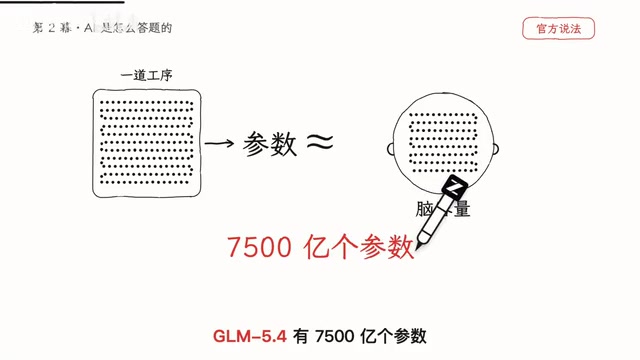
Understanding GLM 5.4 in 8 Minutes: How Loop Transformer Makes AI Smarter Without More Parameters
GLM 5.4 didn't grow its parameters yet got smarter. Using the memorizer-vs-reasoner analogy, this article explains how Loop Transformer runs the middle 28 steps twice, how gated progressive update and two other techniques stabilize the second pass, and how generalized Coding uses code to command 3D, mechanical design, and game development — with official comparison data and open questions.
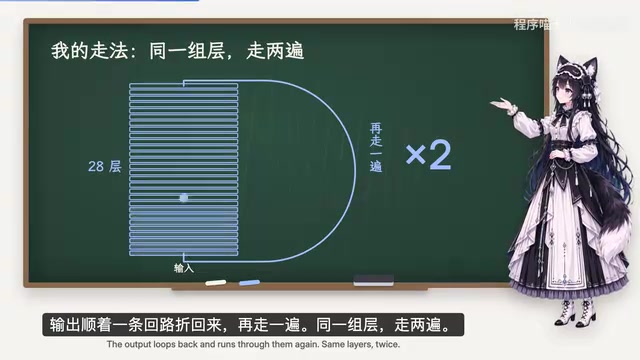
GLM-5.4 Released: An In-Depth Look at Zhipu's First Loop Transformer Flagship Model
Zhipu releases GLM-5.4, its first Loop Transformer flagship. Built on GLM-5 with 28 layers looped twice—no extra params, ~10% more compute, stronger math and long-context reasoning.