Jensen Huang: China's Open-Source AI and Talent Scaling Are Formidable

Huang says AI has entered useful mode, China's scaling capability is formidable, and the future is hybrid AI.
In his GTC Berlin interview, Jensen Huang argued that AI has shifted from "invention mode" to "useful mode," with token demand exploding. Citing DeepSeek's disclosed $38 per GPU-hour yield, he noted NVIDIA compute's high residual value is underappreciated by financing markets. He advocated renting frontier closed-source models when possible and using open-source post-training when necessary, forming router-scheduled hybrid AI. On China, he said no one can match its large-scale manufacturing of chips, open-source models, and AI talent, and that the U.S. faces serious competition. He also rebutted AI job-loss narratives, stressing AI amplifies individual capability.
Jensen Huang: China's Open-Source AI and Talent Scaling Are Formidable
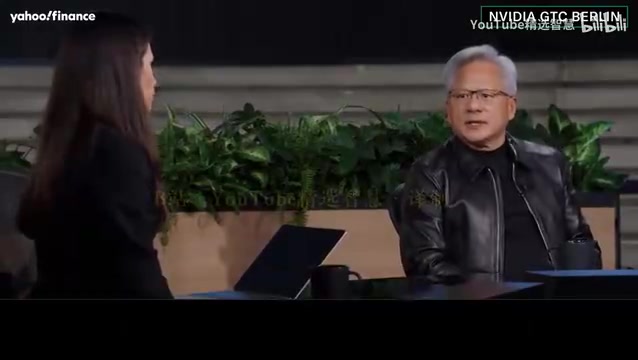
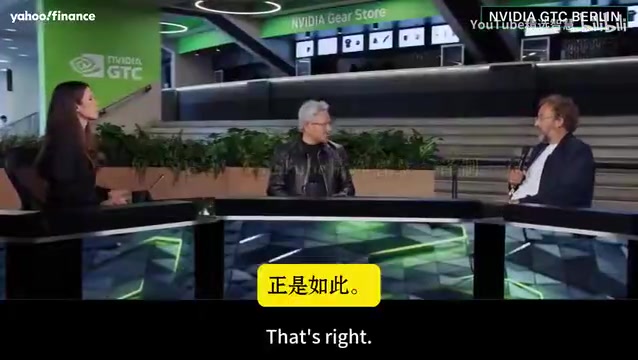
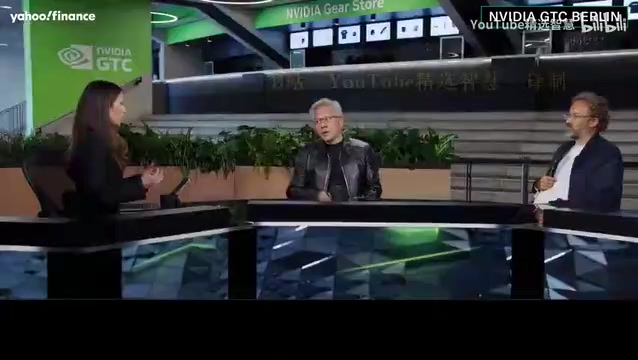
After his keynote at GTC Berlin, NVIDIA CEO Jensen Huang sat down for an in-depth interview. The conversation ranged from DeepSeekAd's astonishing per-GPU revenue to the tug-of-war between open-source and closed-source models, China's ability to scale AI talent and manufacturing, and how AI can truly become "useful." The dialogue was extremely information-dense; this article distills the key judgments and logic.
From "Invention Mode" to "Useful Mode": AI's Inflection Point Has Arrived
Huang made one key turning point clear in the interview: for the past fifteen years, AI technology was in "invention mode," and just six months ago, the industry officially switched to "useful mode." One thing he tried to do in his keynote was "demystify"—to explain clearly why AI is useful, what components it consists of, and why it can be built anywhere.
The underlying support for this judgment is the explosion in token demand. Huang cited robust demand for numerous models worldwide, covering OpenAI, Anthropic, Meta, xAI, Gemini, as well as DeepSeek, Moonshot, GLM, and others. He emphasized that whether closed-source or open-source, demand is "extraordinary," which is exactly why token demand is so high. "Without demand, nothing can be solved; with demand, everything can be solved."
DeepSeek Earns $38 per GPU-Hour; Compute Asset Value Is Underestimated
One specific data point raised in the interview drew attention: the open-source model DeepSeek said its monetization yield per GPU-hour reached $38. The host said outright that they had never heard of any place renting out GPUs at anywhere near that price level. Huang's response pointed to a deeper logic—NVIDIA's compute has extremely high residual value, but "currently no one is giving credit for it."
This led to his view on the macro financing environment. Facing concerns about the timing of AI infrastructure financing, Huang believes the key is to make financing easier, and the "fungibility and durability" of NVIDIA's compute assets are precisely the advantage: the assets themselves can be used to enhance credit for loans. In his view, with demand so strong, the remaining problems will all be solved.
GPU-hour monetization yield refers to the revenue that can be earned by renting out a GPU per hour or using it for inference services. The $38/GPU-hour disclosed by DeepSeek is a fairly high level in the industry, because the public prices for renting high-end GPUs (such as H100) from traditional cloud providers typically range from $2 to $10 per hour. Behind this gap is the fact that open-source models, through efficient inference optimization and strong API call demand, have pushed the output per unit of compute to a new height—which also explains why Huang emphasizes that the "residual value" of NVIDIA compute is undervalued by the financing market.
Open-Source Models Have Reached the Frontier; the Future Is Hybrid AI
On the balance between open-source and closed-source, Huang offered a clear layered framework. He revealed that in the first six months of this year, hundreds of billions of dollars (about $600 billion was mentioned in the interview) of venture financing flowed into AI-native startups, 80% of which are using open-source models. These companies take near-frontier open-source models, combine them with their own domain expertise and data for post-training, and build "super AI" that performs exceptionally well in specific domains.
His advice was direct: "Rent a closed-source frontier model when you can; build your own only when you must." He cited European industrial software companies such as Dassault, Cadence, and Siemens, pointing out that such enterprises must build their own proprietary super agents because software and AI are their core.
The ultimate form is a hybrid architecture. The host described what their portfolio companies do: take an American open-source model and post-train it so it performs well on specific tasks, then combine it through a router with a preferred closed-source frontier model. Huang fully agreed: "The AI of the future is hybrid AI, just as today's computing is hybrid cloud."
Post-training refers to further training or fine-tuning on top of an already pre-trained foundation model using domain-specific data, so that the model performs better on specialized tasks. It differs from training a large model from scratch and is far less costly, which is why it has become the preferred path for startups and industry enterprises. What Huang calls "using near-frontier open-source models combined with one's own expertise for post-training" is precisely the mainstream approach to domain-specific AI today.
Router architecture is a scheduling layer: based on the type of user request, it automatically decides which model should handle it—simple tasks go to low-cost open-source models, while complex tasks are routed to more capable closed-source frontier models. This combination controls costs while ensuring quality, and is the key technical form for implementing "hybrid AI."
China: Unmatched in Scaling Manufacturing Talent
When the topic turned to China, Huang's remarks were especially candid. Regarding reports of DeepSeek collaborating with Huawei on chip design, and the judgment that export restrictions may accelerate China's independent industry, he responded: "We should always take China seriously."
He elaborated: "If there is any country that can make things at scale—whether it is manufacturing, large-scale chip manufacturing, large-scale open-source model manufacturing, or, very importantly, large-scale manufacturing of AI researchers—no one does it more seriously, at greater scale, or better than China." He explicitly stated that the United States faces "very, very serious competition," but also emphasized America's advantages in frontier labs, chips, computing systems, and infrastructure, advocating to "compete on innovation."
These remarks echo a phenomenon mentioned in the interview: there is considerable resistance to AI in the West, while Chinese society is more embracing of AI and more inclined to see it as a useful tool. Huang attributed this partly to a narrative problem, arguing that the popular narrative about jobs is "almost exactly backwards."

Export restrictions here specifically refer to U.S. export controls on high-end AI chips (such as NVIDIA H100, B200, etc.) and semiconductor manufacturing equipment to China. The original intent was to slow China's access to the most advanced compute, but the industry widely worries that this will force China to accelerate the construction of an independent chip and software ecosystem. Huang's statement about "taking China seriously" is precisely a response to this policy side effect—restrictions may be effective in the short term, but in the long run they may create a competitor no longer constrained by the U.S. technology system.
The Jobs Narrative Is Backwards, but Data Centers Must First Be Good Neighbors
Huang used a "five-layer cake" framework to rebut fears that AI will destroy jobs: the energy sector is booming, the chip industry is performing well, infrastructure and construction are prospering, the U.S. is reindustrializing, and Europe will also undergo reindustrialization. He cited the fact that AI has already created more jobs in software, healthcare, and even law, and said now is the best time in a century to invest in renewable energy, with fission, fusion, large and small nuclear reactors, batteries, and solar technology all receiving investment.
But he also acknowledged that the tech industry has taken missteps in community relations. When building AI factories and data centers in recent years, everyone was "too impatient." Now companies are starting to give back to communities—contributing community centers, improving schools, and even supporting tax reduction. Microsoft's cancellation of NDAs and increased transparency were also mentioned as positive examples. Huang's summary was simple: "Before entering a community, stop and see whether you can help. You should be a good visitor, a good guest."
Mittelstand (medium-sized enterprises) is the backbone of the German-speaking economies, usually referring to family-run small and medium-sized industrial enterprises focused on niche areas, with employees ranging from hundreds to thousands. They often have world-leading technology in fields such as machinery, chemicals, and auto parts, but generally lack software and AI R&D capabilities. Huang used Mittelstand as an example to show that generative AI allows such enterprises to obtain customized digital tools without building a software team—which is exactly how "AI amplifies capability" manifests in traditional industries.
For Ordinary People, AI Is a Tool That Amplifies Capability
The interview finally returned to the most practical question: how can AI make ordinary people's lives better today? Huang's answer stripped away grand narratives. He pointed out that almost everyone is already using AI, but they are expecting some dramatic sudden change. In reality, search has gotten better, writing, design, and problem-solving have gotten better, disease diagnosis has gotten better, there are already many cases of early detection of colon and breast cancer, cars will be safer, and planes will be more fuel-efficient—none of which would be possible without AI.
His simplest summary was: AI is a tool that amplifies your capabilities. A small shop owner who understands their business but is not good at programming can now have AI write a website with a built-in digital marketing expert; German medium-sized industrial enterprises (Mittelstand), if they lack software capabilities, now have software capabilities. "I don't know anyone who doesn't want to have this extremely useful tool to amplify their own capabilities."
From the economics of compute assets to the layers of the open-source ecosystem to the scaling capabilities of great-power competition, the core thread of Huang's interview is actually consistent: AI has crossed the threshold of usefulness, and the next competition is not about whether to use AI, but about who can turn it into productivity at greater scale and with greater seriousness.
One-line Summary
Huang says AI has entered useful mode, China's scaling capability is formidable, and the future is hybrid AI.
Paragraph Summary
In his GTC Berlin interview, Jensen Huang argued that AI has switched from "invention mode" to "useful mode," with token demand exploding across the board. Citing DeepSeek's disclosed $38 per GPU-hour yield, he noted that NVIDIA's compute has extremely high residual value but is not fully priced by the financing market. On open-source versus closed-source, he advocated a layered strategy: rent frontier closed-source models when possible, and only when you must build your own, use open-source models for post-training, ultimately forming a hybrid AI architecture scheduled by routers. On China, he said outright that no one can match China in the large-scale manufacturing of chips, open-source models, and AI talent, and that the U.S. faces serious competition. He also rebutted the narrative that AI destroys jobs, emphasizing that AI is a tool that amplifies individual capability.
Related articles

Gemini 4 Neon Review: Benchmark Scores Rival Carbon, API Pricing and Quota Breakdown
Google Gemini 4 Neon is now live, benchmark scores closely tracking Carbon, API pricing 3/15 at twice Hydrogen's rate. This article compiles Bilibili creator testing: Neon can replace 90% of Carbon scenarios, AntiGravity quota consumption is only one-third of Carbon, plus subscription channel restrictions and 2API ban risks.

Gemini 4 Helium Coming Soon? Signals of Google Loosening Subscription Restrictions
Google team member hints releases will continue; community speculates Gemini 4 Helium (Flash Lite) may be next. Subscription ban controversy gets a response as product lead says "Soon," suggesting restrictions may be lifted. This article covers Gemini developments, OpenAI Coding Agent and risk management, Doubao real-time audio-video API, and compute business dynamics.

AI-Assisted React Development in Practice: Optimizing a Video App and Handling Errors
A 14-year veteran developer demonstrates AI-assisted React video app optimization: compressing video from 80MB to 5MB (~94%) via ImageKit, plus reliable error handling and retry mechanisms. Includes planning, code understanding, and verification methods for working with AI.