Jensen Huang Losing Influence? Open Models Losing Steam Actually Benefits Anthropic and OpenAI
An industry narrative analysis of why fluctuations in Jensen Huang's influence hit open models and benefit closed-source leaders.
The article centers on a low-traffic Hacker News post whose title claims that fluctuations in Jensen Huang's personal influence will hit the open model camp and benefit Anthropic and OpenAI. The author unpacks the transmission chain: NVIDIA previously provided implicit support to the open model ecosystem through compute supply and public endorsement; once that endorsement weakens, open models lose not only exposure but also industry-chain resources. The benefit to Anthropic and OpenAI is not technical but a passive advantage from enterprise procurement risk preferences tilting toward closed-source solutions with a clear commercial entity accountable. The article also notes the judgment rests on a single-source headline-style statement lacking data support, and needs verification through signals like open model release pace and enterprise adoption rates.
A post on Hacker News with just 19 points and 2 comments has a rather eye-catching title: "Jensen Huang's fall hits 'open' models in boost to Anthropic and OpenAI." There's very little information there, but the judgment it puts forward is worth unpacking: when the industry influence of NVIDIA's leader wavers, why is it the "open" model camp that gets hit, while the beneficiaries are closed-source leaders like Anthropic and OpenAI?
The industry narrative behind a low-traffic post
The post itself offers no argumentative detail—just a headline-style judgment. But the three subjects in the title form an intriguing triangle: Jensen Huang (NVIDIA), "open" models (the open-weight model camp), and Anthropic and OpenAI (the representatives of closed-source commercial models).
Putting all three in the same sentence implies a logic: NVIDIA previously played a key role as a driver of the open model ecosystem—whether through compute supply, ecosystem investment, or public endorsement. Jensen Huang's personal backing of the "open" narrative objectively won industry attention and resources for open-source/open-weight models. Once that endorsement weakens, open models lose not just exposure but also implicit support across the industry chain.
Whether this judgment holds depends on how we understand the relationship between NVIDIA and open models—one that is both cooperative and competitive.
NVIDIA and open models: driver or variable?
NVIDIA's role in the open model ecosystem has always been subtle. On one hand, open-weight models lower the barrier to entry on the inference side, which in turn stimulates compute demand—good for NVIDIA, which sells chips. On the other hand, if open models become strong enough, enterprise customers may prefer to build their own inference stacks, which in the long run would weaken dependence on NVIDIA's full-stack solutions.
Jensen Huang's public support for open models has, to some extent, been "setting the tone" for the entire ecosystem—keeping capital markets and enterprises balanced between open and closed source. When that tone-setting power weakens, the industry's balance naturally tilts toward closed-source vendors that already have mature commercialization paths. This is exactly the transmission chain implied by the post's title: changes in personal influence, transmitted through ecosystem narrative, shape the competitive landscape of model camps.
It should be noted that this transmission chain currently rests only on a headline-style judgment from a single source, lacking concrete data support. Readers should treat it as an observational lens rather than a conclusion.
Open-weight Models refer to models whose parameters can be publicly downloaded and that allow users to deploy and fine-tune them themselves, such as the Llama series and Mistral. They are often conflated with "open-source models," but strictly speaking, open weights are not equivalent to open source: training data, training code, and licensing terms may not be public, and commercial use restrictions vary. This distinction is crucial in industry discussions—open weights lower the deployment barrier on the inference side, enabling enterprises to run models on their own infrastructure, but they do not necessarily bring about community-collaborative ecosystem prosperity. NVIDIA's attitude toward such models is therefore all the more subtle: open weights stimulate GPU inference demand, yet they also give customers the opportunity to bypass vendors' full-stack lock-in.
Why the beneficiaries are Anthropic and OpenAI
What Anthropic and OpenAI share: closed source, high degree of commercialization, and deep enterprise customer bases. Their competitive moats are largely built on "capability leadership + service controllability" rather than the collective prosperity of an open ecosystem.
When the open model camp loses a strong industry spokesperson, the psychological balance in enterprise model selection tilts toward closed-source solutions "with a clear commercial entity accountable"—this is not a judgment of technical superiority but a matter of risk preference in procurement decisions. For Anthropic and OpenAI, this constitutes a passive benefit: they don't need to do anything themselves; the shift in competitive narrative does part of the persuading for them.
In other words, what this post really points to may not be the rise and fall of any individual, but rather the shifting balance of industry discourse power between the open and closed-source routes.
Closed-source commercial models' competitive moats typically consist of three parts: frontier capabilities (benchmark and real-task performance), service controllability (SLA, data isolation, compliance auditing), and a clear commercially responsible entity. During enterprise procurement, CTOs and compliance teams often place more weight on the latter two—having a contract counterparty to hold accountable when problems arise fits enterprise risk preferences better than "community maintenance." This is precisely where the open model camp tends to lose points when lacking a strong industry spokesperson: the technical gap may be small, but responsibility attribution and compliance certainty in procurement decisions clearly favor closed-source solutions. The passive benefit for Anthropic and OpenAI is essentially this procurement psychology amplified at the narrative level.
Limitations of this judgment and what remains to be verified
Back to the post itself: 19 points and 2 comments indicate that it did not form a discussion consensus in the Hacker News community. The causal chain presented in the title—declining personal influence leads to setbacks for open models and benefits for closed-source vendors—lacks verifiable intermediate links.
To verify this judgment, at least several signals need to be observed: the pace of new releases of open-weight models, changes in the proportion of enterprises adopting open models, and shifts in the enterprise market share of leading closed-source vendors. Until these signals emerge, it is safer to treat this as an industry observation angle worth noting than as a conclusion.
For readers following the AI competitive landscape, this low-traffic post offers a reminder: the victory or defeat of model routes is never determined by benchmarks alone—industry spokespeople, capital narratives, and procurement psychology also play a role.
One-line Summary
An analysis of the industry narrative behind why fluctuations in Jensen Huang's influence hit open models and benefit closed-source leaders.
Paragraph Summary
The article centers on a low-traffic Hacker News post whose title claims that fluctuations in Jensen Huang's personal influence will hit the open model camp and benefit Anthropic and OpenAI. The author unpacks the transmission chain of this judgment: NVIDIA previously provided implicit support to the open model ecosystem through compute supply and public endorsement; once that endorsement weakens, open models lose not only exposure but also industry-chain resources. The benefit to Anthropic and OpenAI is not technical but a passive advantage arising from enterprise procurement risk preferences tilting toward closed-source solutions "with a clear commercial entity accountable." The article also notes that this judgment rests only on a headline-style statement from a single source, lacks data support, and needs to be verified by observing signals such as the pace of open model releases and enterprise adoption rates.
Related articles
Gemini 4 Hydrogen In-Depth Review: Real Value Beyond Cost-Effectiveness
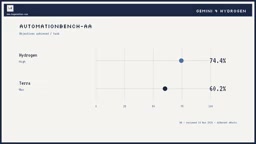
Based on Artificial Analysis selection data and hands-on feedback, this review unpacks the Gemini 4 Hydrogen value paradox: high scores don't equal high value, performance splits across automation workflows and coding tasks, pricing and Google subscription bundles are separate ledgers, and SynthID output labeling could be a dealbreaker.
Gemini 4 Hydrogen Five Extreme Tests: 96.7% Accuracy and One-Prompt Website Building
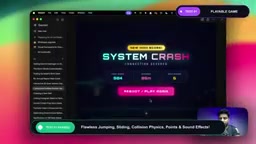
A YouTube creator runs five extreme tests on Gemini 4 Hydrogen: single-prompt game generation, 3D solar system simulation, 30-minute video timestamp localization, converting a 287-page report into an interactive dashboard, and 96.7% accuracy in hallucination resistance.

Gemini 4 Hydrogen Released: A 2.5x Faster Everyday AI Model
Google releases Gemini 4 Hydrogen, claiming 2.5x the speed of Gemini 3.8 Flash, with four-tier thinking control, a million-token context, and Orchestrator multi-model collaboration. API pricing is $1.50 per million input tokens.