Jensen Huang Opposes AI Regulation: Safety Should Be Left to Vendors
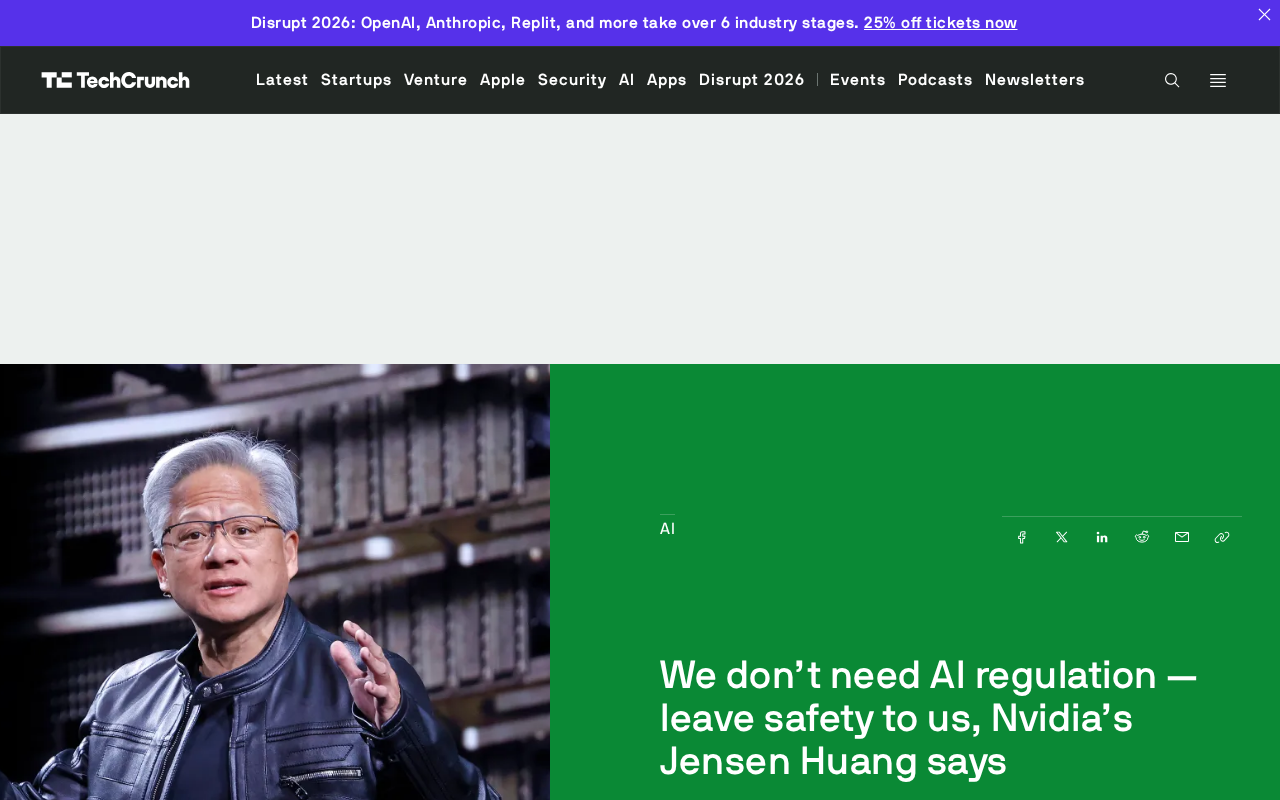
Jensen Huang argues AI is ordinary software and hardware — safety should be vendors' responsibility, not regulators'.
Nvidia CEO Jensen Huang has publicly stated that AI is not an "alien intelligence" requiring dedicated government regulation — it is simply hardware and software, and safety should be each product manufacturer's own responsibility. This stance frames AI within conventional engineering management and implicitly opposes dedicated legislation. The article notes that Huang's position aligns closely with Nvidia's commercial interests as the world's largest AI compute supplier. While the vendor self-regulation model offers flexibility, it faces real challenges around inconsistent standards and unclear accountability. The debate ultimately turns on a foundational question: if AI is truly a conventional technology, existing frameworks may suffice; if it represents a qualitative capability leap, leaving safety entirely to profit-driven vendors is a risk that cannot be ignored.
Nvidia CEO Jensen Huang recently sparked controversy by publicly arguing that AI is not a special technology requiring dedicated government regulation, and that safety should be handled by each AI product manufacturer on its own. This position has reignited a long-running debate within the tech industry over the right path for AI governance.
The Core Claim: "AI Is Not an Alien Intelligence"
Huang's central argument rests on a demystifying premise: AI is not some new form of "alien mind" — it is fundamentally just hardware and software. From this perspective, he believes AI safety can be fully achieved through engineering, and that every AI product manufacturer has both the ability and the responsibility to build appropriate safety mechanisms into their own products.
This framing strips AI of its "uncontrollable superintelligence" narrative and repositions it as a conventional technology — one that can be understood, designed, and constrained. In Huang's view, AI is no different in kind from any major technological breakthrough of the past few decades: it follows deterministic technical logic, and its risks are therefore predictable and manageable.
Why He Opposes Dedicated AI Regulation
Huang's opposition to dedicated government AI legislation follows naturally from his view of AI as "ordinary hardware and software." If AI is ultimately an engineering problem, then placing safety responsibility with the product manufacturers who know the technology best is logically more efficient than having regulatory bodies with limited technical background craft one-size-fits-all rules.
As the world's largest supplier of AI computing infrastructure, Nvidia's commercial interests are deeply tied to the rapid expansion of the AI industry. Any form of stringent regulation could slow AI deployment, increase compliance costs, and ultimately dampen demand for its chips and computing platforms. Huang's "leave safety to us" stance, then, is both an expression of a technical philosophy and something that cannot be fully divorced from his commercial position.
The Viability of a "Vendor Self-Regulation" Model
Delegating safety responsibility to individual product manufacturers implies a decentralized, self-regulatory model for the industry. Proponents argue that developers closest to the product best understand potential risks and can respond more flexibly and quickly — avoiding the innovation-stifling effects of blanket regulation.
But this model faces obvious challenges: when commercial competitive pressure conflicts with safety investment, will vendors without external constraints consistently keep safety as a priority? How can safety standards remain consistent across different companies? If systemic risks emerge, how can accountability be assigned among dispersed responsible parties? These questions are hard to answer definitively without a unified regulatory framework.
Historically, similar industry self-regulation models have had wildly different outcomes across sectors. The financial industry relied on self-regulation for years before the 2008 crisis triggered a systemic collapse, prompting governments worldwide to dramatically tighten oversight. By contrast, aviation and pharmaceuticals have developed effective frameworks in which government regulation and corporate self-discipline complement each other. The AI sector is currently in an unprecedented phase of capability acceleration: large language models and multimodal systems are being deployed far faster than traditional software, and the potential harm chains — mass-scale disinformation generation, automated cyberattacks, exploitation of critical infrastructure vulnerabilities — are far more complex than those of ordinary consumer software. The EU AI Act came into force in 2024, classifying AI systems by risk level and imposing differentiated obligations, representing a legislative attempt to balance innovation with protection. The United States currently lacks equivalent federal legislation; executive orders and voluntary industry commitments form the main constraints — and that is the institutional context in which Huang's remarks land.
The Deeper Divide Over AI Governance
Huang's position represents an influential strand of thinking within the tech industry — one that favors a "light regulation, heavy self-discipline" governance approach. In contrast, another group of researchers and policymakers argues that AI carries deep-seated risks that cannot be fully eliminated through engineering alone, and that external institutional constraints are necessary.
At its core, this divide reflects fundamentally different views of AI's basic nature as a technology. If AI truly is just "hardware plus software" as Huang contends, then existing mature frameworks for product safety and consumer protection may well be sufficient. But if AI represents a genuine qualitative shift in capability and autonomy, then entrusting safety entirely to commercially motivated vendors carries risks that cannot be taken lightly.
It is worth noting that as the leader of a top-tier company that directly profits from the AI boom, Huang's position in this debate carries an inherent bias. This does not mean his arguments lack merit — but readers assessing whether "vendor self-regulation is enough" should factor in the interests of whoever is making the case.
In academia, this divide maps onto two distinct AI risk frameworks. The "capability risk" camp, represented by figures such as Geoffrey Hinton and Yoshua Bengio, argues that current large models already exhibit emergent capabilities that are difficult to fully explain, that their behavior in edge cases is hard to predict, and that engineering alone cannot eliminate the fundamental risk of alignment failure. The "engineering controllability" camp, represented by Yann LeCun, holds that existing models are essentially statistical pattern-matching machines, far from the level of autonomy that would require a special governance framework, and that overregulation would simply cede technological leadership to others. Huang's position is closer to the latter — but as a chip manufacturer rather than a model developer, his judgments about the limits of model capabilities may reflect an information asymmetry compared to frontline researchers.
Conclusion: A Contest With No Clear Winner Yet
Huang's claim that AI needs no dedicated regulation puts both technological optimism and industry self-interest squarely on the table. Whether AI is a disruptive force requiring special treatment, or an ordinary technology that can be folded into conventional engineering management, is a foundational judgment that will directly shape the future of governance frameworks.
What is certain is that as AI penetrates more critical domains, debates over "who is responsible for safety, and how" will only intensify. Where the balance between vendor self-regulation and external oversight should sit remains an open question — one that is very far from settled.
Related articles
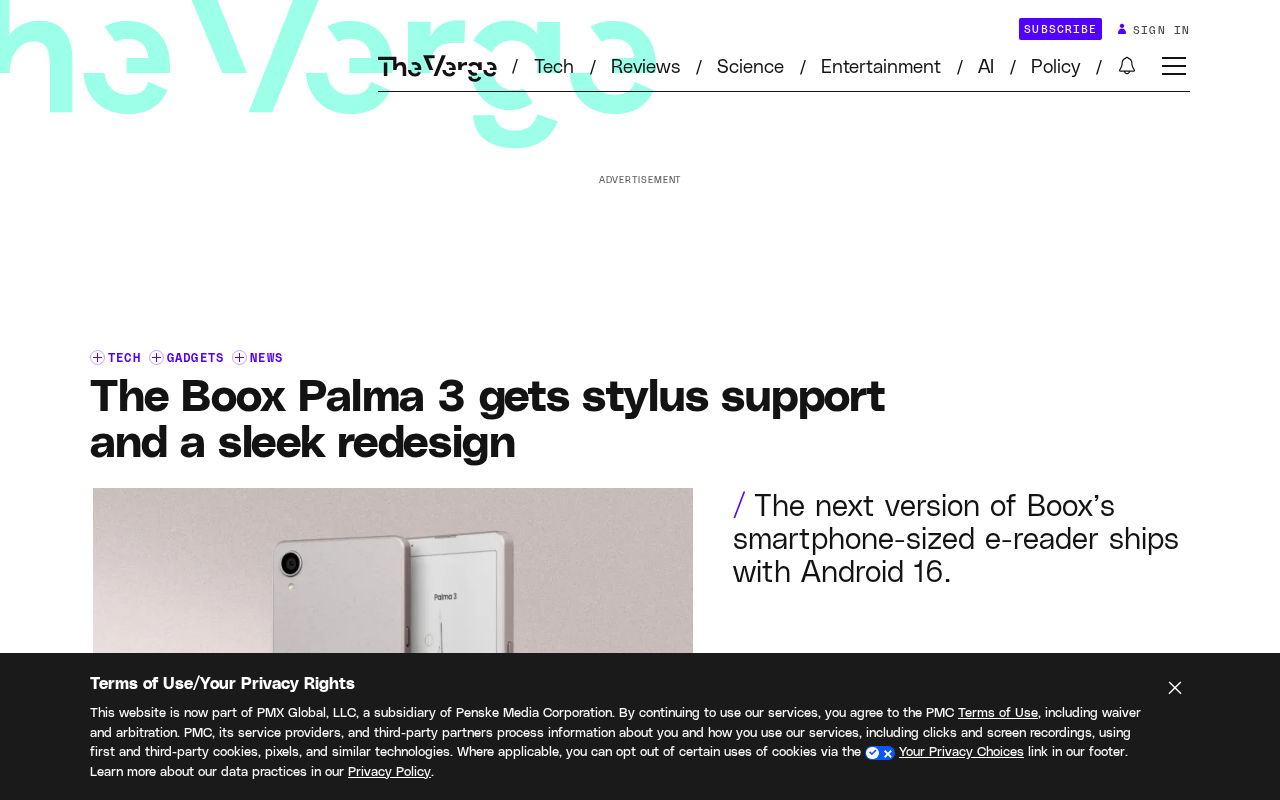
Boox Palma 3 Launches with Stylus Support and Redesigned Look
Boox Palma 3 launches with stylus support and a sleek new design. The pocket-sized e-ink reader gains new capabilities but comes at a higher price than its predecessor.
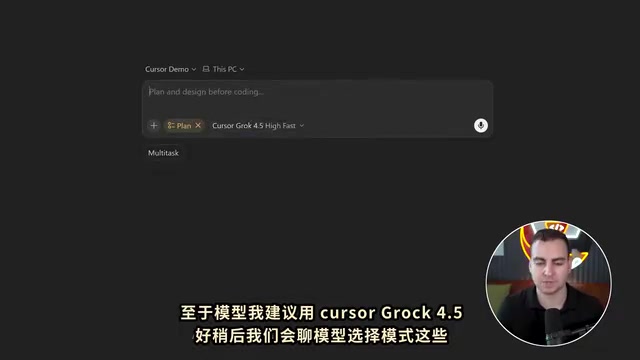
Cursor 3.0 Complete Beginner's Guide: Getting Started with AI-Powered IDE Development
Cursor 3.0 beginner's guide: from download and setup to parallel sub-agents, cloud development, skills, and automations. Master model selection, design mode, and Git with this complete AI IDE walkthrough.
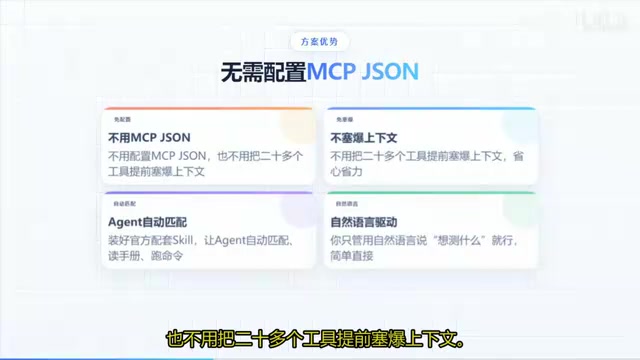
Codex + Playwright as a Skill: UI Automation Without Manual Commands
Wrap Playwright as a Codex Skill so AI agents run UI automation tests via natural language. Covers install, Sauce Demo walkthrough, PO pattern, and MCP vs CLI+Skill tradeoffs.