Jensen Huang Steps Down and Returns: The Inside Story of Nvidia's CEO Upheaval

Jensen Huang briefly resigned as Nvidia CEO under scrutiny over an affair, then returned, highlighting founder-dependency risk.
The article recounts how Nvidia founder Jensen Huang resigned as CEO on November 12 amid escalating scrutiny over an alleged extramarital affair, which he acknowledged. Because Nvidia GPUs are critical AI infrastructure, the leadership change quickly drew industry attention. The report's title indicates Huang ultimately returned as CEO, forming a "resignation—return" loop, though the source does not disclose board decision details or the terms of his return. The article argues the core tension lies in the founder's personal image being deeply tied to the company brand: on one hand, the founder's irreplaceability temporarily outweighed governance pressure from personal controversy; on the other, it exposed the vulnerability of star AI companies to key-person risk and governance mechanisms. The aftermath merits continued observation.
Nvidia founder Jensen Huang's tenure as CEO has gone through a dramatic rollercoaster this month. According to an RSS source report, the key figure who co-founded one of today's most important AI companies thirty years ago resigned from the CEO position on November 12, citing mounting scrutiny over an alleged extramarital affair. Huang acknowledged that he had been "unfaithful" to his wife.
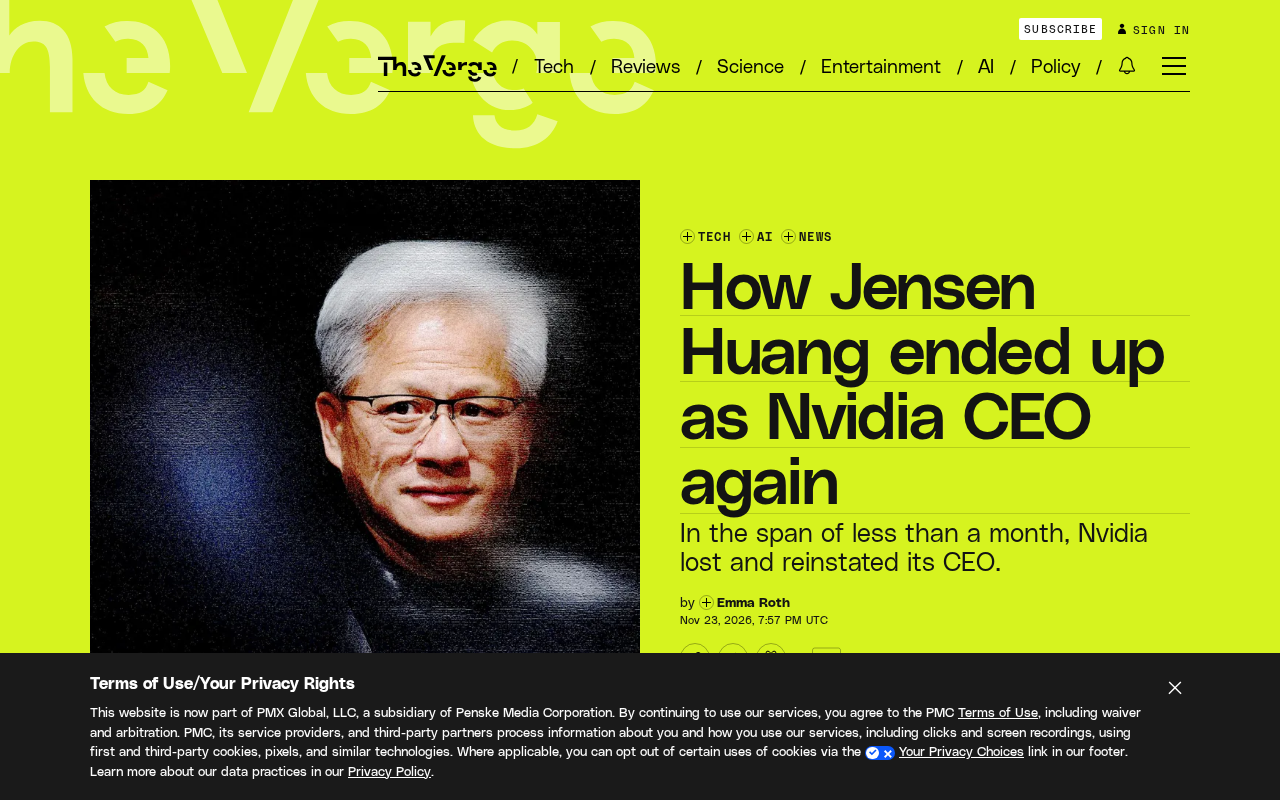
From Resignation to Return: A Brief but Violent Shock
The report notes that Huang's resignation was not quiet. With the AI industry highly dependent on Nvidia GPUs, any leadership change at the company sends ripples across the entire industry. As co-founder, Huang's personal image is deeply intertwined with Nvidia's brand, and his departure naturally sparked speculation about the company's future direction.
However, events soon took a turn. The original source's title explicitly states "How Jensen Huang ended up as Nvidia CEO again," indicating that he ultimately returned to the CEO role. Although the source does not elaborate on the specific process of his return, the very loop of "resignation—return" is enough to demonstrate Huang's irreplaceable position within Nvidia.
Nvidia was co-founded in 1993 by Jensen Huang, Chris Malachowsky, and Curtis Priem, starting out with graphics processing units (GPUs) and initially targeting the PC gaming graphics card market. After the launch of the CUDA parallel computing platform in 2006, GPUs gradually expanded from graphics rendering into general-purpose computing, laying the hardware foundation for the subsequent deep learning revolution. Today Nvidia's GPUs (such as the A100 and H100 series) are core components for training large language models and AI infrastructure, and the company has long held a dominant share of the data center AI chip market. For this reason, a CEO change at Nvidia is not merely an internal corporate matter—it transmits through supply chains, stock prices, and expectations for AI compute supply to the entire tech industry. This is the structural reason the event attracted such intense attention.
The Clash Between Founder Charisma and Personal Crisis
The core tension in this episode is this: a founder regarded as an iconic figure of the AI era faced scrutiny over personal conduct, which in turn triggered changes at the corporate governance level. Huang's acknowledgment of infidelity pushed a private moral issue into the public eye, and the "mounting scrutiny" surrounding it ultimately became the direct trigger for his resignation.
For a company at the epicenter of AI chips, leadership stability is crucial. Nvidia's customers and investors need a decision-maker who can stay at the helm. Huang's brief departure and rapid return reflect, to some extent, the market's and the company's heavy reliance on "founder leadership."
Founder-CEOs are a special category in corporate governance research: they often hold relatively large stakes, wield strong board influence, and become highly personified in their company's brand. This structure is strategically beneficial for continuity in long-term decision-making, but it also brings "key-person risk"—when the founder's personal reputation or legal situation comes into question, there is a lack of effective replacement and checks-and-balances mechanisms. Mature public companies typically rely on independent directors, a lead independent director, or clear succession plans to mitigate such risks. The "scrutiny" mentioned in the article, in a corporate context, may come from a special board committee, external legal counsel, or a compliance department investigation, whose intensity and conclusions directly affect whether executives stay or go.
Implications for the AI Industry
Although this turmoil ended with Huang returning as CEO, it raises a question worth pondering: when the personal reputation of an AI company's founder is in crisis, how should corporate governance mechanisms respond? Nvidia's case shows that a founder's irreplaceability can, in the short term, outweigh the pressure brought by personal controversy.
The original report is limited in length and does not disclose details of the board's decision-making or the specific conditions of his return. But judging from the outcome, Huang continues to lead Nvidia, meaning the company still chooses to bet its future on this co-founder. For readers following the AI industry landscape, the aftermath of this event is worth continued observation.
Related articles
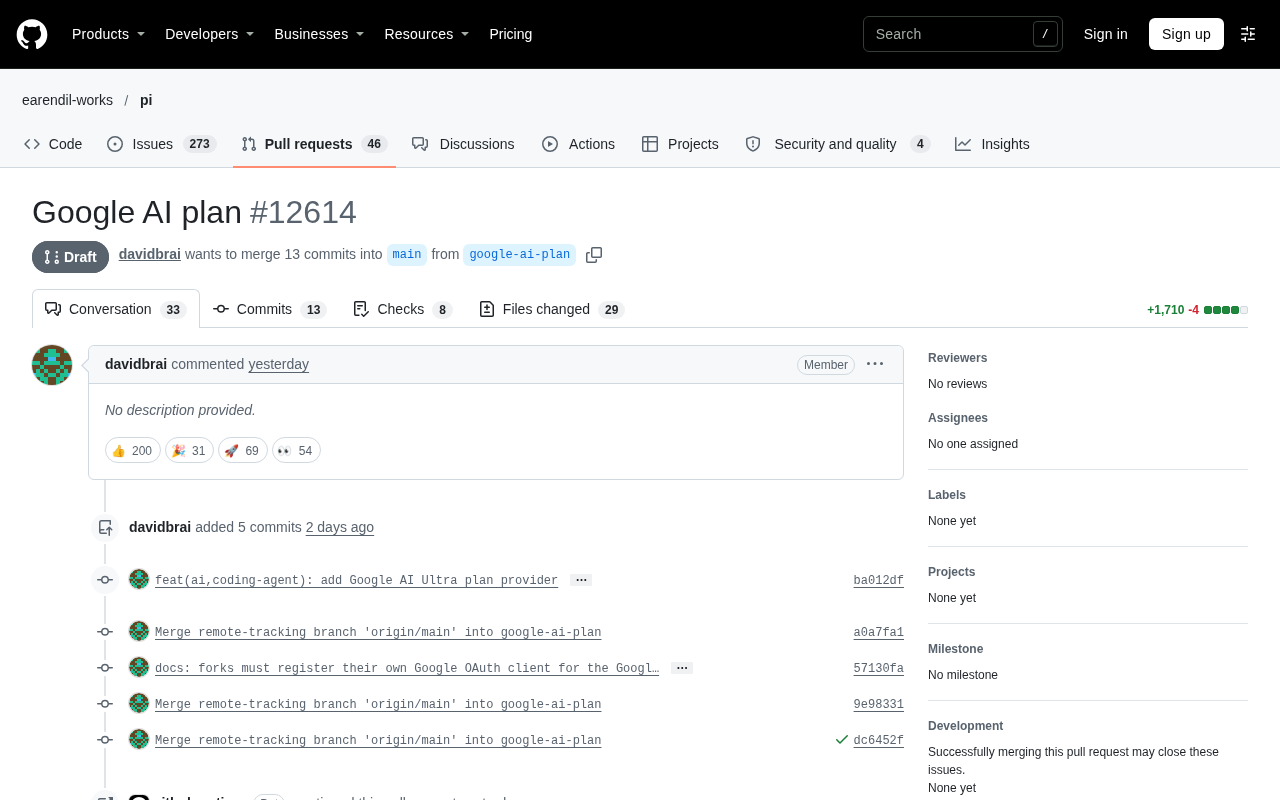
Google Officially Supports Pi Coding Agent: The AI Programming Tool Ecosystem Expands Further
Google adds official Google AI plan support for the open-source coding agent Pi, signaling accelerating integration between large model vendors and coding agent tool ecosystems. This article analyzes the impact on developer workflows, the tool ecosystem landscape, and model binding relationships.

Loom: One Machine for Weaving, Knitting and Braiding
Loom is a device that aims to seamlessly combine weaving, knitting and braiding in a single machine, drawing attention on Hacker News. This article examines its engineering challenges, significance for flexible manufacturing, and lessons for makers and hardware developers.
Running Local AI Agents on Mac: A Full Breakdown of the MLX Four-Layer Stack
A breakdown of Apple engineer Joanna's local Mac AI agent solution: the MLX four-layer stack, a three-step setup, and how the neural network accelerator, continuous batching, and distributed inference solve local agent performance bottlenecks.