Kia Unveils All-Electric PV7, Reshaping Its Electric Van Lineup

Kia launches the all-electric PV7 van to capitalize on a 21% MPV sales surge and the EV wave.
Kia has unveiled the all-electric PV7 van, targeting a recovering MPV segment that has seen 21% sales growth in the US as consumers rediscover practicality over SUV styling. The EV skateboard platform enables a flat floor and flexible seating configurations, while lowering running costs. For Kia, the PV7 is a strategic move to build a first-mover advantage in electric vans while rivals remain focused on SUVs. Specific range, pricing, and launch timing are still pending official disclosure.
Vans Are Making a Quiet Comeback
Many people may not have noticed, but MPVs (minivans/multi-purpose vehicles) are staging a comeback in the US market. Sales figures show a 21% increase for this vehicle category, suggesting that vans — once dismissed as "uncool" — are winning back consumers who have grown tired of SUVs.
Against this backdrop, Kia has chosen to launch the all-electric PV7 van, aiming to ride the dual wave of electrification and the minivan revival to carve out a position in a segment that's rapidly heating up.
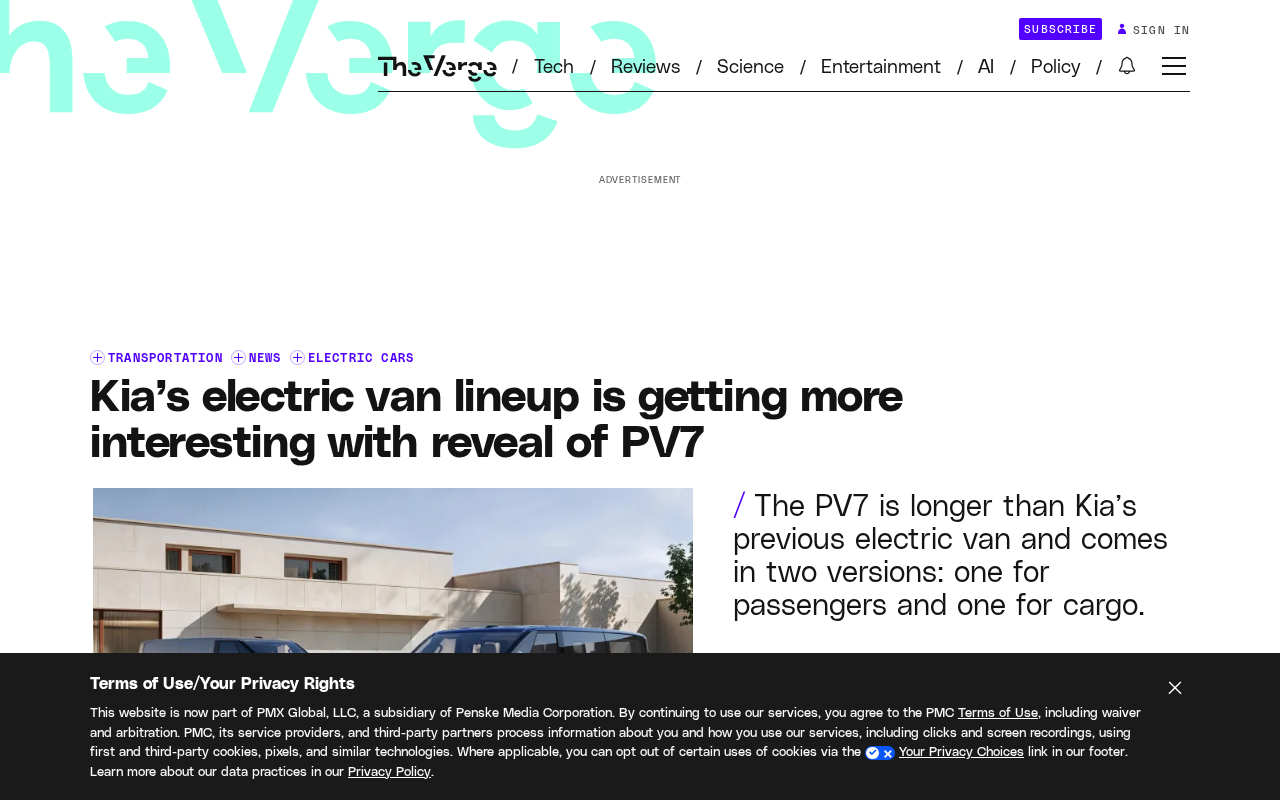
The Product Logic Behind the PV7
The PV7 is a key addition to Kia's electric van lineup. Compared to traditional combustion-engine vans, an all-electric platform offers inherent advantages in space utilization — without the constraints of a conventional engine and transmission, the cabin floor can be made completely flat, offering far more flexibility for seating and cargo configurations.
For Kia, launching the PV7 isn't just about adding another model — it's a strategic step toward completing its electric commercial and multi-purpose vehicle matrix. Vans can serve both family transportation and commercial use cases such as last-mile delivery and corporate fleets, making their multi-purpose nature particularly valuable in the era of electrification.
It's worth elaborating on the spatial revolution that electric platforms bring to vans. Traditional combustion-engine vans are constrained by longitudinal or transverse engine bays, driveshaft tunnels, and fuel tank placement, which often result in an uneven cabin floor and reduced legroom for middle and rear-row passengers. The skateboard platform — designed specifically for EVs — lays the battery pack flat beneath the vehicle, and electric motors are far smaller than internal combustion engines, making a completely flat floor possible from front to rear. This not only improves ride comfort but also enables far more versatile seating arrangements — such as 2+2+3 or 2+3+2 configurations — without sacrificing cargo volume. Hyundai Group's E-GMP platform (Electric-Global Modular Platform), already proven in models like the EV6 and EV9, has validated the maturity of this architecture, and the PV7 is expected to adopt or draw inspiration from a similar design philosophy.
Why Vans Deserve a Second Look
For the past decade or more, SUVs have dominated the global passenger vehicle market, pushing vans to the margins. But as consumers return to prioritizing practicality, space, and ride comfort — and as electrification unlocks new design freedom — vans are finding a new lease on life.
That 21% sales growth is no coincidence. It reflects a growing segment of consumers who are tired of sacrificing utility for styling in their SUVs, and who are looking for vehicles that can genuinely haul, seat, and carry. All-electric powertrains happen to address two of the traditional van's biggest weaknesses: driving dynamics and running costs.
The PV7 is Kia's move to seize this window of opportunity. While competitors are still locked in an SUV arms race, establishing an early position in the electric van space could yield a meaningful first-mover advantage.
The rise and fall of MPVs in the US market has a clear historical arc. Chrysler introduced the Dodge Caravan in 1984, launching the modern minivan category, and for the following decade-plus, MPVs claimed a significant share of US family vehicle sales. However, the rise of SUVs and pickup trucks in the 2000s, combined with the cultural stigma of vans being "for middle-aged parents," caused the category to rapidly decline — with multiple mainstream brands exiting the MPV market altogether. The factors driving today's recovery are multifaceted: millennials entering parenthood with a genuine need for practical space, heightened sensitivity to fuel and ownership costs, and electrification erasing the dual stigma of traditional MPVs being both gas-guzzling and boring. The sustained strong sales of the Toyota Sienna hybrid have already validated this trend in advance; the Kia PV7's arrival pushes the competition into the all-electric dimension.
Closing Thoughts
The PV7's debut makes Kia's electric vehicle lineup all the more compelling to watch. At the intersection of a van market revival and full electrification, this vehicle category may well become the next growth engine. For those tracking shifts in the EV market landscape, Kia's moves in this segment are well worth following.
(Note: This article is based on limited source material. Specific details for the PV7 — including range, pricing, and availability — are pending official announcement from Kia.)
Related articles

LynnReal-Omni: 32B Unified Video Diffusion Model Goes Open Source with Multi-Task Coverage in Four Steps
LynnReal-Omni is a 32B unified video diffusion model on MiniMax H3, covering text-to-video, pose guidance, style transfer, restoration in 4 steps. Flash version generates 540p video in 377ms on one H100.

Anthropic Co-Founder: AI 'Kill Switch' May Need to Be Mandatory by Law
Anthropic's co-founder tells the BBC that AI 'kill switches' may need to be legally mandated. We analyze the industry logic, technical challenges, and the tension between regulation and innovation.

The AI Data Center Boom Is Colliding With Cities Scarred by Heavy Industry
The AI data center boom is clashing with post-industrial communities. Philadelphia's case reveals structural conflicts between AI growth, energy use, water, and environmental justice.