Kimi K3 Deep Dive: 2.8 Trillion Parameter Open-Source Model Closes the Gap with Closed-Source Frontier for the First Time

Kimi K3's 2.8T parameters bring open-source models to the frontier threshold for the first time.
Moonshot AI's Kimi K3 is a 2.8 trillion parameter open-weight model with native vision and a 1M token context window. In benchmarks like Deep SWE, SWE Marathon, and BrowseComp, it rivals closed-source frontier models at roughly one-third the cost. Its standout strengths include 3D game development, 3+ hour continuous coding sessions, and hierarchical sub-agent orchestration. However, safety concerns loom large — no system card has been published, and its powerful security auditing capabilities are a double-edged sword.
Another "Moonshot" for Open-Source Models
Kimi K3, released by Moonshot AI, may be the most impressive open-weight model to date. According to a full-day hands-on review shared by well-known tech YouTuber Theo, he admitted that he hadn't felt "excited" about open-source models in a long time — because they could never truly approach the everyday performance of closed-source frontier models like GPT-5.6 and Fable 5, especially on complex coding and long-horizon agent tasks.
But Kimi K3 changed all that. In his own words: "This model is genuinely standing at the frontier's doorstep, and in some tasks, it even surpasses where we currently are."
Kimi K3 is a massive 2.8 trillion parameter model built on Moonshot AI's proprietary Kimi Delta Attention and Attention Residuals architecture, with native vision capabilities and a 1 million token context window. Traditional Multi-Head Attention faces a quadratic scaling bottleneck in compute and memory when processing ultra-long contexts. The core idea behind Delta Attention is to compute only the "incremental changes" in attention weights relative to the previous layer, rather than recalculating the full attention matrix from scratch at every layer, thereby significantly reducing redundant computation. Attention Residuals introduce residual connections between attention layers, enabling information to pass directly across layers and mitigating vanishing gradient problems in deep networks. The combination of these two techniques allows K3 to train efficiently at the 2.8 trillion parameter scale while natively supporting million-token ultra-long contexts. Keep in mind that just one year ago, the Kimi model had no vision, no long context, and not even reasoning capabilities. The pace of this catch-up is nothing short of astonishing.

You may not have noticed, but Moonshot AI recently closed a new funding round of approximately $2 billion, bringing total funding to nearly $4 billion. This explains why they dare to "aim for the stars" — a 2.8 trillion parameter model is a "moonshot" in the most literal sense.
Kimi K3 Is Not the Future of Local Deployment
Regarding model size, there's a reality check that needs to happen. FP8 and FP4 are low-precision floating-point formats — standard deep learning training typically uses FP32 (32-bit) or FP16/BF16 (16-bit), while FP8 (8-bit) and FP4 (4-bit) are more aggressive compression formats. Model quantization is the process of converting trained model parameters from high precision to low precision, aiming to reduce size, lower memory usage, and speed up inference. At FP8 precision, each parameter takes 1 byte, so one trillion parameters equals roughly 1TB of data, meaning 2.8 trillion parameters comes to 2.8TB; even quantized to FP4, it's still about 1.4TB. However, quantization isn't a free lunch — the lower the precision, the greater the risk of quality degradation, especially on tasks requiring high-precision numerical reasoning.
Theo was blunt: "Anyone who tells you this is the future of local models doesn't know what they're talking about and should be permanently ignored." Because a 1.4TB model simply cannot fit into the memory of any computer a regular person owns. Moonshot AI itself recommends deploying K3 on supernodes with 64 or more accelerators. A supernode refers to a compute cluster composed of multiple high-end GPUs connected via high-speed interconnects (such as NVLink, NVSwitch, or InfiniBand), capable of distributing an ultra-large model's parameters across multiple GPUs' memory through tensor parallelism or pipeline parallelism for collaborative inference. 64 H100 GPUs means you'd need 8 DGX H100 servers (8 GPUs each), with total memory of approximately 5.12TB — enough to accommodate the model parameters and the KV Cache required for inference — and hardware procurement costs alone would run approximately $2.6 million, not including power, cooling, and operations.
For comparison, industry estimates place the parameter counts of closed-source frontier models like Opus in the 1 to 3 trillion range, typically falling between 1 and 2 trillion. Having a model of roughly 3 trillion parameters released as open weights is itself a massive leap. However, the actual weight release date is set for July 27th — until then, it can only be accessed via API. And since Moonshot AI is a Chinese company, this means code passes through their servers, requiring careful consideration when dealing with sensitive data.
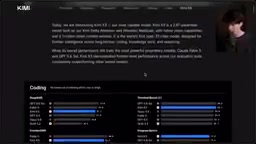
Benchmark Results: Kimi K3 Enters the Frontier Tier
Across multiple benchmarks, Kimi K3 performs well enough to compete head-to-head with closed-source frontier models:
- Deep SWE: K3 scored 67.5, trailing 5.6 Sol (73) and Fable 5 (70), but ahead of GPT-5.5, Opus 4.8, and GLM 5.2.
- Frontier SWE: K3 squeezed in between Fable and Sol, with a 10-point lead over Sol — Theo believes this shows K3 writes code with "more taste," not just solving problems but producing code that looks and feels better.
- SWE Marathon: K3 overtook the previously leading Opus 4.8, claiming the top spot.
- Terminal Bench / Program Bench / Spreadsheet Bench: All reached or approached world-class levels.
- BrowseComp: Extremely high scores in browser/computer operation capabilities, at a cost far below frontier models.
The SWE benchmark series has become the core test suite for evaluating LLM coding capabilities in recent years. Deep SWE focuses on testing a model's ability to solve complex bugs and feature requests in real open-source projects, with tasks sourced from actual GitHub Issues and Pull Requests — requiring models not just to write code, but to understand project architecture, locate root causes, and generate mergeable patches. Frontier SWE further focuses on frontier-level software engineering tasks requiring cross-file, cross-module understanding. SWE Marathon tests a model's ability to maintain coherence and correctness across ultra-long coding sessions — critical for agent applications, since real software development tasks often require hours or even days of sustained work.
According to Artificial Analysis's evaluation, Kimi K3 scored 57 on their intelligence index, making it "the third smartest model ever," with intelligence on par with Opus 4.8 and 5.5, only slightly behind Fable 5 and 5.6 Sol.
Hallucination Test: One of the Most Honest Open-Source Models
Particularly noteworthy is the AI Omniscience (hallucination test): K3 is one of the most honest open-source models to date — it's more willing to admit when it doesn't know an answer rather than fabricate one. Hallucination is one of the most criticized problems with large language models, referring to when a model generates seemingly plausible but entirely incorrect content with high confidence despite lacking relevant knowledge. The core of the AI Omniscience test isn't about how many questions the model answers correctly, but whether it can honestly respond "I don't know" when uncertain. K3's excellent performance on this test means it has good "cognitive calibration" — a more accurate perception of its own knowledge boundaries. This is crucial in high-stakes domains like healthcare, law, and finance, where a confident but wrong answer can have serious consequences. On this metric, K3 even surpassed many closed-source frontier models (some of which were penalized for being "too eager to fabricate").
Kimi K3 API Pricing
Cache hits at $0.30, input at $3 per million tokens, output at $15. This is roughly Sonnet-level pricing, making the value proposition quite compelling.
Frontend Development and 3D Capabilities: Unexpectedly Stunning Performance
Theo felt Kimi K3's most jaw-dropping quality was its vision-related coding capabilities. In a test redesigning the T3 Chat marketing page, K3 delivered five different style options, performing slightly better overall than OpenAI's model lineup, though slightly behind Claude.
3D and Game Development: K3's Killer Feature
The real killer feature is 3D and game development. K3 can achieve "vision in the loop" — seamlessly iterating between code and real-time screenshots: write code, take a screenshot, observe, then modify. Traditional code generation models can only handle text input and output, requiring developers to view rendering results themselves and manually describe issues back to the model. K3, with its native vision capabilities, can directly "see" page rendering results, 3D scene screenshots, and even animation frames, autonomously judge the gap between current output and the target, then automatically generate corrective code. This closed loop dramatically reduces human-machine interaction cycles, enabling the model to independently complete the full workflow from code writing to visual verification, much like a full-stack developer.
In a test porting a 3D web game called Fishlop, the fish textures and submarine models generated by the model prompted Theo to exclaim, "This is the best fish model I've ever seen any lab produce." He stated plainly: "If this model can actually do 3D, it's going to change the game."

On real UI tasks, K3 even produced a dark theme redesign that was better than Theo's team's existing version — and this is from an open-source model priced at roughly one-third of frontier models.
Long-Horizon Agent Capabilities and Safety Concerns
Over 3 Hours of Continuous Coding Without Breaking Down
Kimi K3's long-horizon coding capabilities are equally impressive. In a test porting the legacy codebase ping.gg, it ran continuously for over 3 hours, completing 122 tasks with just one and a half prompts while maintaining coherence. Theo stated: "I've never seen an open-source model stay coherent over such a long task, let alone real-world large-scale migration work."
Unique Sub-Agent Orchestration
Even more interesting is its agent orchestration approach: unlike other models, K3 creates multiple workflows for different work phases and allows sub-agents to directly check off tasks on the parent's to-do list — behavior Theo says he hasn't even seen from Fable. This hierarchical task management suggests K3 may have undergone specialized agent workflow optimization during post-training, enabling it not just to execute individual instructions but to autonomously plan and coordinate complex multi-step projects.
Security Audit: A Double-Edged Sword
However, powerful capabilities bring real safety concerns. When Theo asked K3 to perform a "deep security audit" on his cloud product, the model executed without hesitation — it launched multiple discovery agents and 25 validation agents for confirmation, then synthesized actionable recommendations.
This double-edged sword is concerning: "This is great for me because I can use it to harden my systems; but it's going to be bad in the future because attackers will use it to do the same thing." Anthropic and OpenAI have deliberately restricted models from assisting with offensive work and hidden ML kernel optimization capabilities, while Kimi K3 not only opens up these capabilities but openly showcases its GPU kernel optimization performance — in fact, during late-stage development, early versions of K3 handled most of the team's kernel optimization work.
What's particularly alarming is that Moonshot AI has not yet published a system card — the word "safety" doesn't appear anywhere on the page, and we know nothing about how safety was considered during training. A system card is an emerging safety transparency practice in the AI industry, first widely adopted by OpenAI with the GPT-4 release, functioning like a "product safety data sheet" that details the model's capability boundaries, known risks, safety evaluation methods, red-teaming results, and mitigation measures taken to reduce abuse risks. A 2.8 trillion parameter model with powerful agent capabilities, released in open-source form without thorough safety evaluation and public disclosure, could be exploited by malicious actors for cyberattacks, vulnerability discovery, or other high-risk purposes — and this is the industry's biggest concern about K3.
Kimi K3's Shortcomings and Overall Assessment
Kimi K3 is far from perfect. Moonshot AI themselves acknowledge that its user experience has a noticeable gap compared to Fable 5 and 5.6 Sol. Key issues found during hands-on testing include:
- Too proactive, and sensitive to thinking history;
- After completing workflows, it "responds to the workflow itself" rather than providing the context the user needs;
- Output speed is only about 20 TPS, less than half of other labs, and it tends to get "stuck" reasoning on trivial issues, making the overall experience feel slow;
- Currently only supports max thinking intensity, with no reasoning control options available.
These gaps largely stem from Moonshot AI's lack of User Feedback Telemetry. Telemetry refers to the mechanism by which model developers collect user usage data through their official product interfaces, including thumbs up/down on model outputs, conversation drop-off points, regeneration requests, and task completion rates. The reason OpenAI's ChatGPT and Anthropic's Claude lead in user experience is largely due to RLHF (Reinforcement Learning from Human Feedback) and post-training optimization driven by hundreds of millions of user interactions. Moonshot AI's dilemma is that most of their users access the K3 model indirectly through third-party API providers, preventing them from directly obtaining this valuable first-party usage feedback, causing significant lag in UX-level optimizations like output format preferences and error recovery strategies.
A Frontier-Level Contender with Exceptional Value
Despite these shortcomings, Theo's overall assessment was extremely positive. He spent roughly $63 during testing to complete work that would normally cost hundreds of dollars, demonstrating excellent cost efficiency. His final summary: "It's no longer 'good for an open-source model' — in many ways, it's genuinely frontier-level. While the experience isn't as pleasant as the best models, it's close enough to completely win me over."
It's foreseeable that Kimi K3's open-source nature will significantly intensify market competition and may even force Anthropic to reconsider its upcoming Opus pricing strategy. The era of the open-source frontier is truly arriving.
Key Takeaways
Related articles
Altman: Taking OpenAI Public This Year Would Be 'Ill-Advised'
OpenAI CEO Sam Altman says going public this year would be 'ill-advised,' even as the company has confidentially filed IPO paperwork. Here's what it means for AI.

An Open Letter to Dario: If AI Safety Is Real, Open the Model Weights
Developer Jacob's open letter to Anthropic CEO Dario Amodei went viral on Hacker News, challenging the contradiction between AI safety rhetoric and closed-source models: if safety truly matters, why not open the weights?
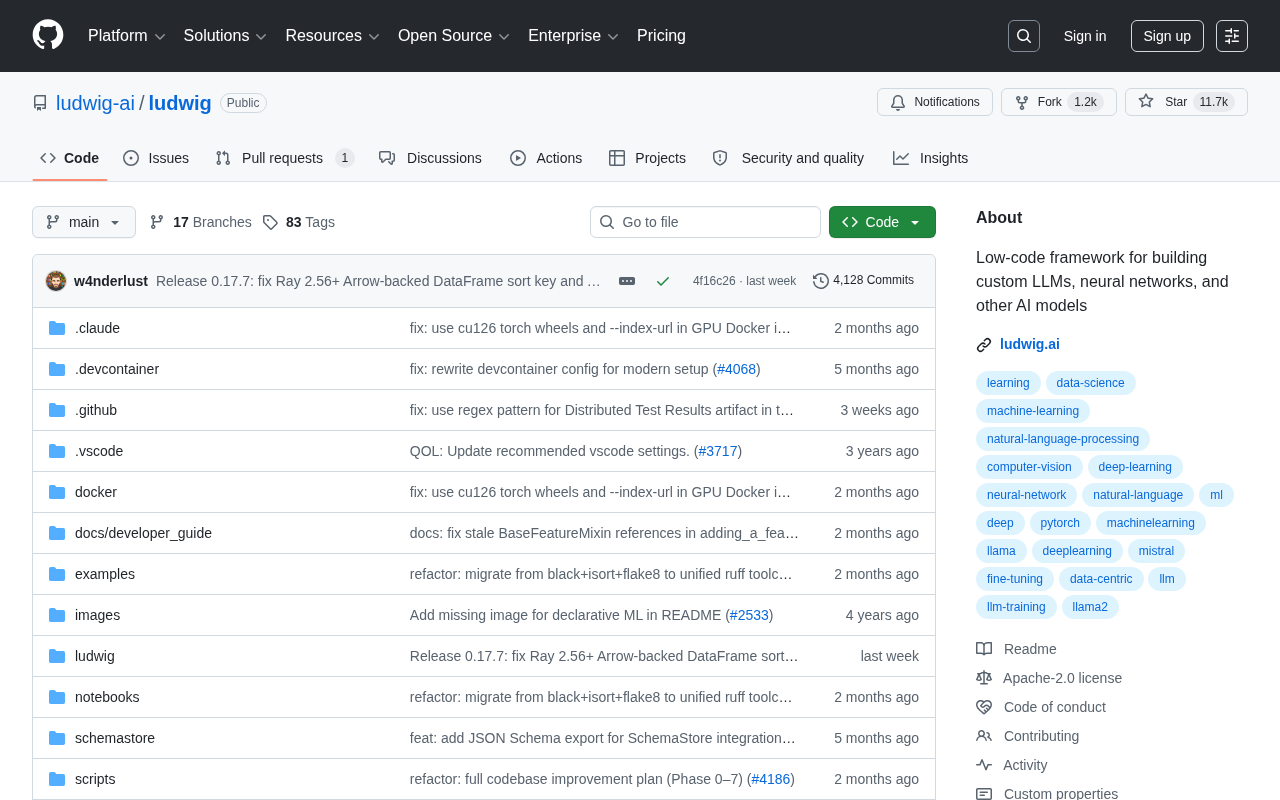
Ludwig: Building Custom LLMs and Neural Networks with Declarative Low-Code Configuration
Ludwig is an open-source low-code ML framework that builds custom LLMs and neural networks via declarative YAML config — no boilerplate training code required.