Kimi K3 Hands-On Review: 2.5 Trillion Parameter Open-Source Model Challenges Claude

Kimi K3's 2.5T parameters match Claude in coding, dominate in 3D game dev, at 1/10th the price.
Moonshot AI's Kimi K3 quietly launched as a 2.5 trillion parameter MoE model with 1 million token context. In hands-on testing, it matched Claude in programming and surpassed it in 3D/game development, generating a complete Black Hawk helicopter simulation in one pass. Despite slower inference speeds, its output quality rivals top closed-source models at approximately one-tenth the API cost, potentially reshaping the open-source AI landscape.
A 2.5 Trillion Parameter Beast Arrives Quietly
Moonshot AI's Kimi K3 appeared quietly in the Kimi App, command-line tools, and desktop client—without any official announcement, launch event, or even a model card. Yet this "stealth launch" approach triggered a viral discussion in the overseas testing community. Some testers declared "we might be witnessing a new SOTA model today," while others claimed K3 "destroys all open-source models."
According to analysis from Bilibili creator Zero Degree Commentary, based on leaked information, K3 is a MoE (Mixture of Experts) model built on an entirely new architecture, with total parameters reaching 2.5 trillion (2.5T)—more than doubling the previous K2 series' 1T. MoE (Mixture of Experts) is a sparsely-activated neural network architecture whose core idea is splitting the model into multiple "expert" sub-networks, activating only a small subset of experts for each inference pass. This means that although K3's total parameter count reaches 2.5 trillion, the actual computation per inference is far less than a dense model of equivalent scale—which is why such a massive model can still be served via API. Google's Switch Transformer was an early representative of MoE, and recent models like DeepSeek-V2 and Mixtral have pushed this architecture into the mainstream. K3 takes its scale to new heights.
The native context window reaches 1 million tokens, meaning entire code repositories or complete books can be processed in a single pass. One million tokens equals approximately 750,000 English words or over 1 million Chinese characters—roughly equivalent to 10 full-length novels or the entire contents of a medium-sized code repository. The core challenge in achieving such ultra-long context lies in the computational complexity of the attention mechanism—standard Transformer attention scales quadratically with sequence length. The industry typically employs methods like linear attention, sparse attention, Ring Attention, and positional encoding extrapolation (such as RoPE frequency scaling) to break through this limitation. The Kimi series has positioned long context as its core competitive advantage since inception, and K3's expansion to 1 million tokens further solidifies this technical moat.
Even more noteworthy is its signature feature, K3 Agent Swarm, which supports massive parallel search and batch processing, allowing multiple tasks to run simultaneously within a single session. The Agent Swarm concept draws from Swarm Intelligence, inspired by the collaborative behavior of ant colonies and bee swarms in nature—multiple AI agents work in parallel, each handling different sub-tasks like web search, code execution, and data analysis, then consolidating results. Unlike traditional single-agent serial execution, this parallelized design dramatically improves processing efficiency for complex tasks. OpenAI released an experimental version of a Swarm framework in 2024, while Kimi has deeply integrated it as a core product feature, indicating this direction is moving from research to production deployment.
It's worth noting that the Kimi series has always excelled at long context and Agent capabilities. The previous K2 Code could consecutively invoke over 4,000 tools and run for 12 hours without disconnecting, and K3 essentially pushes this technical roadmap to its limits.
A Single Prompt Generates a Runnable Black Hawk Helicopter Demo
In hands-on testing, testers posed a demanding task: generate a complete, directly runnable HTML file that realistically recreates a Black Hawk helicopter's entire sequence from helipad startup, takeoff, hovering, to landing.
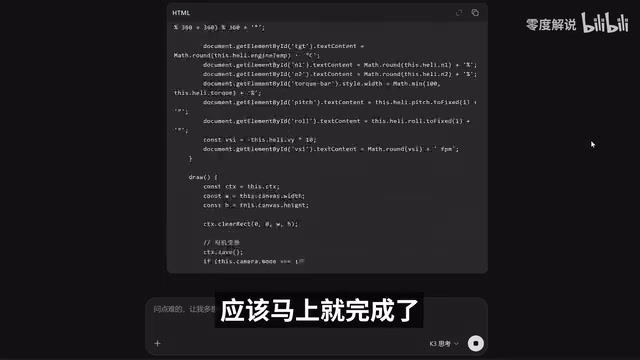
Code output speed was slow, taking several minutes to complete, but the results were astonishing. The generated HTML file runs in the browser without any external software, featuring built-in options for external tracking view, cockpit view, cinematic orbit view, tower view, and more. Engine startup, rotor acceleration, takeoff hover, circuit flight, smooth return and landing—the entire process flows seamlessly without any errors.
Most critically, this complete project incorporating procedural modeling, dynamic lighting, particle effects, flight animation, and interactive controls passed on the first attempt without any modifications. This isn't a video rendered in Unity, Unreal Engine, or Blender—it's pure frontend code generated directly by AI from a single prompt, likely using Three.js or WebGL browser-native 3D rendering technology, with all geometry, materials, and animation logic contained in a single HTML file. If large models can consistently achieve this level of output, the development approach for web games and 3D demo projects could be fundamentally rewritten.
Kimi K3's Coding Ability Ties with Claude
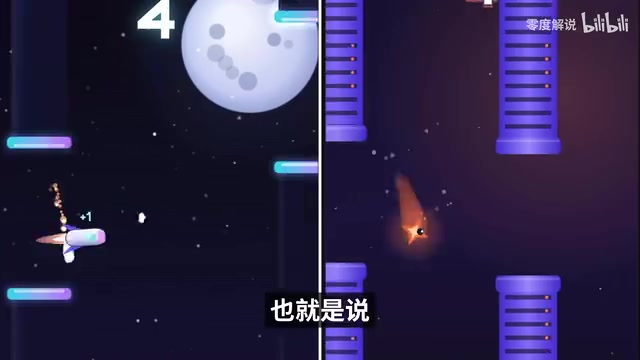
Multiple overseas developers conducted head-to-head comparison tests, and the conclusions are explosive: in programming, K3 goes toe-to-toe with Claude, and in some cases K3's output quality is even superior. Consider that the Claude series (especially Claude 3.5 Sonnet and Claude 4 Opus) represents virtually the ceiling in programming, consistently dominating leaderboards on code benchmarks like SWE-bench and HumanEval. For an open-source model to reach this level carries significant weight.
However, K3 has a clear weakness—it's slow. One tester spent a full 35 minutes running a frontend project, slower than the benchmark model. But this tester's exact words were: "This is one of the best outputs I've ever seen." In other words, K3 takes the "slow and steady wins the race" approach: it'll drive you crazy if you're in a hurry, but if you value final quality, it'll surprise you. The slow inference speed may relate to routing computation overhead in the MoE architecture, attention computation for ultra-long contexts, and the model possibly employing deep thinking strategies similar to Chain-of-Thought during inference.
Distillation Speculation: Was K3 Distilled from Claude?
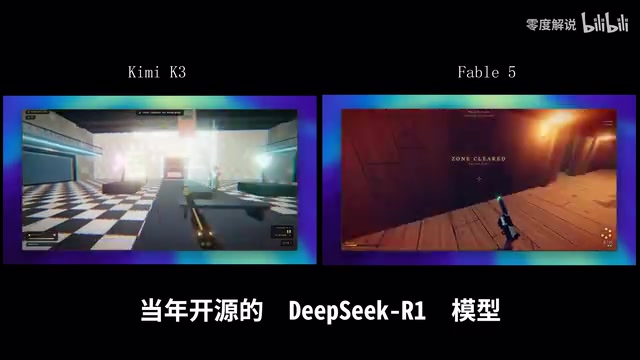
An interesting detail: someone tested both models with identical prompts and found that K3 used the exact same implementation mechanism as the benchmark model—a mechanism that wasn't specified in the prompt at all. This led the community to speculate that K3 was likely distilled from Claude.
Knowledge Distillation is a model compression and knowledge transfer technique first proposed by Hinton et al. in 2015. Its basic principle involves having a "student model" learn the output distribution (soft labels) of a "teacher model," rather than directly learning from hard labels in the original training data. The teacher model's soft labels contain rich information about inter-class relationships, enabling the student model to approach the teacher's performance at lower cost. In the era of large language models, distillation typically refers to using a stronger model's outputs as synthetic training data to train new models—technically efficient but controversial regarding intellectual property.
But the key point is—even if it is distilled, its performance is by no means inferior, and in some scenarios it even surpasses the "teacher." This is reminiscent of when DeepSeek R1 burst onto the scene—R1 was similarly suspected of using distillation strategies, but ultimately earned community recognition through excellent performance, proving that distillation isn't simply "copying homework" but rather an effective technical pathway.
3D and Game Development Is K3's Killer Feature
If coding is merely a tie, then in 3D and game development, K3's performance can only be described as "breaking through the ceiling."
Test cases include: a CGX-produced war scene in a single continuous shot, with scene details, lighting/shadows, and camera movement all generated in one pass; using just a single-script HTML file (approximately 1GB), outputting a playable simplified Minecraft client in one shot without iterative fixes. A 1GB HTML file means the model generated millions of lines of code, encompassing core game development components like a voxel engine, terrain generation algorithms, collision detection, and basic physics engine—work that previously required a development team weeks or even months to complete.
One tester concluded: Kimi K3 may be the first open-source model that can truly rival Claude in 3D and game development. Moreover, in these comparisons, K3 not only produced better results but completed them faster with fewer fixes needed. By contrast, while the GPT series has strong general capabilities, 3D and game development has never been its strength.
In a universe simulation comparison, although the benchmark model finished faster with more stable interactive components, K3's version had higher complexity and stronger visual impact—selecting a star and adjusting parameters to 100x would automatically switch to first-person perspective. In the classic Flappy Bird test, K3 clearly outperformed Opus.
K3 Frontend Development and Arena Testing

In frontend development, K3's performance can almost be described as "crushing all open-source models." Entire websites generated in one pass directly passed arena testing with virtually no rework needed. The "arena testing" here refers to evaluation mechanisms similar to LMSYS Chatbot Arena or WebDev Arena blind evaluation platforms—human evaluators score outputs comparatively without knowing model identities, producing rankings through an Elo Rating system. This evaluation approach is closer to real-world usage scenarios than fixed benchmarks because it measures humans' intuitive perception of output quality.
Whether it's animation effects, color themes, typography, or overall interaction flow, everything is executed with considerable polish. Another impressive case: a tester ran K3 on a complex task and produced results equivalent to top-tier Pro model quality in just 4 minutes, passing on the first attempt. Of course, K3 isn't perfect—lighting processing still has minor imperfections sometimes—but overall performance is already remarkably impressive.
K3 API Pricing: A Value Massacre
Across all tests, the community's preliminary consensus is: K3's overall quality falls between GPT's top-tier version and Claude, and in 3D, gaming, and frontend, it can even dominate head-on. While it's slow—complex tasks routinely taking 10+ minutes—the final output quality is very high. In one sentence: It's not the fastest, but it's likely the strongest model in the open-source camp right now.
Pricing is even more critical. According to leaked information, K3's API pricing is expected to be approximately one-tenth of the benchmark model—spending just pennies to get near-SOTA output quality. This isn't merely a performance competition; it's a value massacre. For comparison, Claude 3.5 Sonnet's API costs $3 per million input tokens and $15 per million output tokens. If K3 truly delivers at one-tenth the price, it will dramatically lower the barrier for developers to access top-tier model capabilities.
Additionally, the prediction probability for K3's official release on PolyMarket has reached approximately 97%, and the official API platform even prematurely leaked a top-up promotion page, suggesting the current testing is most likely the final rehearsal before official release.
If K3 continues the K2 series' tradition of open-sourcing weights, it would undoubtedly be a milestone event for the entire open-source community and local deployment users. Of course, running 2.5T parameters on an ordinary computer is virtually impossible—we'll need to wait for quantized versions. Quantization is a technique that compresses model parameters from high-precision floating point (e.g., FP16, 16 bits per parameter) to low-precision representations (e.g., INT4, only 4 bits per parameter). 2.5 trillion parameters at FP16 precision require approximately 5TB of VRAM; INT4 quantization can reduce this to approximately 1.25TB—still far beyond consumer hardware, but within the range of multi-GPU servers. However, since the MoE architecture only activates a portion of parameters each time, actual inference computational demands are significantly lower than what the total parameter count implies, leaving room for future optimized deployment.
Final Thoughts
From stealth launch to viral sensation, Kimi K3 demonstrates unprecedented ambition from the open-source camp. With its "slow and steady" approach, it challenges closed-source top-tier models in programming, 3D, and game development while redefining value at one-tenth the price. Regardless of whether it ultimately proves as powerful as rumored, this contest between open-source and closed-source, speed and quality, deserves continued attention from the entire AI industry.
From a broader perspective, K3's emergence marks Chinese AI companies officially entering the "first-tier competition" in the large model race. Moonshot AI has produced a model with parameters rivaling GPT-4 just two years after its founding—this pace of catching up is itself a signal of accelerating industry transformation. The combination of open-source and low-price strategies may, like DeepSeek's market disruption before it, force the entire industry to rethink the business models and pricing logic of large models.
Related articles
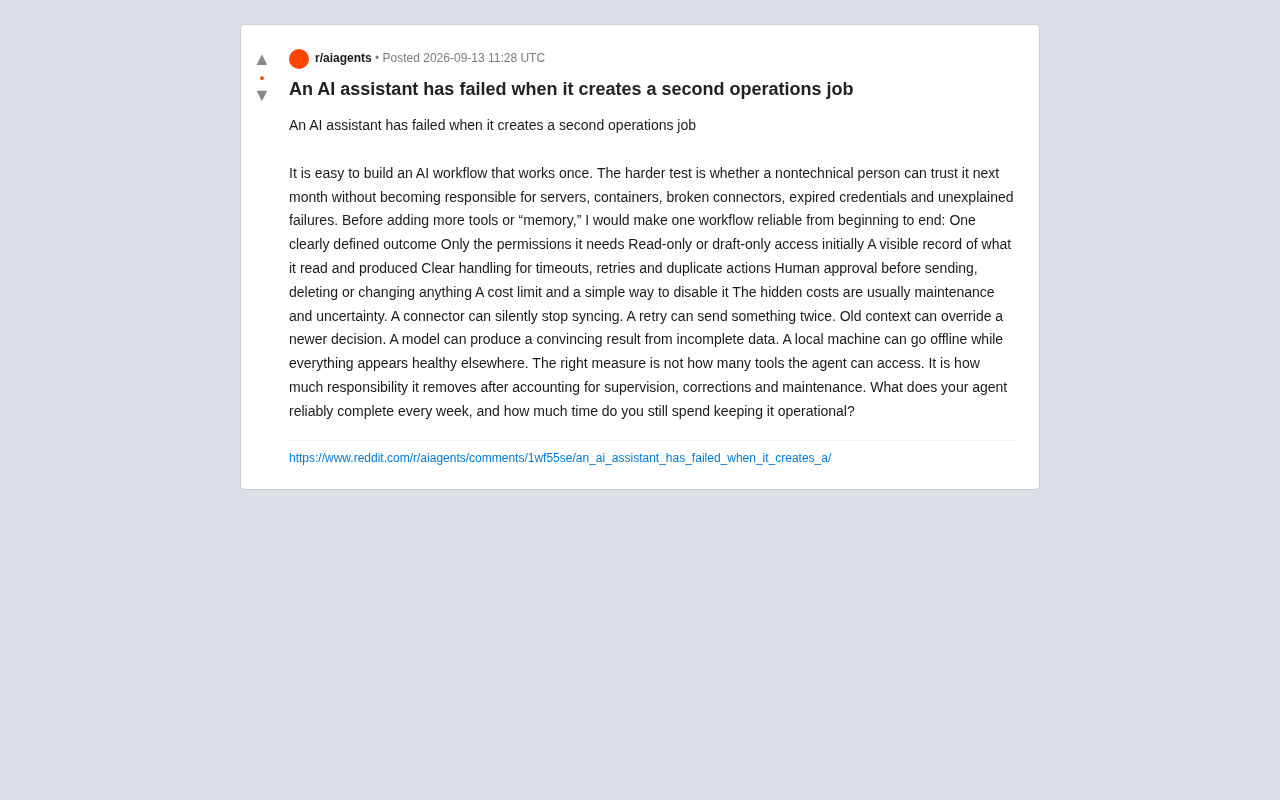
The True Failure of an AI Assistant: When It Creates a Second Operations Job
A Reddit user reframes how to judge AI assistants: they fail when they create a second ops job. Learn how to build end-to-end reliable workflows and measure Agent value by net benefit, not tool count.
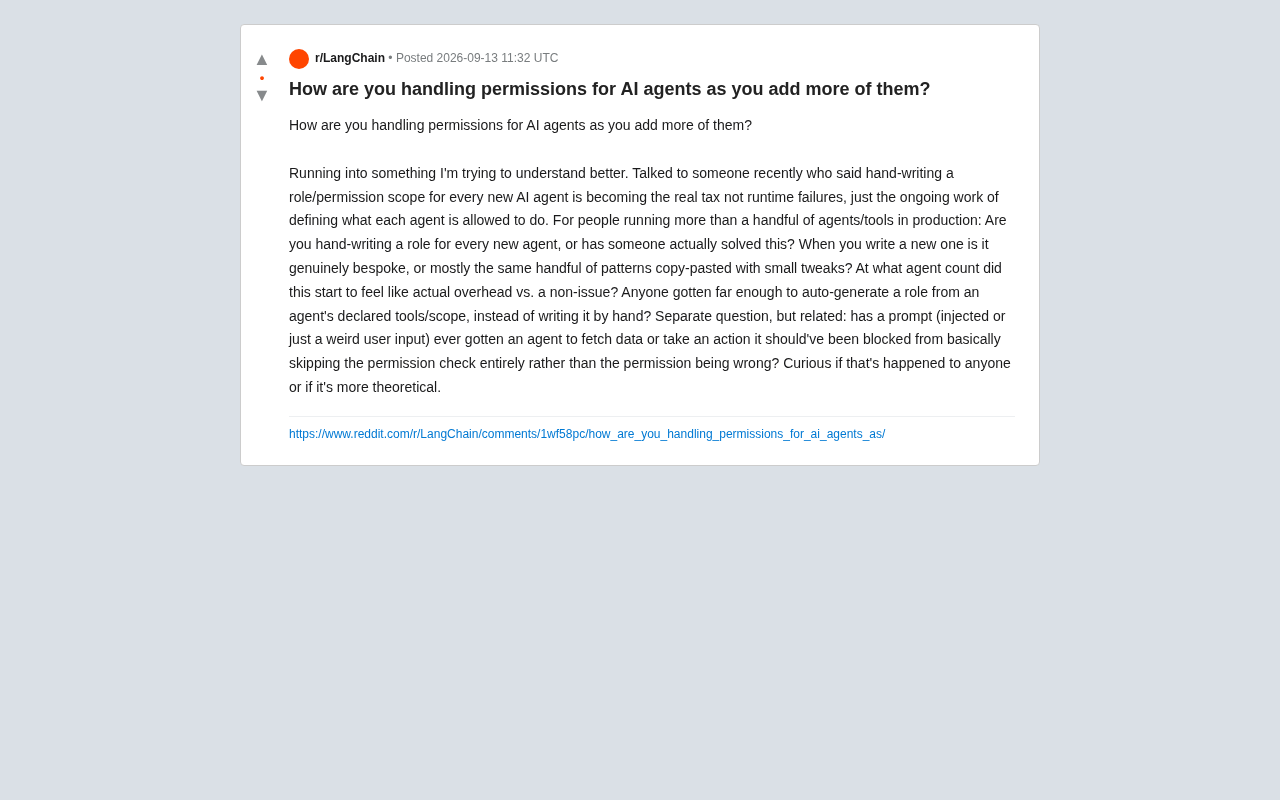
AI Agent Permission Management: Is Writing Roles Manually the New Hidden Tax?
As AI Agent counts grow, manually defining permission roles is becoming a hidden operational burden. This article explores scalability challenges, auto-generated roles, and the security risk of prompt injection bypassing permission checks.
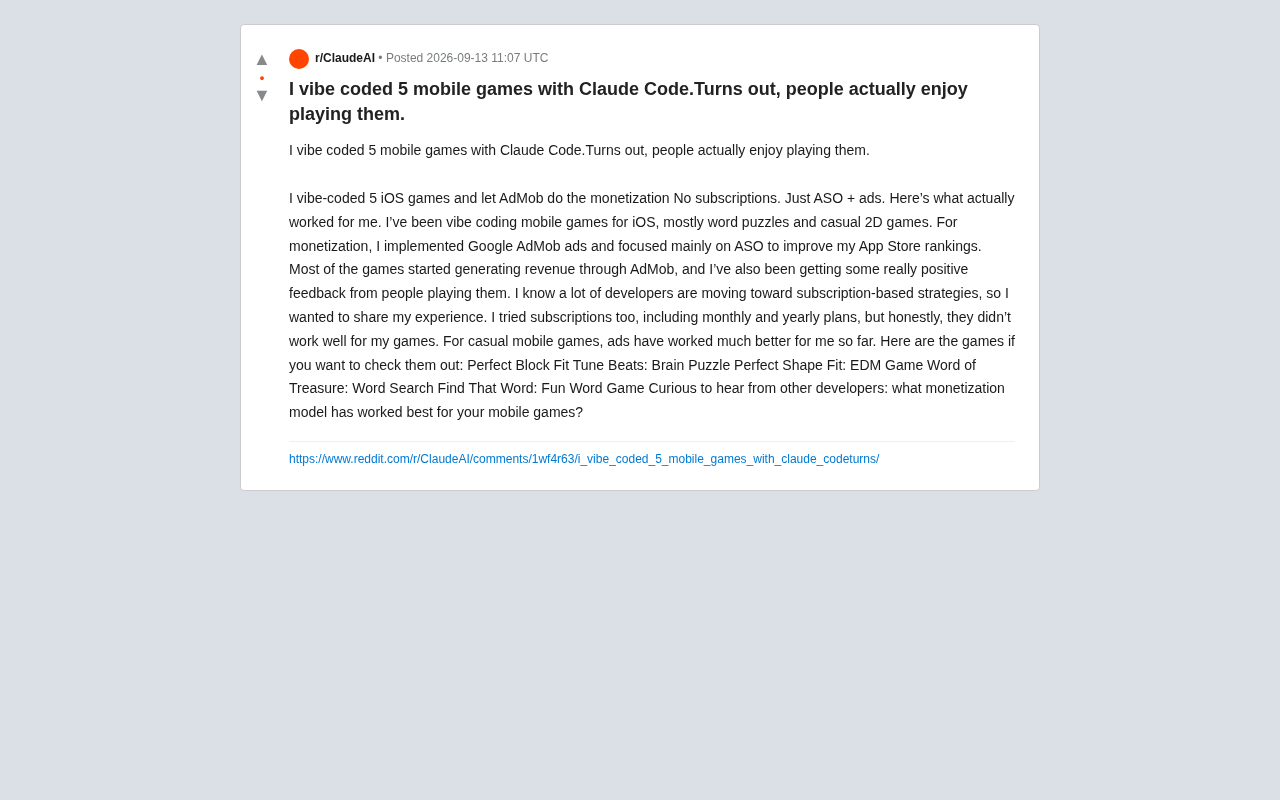
Vibe Coding 5 Mobile Games with Claude Code: Ad Monetization Beats Subscriptions
An indie dev built 5 iOS casual games with Claude Code vibe coding. His verdict: AdMob ads plus ASO optimization outperform subscriptions for casual games.