Knack MCP: A HIPAA-Compliant Backend Built for AI Healthcare Apps
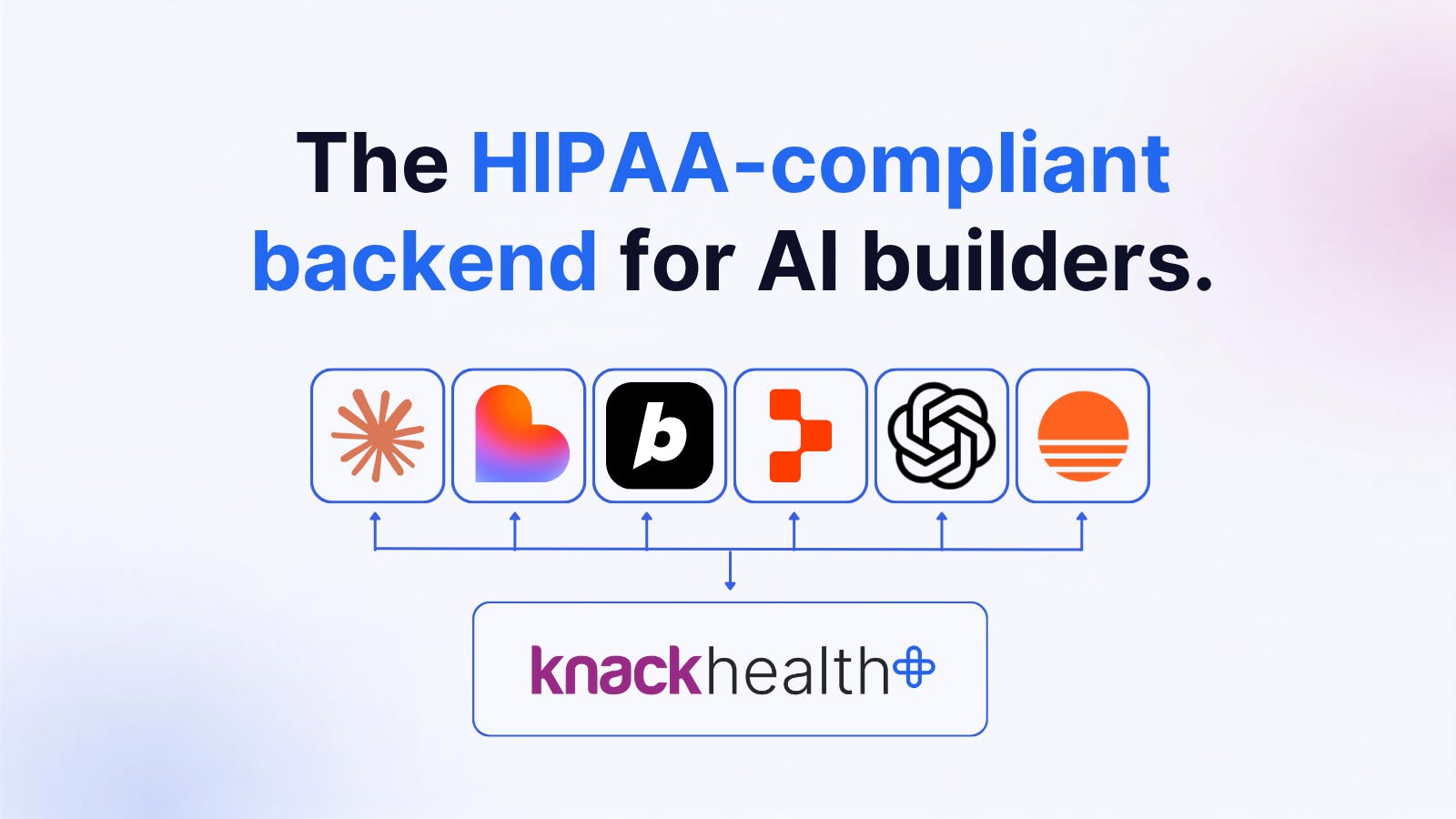
Knack MCP Server packages HIPAA compliance as an AI-native backend, bridging the gap from healthcare prototype to production.
AI coding tools have made building healthcare app frontends trivial, but U.S. HIPAA regulations — requiring data encryption, audit logs, and signed BAAs for PHI — create a massive gap between a working prototype and a shippable product. Knack MCP Server positions itself as a HIPAA-compliant backend for AI developers, offering a plug-and-play compliance layer, 700+ integrations, and MCP protocol support, starting at $499/month with unlimited users. While its Product Hunt debut was modest and its market remains niche, the "compliance as a service" model it represents signals a deeper trend: as general-purpose AI solves productivity, compliance middleware is becoming the next competitive frontier in regulated industries.
When AI Builds Healthcare Apps Fast — Compliance Becomes the Bottleneck
With AI coding tools booming, spinning up the frontend of a healthcare app using Lovable, Base44, or Claude Code has become remarkably straightforward. Within minutes, you can have a polished, feature-complete product prototype. The real headache for developers, however, isn't the UI — it's the backend compliance challenges lurking underneath.
Knack MCP Server, which recently launched on Product Hunt, targets exactly this pain point. Positioning itself as "a HIPAA-compliant backend built for AI developers," it earned 84 upvotes and ranked 20th on its launch day. The numbers aren't headline-grabbing, but the niche it's carving out — AI + healthcare compliance — is worth a deeper look.

Why Healthcare App Backends Are So Complex
The Compliance Barrier Imposed by PHI
In the United States, any application that handles Protected Health Information (PHI) must comply with HIPAA (the Health Insurance Portability and Accountability Act). This means developers can't treat it like a typical SaaS product — casually picking a database and storing user data however they like.
Once PHI is involved, a hard set of requirements kicks in:
- Compliant data storage: Encryption, access controls, and audit logs are all mandatory;
- Record Retention: Medical data must be stored long-term and remain traceable;
- Signing a BAA (Business Associate Agreement): This is a legal requirement under HIPAA — any third-party vendor that processes PHI must sign one with you.
In short, AI tools handle the "zero to one" part of building a frontend, but the most critical step — going from prototype to production — hits a wall called compliance. That's the gap Knack is trying to fill.
The "Last Mile" Problem in the AI Coding Era
The "Vibe Coding" trend has empowered non-professional developers to ship functional apps quickly. But healthcare's unique demands make one thing clear: a working prototype is not a shippable product. Compliance isn't optional — it's a legal requirement. Knack positions itself as the "last mile" solution, letting developers focus on building while offloading the tedious compliance burden to a specialized backend.
Breaking Down Knack MCP Server's Core Features
According to the official description, Knack Health is "a HIPAA-compliant backend built specifically for healthcare applications," with several key selling points:
A Plug-and-Play Compliance Layer
Developers simply connect their AI frontend to Knack and gain a complete compliance infrastructure. Knack takes on the role of the "compliance layer" — handling data storage, retention policies, and most critically, signing the BAA. For independent developers and small teams, having a third-party-signed BAA dramatically reduces legal exposure.
700+ Integrations and MCP Protocol Support
Knack claims to offer 700+ integrations, allowing developers to connect the compliant backend into existing workflows and third-party services. The "MCP" in the product name — Model Context Protocol, the open standard championed by Anthropic — signals that Knack embraces an AI-native architecture, enabling AI Agents to call backend capabilities more naturally. This positions Knack not just as a database, but as backend infrastructure purpose-built for AI-native applications.
Pricing Strategy
Knack uses a starting price of $499/month with unlimited users. For a HIPAA-compliant backend, this is relatively accessible — especially when you consider the engineering and legal costs of building compliant infrastructure from scratch. For early-stage startups, $499/month has real appeal. That said, whether the "starting price" hides scale-dependent costs remains something real-world users will need to verify.
Industry Signals Worth Paying Attention To
AI Applications Are Moving Into Vertically Regulated Domains
Knack's emergence reflects an important trend in AI application development: general-purpose AI tools have solved the productivity problem, but compliance, security, and regulatory requirements in vertical industries are spawning a new category of specialized infrastructure services. Heavily regulated sectors like healthcare, finance, and legal services all need similar "compliance middleware."
The Rise of "Compliance as a Service"
Traditional BaaS platforms like Firebase and Supabase solved for developer efficiency. Knack, on the other hand, packages compliance itself as a service. This "Backend-as-a-Compliance" model essentially outsources legal and technical risk, lowering the barrier to entry for regulated industries. It may well become a standard building block for AI startups operating in heavily regulated spaces.
Questions to Ask Before Committing to Knack
It's worth noting that Knack's Product Hunt debut was relatively modest — 84 upvotes, 6 comments, and a 20th-place ranking suggest it hasn't broken through to mainstream awareness yet. Its target market is also fairly niche: only teams actively building U.S.-based healthcare applications that handle PHI will truly feel the value.
Beyond that, entrusting compliance responsibilities to a third-party backend deserves careful evaluation. A BAA is just one component of HIPAA compliance — data handling at the application layer, access controls, and user authorization remain the developer's own responsibility. Knack can address compliance at the infrastructure level, but it can't absorb a developer's entire compliance obligation.
Closing Thoughts
Knack MCP Server represents a snapshot of the AI application ecosystem maturing: as AI makes "building products" increasingly easy, the real competitive moats are shifting toward compliance, security, and trustworthy infrastructure. For founders looking to move fast in healthcare with AI, a HIPAA-compliant backend like Knack could help bridge the enormous gap between prototype and production. And for the industry at large, it's a reminder: the second half of the AI era belongs to products that can build bridges between deep expertise and regulatory compliance.
Related articles
Claude Code Adds Agent View: A Research Preview for Unified Session Management
Claude Code's new Agent View feature (research preview) consolidates all coding sessions into a unified list, advancing AI tools toward multi-agent orchestration.
Open-Source Python SDK: Measuring AI Agent Reliability with SRE Principles
Agent Reliability is an open-source Python SDK that applies SRE's SLO and error budget concepts to AI Agent evaluation, with PASS/FAIL/UNKNOWN states, CI assertions, and zero forced dependencies.
MiniMax RefMod: A Complete Guide to Training-Free Reusable Identity Workflows
MiniMax RefMod offers training-free reusable identity workflows for image, video, and audio generation. Includes Runpod template and tutorial for quick setup.