Kondo KHR-3 Mod: Progress in Bipedal Robot Gait

Developer heavily modifies Kondo KHR-3 to explore more natural human gait, with clear progress but still somewhat stiff.
A developer continues to explore a more human-like natural walking gait based on a heavily modified Kondo KHR-3 bipedal robot. Although the current movement is still somewhat stiff, it has clearly improved compared to earlier versions. The article analyzes the dynamic challenges of bipedal gait, including stance-swing phase transitions, center-of-mass transfer, and limitations from the lack of torque feedback on servo platforms. The author notes that achieving compliant landing and natural walking on position-controlled servo platforms requires refined gait planning and control strategies. The Reddit community is encouraging toward such DIY projects, and open sharing helps attract improvement suggestions. The project still has a long way to go before achieving truly natural gait, but it demonstrates the practical value of amateur developers tackling complex robotics problems with limited resources.
In the Reddit community, a developer shared the latest progress on their bipedal robot gait research. This project is based on a heavily modified Kondo KHR-3 robot, aiming to achieve a more human-like natural walking gait. Although the author admits the movement is still a bit stiff ("Still a little janky"), it has clearly improved compared to earlier versions.
Project Background: From Kondo KHR-3 to a Custom Platform
The Kondo KHR-3 is a classic entry-level bipedal robot kit, popular among hobbyists for its relatively affordable price and programmability. However, the stock gait is often very mechanical, with rigid center-of-mass shifts during walking, making it difficult to mimic smooth human motion. The developer chose to heavily modify it, which likely means replacing servos and adjusting structural components at the hardware level, or rewriting control algorithms at the software level.
The author mentions having invested considerable time into this "real human gait" goal, indicating the project is not a short-term experiment but the result of continuous iteration. Such long-term dedication is not uncommon in amateur robotics communities, but cases that publicly showcase staged progress are still worth noting.
Servo is the core actuator for small bipedal robots like the KHR-3, rotating to a specified angle by receiving PWM signals. Common position-control servos have built-in potentiometer feedback for closed-loop angle control, but cannot directly output or sense torque, and their response speed and precision are limited by the gear train and motor performance. Therefore, servo-based robots struggle to achieve muscle-like compliant adjustment, and impact forces upon landing are often transmitted directly to structural components, making movements appear stiff.
Gait Planning refers to designing time-varying motion trajectories for each joint of the robot so that it can walk stably. Common methods include trajectory generation based on the Zero Moment Point (ZMP), inverted pendulum model simplification, and predefined keyframe interpolation. Gait planning must consider both kinematic constraints (joint angle ranges) and dynamic constraints (center of mass and ground reaction forces), and on servo platforms, additional control margins are needed.
Technical Challenges: Why Bipedal Gait Is Hard to Make "Human-like"
Bipedal walking appears simple but actually involves complex dynamic balance. Human gait includes smooth transitions between stance and swing phases, pelvic rotation and tilt, counter-swinging of arms, and other coupled motions. For servo-driven robots, the motion trajectory of each joint must be precisely planned while also handling disturbances from ground reaction forces and inertia.
Platforms like the KHR-3 typically use position-controlled servos lacking torque feedback, making compliant landing and center-of-mass transfer more difficult. Developers must approximate natural walking through gait planning and control strategies under imperfect hardware conditions. The author's mention of "janky" (stiff, not smooth) likely stems from limitations in servo response speed, joint clearance, or control frequency.
Stance phase and swing phase are the two basic stages of the gait cycle. The stance phase refers to the period when the foot is in contact with the ground and bearing body weight, during which the robot must maintain stability; the swing phase is when that foot lifts off and moves forward while the other leg supports alone. In human walking, the stance and swing phases of the two legs alternate, with a brief overlap during double support. For bipedal robots, properly dividing these two phases and ensuring smooth center-of-mass transition at the switching moment is one of the core tasks of gait planning.
IMU (Inertial Measurement Unit) is a key sensor for robots to perceive their own posture, typically integrating gyroscopes and accelerometers to measure angular velocity and linear acceleration. In bipedal gait control, the IMU can provide real-time feedback on the torso's pitch and roll angles, helping the controller determine whether the robot is deviating from balance and adjust joint movements accordingly. For servo platforms lacking torque feedback, introducing IMU feedback is a common low-cost approach to improve walking stability.
Current Progress and Community Feedback
From the shared content, the robot can already complete continuous walking cycles, but the smoothness of movement still has room for improvement. The author did not disclose specific gait parameters or control methods but expressed willingness to answer community questions, leaving room for technical exchange.
The Reddit robotics community has always been encouraging toward DIY projects, and such shares often attract experienced hobbyists to offer improvement suggestions, such as adjusting gait cycles, optimizing center-of-mass trajectories, or introducing IMU feedback. For developers exploring bipedal gait, this kind of open sharing and discussion is itself an important way to advance the project.
Future Directions: From "Can Walk" to "Walks Naturally"
The author explicitly states there are "definitely got a ways to go." Achieving a more natural human gait may require further optimizing joint trajectory planning, introducing more refined landing buffer strategies, or even attempting reinforcement learning-based control methods. However, on servo platforms like the KHR-3, hardware limitations remain an unavoidable factor.
The value of this project lies in demonstrating how amateur developers can tackle complex robotics problems with limited resources. There is no universal standard for gait "realism," but each iteration narrows the gap between robot and human motion. For readers interested in bipedal robots or humanoid robot gait research, this project offers a practical case worth following.
One-line Summary
Developer heavily modifies Kondo KHR-3 to explore more natural human gait, with clear progress but still somewhat stiff.
Paragraph Summary
A developer continues to explore a more human-like natural walking gait based on a heavily modified Kondo KHR-3 bipedal robot. Although the current movement is still somewhat stiff, it has clearly improved compared to earlier versions. The article analyzes the dynamic challenges of bipedal gait, including stance-swing phase transitions, center-of-mass transfer, and limitations from the lack of torque feedback on servo platforms. The author notes that achieving compliant landing and natural walking on position-controlled servo platforms requires refined gait planning and control strategies. The Reddit community is encouraging toward such DIY projects, and open sharing helps attract improvement suggestions. The project still has a long way to go before achieving truly natural gait, but it demonstrates the practical value of amateur developers tackling complex robotics problems with limited resources.
Related articles
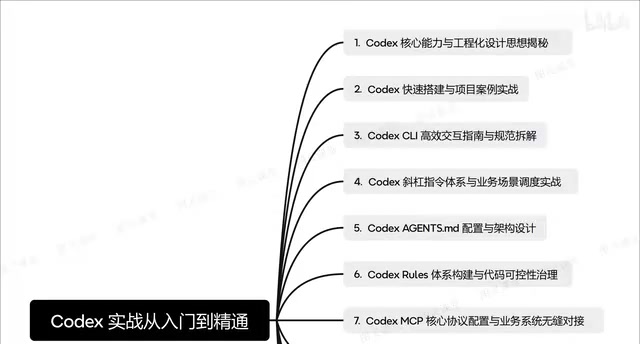
Codex in Practice: From Installation and Configuration to Multi-Agent Collaboration
Based on a Bilibili Codex course overview, this guide maps the full path of AI coding assistants from installation and agents.md context design to CLI commands, MCP integration, and multi-agent collaboration.

Claude Code Installation and Model Switching Guide for Users in China
How can developers in China install Claude Code reliably? This article compiles a Bilibili creator's hands-on solution: install via NPM, skip official login, use CC Switch to configure API Keys and freely switch between DeepSeek, Kimi, and other models to avoid account bans.

AI Supply Chain Security: What Canary Tokens Reveal
Starting from a Hacker News discussion, this article analyzes the role of canary tokens in AI supply chain security: how they detect abnormal access to model weights, training data, and credentials, as well as coverage blind spots and cost constraints during implementation.