Kuc-kuc: A Knock on the Door in Dangerous Weather, AI Safeguarding Seniors Living Alone
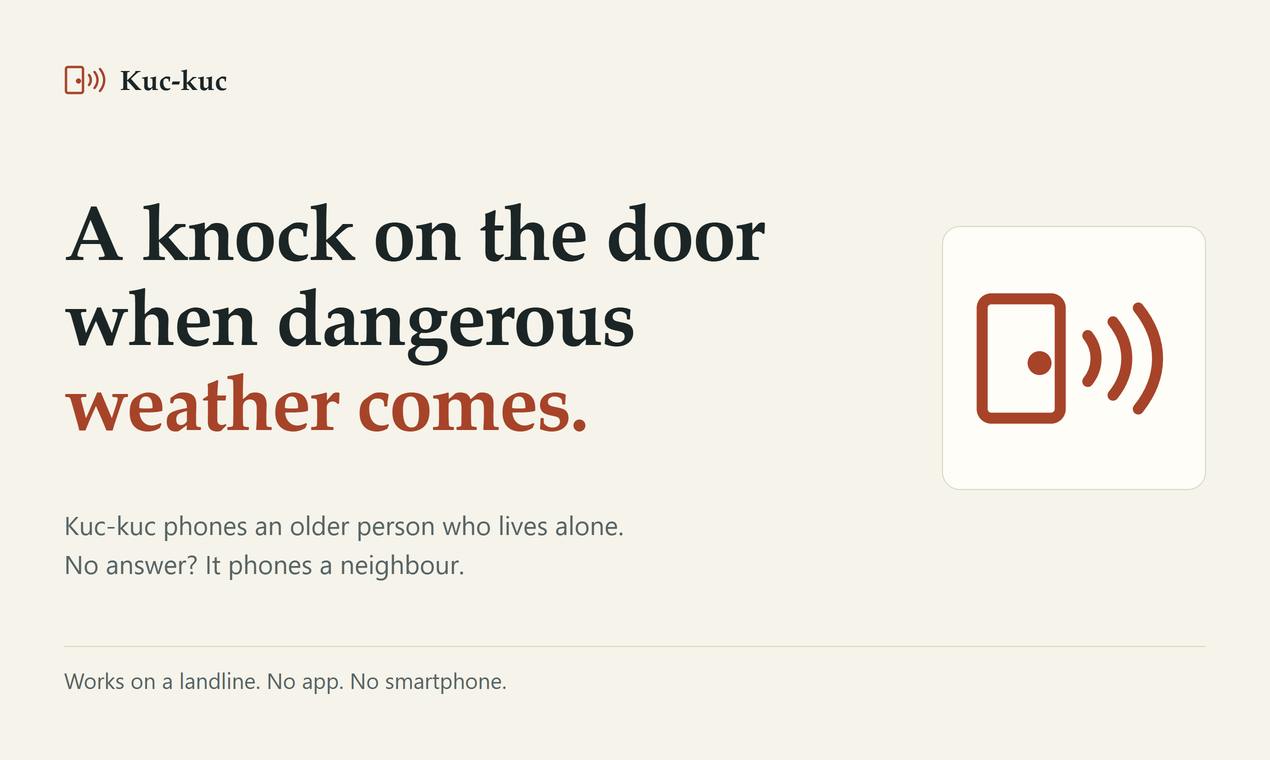
Kuc-kuc uses phone calls and neighbor knocks to safeguard seniors living alone in extreme weather.
Kuc-kuc is a weather warning care product for seniors living alone. When dangerous weather is forecast, the system automatically calls the senior to ask if they are okay; if no answer or discomfort, it contacts a neighbor to knock and check, syncing everything to family in real time. It deliberately uses phone calls (including landlines) to lower the barrier, replacing cold automated alerts with real neighbor action. Lightweight and running on Google Cloud Run serverless platform, it gained attention on Product Hunt as an innovation leveraging low technical barriers for social good.
When extreme weather strikes, how can we ensure the safety of seniors living alone? A product called Kuc-kuc offers a simple and warm answer: a phone call and a knock on the door to connect seniors, neighbors, and family. It doesn't chase flashy AI features but addresses real pain points in the most straightforward way.
Protection That Starts with a Phone Call
The core logic of Kuc-kuc is very direct: when the weather forecast indicates dangerous weather, the system automatically calls the senior living alone to ask if they are okay. If the senior doesn't answer, or responds "I don't feel well," the system immediately contacts a neighbor to knock on their door and check on them. The entire process—from the phone call to the neighbor's response—is synced in real time to the senior's family, keeping them informed at all times.
The cleverness of this flow lies in that it doesn't try to replace human care with technology but uses technology to trigger human action. Seniors don't need to learn to use an app or wear any device—they just need to answer the phone. The neighbor's role is naturally integrated, forming a low-barrier community safety net.
Why Phone Calls and Neighbors?
In an era flooded with smart home devices and wearables, Kuc-kuc goes against the grain by choosing the phone as the primary interaction method and supporting landlines. This may seem "outdated," but it's actually precise. Many seniors living alone are resistant to smartphones and complex devices, but the phone is the communication tool they are most familiar with and trust. Landline support further covers those who don't use mobile phones.
At the same time, the involvement of neighbors turns emergency response from a cold automated notification into a human action. Family members also gain peace of mind through feedback at every step—knowing someone is going to knock on the door is far more reassuring than receiving an "alert sent" notification.
Interactive Voice Response (IVR) is a common automation technology in phone systems that guides users through operations via voice menus and key presses or voice input. Kuc-kuc's phone greeting process is essentially an outbound IVR variant: the system automatically dials and plays a question, then triggers subsequent actions based on the senior's voice response (such as "I'm fine" or "I don't feel well") or non-answer status. Such systems typically combine speech recognition with simple keyword matching to determine intent and can run reliably without complex conversational AI, which explains why the product can achieve its core functionality on a lightweight tech stack.
Technical Foundation: Lightweight but Reliable
Kuc-kuc runs on Google Cloud Run, a serverless computing platform that automatically scales based on requests. For this type of event-driven application (weather-triggered calls), Cloud Run's pay-as-you-go model is very suitable, ensuring reliability while controlling costs. The product was developed by Marko Veselinovic and received 72 votes on Product Hunt, ranking 10th, with tags including artificial intelligence, social impact, and health.
Although the product doesn't emphasize complex AI models, the "artificial intelligence" tag suggests there may be natural language processing or speech recognition technology behind it to interpret the senior's responses. Considering it needs to handle voice responses during calls, this likely involves speech analysis, but specific implementation details have not been disclosed.
Serverless computing is a cloud computing execution model where developers don't need to manage server infrastructure; the cloud platform automatically allocates resources and scales based on actual requests. Google Cloud Run is a typical representative of this model: it runs containerized applications, scales to zero when there are no requests, automatically starts instances when there are requests, and bills based on actual CPU and memory usage. For low-frequency applications like Kuc-kuc triggered by weather events, serverless architecture avoids paying for idle servers while ensuring availability during sudden requests—a reasonable choice balancing cost and reliability.
Social Impact and Product Insights
The launch of Kuc-kuc has sparked discussions about the warmth of technology. In the AI wave, people often pursue smarter algorithms and richer features, but Kuc-kuc reminds us that the social value of technology is sometimes precisely reflected in a precise response to simple needs. It targets the vulnerable group of seniors living alone,切入 through the specific scenario of weather warnings, and builds a sustainable care loop.
Of course, the actual effectiveness of the product also depends on the density of the neighbor network, the accuracy of weather data, and the reliability of phone interactions. But the approach it offers is worth learning from: using the lowest technical barrier to leverage the greatest social benefit.
For readers interested in AI application implementation and social innovation, Kuc-kuc is a small but beautiful case. It proves that beyond chasing large models and generative AI, there is a vast space for lightweight innovations that solve specific problems.
One-line Summary
Kuc-kuc uses phone calls and neighbor knocks to safeguard seniors living alone during extreme weather.
Paragraph Summary
Kuc-kuc is a weather warning care product for seniors living alone. When dangerous weather is forecast, the system automatically calls the senior to ask if they are okay; if there is no answer or the senior reports discomfort, it immediately contacts a neighbor to knock on the door and check, with the entire process synced in real time to family members. The product deliberately chooses phone calls (including landlines) as the interaction method to lower the barrier for seniors and replaces cold automated notifications with real neighbor action. Technically lightweight on the front end, it runs on the Google Cloud Run serverless platform with pay-as-you-go, controllable costs. The product gained attention on Product Hunt, demonstrating an innovative approach that leverages social benefits with a low technical barrier.
Related articles

distribution.dev: One Campaign, Multiple Developer Sites
distribution.dev is a developer ad network jointly launched by daily.dev and DEV, enabling one campaign across multiple developer sites with ads adapted to each platform's reading environment.
SparrowDesk Puts Phone Support Into an Omnichannel Inbox With Usage-Based Pricing
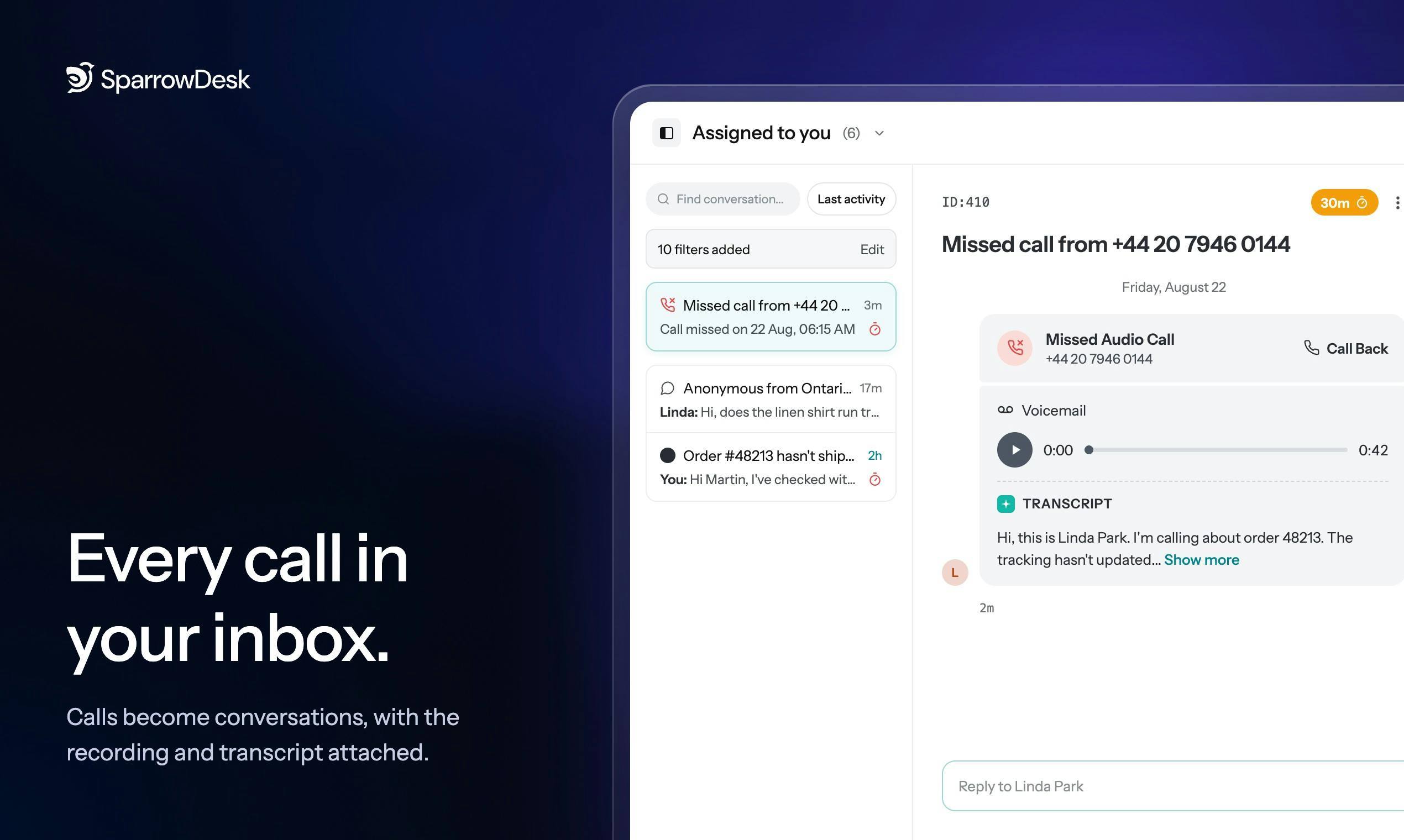
SparrowDesk launches Phone Calls on Product Hunt, bringing phone support into the same inbox as email, chat, and WhatsApp, with numbers in 51 countries, visual IVR, AI agent routing, call recording and transcription into tickets, and a prepaid Voice Wallet with usage-based pricing that avoids per-seat fees.
Granular.Build: Putting AI Agents Inside a Visual Workspace
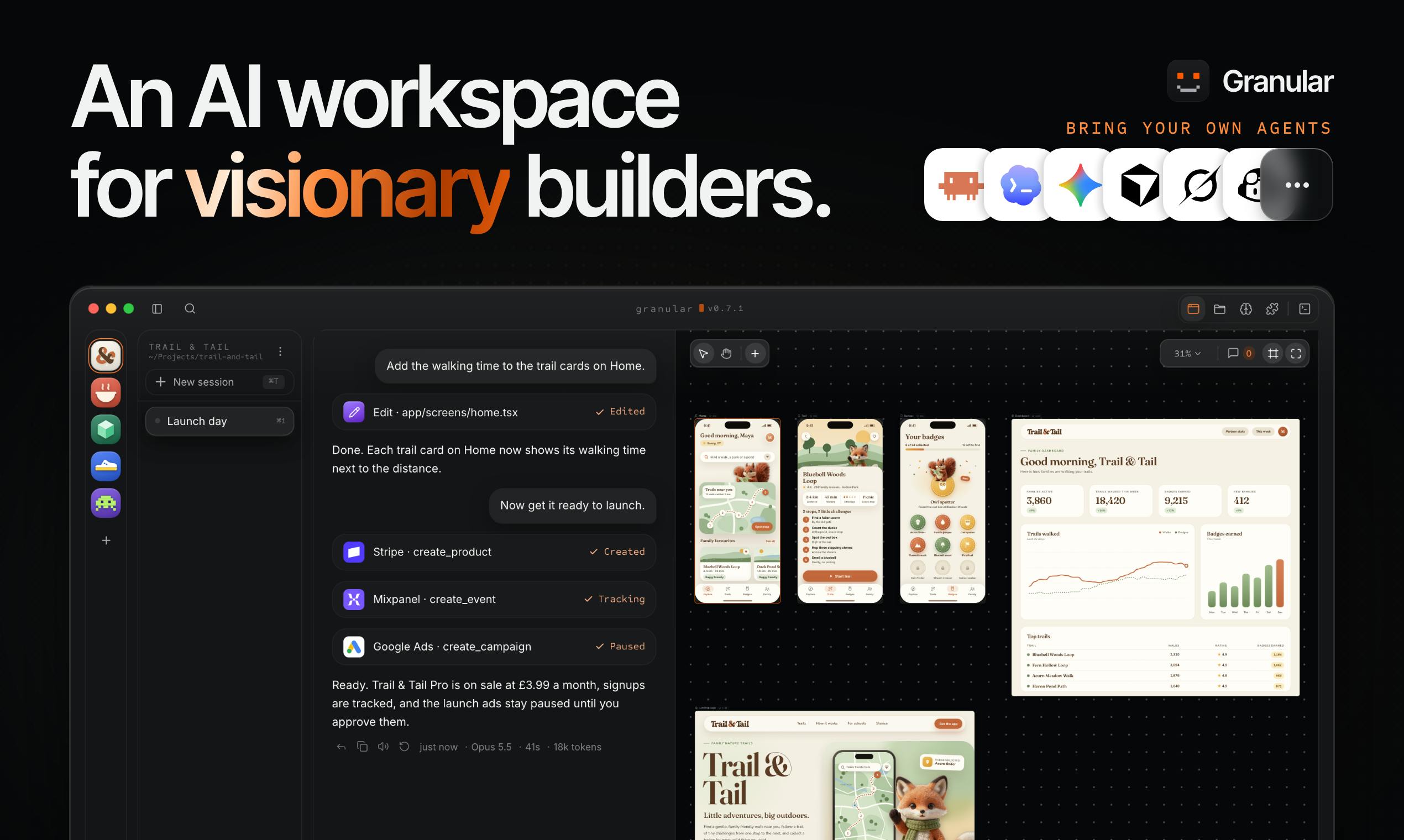
Granular.Build is a visual AI workspace on Product Hunt where boss agents orchestrate specialized agents in parallel, with centralized models, files, and context.