Kushner's Phone Hacked: Encrypted Communications and Million-Dollar Deals Exposed

Kushner's phone hacked; leaked content allegedly involves secret talks and million-dollar deals, but key details remain missing.
The article examines the hacking of Jared Kushner's phone, noting the original material only provided a title and Hacker News engagement data, without attack method, leak scope, or transaction details. It analyzes three angles: political figures' phones carry both policy and business info, exposing an entire relationship network; E2EE protects only the transmission channel, not the endpoint, making endpoint isolation critical; leaks may mix selective narratives and forgeries, so verifiable metadata like file hashes and timestamps should be used over screenshots. It concludes with protection advice and notes that attack path, authenticity, and impact scope remain uncertain.
Kushner's Phone Hacked: Encrypted Communications and Million-Dollar Deals Exposed
According to a trending topic on Hacker News, Jared Kushner's phone was hacked, and the leaked contents are said to involve secret negotiations and transaction records worth millions of dollars. The discussion quickly gained 127 points and 40 comments, but the original material provided only a title and engagement data—no details on the attack method, the scope of the leak, or the specific transactions. The following, based on the publicly available information framework, outlines the key questions that remain unanswered about this incident.
Event Overview: Knowns and Unknowns
The confirmed information is quite limited: a phone belonging to Kushner was compromised, and the attackers claim to possess evidence of "secret negotiations" and "million-dollar transactions." Discussion on Hacker News centers on two directions—first, whether the leaked content is authentic or has been tampered with; second, why a phone, serving as the communication terminal of a high-value political figure, became a single point of breach.
As a side note, the original material does not provide the number, format, or time span of the leaked files, nor does it identify the hackers or their motives. Any speculation about "who did it" or "how they did it" can only remain hypothetical in the absence of a technical forensic report.
Why Phones Are a Vulnerability for Political Figures
Political figures and business executives using personal phones to handle sensitive matters has long been a known concern in the security community. A phone simultaneously carries encrypted communications, emails, calendars, payment credentials, and location data. Once compromised, the attacker gains not a single piece of information, but a map of a relationship network.
Kushner's identity spans both politics and business—he served as a senior advisor in the White House while maintaining close ties to the family real estate business and external investments. This dual identity means that the contents of a single phone could touch on both policy negotiations and commercial transactions. The debate in the Hacker News comments also revolves around this point: some argue this is "the exposure risk inevitably faced by high-value targets," while others question why stricter endpoint isolation measures were not adopted.
Encrypted Communications Are No Panacea
Another focus of the discussion is the effectiveness of encrypted communications. End-to-end encryption protects the transmission process, but it cannot defend against an endpoint being compromised—if an attacker gains control of the device through phishing, a zero-click exploit, or physical access, encrypted messages remain readable after decryption.
This means "using encryption software" is not the same as "being secure." For highly sensitive individuals, endpoint security, device isolation, the principle of least privilege, and regular forensic audits are often more critical than which encrypted app is chosen. The juxtaposition of "secret negotiations" and "million-dollar transactions" in the leak title precisely indicates that the attackers targeted the content itself, not the communication channel.
Zero-click exploit refers to a vulnerability exploitation method in which an attacker can remotely compromise a device without any interaction from the victim (no clicking links, no opening files). Such attacks typically target the message parsing components of instant messaging apps—for example, when a specially crafted image, video, or system message is automatically processed on the receiving end, it triggers memory corruption and thereby executes arbitrary code. Historically, Pegasus spyware has repeatedly used zero-click vulnerabilities in iMessage to compromise the phones of journalists and dignitaries. For high-value targets, a zero-click attack means that even if the user never clicks a suspicious link, the device can still be controlled—which is why sandbox isolation at the endpoint level and timely system patches are crucial.
End-to-End Encryption (E2EE) refers to messages being encrypted at the sender and decrypted only at the receiver, with intermediate servers forwarding only ciphertext and unable to read the content. It protects the "transmission channel," not the "endpoint." Once a device is compromised, an attacker can read the plaintext after decryption but before display, or directly steal the local key store. Therefore, the threat model of E2EE does not cover scenarios such as device compromise, operating system backdoors, or screen recording. This is why the security community repeatedly emphasizes that "encryption is a necessary but not sufficient condition"—endpoint security and key management are also part of the defense line.
Information Authenticity and Public Opinion Risks
Before official forensic conclusions are available, caution should be exercised regarding the leaked content. In many historical "phone hacked" incidents, attackers have mixed genuine files with forged material to amplify public impact. Among the 40 comments on Hacker News, some users have already warned of the narrative manipulation risk of "selective leaks"—that is, releasing some genuine information to lend credibility to false content.
For the media and readers, verifiable metadata (file hashes, timestamps, device logs) is more valuable than screenshots and retellings. In the absence of such evidence in the original material, reporting should clearly distinguish between "hacker claims" and "confirmed facts."
File hash is a fixed-length fingerprint computed from a file's content using a hash algorithm (such as SHA-256); any change to the content will drastically alter the hash value. In leak incidents, publishing a file's hash allows third parties to independently verify its integrity, confirm whether multiple copies are identical, and track whether the file has been tampered with. Coupled with timestamps and device logs, they together form a verifiable metadata chain. In contrast, screenshots are easily cropped, spliced, or forged and cannot serve as independent evidence. When reporting on unverified leaks, distinguishing "verifiable metadata" from "hacker claims" is a basic forensic literacy for the media.
Lessons for Ordinary Users
This incident also has relevance for non-high-value targets: phones are the terminals where personal data is most concentrated, and backups, two-factor authentication, system updates, and device encryption are the lowest-cost lines of defense. For those handling sensitive matters, it is recommended to physically separate highly sensitive communications from daily social devices and to regularly review the list of logged-in devices on accounts.
The full picture of the incident still awaits further disclosure by official or technical teams. Until the details are clear, the core questions surrounding the Kushner phone hack—the attack path, the authenticity of the leak, and the scope of impact—remain without definitive answers.
One-line Summary
Kushner's phone was hacked, and the leaked content allegedly involves secret negotiations and million-dollar deals, but key details remain missing.
Paragraph Summary
The article examines the hacking of Jared Kushner's phone, noting that the original material provided only a title and Hacker News engagement data, without disclosing the attack method, scope of the leak, or transaction details. The author analyzes from three perspectives: political figures' phones carry both policy and business information, and once compromised, they expose an entire relationship network; end-to-end encryption protects only the transmission channel and cannot defend against endpoint compromise, making endpoint isolation and least privilege more critical; leaked content may involve selective narratives and mixed forgeries, so judgments should be based on verifiable metadata such as file hashes and timestamps rather than screenshots. The article concludes with protection advice for ordinary users and emphasizes that the attack path, authenticity of the leak, and scope of impact still lack definitive answers.
Related articles
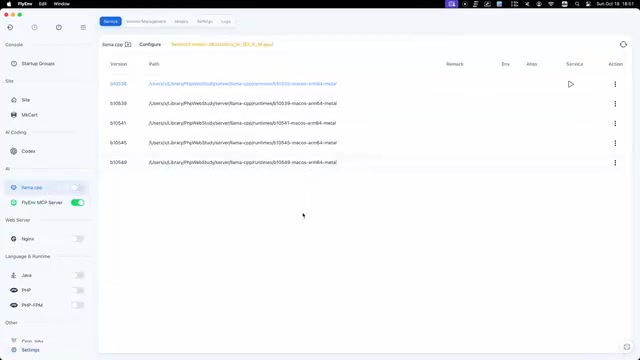
FlyEnv Plugin Review: Visually Running llama.cpp and Managing GGUF Models
FlyEnv launches the official llama.cpp plugin with side-by-side Metal runtime management, public GGUF repository indexing with file type labels, and visual configuration of context, threads, and GPU layers—saving templates and speculative decoding with each model for one-click local LLM inference.
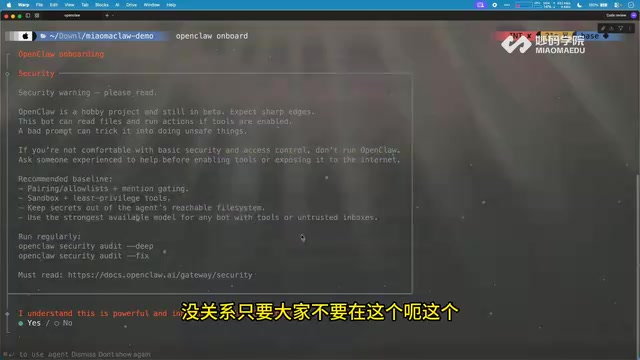
How Can Frontend Developers Advance into AI Agent Development? Deconstructing System-Level Agent Architecture from OpenClaw
Starting from the OpenClaw demo in a Bilibili open class, this article breaks down the three-layer architecture and universal formula of system-level AI agents, and analyzes the path for frontend developers to enter agent development based on TypeScript, including plugin-based design and security/memory layer challenges, with an interview answer framework.
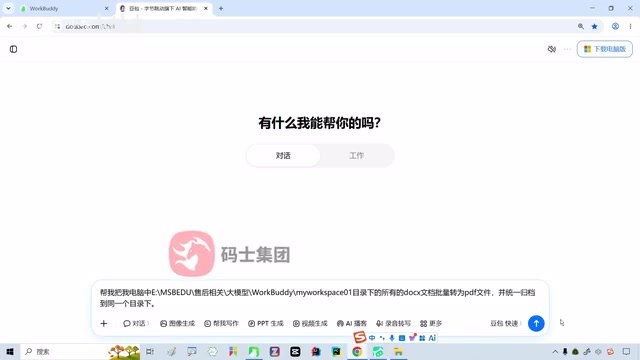
WorkBuddy in Action: How AI Agents Automate Batch File Conversion and Archiving
Bilibili creator Teacher Shanyao tests WorkBuddy vs. Doubao on batch file conversion, showing how AI Agents move from "giving solutions" to "direct execution," with a full workflow and credit cost reference.