KyleXian's Improvised Piano Stream: A Live Experiment in Song Requests and Differential Pricing

KyleXian turns a casual piano stream into a content business using differential pricing and follow incentives.
Pianist KyleXian's improvised livestream centers on viewer song requests, spanning anime, J-pop, and classic Mandopop — showcasing an improviser's ability to rapidly internalize melodies and harmonize on the fly. What stands out most is the operational design: song requests are split into a Super Chat paid fast lane and a free random draw, effectively a form of price discrimination that boosts monetization while keeping free viewers engaged. A Special Follow incentive ties the follow action to a higher request success rate, driving user retention and funneling traffic to long-form content. The stream is a strong example of how music performance and business logic can be tightly integrated.
A Field Observation of an Improvised Piano Livestream
Pianist KyleXian's (K大) improvised piano livestream is fundamentally a live performance built around viewer song requests. Audience members submit requests via live chat, and the host improvises on the spot — pausing to listen to an unfamiliar chorus before playing it. The stream covered a wide range of genres: anime and J-pop titles like the OPs from Bocchi the Rock! and My Deer Friend Nokotan, Fujii Kaze's Hana, Eureka Seven's Days, and classic Mandopop like Teresa Teng's I Only Care About You.
This "take all comers, improvise anything" format demands that the performer rapidly internalize a melody and construct harmonies on the fly. Throughout the stream, KyleXian repeatedly noted that for songs he hadn't heard or wasn't very familiar with, he'd listen to a section first before playing — a hallmark workflow for improvisers: establish the melodic skeleton, then fill in harmony and texture in real time.

Super Chat and the Economics of Song Requests
The most interesting aspect of this stream isn't actually the music — it's the song request system the host designed. At one point, a viewer complained: "If you had to pay to request a song, you'd actually be able to get through them all." KyleXian's response had a distinctly economic flavor: viewers can purchase a Super Chat to "skip the queue" and have their request prioritized, while regular requests go into a random draw.
He framed this explicitly as differential pricing: paying viewers get priority access via Super Chat, while non-paying viewers enter the random pool. This is essentially price discrimination in action within a livestream tipping context — the same "song request" service is tiered by willingness to pay, maximizing revenue while preserving free-user engagement.

For content creators, this is a genuinely useful operational model. When demand (song requests) far exceeds supply (performance time), using a paid fast lane to sort priorities improves monetization efficiency while keeping the community active. Throughout the stream, Super Chat requests repeatedly interrupted the random request queue — proof that the system actually works as intended.
What is price discrimination? Price discrimination is a classic economics concept in which a seller charges different prices to different buyers for the same product or service in order to maximize total revenue. It's typically broken into three degrees: first-degree charges each consumer their maximum willingness to pay; second-degree uses volume-based tiered pricing; third-degree segments consumers into groups and prices accordingly. KyleXian's request system resembles third-degree price discrimination — paying users (Super Chat) and free users receive different priority tiers of the same service, allowing the host to capture more value from high-willingness-to-pay viewers while maintaining community scale through free participation. This structure is ubiquitous in internet products: priority customer service for members, in-game speed boosts, and so on — all leveraging differences in consumer willingness to pay for market segmentation.
Medleys and the Craft of Improvised Transitions
One highlight of the stream was how KyleXian handled transitions between songs. Rather than playing each request in isolation, he would naturally segue between stylistically adjacent pieces — for example, weaving Yuki no Hana into Fujii Kaze's Hana, chaining Dystopia into Parabellum and Relight, then transitioning back after a Super Chat queue-jump.

These kinds of medleys require the performer to have a holistic grasp of each piece's key, rhythm, and emotional register — and to find natural bridges between melodies. When faced with a tricky recall challenge ("ten songs that all share one melody"), KyleXian candidly admitted: "My first instinct is that suspended melody, but I can't remember how the unison part goes" — and looked it up on the spot. That honest interplay of improvisation and memory is precisely what makes live streaming compelling.
A note on keys and texture in improvised medleys Improvised medleys depend heavily on rapid key recognition and modulation. If two pieces share the same key or are relative keys (e.g., C major and A minor), the transition requires almost no modulation at all; if they're further apart, the performer needs to execute a "modulation bridge" within a few chords so listeners don't feel a jarring break. "Texture" refers to the layered sound produced by melody, accompaniment patterns, and harmonic voices together. Common improvised textures include Alberti bass, block chords, and broken chords. Keeping texture consistent across a medley is the key to making disparate pieces sound like a unified whole.
The Follow Mechanism and Community Retention
Near the end of the stream, KyleXian offered a clear call to action: he encouraged viewers to hit "Special Follow," explaining that doing so triggers a phone notification the moment he goes live — meaning they can claim a spot at the very beginning of the stream when "the odds of getting your request picked are much higher than they are right now."
This is a textbook user retention and activation design: tying the act of following directly to a tangible benefit (a higher song request success rate), giving viewers a concrete reason to do it. He also used the moment to promote his latest long-form content — a travel vlog titled "99 Golden Wind Italy Trip: Sacred Ground Pilgrimage" — effectively funneling livestream traffic to his video content.

Taken as a whole, the music is the surface layer; the operations are the underlying logic. By combining Super Chat differential pricing with Special Follow incentives, KyleXian turned what looks like a casual improvised piano stream into a content product with clear monetization logic and a defined user growth path.
Takeaways
This improvised piano livestream offers two layers of value for observers: first, how an improvising performer rapidly constructs harmonic frameworks on unfamiliar material and stitches songs together in medley form; and second, how a content creator uses differential pricing and follow incentives to convert limited performance time into a sustainable business model. For anyone interested in livestream operations and content monetization, KyleXian's playbook is worth studying.
Related articles

M&M's Spent Millions Replacing Artificial Blue Dye — Why Is It So Hard?
Mars spent millions trying to replace artificial blue dye in M&M's with spirulina, but thick material clogs pipes and residue risks mold, forcing a full production-line rebuild. Here's the engineering behind the reformulation.
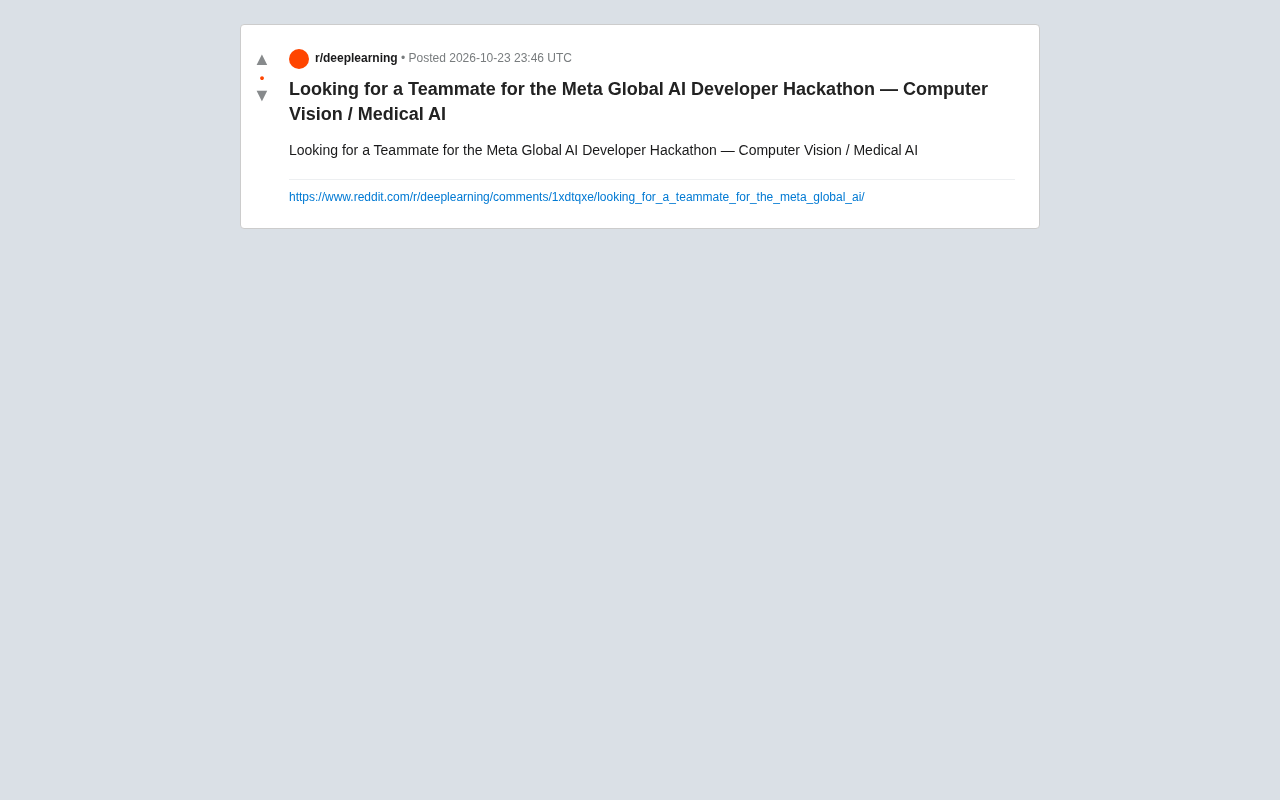
Teammate Wanted for Meta Global AI Developer Hackathon: Computer Vision & Medical AI
A Reddit developer seeks teammates for the Meta Global AI Developer Hackathon, focusing on computer vision and medical AI. This article analyzes the track logic, skills-complementarity needs, and topic selection strategy behind this teaming signal.
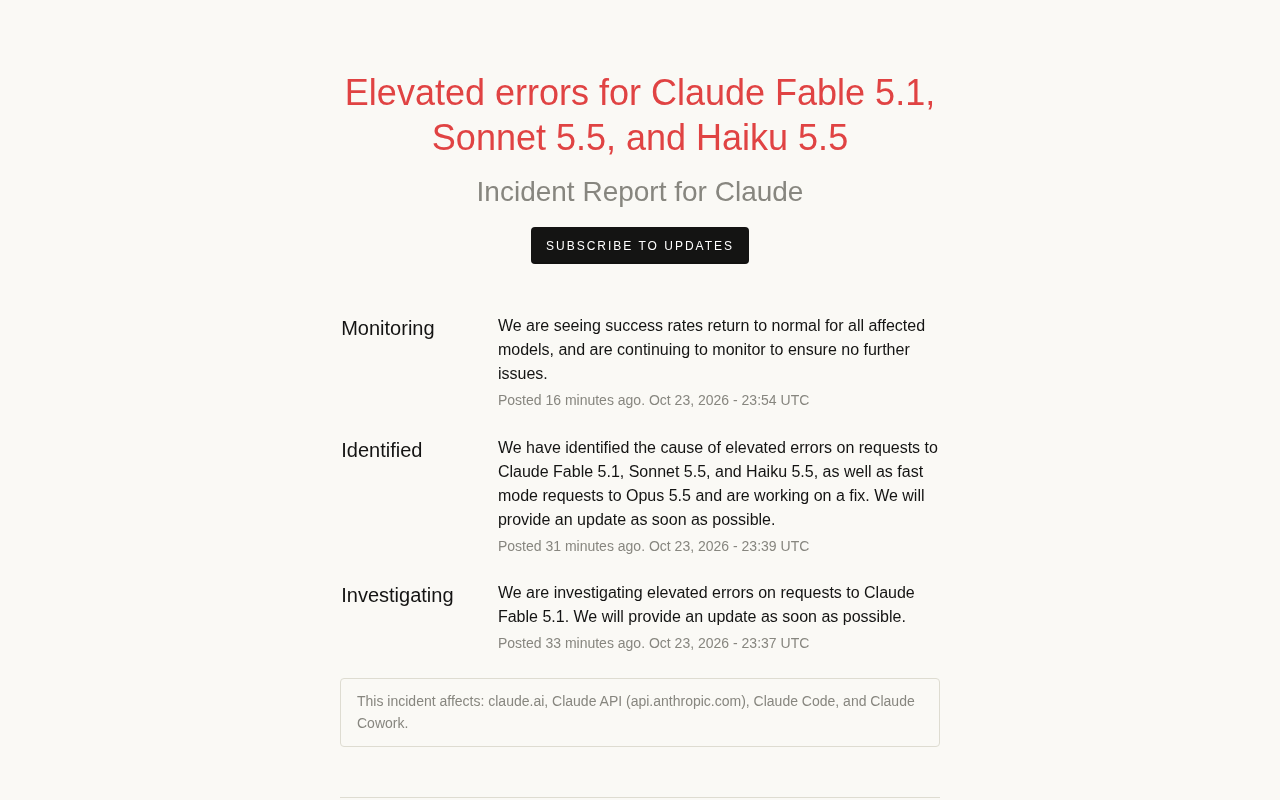
Multiple Claude Models Hit by Errors: A Postmortem of Fable 5.1, Sonnet 5.5, and Haiku 5.5
Claude Fable 5.1, Sonnet 5.5, Haiku 5.5, and Opus 5.5 fast mode saw elevated errors; Anthropic identified and resolved the issue in 17 minutes. This postmortem covers the timeline, the technical reasons for the multi-model cascading failure, and practical lessons for retry and degradation strategies.