Lakebase Branching: Isolated Database Environments for Safe AI Coding Agent Experimentation

Databricks Lakebase Branching gives AI coding agents isolated database branches for safe experimentation without touching production.
Databricks' Lakebase Branching extends Git-style branching to the database layer, specifically targeting the risk that AI coding agents may corrupt production environments during automated database operations. The feature captures both schema and data simultaneously, creating isolated, production-faithful temporary replicas for agents to experiment in freely. Combined with the Databricks CLI, an AGENTS.md behavioral specification file, and a diff mechanism against the parent branch, changes must pass human review before being promoted to production via a CI/CD pipeline. The core value lies in decoupling agent freedom from production safety at the infrastructure level — and because it supports real data snapshots, it's equally useful for testing data migrations and validating complex queries outside of AI agent contexts.
When Coding Agents Need a Safe Sandbox
As AI coding agents increasingly work their way into everyday development workflows, a hard-to-ignore risk emerges: when these agents automatically modify database schemas or data, they can inadvertently affect production environments. Lakebase Branching, introduced by Databricks, directly addresses this pain point by providing a set of isolated, short-lived database environment solutions.
The core idea is straightforward — give agents a space to experiment freely without ever touching real production data. This mirrors the Git branching philosophy in software engineering, except here the branching extends beyond code to encompass the database's schema and data itself.
What Lakebase Branching Actually Does
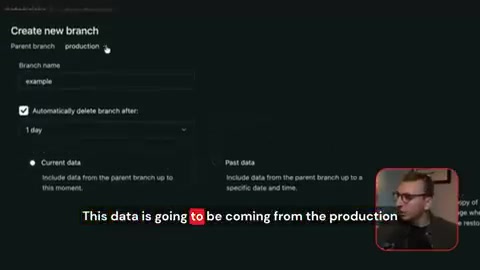
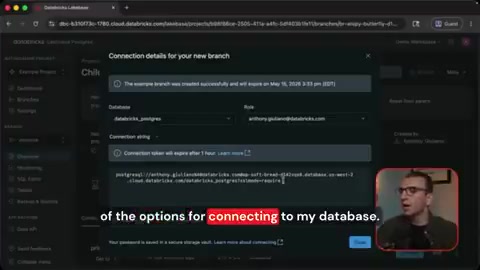
According to Databricks' official documentation, Lakebase Branching creates isolated, temporary database environments that simultaneously capture both the database schema and data. This means agents aren't handed an empty test shell — they get a complete, production-faithful replica.
This distinction matters enormously. Traditional test environments often suffer from missing data or stale schemas, causing test results to diverge from real-world behavior. Branching captures an authentic data snapshot while maintaining full isolation, making agent experiments far more meaningful — with zero impact on live operations.
The short-lived design deserves attention as well. Branch environments are disposable once their purpose is served, eliminating the resource waste and data drift that come with maintaining long-running test databases. This ephemeral pattern fits naturally with the high-frequency, rapid-iteration nature of AI agents.
Building an Agentic Branching Workflow
Databricks has demonstrated a complete agentic branching workflow involving several key components:
Databricks CLI and AGENTS.md
The workflow operates through the Databricks CLI, paired with an AGENTS.md file that defines the agent's behavioral guidelines. AGENTS.md has become a conventional agent instruction format that provides coding agents with explicit context and operational boundaries — letting them know exactly where they can act freely.
AGENTS.md is a convention file format that emerged alongside the rise of AI coding agent tools, similar to a repository's CONTRIBUTING.md or .cursorrules. It communicates project structure, available tools, operational constraints, and expected behavioral norms to the agent. Different agent frameworks (such as OpenAI Codex, Devin, GitHub Copilot Workspace, etc.) read these files in slightly different ways, but the core purpose is the same: providing system-prompt-level context to prevent the agent from making dangerous assumptions in the absence of information. In database operation scenarios, AGENTS.md can explicitly specify which tables may be modified, which operations require human confirmation, and branch naming conventions — adding a soft constraint layer at the prompt level that complements the infrastructure-level isolation of branching.
Diffing Against the Parent Branch
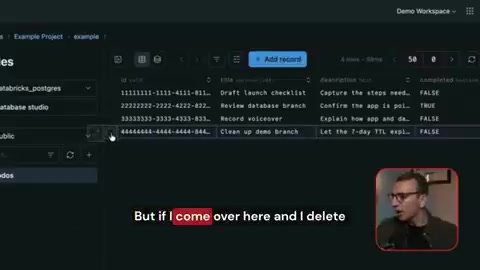
Once an agent completes its modifications within a branch, changes can be compared against the parent branch. This step mirrors the diff stage in a code review, giving developers a clear picture of exactly which schemas and data the agent changed — enabling an informed approve-or-reject decision.
Promoting Approved Changes Through CI/CD
Once changes are approved, they can be promoted to higher-level environments or production through a CI/CD pipeline. This design brings AI agent output into a standardized software delivery pipeline, rather than allowing it to bypass existing quality gates.
Why This Approach Matters
The value of this workflow lies in how it decouples two seemingly contradictory requirements: the freedom AI agents need to operate, and the safety production environments demand. Agents can experiment boldly in isolated branches, while any change must pass through diff review and CI/CD before it lands anywhere that matters.
For teams exploring how to bring AI agents into data engineering and database operations, this offers a referenceable paradigm: use infrastructure-level isolation mechanisms to constrain high-uncertainty automation tools. Rather than hoping agents never make mistakes, architect the system so that mistakes — when they happen — can't cause real damage.
It's also worth noting that the simultaneous capture of both schema and data makes these branches useful well beyond the AI agent use case — including testing data migrations, validating complex queries, and reproducing production issues. The applicability extends far beyond any single scenario.
Data drift is a chronic problem with traditional long-running test environments: a test database's structure and data gradually diverge from production over time, meaning changes that pass in the test environment can still cause surprises when deployed. Lakebase Branching's ephemeral, short-lived design eliminates this problem at the root — every branch starts from a production snapshot, guaranteeing a fresh test baseline. This is especially critical for AI agents: the quality of an agent's decisions is highly dependent on the authenticity of the data it encounters. A stale test database can cause agent-generated schema migration scripts or query optimization proposals to fail completely against the actual data distribution in production. Designing for both isolation and data freshness simultaneously is what distinguishes this approach from conventional sandbox mechanisms.
Conclusion
Lakebase Branching brings Git-style branching thinking into the database world and aligns it with the practical needs of AI coding agents. Through isolated environments, complete snapshots of schema and data, and a workflow loop built on CLI + AGENTS.md + CI/CD, it attempts to answer an increasingly urgent question: how do you let AI agents act freely while holding the line on production data?
For practitioners following AI-driven development and the evolution of data platforms, this is a feature direction worth getting hands-on with.
Related articles

Random Pruning of the DPO Computation Graph: 1.4x Training Speedup and Lower Peak Memory
DPO training too slow and memory-hungry? This paper proposes a random pruning framework for the DPO computation graph, sampling independently across position, sequence, and branch dimensions; branch pruning achieves a 1.426x step-time speedup and cuts training time by about 30%, with in-depth attribution of memory and time gains.

Why Does JEPA Underperform MLM in Longitudinal EHR Representation Learning?
New study compares JEPA and MLM for longitudinal EHR representation learning on MIMIC-IV: three JEPA variants train stably without collapse but underperform MLM; target size, not heterogeneity, drives prediction error.

Transfer Learning + Visible Light Communication: A New Approach to Energy-Efficient Indoor Positioning
A study proposes a transfer learning-based visible light communication indoor positioning method, achieving 47% accuracy improvement on the BOSCH factory dataset, 67.5% model efficiency under high noise, and introducing the ME composite metric for energy-efficient positioning in energy-constrained industrial IoT scenarios.