LangChain from Scratch: A Deep Dive into a Hands-On RAG and Agent Tutorial

A half-year-polished zero-foundation LangChain tutorial that connects scattered knowledge points through hands-on RAG and Agent practice.
The article discusses a LangChain tutorial that a Bilibili creator spent half a year polishing, pointing out that scattered knowledge points and a lack of hands-on end-to-end practice are the main reasons learners give up. The tutorial targets zero-foundation learners and covers basic LLM integration, the RAG pipeline, and Agent tool calling, emphasizing a scenario-driven approach. It advises focusing on document splitting, vector store selection, and retrieval debugging for RAG, and understanding the decision loop before expanding to multi-tool collaboration for Agents. It also urges a rational view of "get a job as soon as you finish" claims and recommends using the tutorial as a project map, extending features yourself after each module to build explainable project experience.
Why Beginners Learning LangChain Keep Cycling Between "Getting Started" and "Giving Up"
Searching for LangChain tutorials online often leads to a dilemma: scattered knowledge points, mixed versions, and countless repetitions of basic API calls—yet you've never actually built a complete project. According to one Bilibili creator's observations in a video, many people finish learning LangChain's model invocation and tool integration but still have no idea how to approach real development. The core reason is the lack of hands-on, end-to-end practice.
This creator spent half a year polishing a LangChain tutorial that goes from beginner to hands-on实战 (practical combat). After repeated revisions and adjustments, the goal was to start from a complete novice's perspective and focus on LangChain's two most core development scenarios: RAG and Agent development. Whether you're a university student, a career changer, or someone looking to earn income on the side, this content's direction is worth considering.
What This Tutorial Actually Teaches: From Basic API Calls to a Deployable RAG Agent
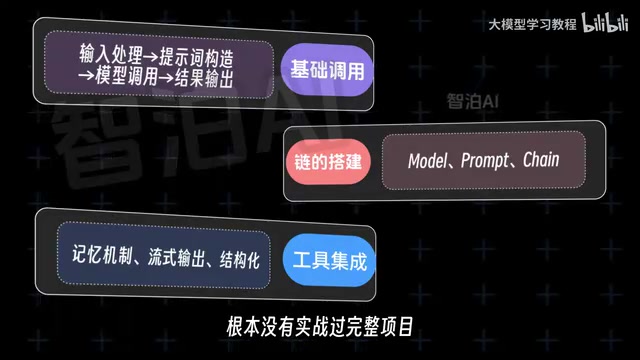
The tutorial's positioning is clear: it's not satisfied with just explaining how to call ChatOpenAI or how to use PromptTemplate. Instead, it aims to string these scattered knowledge points into a project line that actually runs end to end. According to the creator, the content covers basic LLM integration, building the RAG retrieval-augmented generation pipeline, and the complete workflow of Agent tool calling.
For beginners, this "scenario-driven" learning path is more effective than going through the API documentation in order. That's because RAG and Agent are precisely the two directions where LangChain lands most in real business—the former solves the problems of outdated knowledge and hallucinations in large models, while the latter gives models the ability to call external tools.
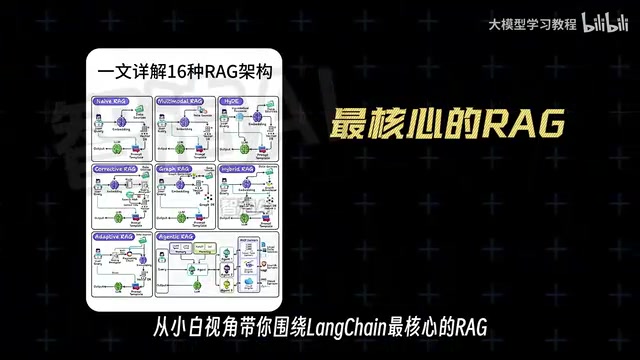
RAG in Practice: How Should You Actually Learn Retrieval-Augmented Generation?
RAG (Retrieval-Augmented Generation) is one of the tutorial's key focuses. Many tutorials stop at "document splitting → vectorization → retrieval → prompt assembly," but in real projects, every step—splitting strategy, vector store selection, retrieval quality evaluation—affects the final result.
According to the creator, the tutorial expands around RAG development scenarios and emphasizes building a runnable pipeline from scratch rather than staying at the conceptual level. For zero-foundation learners, it's recommended to reproduce each step hands-on while learning, especially document loading and retrieval result debugging—these two areas best expose blind spots in understanding LangChain's abstraction layers.
Vector store selection is an easily underestimated part of the RAG pipeline. Common options include FAISS, Chroma, Milvus, and Pinecone: FAISS leans toward being a local high-performance retrieval library, suitable for prototyping; Chroma is lightweight and easy to use, often integrated with LangChain by default; Milvus and Pinecone target production environments, supporting distributed deployment and persistence. When choosing, consider data scale, whether persistence is needed, deployment cost, and whether metadata filtering is supported. For zero-foundation learners, getting the pipeline running with Chroma first and then migrating to a production-grade vector store is a smoother path.
Retrieval quality evaluation determines whether RAG is actually usable. Common metrics in practice include Recall@K, MRR (Mean Reciprocal Rank), and hit rate. The evaluation method typically involves constructing a test set of "question–gold answer snippet" pairs and observing whether the retriever can rank the correct snippet within the top K results. In the LangChain ecosystem, tools like Ragas can be used for end-to-end evaluation. Many beginners only focus on whether the final answer "looks right" while ignoring quantitative evaluation of the retrieval step, which makes problem diagnosis difficult.
Agent Development: From Tool Integration to a Complete Deployable Project
Agent is another core module. LangChain's Agent mechanism involves tool definition, executor scheduling, and output parsing, and beginners often get stuck on tool descriptions and call chains. The tutorial claims to provide guided practice around Agent development scenarios, with the goal of building deployable RAG Agents-related projects.
From a learning strategy perspective, it's recommended to first understand the Agent's decision loop, then hands-on integrate one or two simple tools (such as search and calculation), and finally combine them into a complete multi-tool collaborative project. According to the creator, this content was refined over half a year, and the purpose of repeated adjustments was to let people with zero foundation keep up with the pace.
The Agent's decision loop can usually be summarized as the ReAct paradigm: the model first outputs a "Thought," then decides which "Action" to call and with what parameters. The executor takes the tool's return value and feeds it back to the model as an "Observation," looping until the model produces a final answer. Understanding this loop is a prerequisite for reading LangChain's Agent executor (AgentExecutor) source code.
Tool definition hinges on the description text. LangChain uses a tool's name, description, and parameter schema to let the model decide when to call it; vague descriptions directly lead to incorrect calls or missed calls. In practice, tool descriptions should be written as natural-language explanations of "when to use this and what the input format is," and each tool's responsibility should be as single-purpose as possible.
Suggested Learning Path for Beginners and Realistic Expectations
The target audience for this tutorial is explicitly defined as university students, career changers, and side-project creators, with the barrier set at zero foundation. However, claims like "get a job as soon as you finish" should be viewed rationally—LangChain is only one link in the toolchain. What truly determines employability is your understanding of LLM application architecture and the depth of your project experience.
A more pragmatic approach: treat the tutorial as a project-driven learning map, and each time you finish a module, extend it with a small feature yourself—for example, adding multi-turn conversation memory to RAG, or adding a custom tool to an Agent. That way, after completing a tutorial, you'll have at least a few projects whose design thinking you can explain clearly, rather than just having run someone else's code.
According to the Bilibili creator's sharing, the starting point of this tutorial is to solve the pain points of "scattered knowledge points and lack of hands-on practice." For developers currently筛选 (screening) learning resources, this is an option worth including in comparisons.
One-line Summary
A half-year-polished zero-foundation LangChain tutorial that connects scattered knowledge points through hands-on RAG and Agent practice.
Paragraph Summary
The article centers on a LangChain tutorial that a Bilibili creator spent half a year polishing. It points out that scattered knowledge points, mixed versions, and a lack of hands-on end-to-end practice in online tutorials are the main reasons learners cycle between "getting started" and "giving up." Positioned from zero foundation to hands-on practice, the tutorial covers three core areas: basic LLM integration, the RAG retrieval-augmented generation pipeline, and Agent tool calling, emphasizing a scenario-driven approach rather than reading through API documentation. The article suggests that when learning RAG, focus on document splitting, vector store selection, and retrieval debugging, and when learning Agent, first understand the decision loop and then expand from a single tool to multi-tool collaboration. It also reminds readers to view "get a job as soon as you finish" marketing claims rationally, and advocates treating the tutorial as a project map—extending features yourself after each module to accumulate project experience whose design thinking you can explain clearly.
Related articles

Kimi K3.1 Pro Open-Source Model Matches GPT-6 Astra; China Releases AI Employment Policy
This week in AI: Moonshot open-sources Kimi K3.1 Pro with nearly 3T parameters, beating GPT-6 Astra on coding tests; Anthropic launches proactive agent Claude Duet; China's State Council issues AI and employment policy with 6 areas and 18 tasks.

The Most Comprehensive Agent Development Tutorial on Bilibili: From Zero to Expert in Seven Days
A Bilibili creator releases a 748-episode zero-foundation AI Agent tutorial in three parts: cognition, advanced, and hands-on, covering ReAct, LangChain, AutoGen, multi-Agent collaboration, and enterprise projects, with source code and a learning roadmap.
Deploy OpenClaw Locally on Windows and Connect It to Feishu: A Beginner's Guide to Building an AI Agent
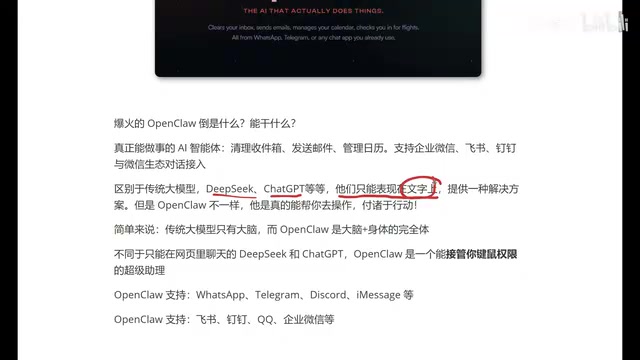
OpenClaw is an AI agent that can take over keyboard and mouse permissions. This article explains the complete approach to deploying OpenClaw locally on Windows and connecting it to Feishu, analyzing its differences from traditional large models, core capabilities, and deployment risks—beginners can build a local AI project too.