LangChain Guardrails Explained: Building Safe and Controllable AI Agents

A comprehensive guide to LangChain's Guardrails mechanism for building secure, production-grade AI Agents.
This article explains LangChain's Guardrails safety mechanism in detail, covering the layered ecosystem architecture (LangGraph → LangChain → DeepAgents), how the middleware mechanism enables full-pipeline protection through hook functions, and the two types of guardrails — deterministic (regex-based) and model-driven — that together defend against sensitive data leaks, prompt injection attacks, and compliance risks in production AI Agent systems.
Why You Need to Understand LangChain's Role
For developers new to large model development, the first thing to clarify is a core concept: a large language model is essentially a capability carrier. Trained by algorithm teams, its greatest value lies in powerful reasoning ability — give it a pile of disorganized information, and it can organize it into structured, usable results; converse with it, and it can understand your true intent.
The core technical foundation of Large Language Models (LLMs) is the Transformer architecture, proposed by Google in the 2017 paper Attention Is All You Need. Through pre-training on massive text datasets and fine-tuning with alignment techniques such as Reinforcement Learning from Human Feedback (RLHF), LLMs acquire powerful capabilities in language understanding, logical reasoning, and text generation. The term "capability carrier" means that the model itself doesn't directly solve any specific business problem — rather, it provides a general-purpose intelligent foundation that can be applied to vastly different scenarios such as customer service conversations, code generation, data analysis, and content moderation. The developer's core task is to channel this general capability toward specific business use cases through techniques like Prompt Engineering, Retrieval-Augmented Generation (RAG), and Tool Use.
So what is the core job of a large model developer? In one sentence: How to make the model's capabilities better serve your business. This is the fundamental question behind all LLM application development today.
But a problem quickly follows. When developers try to integrate LLM capabilities into their business, they often fall into a common trap: spending excessive effort on low-level code — how to communicate with the model more efficiently, how to stabilize inputs and outputs, how to handle fragmented knowledge, how to avoid runtime bottlenecks... The result is drifting away from the original goal of "solving business pain points."
The LangChain framework was created precisely to resolve this tension. It encapsulates the tedious low-level work of communicating with models, managing knowledge, and controlling conversations, allowing developers to focus on the business itself.
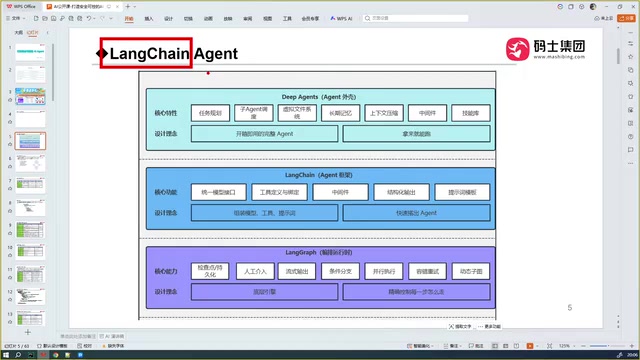
LangChain's Layered Ecosystem Architecture
To understand the LangChain ecosystem, you need to start with its layered structure. The entire ecosystem consists of three layers. Moving from bottom to top, the level of encapsulation increases while flexibility decreases.
Bottom Layer: LangGraph
LangGraph is the foundational implementation of the entire ecosystem, using a "graph" approach to build Agent logic. Developers can work directly with LangGraph to build applications — the benefit is greater flexibility and control over business logic and implementation details, but the trade-off is more code and higher development costs.
The "graph" structure adopted by LangGraph originates from directed graph theory in computer science. In LangGraph, each Node represents an execution step — such as calling an LLM, executing a tool, or making a conditional decision — while Edges define the flow relationships between nodes, including normal edges and conditional edges. This design means that an Agent's execution flow is no longer limited to linear chain-of-calls but can implement loops, branches, parallelism, and other complex control flows. LangGraph also includes a built-in state management mechanism that passes and persists data between nodes through State objects, supporting checkpoint resumption and Human-in-the-Loop interactions. This architecture is particularly suited for building complex Agent systems that require multi-step reasoning and dynamic decision-making, but it also means developers must design the graph topology and state transition logic themselves.
Middle Layer: LangChain
LangChain is a framework built on top of LangGraph — its underlying implementation actually uses LangGraph's graph structure. It strikes a balance between development efficiency and flexibility, enabling rapid Agent and application development while offering the most comprehensive LLM support among all Agent frameworks, along with the strongest ecosystem extensibility.
Top Layer: DeepAgents
The top-level DeepAgents is an implementation of the Harness architecture, also built on LangGraph and LangChain. It has the highest level of encapsulation and is the easiest to use, but comparatively lacks some low-level capabilities — such as direct file system operations or SQL calls — making it less flexible than lower-level frameworks for business processing.
The Harness architecture is a highly encapsulated Agent runtime framework philosophy. Its core idea is to abstract common capabilities like Agent scheduling, tool orchestration, memory management, and security protection into a standardized runtime environment, where developers only need to focus on declarative configuration of business logic rather than diving into low-level implementation. As a concrete implementation of the Harness architecture within the LangChain ecosystem, DeepAgents provides out-of-the-box advanced Agent templates suitable for rapidly building standardized intelligent agent applications. However, its high level of encapsulation comes with trade-offs — for example, it cannot directly manipulate the file system or execute raw SQL queries, capabilities that can be achieved through custom tool nodes in the lower-level framework. This layered design embodies the classic software engineering principle of "abstraction level being inversely proportional to flexibility."
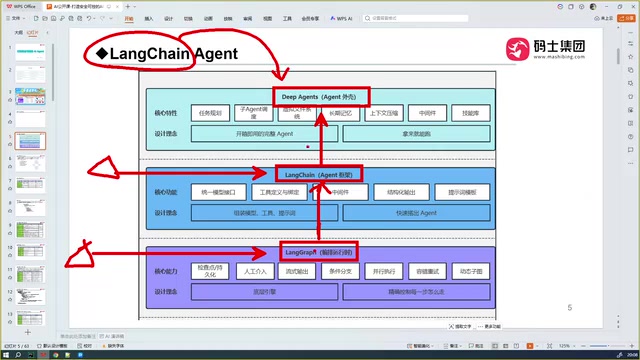
Here's an important takeaway: The Guardrails security mechanism discussed in this article applies to all three layers — whether it's the bottom-level LangGraph, the middle-level LangChain, or the top-level DeepAgents, the design philosophy of safety guardrails is universal. The specific code implementation, however, resides at the LangChain layer.
Core Responsibilities of Guardrails
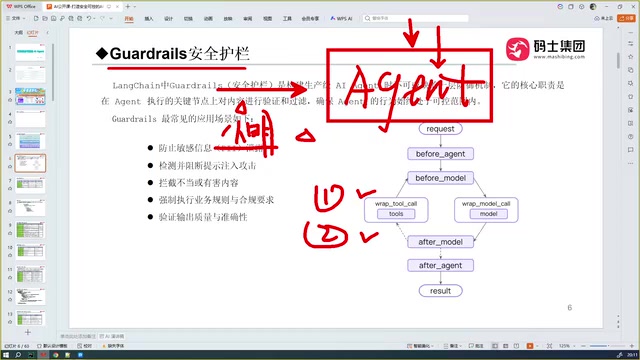
Guardrails are an indispensable component when building production-grade AI Agents. Their core responsibility is to perform security processing on information throughout the entire Agent conversation flow. Specifically, guardrails can play a role at multiple stages:
Input-side violation interception: Suppose you define certain keywords as prohibited terms. When a user's query contains these words, the guardrail can intercept and truncate the message before it reaches the Agent, preventing harmful or non-compliant content from entering the model.
Sensitive information masking during execution: During execution, an Agent often queries business data through MCP tools, and the returned data may contain users' sensitive information. Guardrails can perform data masking on this information.
Output-side content detection: The model itself may have issues — insufficient reasoning ability leading to logically incoherent answers, or output content that poses compliance risks. Guardrails can detect and process the model's responses.
In summary, typical use cases for Guardrails include: preventing sensitive information leakage, blocking Prompt Injection attacks, business compliance checks, and output content moderation.
Prompt Injection is currently one of the most significant security threats facing LLM applications, ranked by OWASP as the number one security risk for large model applications. Attackers craft input text designed to override or bypass the system's preset prompt instructions, causing the model to perform unintended behaviors. Common attack techniques include: direct injection (embedding instructions like "ignore the above instructions" in user input), indirect injection (hiding malicious instructions in external documents that the model will retrieve), and jailbreak attacks (inducing the model to break safety restrictions through role-playing and similar methods). Defense typically requires a multi-layered combination: input filtering, instruction isolation (clearly separating system instructions from user input), output detection, and using specially trained safety classification models for real-time assessment. The input-side interception of Guardrails is a critical component of this defense system.
Implementation Principle: The Middleware Mechanism
The technical implementation of Guardrails fundamentally relies on LangChain's Middleware mechanism.
What Is Middleware
Think of middleware this way: it is a piece of execution logic that can be inserted at any point during your conversation with an Agent. In essence, these are "Hook" functions. Whether before an Agent call, before a model call, or after an Agent/model call, different processing logic can be inserted.
The Middleware pattern is a classic design pattern in modern software architecture, widely used in web frameworks (such as Express.js, Django, Koa), message queue systems, and API gateways. Its core idea is to insert composable, reusable processing layers into the request-response main flow using an "onion model" or "pipeline pattern." Each middleware focuses on a single responsibility — such as logging, authentication, data transformation, or error handling — and different middleware can be freely combined to form a processing chain. In LangChain's implementation, this pattern has been adapted to the Agent conversation scenario: Hook functions are triggered at specific lifecycle nodes, and developers can register custom handler functions to implement security checks, audit logging, data masking, and other features without modifying the Agent's core logic. This decoupled design greatly improves system maintainability and extensibility.
The Complete Middleware Chain
From the moment a user sends a request to receiving the final result, a complete Agent conversation passes through the following middleware nodes in sequence:
- before_agent: Triggered before Agent execution, used for business logic preprocessing
- before_model: Triggered before calling the model, for information processing
- wrap_model_call: Closer to the actual model call than before_model, enabling more fine-grained processing
- wrap_tool_call: Triggered during tool calls
- after_model: Triggered after the model call completes, for additional processing of the response
- after_agent: Triggered before delivering the final result to the user
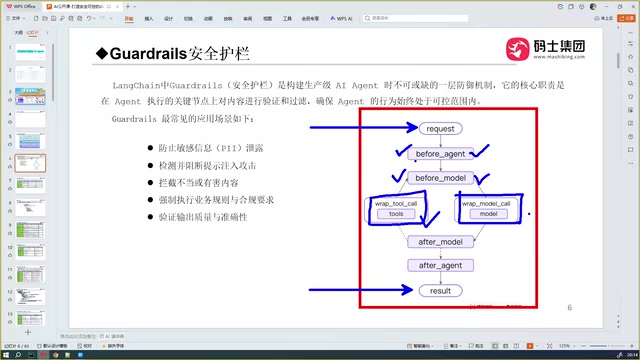
It is precisely by inserting security logic at these different nodes that Guardrails achieves full-pipeline protection across input, execution, and output.
Two Types of Guardrails: Deterministic and Model-Driven
From a technical perspective, safety guardrails are divided into two major categories, each addressing different types of security concerns.
Deterministic Guardrails
Deterministic guardrails target sensitive information with fixed formats and identifiable patterns. Examples include ID numbers, phone numbers, and bank card numbers — content with clearly defined formatting rules. Guardrails can use techniques like regex matching to mask, truncate, or otherwise process such deterministic content.
Regular Expressions are the core technical tool for deterministic guardrails. For sensitive information with fixed formats — such as ID numbers (18 digits plus a check digit), phone numbers (11 digits starting with 1), bank card numbers (16-19 digits conforming to the Luhn algorithm), and email addresses — regular expressions can perform efficient and precise matching. Common masking strategies include: partial masking (e.g., replacing the middle four digits of a phone number with ****), complete replacement (substituting with placeholders like [REDACTED]), and hashing (replacing the original information with an irreversible hash value). In production environments, deterministic guardrails are often combined with Named Entity Recognition (NER) models to improve recall, since users may express sensitive information in non-standard formats — for example, writing a phone number as "one three eight 1234 five six seven eight." Pure regex cannot cover all such variations.
Its limitation is also obvious: it can only handle content with fixed formats. If a large model uses subtle natural language to guide users toward incorrect actions — text that reads perfectly fine on the surface — deterministic guardrails are powerless.
Model-Driven Guardrails
For "non-fixed" risky content, model-driven guardrails are needed. The approach is to leverage the LLM's own comprehension ability to judge whether the output is compliant and whether potential issues exist. Since model responses are in natural language form, only a model that can "understand" the content can identify subtle manipulation, logical errors, or compliance risks.
Model-driven guardrails are typically implemented through several technical approaches. The first uses dedicated content safety classification models, such as OpenAI's Moderation API, Meta's Llama Guard, and Google's ShieldGemma — models specifically trained to identify risk categories including hate speech, violent content, and self-harm guidance. The second leverages a general-purpose LLM itself as a "judge," using carefully designed evaluation prompts (Judge Prompts) to have another model instance review whether the output complies with preset safety policies and business rules. The third is embedding-based semantic similarity detection, comparing the output content against a known risky content database using vector distances. Each approach involves trade-offs in latency, cost, and accuracy. In actual production, a cascading strategy is typically adopted: lightweight deterministic rules are used for initial screening, followed by model-based fine-grained assessment, balancing security with response speed.
Summary
When building production-grade AI Agents, safety guardrails are the critical step from "functional" to "controllable." Understanding LangChain's layered ecosystem (LangGraph → LangChain → DeepAgents) helps you choose the appropriate development level. Guardrails, through the middleware mechanism, insert protective logic at multiple nodes throughout the conversation flow. Combined with both deterministic and model-driven protection approaches, they can effectively address real-world business scenarios such as sensitive information leakage, prompt injection attacks, and compliance detection. For developers looking to deploy safe and controllable intelligent agents, mastering this mechanism is essential.
Key Takeaways
Related articles
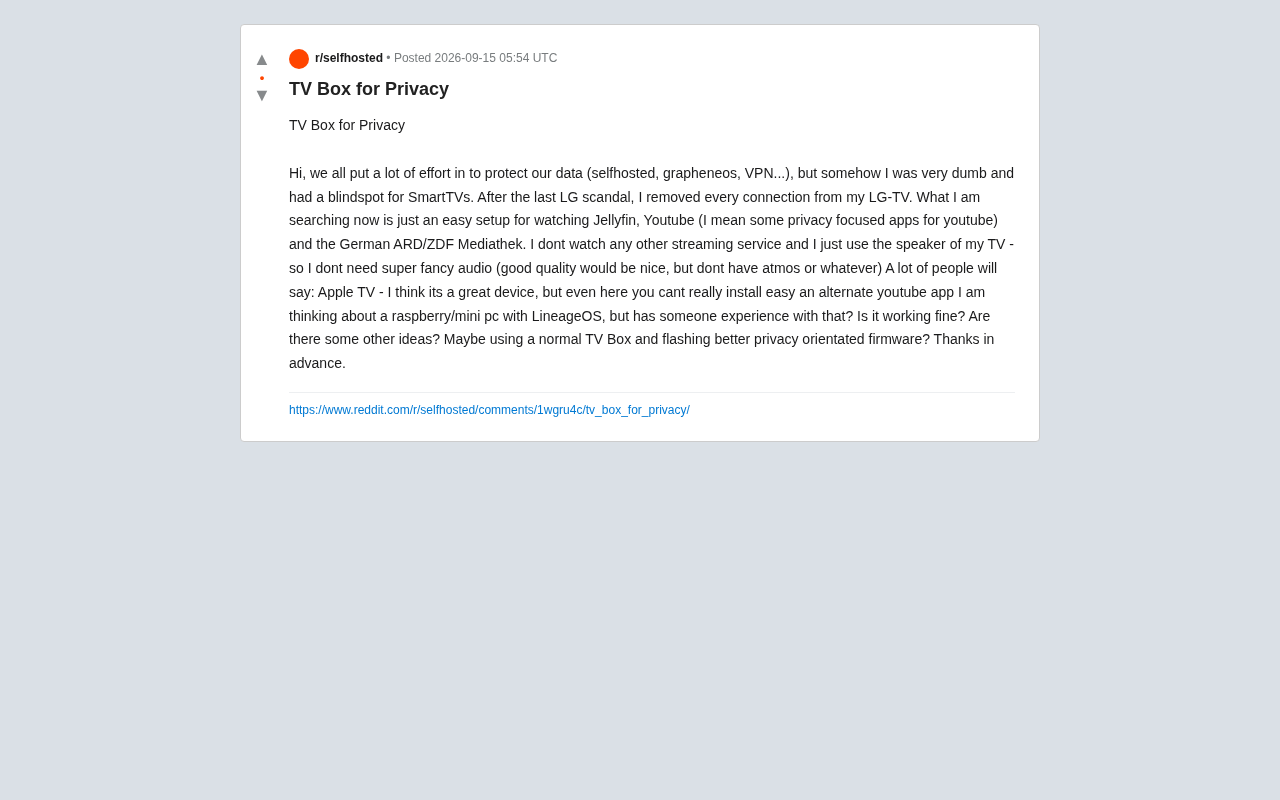
Building a Privacy-First TV Box: Escape Smart TV Data Surveillance
Smart TVs are a hidden privacy risk. Compare Apple TV, Raspberry Pi LineageOS, LibreELEC, and flashed Android boxes to build a privacy-first TV setup for Jellyfin and YouTube.
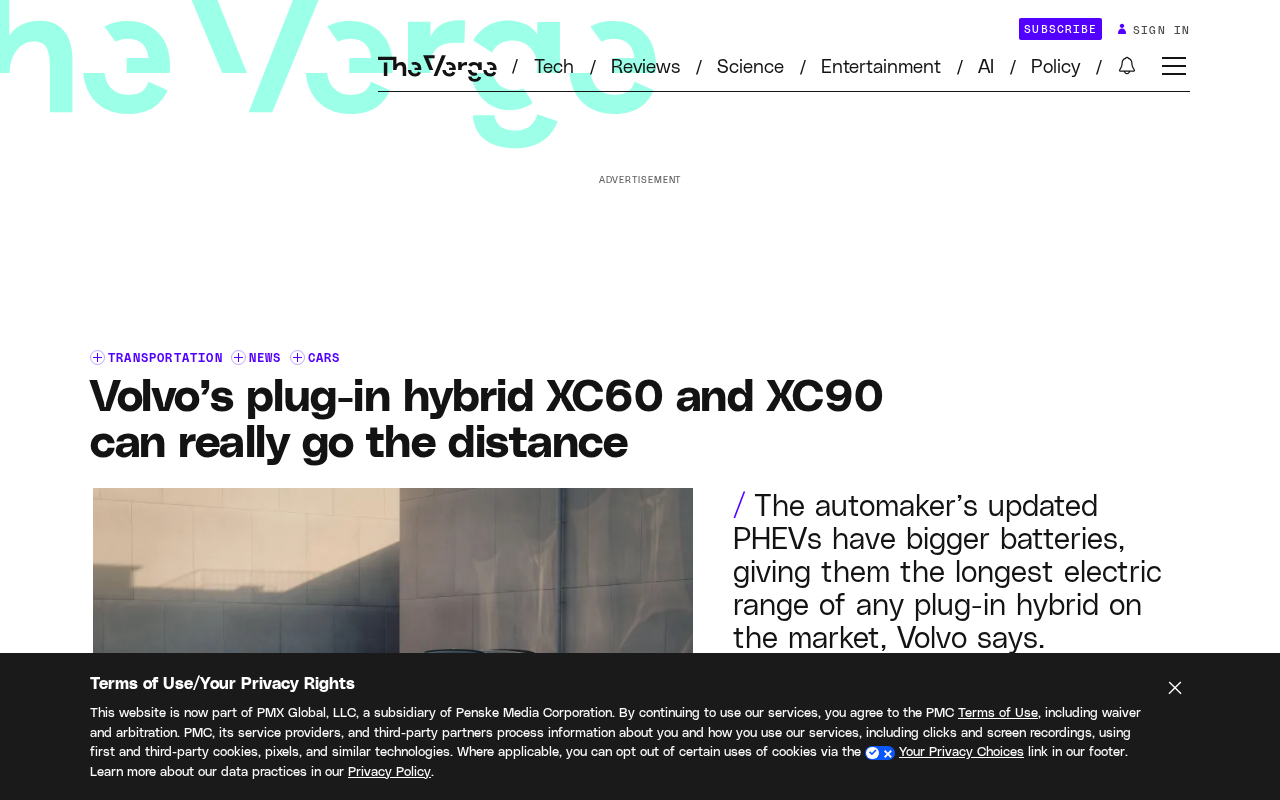
Volvo XC60 and XC90 PHEV Upgrades Push Electric Range Close to Full EV Levels
Volvo unveils upgraded PHEV versions of the XC60 and XC90, targeting electric-only range well beyond the industry average of 30–50 miles to redefine what plug-in hybrids can offer.
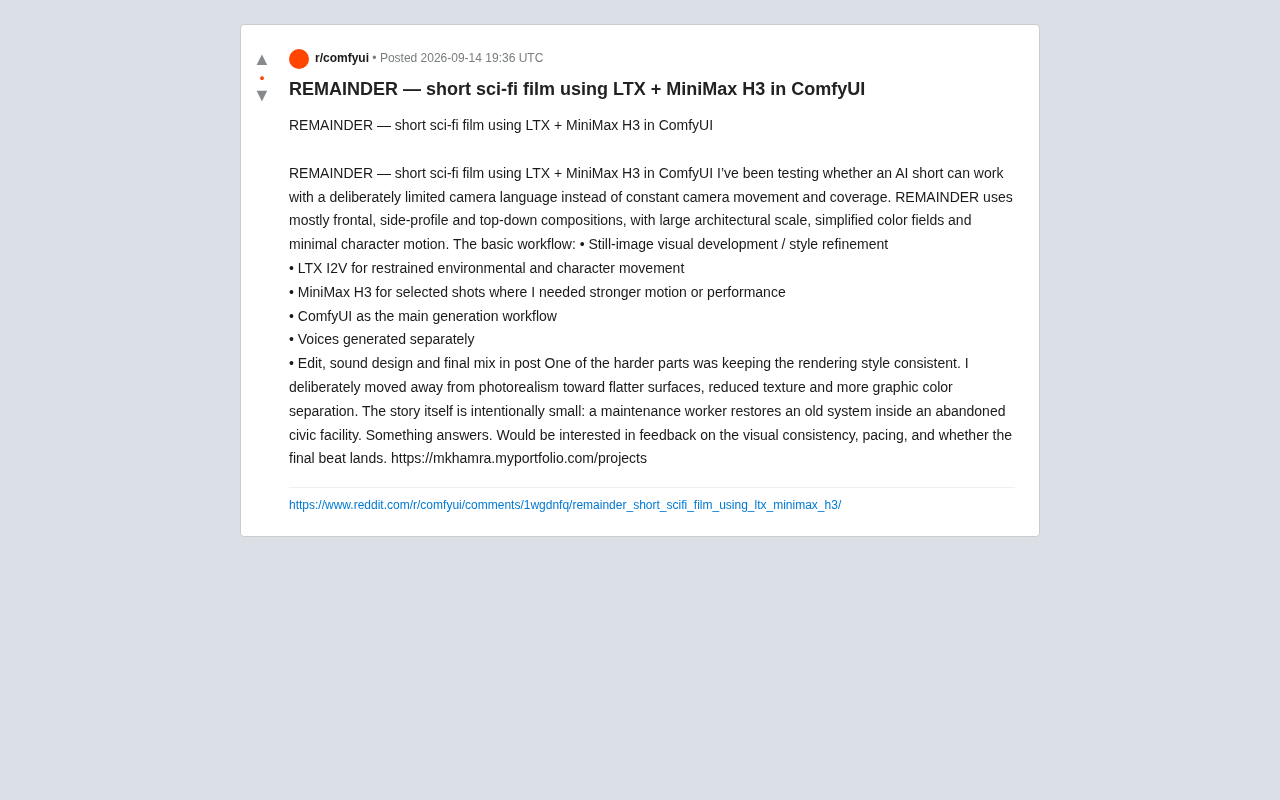
Building an AI Sci-Fi Short with LTX + MiniMax H3: Restrained Cinematography in ComfyUI
Sci-fi short REMAINDER uses LTX, MiniMax H3, and ComfyUI with restrained cinematography and flat aesthetics to solve visual consistency in AI filmmaking.