LangChain Update: Deep Agents Async Sub-agents and Browser Tool Tuning
LangChain weekly update: async sub-agents, Stagehand wins browser tool tuning, LangSmith BYOC multi-cloud support, and Interrupt event.
LangChain released several updates this week, with highlights including async sub-agent capabilities in deep agents that let the main agent keep conversing with users while sub-agents work in the background, improving interaction fluidity for long-running tasks; testing 7 browser tool sets in MDA with Stagehand performing best, offering a reference for browser agent development; LangSmith's BYOC deployment mode expanding to AWS, Azure, and GCP to meet enterprise data sovereignty and compliance needs; and the Interrupt developer conference returning March 24-25 in San Francisco. These developments reflect LangChain's continued strengthening of agent concurrency, tool integration, and enterprise deployment flexibility.
LangChain Weekly Highlights: Async Sub-agents and Tool Tuning
LangChain posted several updates on its official Twitter for "this week at langchain," covering the async sub-agent capabilities of deep agents, browser use tuning results in MDA, LangSmith's BYOC deployment support, and the return of the Interrupt event. These updates reflect LangChain's ongoing efforts to strengthen agents' concurrency handling, tool integration efficiency, and enterprise-grade deployment flexibility.
Async Sub-agents: Letting the Main Agent Work in Parallel with Sub-tasks
The most notable update this week is the async sub-agent feature in deep agents. According to the official description, the main agent can continue conversing with the user while sub-agents work in the background. This means users don't have to wait for sub-agents to finish their tasks before continuing the interaction, improving the fluidity of the experience. The design philosophy behind async sub-agents is to offload time-consuming tasks to the background so the main agent stays responsive—similar to how a front-desk receptionist and back-office specialists collaborate in a human assistant team.
This feature is particularly valuable for scenarios requiring multi-step, long-running operations, such as information retrieval, data processing, or cross-tool invocation. LangChain did not disclose specific technical implementation details in the tweet, but emphasized that this is an important expansion of deep agent capabilities.
Deep Agents is an agent architecture concept proposed by LangChain that emphasizes agents' ability to perform multi-layered planning, reasoning, and tool invocation to complete complex long-horizon tasks. Unlike simple single-step tool-calling agents, deep agents typically have task decomposition, state management, and sub-task scheduling capabilities. Async sub-agents are an extension of this architecture: the main agent delegates some sub-tasks to independent sub-agent instances that execute asynchronously in the background while the main agent remains responsive to user input. This design involves mechanisms such as task queues, state synchronization, and result aggregation, and its technical implementation may rely on LangChain's runtime or orchestration frameworks like LangGraph.
Browser Use Tuning: Stagehand Wins
LangChain also shared its experience tuning browser use in MDA (possibly referring to multi-document agents or multi-agent decision architecture). The company said it tested 7 tool sets, and Stagehand performed best. Stagehand is a tool for browser automation that simplifies building agents for web interaction.
This tuning result suggests LangChain's pragmatic approach to tool selection: choosing components through actual testing rather than assumptions. Although the tweet did not disclose specific performance metrics or testing methodology, the scale of comparing "7 tool sets" indicates the team conducted a systematic evaluation. For developers building browser agents, Stagehand may be an option worth watching.
Stagehand is an open-source browser automation framework designed specifically for AI agents. Built on Playwright, it offers higher-level abstractions: developers can control the browser using natural language instructions or structured actions (such as act, extract, observe) without writing cumbersome CSS selectors or XPath. Stagehand's core advantage lies in combining LLM reasoning with browser operations, supporting dynamic page interaction and data extraction. In LangChain's tests, Stagehand stood out from 7 tool sets, likely due to its balance of flexibility and reliability, as well as its adaptability to complex web pages. For developers building browser agents, Stagehand offers a low-code alternative.
LangSmith BYOC: Supporting AWS, Azure, and GCP
LangSmith is LangChain's developer platform for debugging, testing, and monitoring LLM applications. This week's update announced that LangSmith's BYOC (Bring Your Own Cloud) mode now supports the three major cloud platforms: AWS, Azure, and GCP. BYOC allows enterprises to deploy LangSmith in their own cloud accounts, meeting requirements for data residency, security compliance, and cost control.
This move further lowers the barrier for enterprises to adopt LangSmith, especially in regulated industries such as finance and healthcare. Enterprises can leverage LangSmith's observability and evaluation capabilities while maintaining data sovereignty.
BYOC (Bring Your Own Cloud) is an enterprise-grade deployment model that allows customers to deploy software in their own cloud accounts (such as AWS, Azure, GCP) rather than using a vendor-hosted SaaS environment. For platforms like LangSmith that involve LLM application debugging and monitoring, the BYOC model ensures that sensitive data (such as prompts and response logs) does not leave the enterprise's own cloud boundary, meeting data residency and compliance requirements. At the same time, enterprises can take advantage of existing cloud contracts and discounts and control network isolation and access policies independently. LangSmith's BYOC support is typically implemented through containerized deployment (such as Kubernetes) and infrastructure-as-code templates, reducing operational complexity.
Interrupt Event Returns: March 24-25 in San Francisco
LangChain also announced the return of the Interrupt event, to be held March 24-25 in San Francisco. Interrupt is a developer conference hosted by LangChain, focused on agent and LLM application development. The tweet included a link to the event but did not reveal further agenda details. For developers following the LangChain ecosystem, this is an opportunity to learn about the latest developments and build connections.
Summary
LangChain's updates this week focused on enhancing agents' async collaboration capabilities, optimizing browser tool selection, expanding enterprise deployment options, and community events. The async sub-agents and Stagehand's win are technical highlights, while BYOC's multi-cloud support reflects responsiveness to enterprise needs. Together, these developments point in one direction: making agents smarter, easier to use, and more deployable.
(Note: Due to limited information in the original source, some details such as the specific meaning of MDA and testing metrics were not elaborated in the tweet. This article provides interpretation based on publicly available information.)
Related articles
 Tech Frontiers
MuJoCo: An Analysis of DeepMind's Open-Source General-Purpose Physics Simulator
An in-depth analysis of Google DeepMind's open-source physics simulator MuJoCo: high-performance C++ kernel, MJCF modeling format, contact solving principles, MJX GPU acceleration, and robot reinforcement learning use cases.
 Tech Frontiers
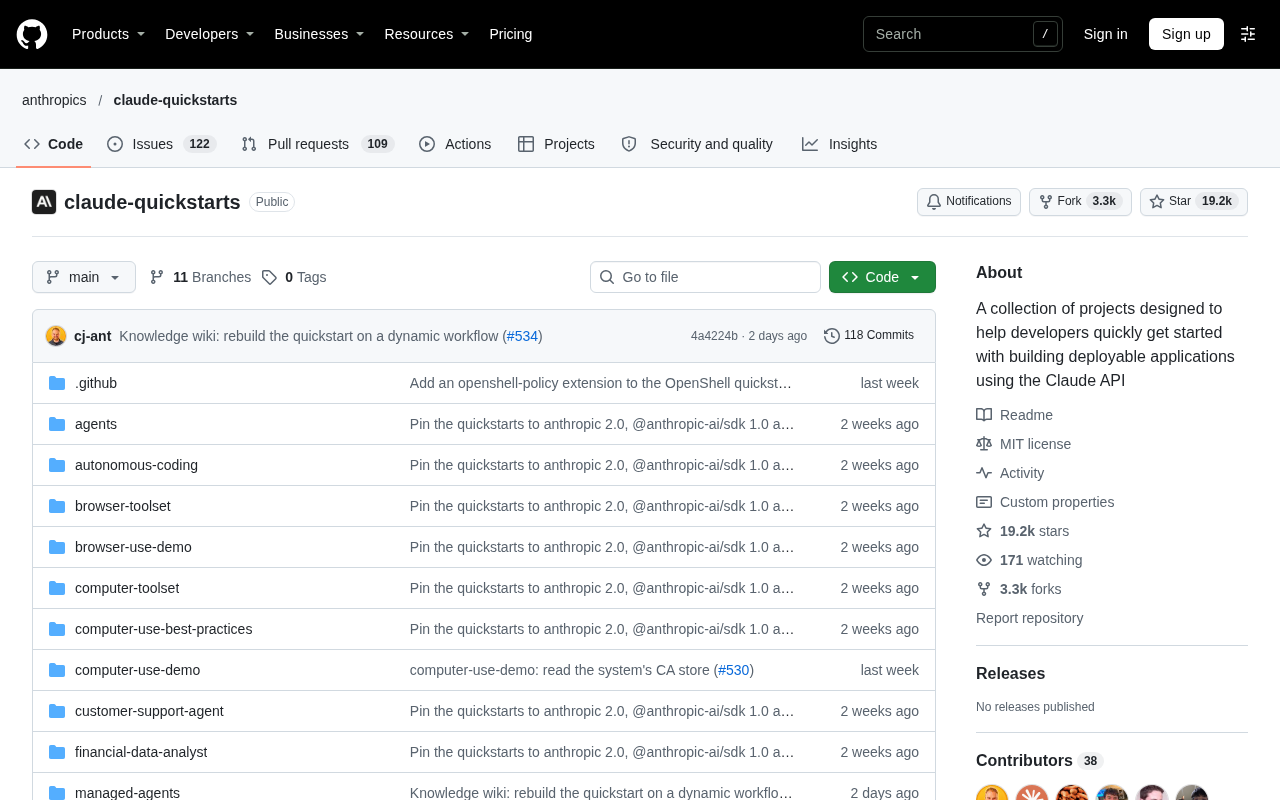
Claude API Quick Start: The Official Quickstarts Project Collection
Anthropic's official claude-quickstarts project collection helps developers quickly build deployable apps with the Claude API. Nearly 20k stars, Python-based, great for beginners and prototyping.
 Tech Frontiers
AI Agents Connecting Directly to APIs: Which Calls Can Be Safely Allowed?
AI agents can call any API, but the real challenge is deciding which calls can be safely allowed. This article analyzes allowance decisions from three dimensions—intent matching, least privilege, and controllable impact—and argues that the control layer should sit outside the agent, combined with audit traceability to build a trustworthy API call governance mechanism.