LARA: A Lightweight Adaptation Framework for Injecting Composable Behaviors into Frozen LLMs
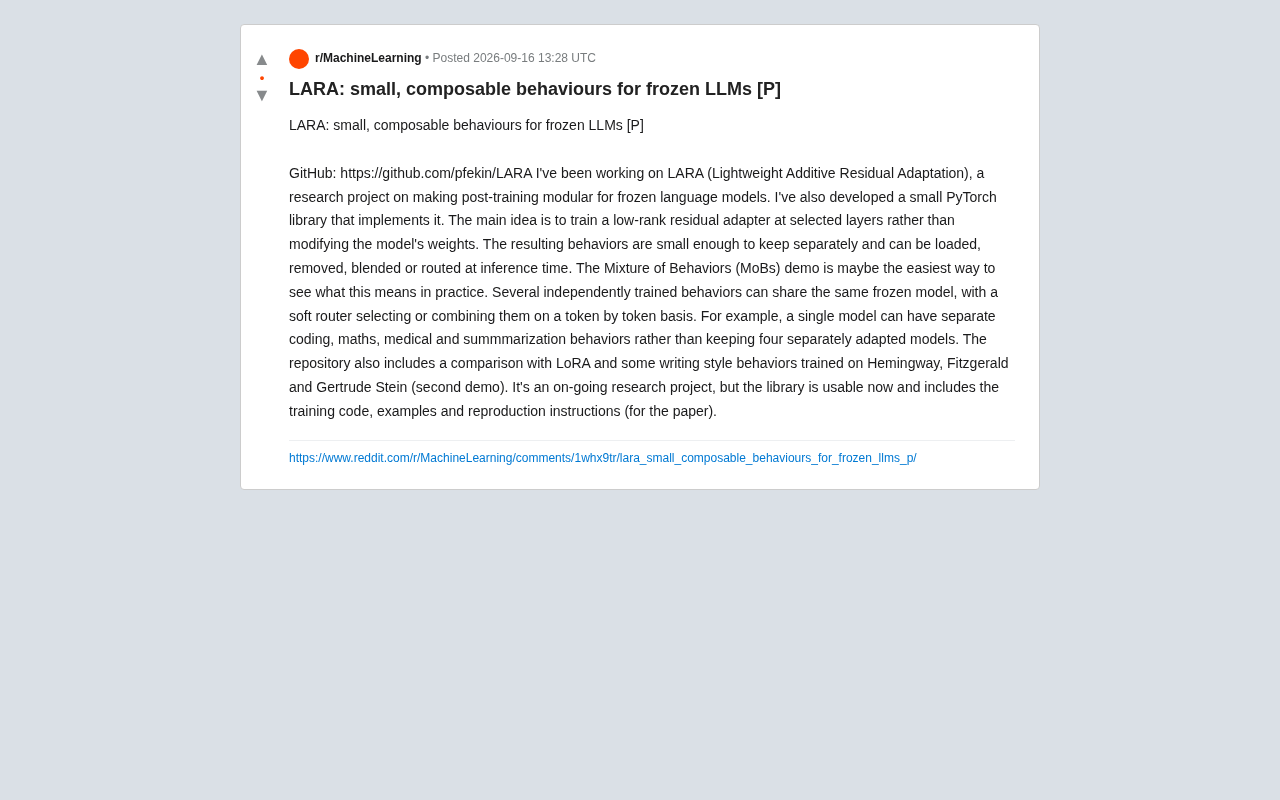
LARA uses low-rank residual adapters and soft routing to share multiple pluggable behaviors on a single frozen LLM.
LARA (Lightweight Additive Residual Adaptation) is an open-source research project for modular post-training. It stacks low-rank residual adapters on selected layers of a frozen language model, packaging each "behavior" as a lightweight module that can be independently saved, loaded, or removed. Its flagship Mixture of Behaviors demo lets coding, math, medical, and summarization behaviors share one base model, with a token-level soft router dynamically selecting or blending them — an ultra-lightweight MoE variant. The repo also includes direct LoRA comparisons and stylistic behavior demos imitating Hemingway and Fitzgerald. A PyTorch library with full training code is available, though the project is still in the research stage and lacks independent third-party benchmarks.
At a time when fine-tuning large language models remains prohibitively expensive, a lighter and more modular approach is gaining traction. A researcher recently open-sourced a project on Reddit called LARA (Lightweight Additive Residual Adaptation), with a core goal of making post-training modular — stacking pluggable behavioral capabilities onto frozen language models without touching the base model's weights.
What Problem Does LARA Actually Solve?
Traditional model customization typically means either full parameter fine-tuning or training a separate LoRA adapter for each task — both of which lead to storage bloat and deployment complexity. LARA's approach is to train a low-rank residual adapter on selected layers rather than directly modifying the model's original weights.
This yields an immediate benefit: the trained "behaviors" are small enough to be stored independently. More importantly, these behaviors can be loaded, removed, blended, or routed at inference time — meaning the base model stays frozen while behaviors are flexibly mounted as external modules. This design philosophy aligns with the broader trend of "adapters as plugins," but LARA places particular emphasis on composability between behaviors.
The low-rank residual adapter draws inspiration from matrix factorization theory: if the weight update in a model essentially lives in a low-dimensional subspace, then approximating that update as the product of two small matrices (i.e., a low-rank decomposition) can capture most of the behavioral change with very few parameters. LoRA systematized this idea first, and LARA builds on it by further emphasizing "residual addition" — the adapter's output is added back to the original activations as a residual, ensuring the semantics of the frozen weights remain intact. Mathematically, this is equivalent to applying a local perturbation to the original forward pass, preserving the base model's general capabilities while carving out dedicated parameter space for specific behaviors. The small footprint (typically 0.1%–1% of the original layer weights) is a direct consequence of the low-rank design and the engineering prerequisite that makes "behavior as plugin" viable in practice.
Mixture of Behaviors: Multiple Behaviors Sharing One Frozen Model
The demo that best captures the project's design philosophy is Mixture of Behaviors (MoBs). It allows multiple independently trained behaviors to share a single frozen base model, with a soft router selecting or composing these behaviors at the token level.
The author's example is straightforward: a single model can simultaneously support coding, math, medical, and summarization behaviors — without maintaining four separately fine-tuned models. In practice, this translates to significantly lower GPU memory usage and management overhead: the base model is loaded once, and behaviors are switched or blended on demand.
This token-level soft routing mechanism is essentially a middle ground between the Mixture of Experts (MoE) paradigm and lightweight adapters — it retains the flexibility of "expert specialization" while avoiding the cost of training full expert networks.
MoE (Mixture of Experts) is the key reference point for LARA's soft routing mechanism. Traditional MoE architectures train multiple complete "expert" sub-networks within the model and use a gating network to decide which experts to activate at the token or sequence level — notable implementations include Mixtral and Switch Transformer. The advantage is high capacity and strong specialization, but at the cost of training all expert networks end-to-end, plus complex load balancing at inference time. LARA's soft router, by contrast, performs selection and weighted fusion only at the lightweight adapter level; each "expert" is just a low-rank matrix rather than a full network. This means the cost of adding or removing a "behavior" is near zero, with no need to retrain the router or any existing behaviors — making it an ultra-lightweight variant of the MoE concept.
Comparison with LoRA and Writing Style Experiments
Notably, the project repository includes a direct comparison with LoRA, providing a concrete reference point for evaluating LARA's real-world effectiveness. As one of the most widely adopted parameter-efficient fine-tuning methods, LoRA is an unavoidable benchmark — the author's willingness to make a head-to-head comparison signals a clear technical stance on where LARA stands.
The second demo is more playful: the author trained several writing style behaviors that imitate the prose of Hemingway, Fitzgerald, and Gertrude Stein. These style-based behaviors nicely demonstrate the expressive power of composable behaviors — in theory, users could blend different authors' styles at inference time to produce output somewhere in between.
LoRA (Low-Rank Adaptation) was introduced by Microsoft Research in 2021 and has since become the de facto standard in the parameter-efficient fine-tuning (PEFT) space. Its core approach is to attach a pair of low-rank matrices A and B alongside the attention weight matrices in a Transformer, updating only those matrices during training and merging them back into the original weights (or keeping them separate) at inference. LoRA's widespread adoption stems from its simplicity, low memory overhead, and seamless compatibility with existing models. However, LoRA adapters are typically trained for a single task or domain; serving multiple tasks simultaneously requires either merging multiple LoRAs (which can cause interference) or maintaining separate adapter copies and switching between them per request. This is precisely where LARA differentiates itself: it treats "multi-behavior coexistence and dynamic routing" as a first-class design primitive, rather than bolting it on after the fact as LoRA does.
Engineering Usability and Research Positioning
The author is upfront that LARA is still an ongoing research project, but the accompanying PyTorch library is already usable. The repository includes complete training code, examples, and reproduction instructions for the paper's results — making it quite accessible for researchers who want to verify or build on the work.
From an engineering standpoint, LARA's value lies in turning the "one base model + multiple lightweight behaviors" paradigm into a practical toolchain. For scenarios that require serving multiple tasks on the same base model — such as an assistant system that needs to write code, generate summaries, and handle domain-specific Q&A — this architecture can meaningfully reduce operational complexity.
A Few Grounded Observations
It's worth noting that, as a Reddit-announced open-source release, the publicly available information comes primarily from the author's own description, with no independent third-party evaluation data yet. Key questions remain open: the performance degradation from low-rank residual adaptation when mixing multiple behaviors, the stability of the soft router at complex task boundaries, and the actual magnitude of gains over LoRA — all of these need more experimental evidence before drawing firm conclusions.
For developers focused on parameter-efficient fine-tuning and modular LLM deployment, LARA offers an interesting conceptual angle and a hands-on codebase to explore. Whether it can hold its ground on larger-scale, more demanding benchmarks remains to be seen and is worth watching. The project is publicly available on GitHub for anyone who wants to reproduce and verify the results themselves.
Related articles
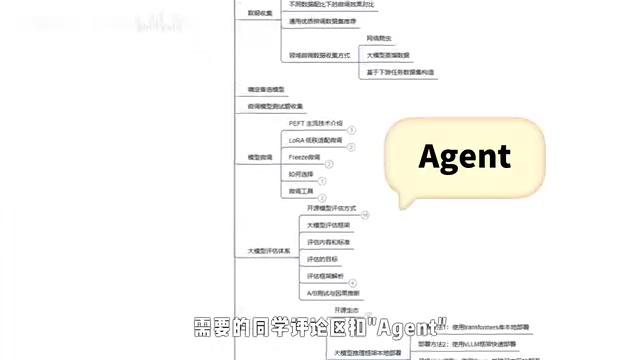
AI Agent Learning Roadmap: A Four-Stage Guide for Complete Beginners
A four-stage AI Agent learning roadmap for beginners: from core concepts and model deployment to RAG, LangChain, LoRA, and interview-ready projects.
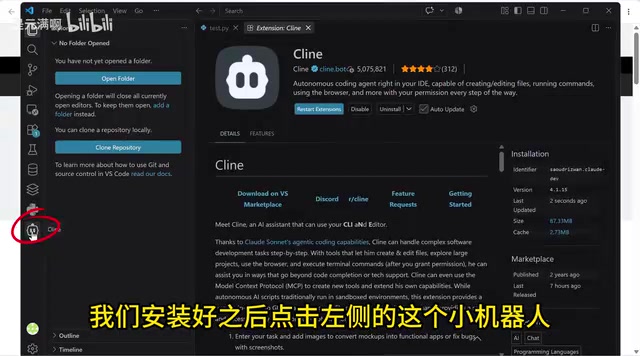
Free Access to Mystery Model & DeepSeek V4 via Cline: Complete Setup Tutorial
Learn how to use DeepSeek V4 and the mystery "Niumai" model for free on Cline — covering IDE extension and CLI installation, account setup, and model selection.
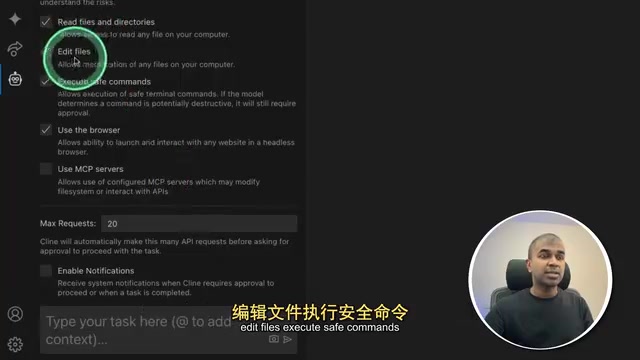
Cline + VS Code in Practice: Generate a To-Do App from a Single Prompt
Cline is an autonomous coding agent inside VS Code. This hands-on guide shows how to generate a to-do app from one prompt and compares Claude, Ollama, and Groq integrations.