Leaked DeepSeek Internal Chat Screenshot: Open Source Doesn't Mean Giving Away the Whole Empire

DeepSeek internal chat screenshot sparks debate on open-source boundaries; open source is really an ecosystem positioning strategy.
A leaked internal DeepSeek chat screenshot went viral, with playful banter about what's left after full open-sourcing, sparking speculation about the team and business model. The article notes that open-sourcing model weights and inference code doesn't mean giving away all assets—computing clusters, engineering teams, and business channels remain with the company. Even with code, replicating performance requires massive compute and optimization. Open source is a business strategy to capture the AI ecosystem, not cutting off revenue.
Leaked DeepSeek Internal Chat Screenshot: Open Source Doesn't Mean Giving Away the Whole Empire
Recently, a chat screenshot allegedly from an internal employee at DeepSeekAd (jokingly nicknamed "Big Fat Fish" by netizens) went viral on Tieba and other communities, quickly gaining traction alongside an interpretation video from a Bilibili creator. The conversation in the screenshot playfully joked about "what's left after fully open-sourcing," with lines like "the boss really went all out for me," sparking speculation about the team's situation at DeepSeek.

Screenshot Goes Viral: Meme or Real Anxiety?
Judging from the circulating screenshot, the tone of the conversation is lighthearted, more like casual banter among employees than a serious strategic discussion. Many netizens share this view, believing there's no need to take it too seriously. But the fact that a single screenshot can trigger so much discussion says something in itself: when a company open-sources both its models and inference framework, outsiders can't help but wonder—how exactly does it make money?
This curiosity isn't unfounded. Open source means the code is public and the weights are downloadable, and anyone can build applications on top of them. On the surface, it looks like laying all your cards on the table. But analysts in multiple tech communities point out that open-sourcing models and inference frameworks is a different matter entirely from handing over all of a company's assets.
What's Open-Sourced Is the Recipe, Not the Kitchen
A netizen summed it up neatly with an analogy: open source is like publishing a recipe, but the chefs and the entire kitchen system that can consistently produce great dishes can't be directly copied by others.
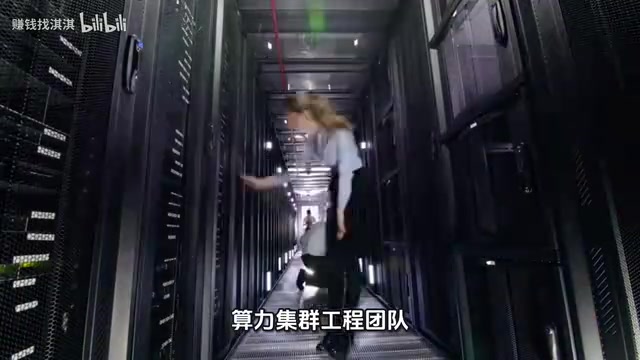
Specifically, what DeepSeek has open-sourced is mostly model weights and inference code, while core assets like computing clusters, engineering teams, and business channels remain firmly in its own hands. Even with all the code in hand, replicating equivalent performance still requires massive compute investment and extensive engineering optimization. According to cross-analysis by Bilibili creators and users on some tech forums, this "barrier at the back end" is precisely the key to the open-source strategy—code can be copied, but the infrastructure and talent pipeline that keep the code running cannot be cloned with a single click.
The Replication Barrier Is Underestimated
Many discussions overlook one point: an open-source model is not an out-of-the-box product. From code to a stable service, there's a whole series of engineering challenges in between—inference optimization, cost control, concurrency scheduling, and more.
Some argue that the team capable of consistently delivering results is DeepSeek's core strength. Simply obtaining open-source code doesn't mean you can replicate its capabilities. This has become a consensus across multiple tech community discussions: open source lowers the cost of getting started "from zero to one," but it doesn't remove the competitive barriers "from one to a hundred."
The Difference Between Model Weights and Inference Code: Model weights are the neural network parameter files saved after training is complete, determining the upper limit of a model's capabilities; inference code is the program logic that runs these weights on hardware and generates outputs. Open-sourcing weights means others can directly load and use or fine-tune them, but it doesn't include training data, training methods, or distributed training frameworks. Making inference code public allows the community to optimize deployment efficiency, but inference optimization often relies heavily on tuning experience with specific hardware clusters. Therefore, open-sourcing these two things doesn't mean disclosing the entire engineering pipeline from data cleaning, pre-training, and alignment to deployment.
Inference Optimization and Concurrency Scheduling: Inference optimization refers to techniques like quantization, operator fusion, KV cache management, and batching to reduce per-inference latency and memory usage while maintaining output quality; concurrency scheduling involves request queuing, dynamic batching, load balancing, and other mechanisms that determine whether a service can run stably under high concurrency. These engineering capabilities require long-term tuning tailored to specific hardware and business traffic, and are difficult to obtain directly from open-source code. Even with identical model weights, the lack of these optimizations can make actual service costs and response speeds differ by several times.
Open Source Is a Business Strategy, Not Cutting Off Your Own Revenue
Opinions online are polarized around this screenshot. Some feel the open-source move is magnanimous and represents genuine technological sharing; others冷静ly analyze it as a business tactic to seize the AI ecosystem and attract developers.
The two views aren't actually contradictory. Open-source models can rapidly expand the user base and get developers into the habit of working with their tech stack—this in itself is ecosystem positioning. As more and more applications are built on a particular open-source system, commercial opportunities in cloud services, enterprise customization, and technical support naturally open up. In other words, open source is part of the business strategy, not its opposite.
The Long-Term Calculus of Ecosystem Positioning
From an industry perspective, leading AI companies that choose open source are often playing a long game: giving up some short-term technological dividends in exchange for developer mindshare and ecosystem position. DeepSeek's latest open-source release, combined with the spread of the screenshot incident, objectively accomplished a low-cost market education—letting more people know what it open-sourced and what it didn't.
As for the line in the screenshot about "the boss really went all out for me," just treat it as an internal team joke. What's really worth paying attention to is the unpublicized compute, engineering, and business systems behind the open source. That's what determines how far an AI company can go.
What do you think about major AI companies open-sourcing their models? Is it genuine technology sharing, or a business tactic to capture the ecosystem? Feel free to share your thoughts in the comments.
Developer Mindshare and Ecosystem Position: Developer mindshare refers to the usage habits, cognitive preferences, and sense of community belonging that developers develop around a particular tech stack; ecosystem position refers to the irreplaceable place that tech system occupies in terms of toolchains, application frameworks, and talent supply. Once an open-source model is widely adopted, the tutorials, plugins, hiring demands, and commercial services around it reinforce each other, raising the switching costs for latecomers. This kind of ecosystem barrier isn't as exclusionary as patents, but it can form a more solid moat in long-term competition—and it's the fundamental reason leading AI companies are willing to forgo short-term technological dividends.
One-line Summary
A leaked internal DeepSeek chat screenshot sparks debate over the boundaries of open source—but open source is really an ecosystem positioning strategy.
Paragraph Summary
Recently, a chat screenshot allegedly from an internal DeepSeek employee went viral in online communities, with the conversation playfully joking about what's left after fully open-sourcing, sparking speculation about the team's situation and business model. The article points out that open-sourcing model weights and inference code doesn't mean handing over all your assets—computing clusters, engineering teams, and business channels remain in the company's control. Even with the code, replicating equivalent performance still requires massive compute and engineering optimization; the barrier at the back end is key. Open source is essentially a business strategy to capture the AI ecosystem, trading a broader developer base for long-term ecosystem position rather than cutting off revenue. The jokes in the screenshot shouldn't be overinterpreted—what's really worth noting is the unpublicized compute, engineering, and business systems.
Related articles

Build an AI Super Employee System at Zero Cost: A Full Breakdown of Automated Agent Workflows
A deep breakdown of the AI super employee system demoed on Bilibili: agent orchestration, digital human voiceovers, map and enterprise lead generation, 24/7 customer service, and legal modules. We analyze the business logic and compliance risks behind zero-cost signup to help entrepreneurs judge the real ROI of this AI digital employee system.

The Essential Difference Between Chatbots and AI Agents: Crossing from Conversation to Execution
What's the difference between a chatbot and an AI agent? Based on the MCP series on the Learn Tech channel, this article uses examples like booking flights and summarizing notes to explain: a chatbot only gives answers, while an agent actually completes tasks through a think-act-observe loop. It breaks down the four core components—model, tools, memory, and goal—as well as MCP's role as a bridge, and discusses agents' applicable boundaries and permission risks.

Free GitHub Repo: 342 Hours of AI Courses, from Math to MCP Servers
A free GitHub repo offers 342 hours of AI courses: 523 lessons across 20 phases, from math fundamentals to agent building and MCP servers. Nearly 100,000 learners have started.