LG Calls Content 'Fake News': Inside a Brand vs. Creator Dispute
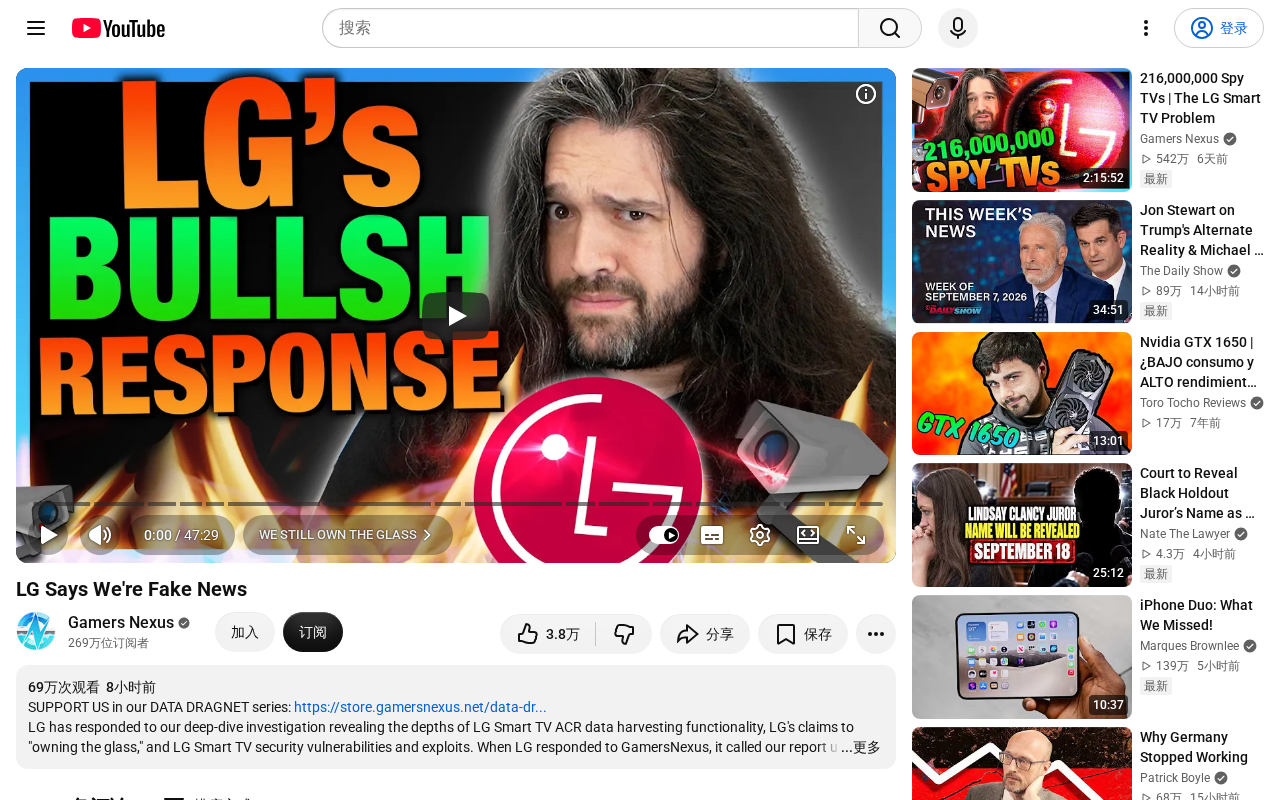
LG labeled a creator's content 'fake news,' prompting a public video response and debate on Hacker News.
A content creator published a video titled *LG Says We're Fake News*, documenting LG's decision to label their content as misinformation. The video quickly gained traction on Hacker News with 190 upvotes and 88 comments. Working from limited source material, this article outlines the event's framework and examines the recurring logic behind brand vs. creator disputes: companies typically respond with public denial, legal pressure, or removal requests, while creators rely on evidence transparency and community support to push back. The piece argues that burden of proof is the central issue — whoever presents more complete, reproducible evidence is more likely to win public trust.
Overview
A video titled LG Says We're Fake News recently sparked discussion on Hacker News, drawing 190 upvotes and 88 comments. At its core, the video documents a dispute between LG and a content creator — LG claimed the creator's content was "fake news," and the creator responded publicly via video.
It's worth noting upfront: since the original source material consists only of a video link and a community discussion thread, with no detailed transcript available, this article reconstructs the event's framework based on available information and explores the broader dynamics at play when brands clash with independent creators.
![rss source: LG Says We're Fake News [video]](/media/screenshots/source/26675_0.png)
The Central Tension: Who Gets to Define "Truth"?
The term "fake news" has been widely used — and widely abused — in recent years. When a major corporation publicly accuses an independent creator or media outlet of spreading false information, it typically signals a fundamental disagreement about a specific fact: a product defect, a marketing claim, or the validity of a testing methodology.
Based on the video's title alone, it's clear the creator found themselves on the receiving end of that accusation and chose to respond publicly. This experience — being labeled as purveyors of misinformation — is far from uncommon in tech reviews and consumer advocacy. Companies tend to issue forceful denials to protect their brand image, while creators rely on a transparent chain of evidence to maintain audience trust.
What the Community Reaction Reveals
The video's traction on Hacker News — 190 upvotes and 88 comments — speaks to the controversy surrounding it. Hacker News tends to attract technically minded users who are generally skeptical of corporate PR messaging and hold independent verification and technical rigor in high regard.
In discussions like this, community opinion typically fractures into a few predictable camps: some rally behind the creator and question the company's rebuttal; others demand more rigorous evidence before taking sides; and still others analyze the situation through a legal or PR strategy lens, asking why the company chose the particularly charged label of "fake news." This diversity of perspective is itself a valuable input when trying to assess what actually happened.
The Recurring Logic of Brand vs. Creator Conflicts
This kind of dispute is not a one-off. When a creator's content touches on something a company considers sensitive, the typical corporate playbook includes: public denial, cease-and-desist letters, requests for content removal, or outright labeling the content as misinformation. Creators, in turn, fight back by publicly documenting the sequence of events, presenting raw evidence, and leveraging community sentiment as a counterweight.
The crux of this dynamic comes down to burden of proof and information transparency. Whoever can present more complete, reproducible evidence is more likely to earn public trust. For consumers, disputes like this offer a rare window into how brands actually respond when confronted with criticism.
Lessons for Content Creators
For anyone doing product reviews or industry reporting, this incident surfaces a few practical takeaways:
- Document everything: Whether it's your testing process or your communications with a company, comprehensive firsthand records are your strongest defense against a "fake news" accusation.
- Keep facts and opinions clearly separated: Explicitly distinguishing verifiable claims from personal interpretation significantly reduces your exposure to accusations of inaccuracy.
- Leverage community credibility: Transparency tends to earn the trust of technical communities, and community sentiment can serve as an effective check on corporate pressure.
Conclusion
Given the limited source material available, this article cannot render a verdict on the specific LG vs. creator dispute. But even from a high-level view of the situation and the community's reaction, it reinforces a broader truth: in the information age, the question of who controls the definition of truth is becoming increasingly complex. The tension between a brand's narrative power and a creator's independent voice can only be resolved through transparent evidence and open discussion. Readers who want the full picture are encouraged to watch the original video and draw their own conclusions from the Hacker News thread.
Related articles
Spotit: Turn Every Mac App into a Real-Time Interactive Tutorial
Spotit is an AI-powered interactive tutorial tool for Mac. Press a shortcut, ask in plain language, and it highlights exactly where to click next — guiding you through any Mac app as you learn by doing.

OpenCode: The Open-Source Coding Agent That Hit 150K GitHub Stars
OpenCode is an open-source TypeScript coding agent with 150K+ GitHub stars. Learn about its features, advantages, and use cases for AI-powered development.

Learning AI Agent Development from Scratch: An Open-Source Tutorial Worth Bookmarking
Haozhe-Xing/agent_learning is a systematic, hands-on open-source tutorial for learning AI Agent development from scratch, with daily arXiv paper tracking built in.