Liang Wenfeng on AGI Strategy: Team Stability Is DeepSeek's Only Core Interest

DeepSeek founder Liang Wenfeng reveals why team stability is the single most critical factor in achieving AGI.
DeepSeek completed a 50B+ RMB funding round at a 350B RMB valuation. Founder Liang Wenfeng argues that team stability is the company's only core interest on the path to AGI. Backed by parent company High-Flyer Quant's compute and talent resources, DeepSeek retains top AI talent through a combination of mission-driven culture and substantial equity incentives, offering a unique counterpoint to skeptics of the open-source model.
Recently, DeepSeek completed its first external funding round, raising over 50 billion RMB and pushing the company's post-money valuation past 350 billion RMB. How did this company, known for its open-source large models, achieve such a sky-high valuation amid persistent market skepticism toward the open-source model? In a recent in-depth speech, founder Liang Wenfeng offered a thought-provoking answer.
Liang Wenfeng's Counterintuitive Insight: The Core Interest Isn't the Product — It's the Team
In Liang Wenfeng's lengthy remarks, the most striking statement was this: the company has only one core interest, and that is maintaining team stability.
His exact words were remarkably bold: "Our greatest core interest is maintaining team stability — you could even call it our only core interest. As long as I can keep the team stable, I will succeed. I will make AGI happen." In his view, as long as key members — especially veteran employees — don't leave, everything else — money, resources — is relatively easy to obtain.
AGI (Artificial General Intelligence) refers to an AI system with cognitive capabilities equal to or surpassing those of humans, capable of performing any intellectual task across any domain rather than being limited to specific scenarios. Current mainstream AI products, including ChatGPT and Claude, are still essentially ANI (Artificial Narrow Intelligence) — they excel at specific tasks but lack cross-domain general reasoning ability. AGI is considered the ultimate milestone in AI development, and the world's leading labs — OpenAI, Google DeepMind, and Anthropic — all pursue it as a long-term goal. Achieving AGI is extraordinarily difficult, involving unsolved technical challenges in reasoning, planning, autonomous learning, commonsense understanding, and more. Industry estimates for when AGI might arrive range from 5 to 50 years. This is precisely why the AGI race is fundamentally an ultra-long-cycle technological ascent, where team continuity and stability become the decisive factors for success or failure.

This judgment is counterintuitive because most entrepreneurs regard "creating value for customers" as a company's top priority. Conventional logic holds that a company only has a reason to exist if customers benefit from its products. Yet Liang Wenfeng placed his strategic focus on the team itself — and behind this lies a critical thread of logic that must be understood.
Why Team Stability Can Be the Only Variable on the Path to AGI
To understand Liang Wenfeng's statement, you first need to see the typical "life-and-death cycle" of startups: cash burns out, the team can't be sustained, the team falls apart, the product never ships, and the company dies. The vast majority of startups operate at a loss in their early stages and need a long runway to prove they'll be "worth a lot someday." Take Amazon as an example — it ran persistent losses with a depressed valuation for years before its market cap eventually climbed to $2.5 trillion. Before profitability materializes, survival depends on whether investors are willing to keep injecting capital.

DeepSeek's logic is the exact opposite. From the early days of High-Flyer Quant to the subsequent launch of the DeepSeek series of large models, this team has proven with tangible results that it can build world-class products. DeepSeek's parent company, High-Flyer (幻方量化), is one of China's leading quantitative hedge funds, with assets under management that once exceeded 100 billion RMB. Known for its technology-driven approach, High-Flyer was already using deep learning and GPU compute clusters at scale in quantitative trading well before the AI large model wave began. In 2023, High-Flyer established DeepSeek as an independent AI research entity, channeling years of accumulated compute infrastructure and AI R&D talent into large language model development. This background means DeepSeek was born with two rare advantages: first, abundant compute resources (High-Flyer once operated a cluster of over 10,000 A100 GPUs), and second, an AI engineering team battle-tested in real commercial scenarios. This also explains why Liang Wenfeng has the confidence to say "the direction is right, the product is right" — the team didn't start from scratch but was forged in quantitative trading, a field that demands extreme model precision.
This is the fundamental difference between DeepSeek and most startups: it has already convinced investors and the outside world that the direction is right and the product is right. Once these two premises are established, the key factor determining whether progress can continue naturally falls on the core team executing it all. Team stability, therefore, is no longer just ordinary "people management" — it is the only variable on the path to AGI.
How DeepSeek Retains Top AI Talent: Mission Over Compensation
In today's AI era, top experts routinely command annual salaries of tens of millions or even hundreds of millions of RMB. Well-funded companies can easily make jaw-dropping offers to poach DeepSeek's core members. The global scarcity of top AI talent has reached unprecedented levels. By industry estimates, there are no more than a few thousand core researchers worldwide with pre-training experience on large models, while demand comes from every tech giant — Google, OpenAI, Meta, Microsoft, ByteDance, and more. In the United States, top AI researchers can earn $5 million to $30 million annually, and some key figures have compensation packages exceeding $100 million (including stock and signing bonuses). In China, as the large model startup boom has intensified, compensation for top AI talent has also skyrocketed, with offers in the tens-of-millions-of-RMB range becoming common. In this "arms race" for talent, salary alone is almost never enough to build a lasting talent moat — because there's always a competitor willing to pay more.
What makes Liang Wenfeng most admirable is his ability to keep a group of top AI talent by his side despite limited financial resources.

His explanation: people aren't here purely for the money. What they truly desire is to pursue AGI in an environment where it can actually be achieved. Of course, Liang Wenfeng didn't sidestep reality either — after this funding round, team members received substantial option grants, which largely addressed "the biggest risk" of team stability.
It's worth noting that stock options are the most commonly used long-term incentive tool at tech companies. Options grant employees the right to purchase company shares at a predetermined price (the strike price) in the future. When the company's valuation rises, option holders can buy low and sell high, capturing the spread. The elegance of the options mechanism lies in its natural "lock-in" effect: options typically come with a vesting period of around four years, unlocking proportionally each year, meaning employees must remain at the company to receive their full allocation. For DeepSeek, completing a funding round at a 350-billion-RMB valuation means that early employees' options could already be worth tens of millions or even over 100 million RMB. This scale of wealth effect, combined with the time constraints of the vesting schedule, creates a powerful talent retention mechanism — leaving means not only forgoing future option gains but also missing out on further valuation appreciation.
Liang Wenfeng was candid: as long as the most important veteran employees remain stable, others won't easily leave even if their option packages are smaller.
This reveals a deeper management philosophy: Money is a necessary condition for team stability, but a shared sense of mission is the decisive force for retaining top talent. When a group of people truly believes they're working on something that can change the world, the marginal appeal of compensation diminishes. This is also why, once pay reaches a certain threshold, what ultimately determines whether talent stays or goes is often their technical ideals, team culture, and their assessment of the project's probability of success.
Skepticism About Open-Source Large Models and DeepSeek's Response
Previously, a well-known company CEO bluntly called open-source large models "a cleverly disguised IQ tax." Amid such skepticism, why are experts who could command higher salaries elsewhere still willing to follow Liang Wenfeng on this seemingly thankless endeavor?
To understand this, we first need to clarify the business logic and controversies surrounding open-source large models. Open-source large models are AI models that make their model weights, training code, and sometimes even datasets freely available to the public. Notable examples include Meta's LLaMA series, Mistral, and the DeepSeek series. The central controversy around the open-source model is this: when core technology is freely available, how does a company build competitive moats and a viable business model? Critics argue that open-sourcing means surrendering the most valuable intellectual property — essentially "sewing a wedding dress for someone else to wear." But proponents see it entirely differently: open source can rapidly establish a developer ecosystem and industry standards, monetizing through derivative services like API access, enterprise customization, and cloud computing platforms. Red Hat (acquired by IBM for $34 billion) is a classic success story of open-source commercialization. For DeepSeek, the open-source strategy carries an even deeper significance — by opening its models, it attracts feedback and contributions from developers worldwide, accelerating model iteration while building brand appeal in the AI talent market. This, in turn, reinforces the very "team stability" that Liang Wenfeng values most.

The answer may well be embedded in Liang Wenfeng's entire logical framework. Open source isn't the goal — it's a strategic path toward the ultimate objective of AGI. When the team buys into this direction and believes in its own ability to execute, short-term debates about business models cease to be the core issue. DeepSeek's actual product performance has provided compelling evidence that "open source can also generate enormous value."
Lessons from Liang Wenfeng's Business Philosophy for Entrepreneurs
Liang Wenfeng's remarks ultimately point to a question every entrepreneur should reflect on: What is your company's vision? What is your ultimate goal? Can that goal guide your team to build truly outstanding products? And can those products create enormous value for customers and the entire industry?
Many companies have stable teams that stay together for years yet never produce groundbreaking results. The reason may be that stability itself isn't the goal — stability only matters when it's built on the premise of "the right direction and a valuable product." The lesson from DeepSeek is this: first prove the direction is right through tangible results, then focus all resources on protecting the team that can continue delivering on that vision.
This is a unique business philosophy, and it's the key to understanding the logic behind DeepSeek's 350-billion-RMB valuation. Looking back at the entire story — from High-Flyer Quant's technology accumulation, to the strategic choice of the open-source path, to the dual-engine talent strategy driven by mission and stock options — DeepSeek has charted a growth trajectory fundamentally different from traditional tech companies. In the AGI marathon that may span decades, whoever can hold onto their core team holds the key to the finish line.
Related articles
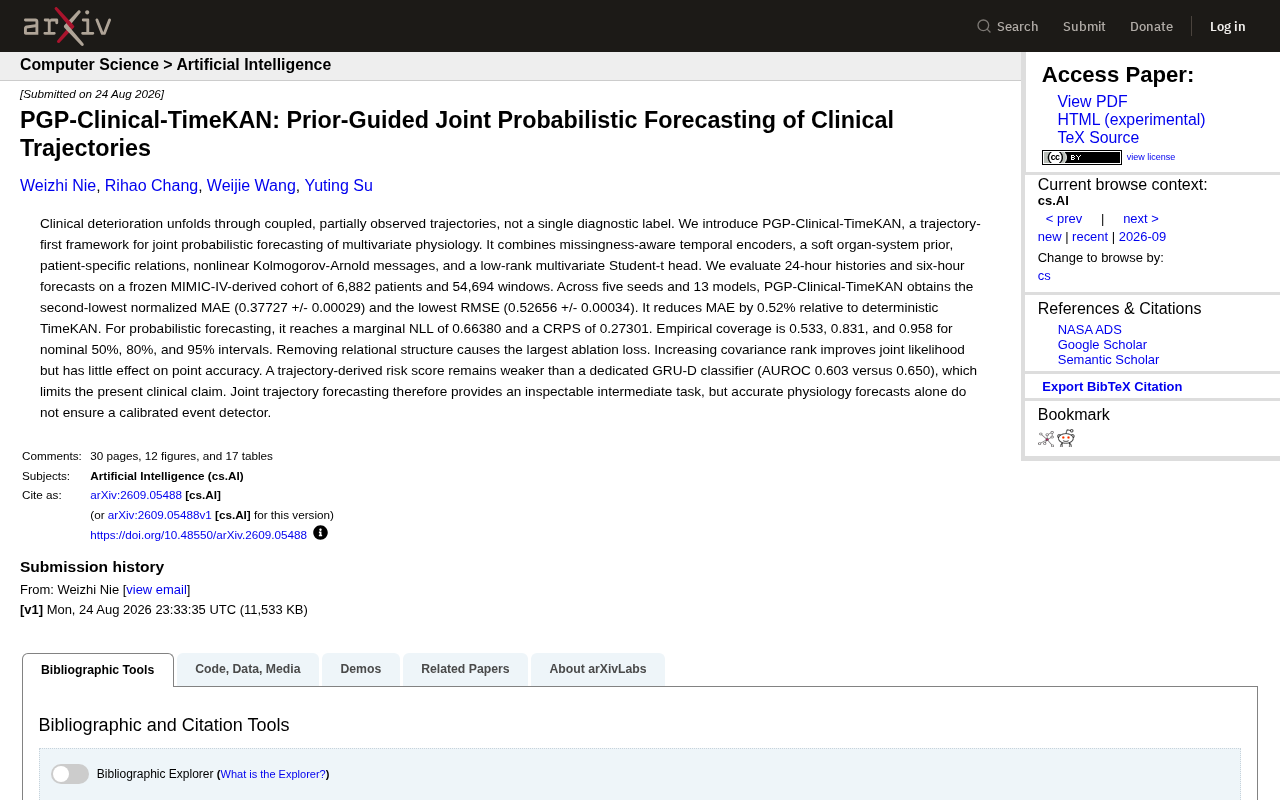
PGP-Clinical-TimeKAN: A Detailed Guide to the Multivariate Physiological Indicator Joint Prediction Framework
An in-depth analysis of the PGP-Clinical-TimeKAN framework for joint probabilistic prediction of multivariate physiological indicators, covering trajectory-first paradigm, KAN message passing, MIMIC-IV validation, and ablation studies.
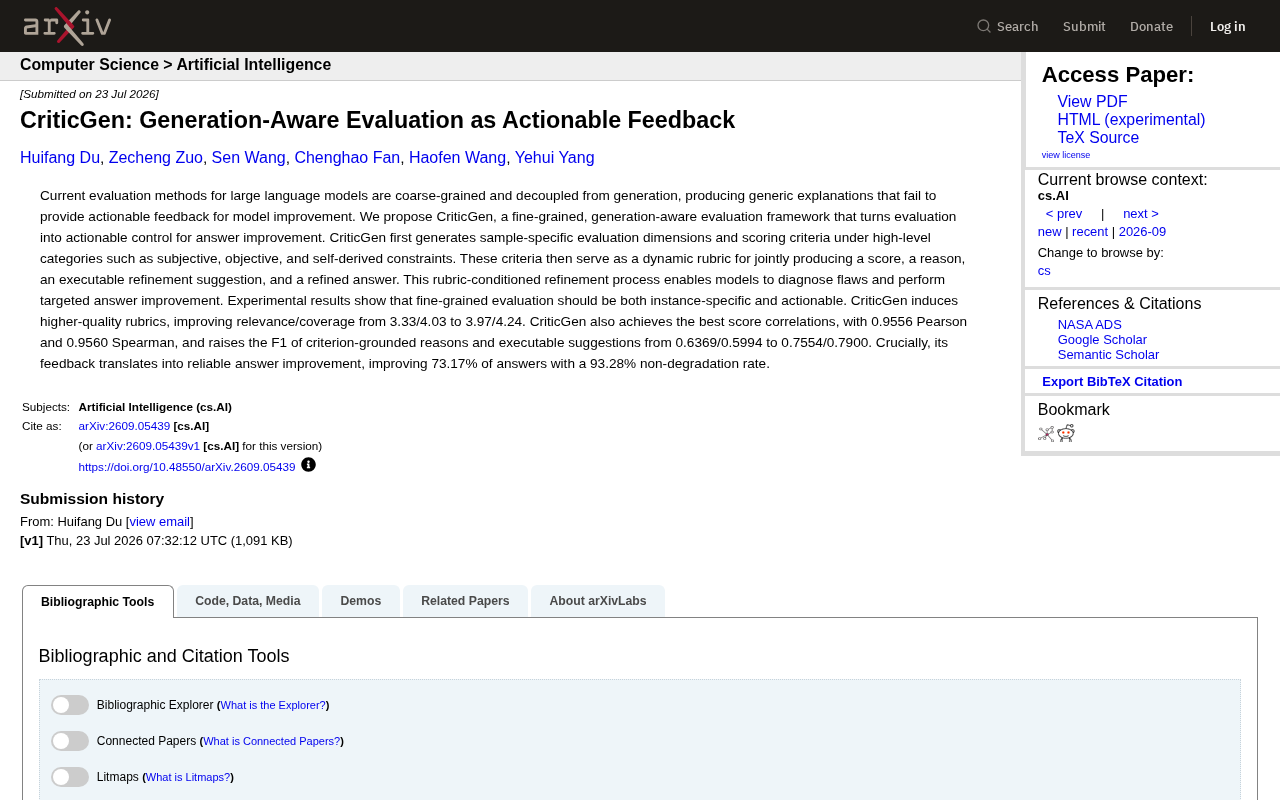
CriticGen: A New Framework That Transforms AI Evaluation into Actionable Improvement Feedback
CriticGen proposes a generation-aware evaluation framework that transforms AI assessment from passive scoring to an active optimization loop, achieving 73.17% answer improvement and 93.28% non-degradation rate.
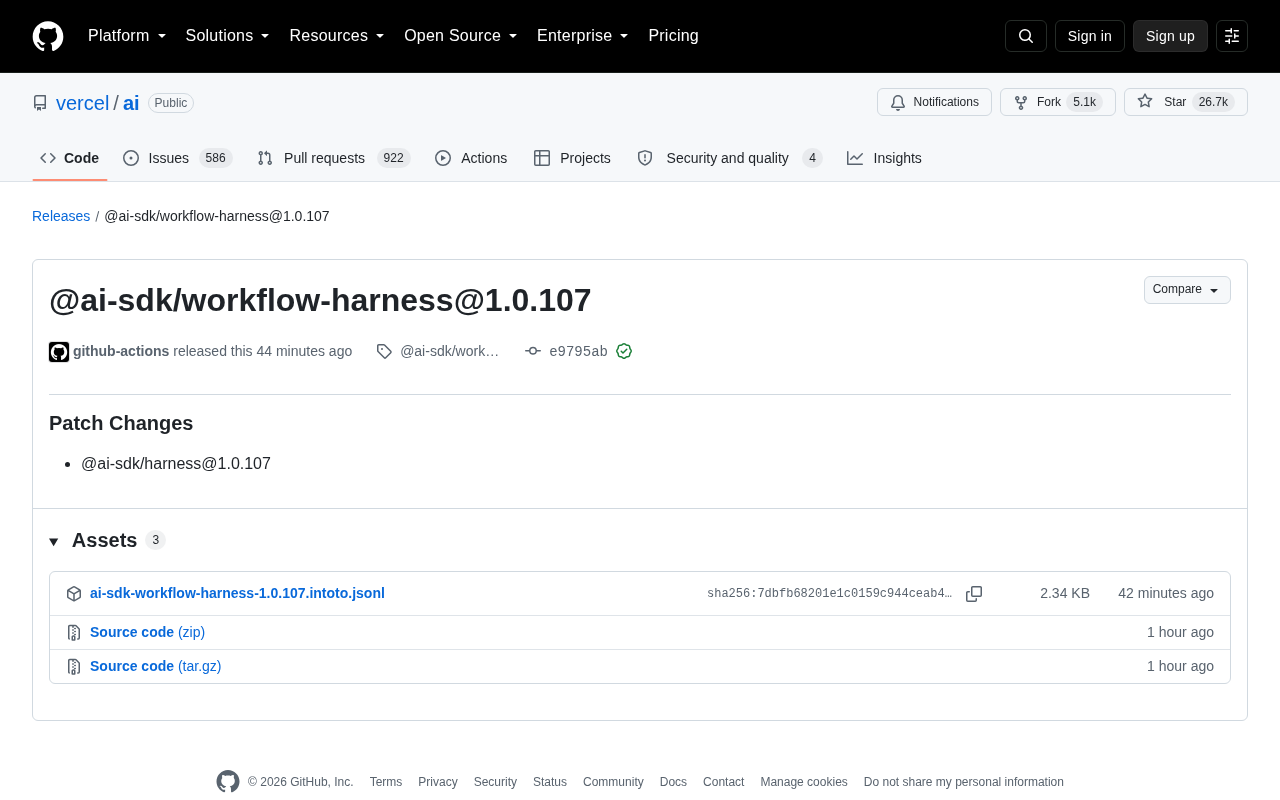
Vercel AI SDK workflow-harness Update Analysis
Deep analysis of Vercel AI SDK workflow-harness 1.0.107 update: architecture design, engineering practices, and developer value for building reliable AI apps.