Liminal: A Shared Team Second Brain Workspace for Humans and AI Agents

Liminal creates a shared workspace where humans and AI Agents collaborate through auto-rendered Markdown.
Liminal is a new Product Hunt launch positioning itself as a shared workspace and second brain for humans, AI Agents, and teams. It automatically renders Markdown and HTML files into clean visual interfaces with real-time sync, eliminating the friction of sharing AI-generated content. With a lightweight philosophy that avoids MCP integrations, proprietary formats, and token waste, it aims to become the presentation and collaboration layer for AI outputs.
A Workspace Built for Human-AI Collaboration
As AI Agents increasingly penetrate daily workflows, a pointed question emerges: when AI generates massive amounts of documents, notes, and content for us, how should these outputs be elegantly hosted, shared, and collaborated on? A new product that recently launched on Product Hunt — Liminal — offers a cleverly designed answer. It positions itself as "the shared workspace and second brain for you, your AI Agents, and your team," and has already earned 118 votes, ranking 15th on that day's leaderboard.
It's worth understanding the current industry landscape of AI Agents. AI Agents are AI systems capable of autonomously planning and executing multi-step tasks, distinct from traditional single-turn conversational AI. Since 2024, with capability improvements in large models like OpenAI's GPT-4 and Anthropic's Claude, along with the emergence of Agent frameworks like AutoGPT, CrewAI, and LangGraph, AI Agents have moved from proof-of-concept to real-world work scenarios. They can automatically write reports, organize research materials, generate code documentation, and even coordinate multiple subtasks to complete complex projects. However, the content these Agents produce often ends up scattered across local file systems, terminal outputs, or temporary caches, lacking a unified presentation and collaboration layer. The deeper issue is that mainstream collaboration tools (like Google Docs, Notion, Confluence) are all designed for human users — they assume content is entered by humans through graphical interfaces, not programmatically written to file systems by Agents in bulk. This fundamental impedance mismatch between design assumptions and how AI Agents actually work is precisely the structural gap Liminal aims to fill.
Liminal's core philosophy can be summarized in one sentence: Let AI write in the format it's best at, and let humans read and collaborate in the most intuitive way possible. This seems simple, but it precisely addresses many pain points in current AI collaboration scenarios.
How Liminal Bridges the Gap from Markdown to Real-Time Collaboration
The Language AI Naturally Speaks: Markdown and HTML
Liminal's design starting point is highly pragmatic. The product points out that AI Agents already habitually write files locally in Markdown and HTML — these are "languages they already speak." Rather than forcing Agents to adapt to various proprietary formats, it's better to work with this natural tendency.
To understand the rationale behind this design choice, some technical background on Markdown is helpful. Markdown is a lightweight markup language created by John Gruber in 2004, using simple symbols (like # for headings, * for lists) to mark text structure. Large language models encounter massive amounts of Markdown-formatted documents during training (including README files on GitHub, technical documentation, blogs, etc.), making Markdown the most natural output format when generating structured content. From a technical perspective, Markdown's syntax structure is highly compatible with natural language — a # followed by a space creates a heading, consecutive text forms a paragraph — meaning models require almost no additional "formatting cognitive cost" when generating token sequences. By contrast, if you require a model to output rich text formats (like the XML structure of docx) or proprietary JSON Schemas, the model must allocate more attention to maintaining format correctness, which not only increases error probability but also reduces the quality of the content itself. HTML is the standard markup language for web pages, and AI naturally uses it when generating content requiring complex layouts (like tables, embedded media, interactive elements). Both are open standards that can be parsed without specific software and have mature rendering ecosystems.
Liminal automatically renders these local Markdown and HTML files instantly into clean UI interfaces, syncing them to team members in real time. In other words, AI produces content in its own way in the background, while humans see a clean, structured visual workspace. This decoupled design between the "write layer" and the "presentation layer" lets both the Agent side and the human side maintain their most comfortable interaction methods, with Liminal serving as the translator and synchronizer in between.
Share a Link, Everyone Syncs in Real Time
On the team collaboration front, Liminal's key feature is "one link handles everything." Simply share a link, and all team members can see the same real-time updated workspace and edit directly in the browser. This design eliminates many familiar friction scenarios:
- No more copying and pasting Markdown text back and forth in Slack
- No more setting up your own server to host HTML pages
- No more waiting for Google Drive's sync and permission settings
This "link-as-workspace" model borrows from the mature paradigm of real-time collaborative documents (like Google Docs' real-time multi-user editing), but the key difference lies in the content source. In traditional collaborative documents, all content is entered by humans via keyboard; in Liminal, content may be automatically written by AI Agents running locally or in the cloud, while human team members review, annotate, and edit in the same space. This means document update frequency may be far higher than in traditional scenarios — an Agent might update a research report every few minutes, and team members need to perceive these changes in real time.
For knowledge workers who frequently collaborate with AI and need to share results with their team, this "zero-intermediary" experience is quite appealing.
Lightweight Design Philosophy: Liminal Rejects Complex Technical Solutions
Liminal particularly emphasizes what it "doesn't do" in its product description, and these negative positioning statements actually better reflect its design philosophy:
- No MCP calls: No need to rely on complex Model Context Protocol integrations
- No proprietary formats: Committed to using universal Markdown and HTML
- No wasted Tokens: Avoids consuming precious model call costs due to format conversions
Regarding MCP (Model Context Protocol), this is a protocol standard open-sourced by Anthropic in November 2024, designed to establish a unified communication interface between AI models and external tools/data sources. It's similar to a "USB-C port" for the AI world, allowing different AI Agents to invoke external services (such as database queries, file operations, API calls) in a standardized way. MCP uses a client-server architecture where AI applications initiate requests as clients, and external tools expose capabilities by implementing the MCP server side. While MCP significantly reduces the complexity of AI tool integration — developers only need to implement an MCP interface once to be callable by all compatible AI Agents — its implementation still requires configuring server-side processes, defining tool Schemas (including parameter types and return value structures), handling OAuth authentication, managing connection lifecycles, and more. For the simple need of just letting a team see an Agent's text output, introducing the full MCP stack is like "using a cannon to kill a mosquito." Liminal explicitly states it doesn't rely on MCP, meaning it chose a lighter path: directly monitoring and reading Agents' existing file outputs (through file system watching or simple directory syncing), rather than requiring Agents to push content to the platform via a specific protocol. This reduces Agent-side integration cost to virtually zero — Agents just need to write Markdown to a designated directory as usual.
Regarding Token costs, in large language model usage, Tokens are the basic billing unit. In English, each word corresponds to roughly 1-2 Tokens; in Chinese, each character is about 1.5-2 Tokens; punctuation and special symbols each consume Tokens as well. When an AI Agent needs to convert content from one format to another (for example, from Markdown to a platform's proprietary JSON structure, or from free text to a specific template format), the conversion process itself requires additional model calls and Tokens. Using current mainstream model pricing as reference: GPT-4o input Tokens cost approximately $2.5 per million, output approximately $10; Claude 3.5 Sonnet input costs approximately $3, output approximately $15. Seemingly tiny unit prices accumulate rapidly at scale — suppose a team produces 50 documents daily through Agents, averaging 2,000 Tokens each. If each requires one format conversion call (input original text + format instructions ~3,000 Tokens, output converted result ~2,500 Tokens), format conversion alone could generate hundreds of dollars in additional monthly costs. By directly rendering raw Markdown/HTML, Liminal fundamentally eliminates this unnecessary computational overhead, reducing these costs to zero.
This series of tradeoffs reflects a trend: as the AI tool ecosystem grows increasingly complex, more products are questioning the necessity of "heavy integration." Over the past year, the AI tools space has experienced a wave of "integration anxiety" — every product rushed to connect as many external services as possible through APIs, plugins, and MCP, resulting in skyrocketing configuration complexity that actually overwhelmed users with various integration settings. Liminal chooses to stand on the side of lightweight, open, and low-cost, attempting to trade minimal technical burden for the smoothest collaboration experience. For teams frustrated by various cumbersome AI workflows, this "subtractive" approach is itself a value proposition.
The Long-Term Vision of a Human-AI Shared "Second Brain"
Liminal doesn't aspire to be merely an instant collaboration tool. The product's ambition lies in accumulation over time — "over time, it becomes the shared second brain for your team and every Agent you collaborate with."
"Second Brain" is a popular concept in knowledge management in recent years, referring to systematically storing and connecting personal or team knowledge, notes, and thinking to form an external memory system that can be accessed at any time. This concept was systematized by productivity expert Tiago Forte in his 2022 book Building a Second Brain, whose core methodology CODE (Capture, Organize, Distill, Express) has influenced the design philosophy of tools like Notion, Obsidian, and Roam Research. In practice, a second brain emphasizes not simple information hoarding, but establishing meaningful connections between knowledge through bidirectional links, tagging systems, and progressive summarization, enabling stored information to be effectively reused in future creation and decision-making.
Traditional second brains rely entirely on active human input and organization, but the AI-era second brain faces a fundamentally new challenge: AI Agents may produce dozens or even hundreds of documents daily, far exceeding human manual organization capacity. A running research Agent might generate 20 competitive analysis reports in a single day, a coding Agent might produce dozens of technical documents, and a content Agent might draft over a dozen article outlines. If these outputs cannot be systematically accumulated and indexed, they'll quickly lose value like unfiled paper documents.
Liminal's unique approach is extending this "brain's" boundary from "humans" to "humans + Agents," essentially redefining the fundamental question of "who fills the brain" — from "humans write, humans read" to "humans and AI co-write, humans and AI co-read and reuse." This paradigm shift means future knowledge management systems need to simultaneously serve two types of "users": humans need intuitive visual interfaces and semantic search methods, while AI Agents need structured text formats and programmatic access interfaces. Liminal uses Markdown/HTML as a unified middle layer that satisfies both — humans read through the rendered UI, Agents read and write through raw text files.
This means AI Agents are no longer just one-time content generation tools, but ongoing participants in team knowledge accumulation. Every collaborative output is deposited into this shared space for reuse by humans and subsequent Agents. For example, an industry report organized by an Agent three months ago can be referenced today by another Agent as foundational data for new analysis, or quickly retrieved by team members preparing a proposal. This vision of "human-AI shared memory" is an important direction in the evolution of current AI collaboration products, echoing the broader trend of "AI-native knowledge infrastructure."
Conclusion: An Important Piece of the AI Collaboration Infrastructure Puzzle
Liminal was built by Justin Lam and is categorized under Productivity and Artificial Intelligence on Product Hunt. From a product logic perspective, it captures a real and expanding gap: after AI can efficiently produce content, the "hosting and collaboration" experience often lags behind.
From a broader perspective, Liminal is addressing a layer in the AI infrastructure stack that hasn't been fully defined yet — what might be called the "AI output presentation and collaboration layer." In the current AI tool ecosystem, we already have the model layer (OpenAI, Anthropic, Google), the orchestration layer (LangChain, CrewAI), Agent runtimes (Cursor, Devin, Replit Agent), but after these Agents produce results, how content is consumed and collaborated on by humans remains highly fragmented. Liminal is attempting to establish a standardized experience at this position.
Of course, as a newly launched product, whether Liminal can deliver on its promises of "real-time sync" and "zero-friction sharing" in actual use, and how deeply it's compatible with mainstream AI Agents (such as development tools like Claude Code, Cursor, and Windsurf, as well as various custom Agent frameworks), still awaits validation from more users. Additionally, as content scales grow, how to achieve efficient search, version management, and permission control will be challenges the product must face as it matures. But at least at the conceptual level, it clearly points to a direction worth watching — the workspace of the future will be designed for both humans and AI.
Related articles
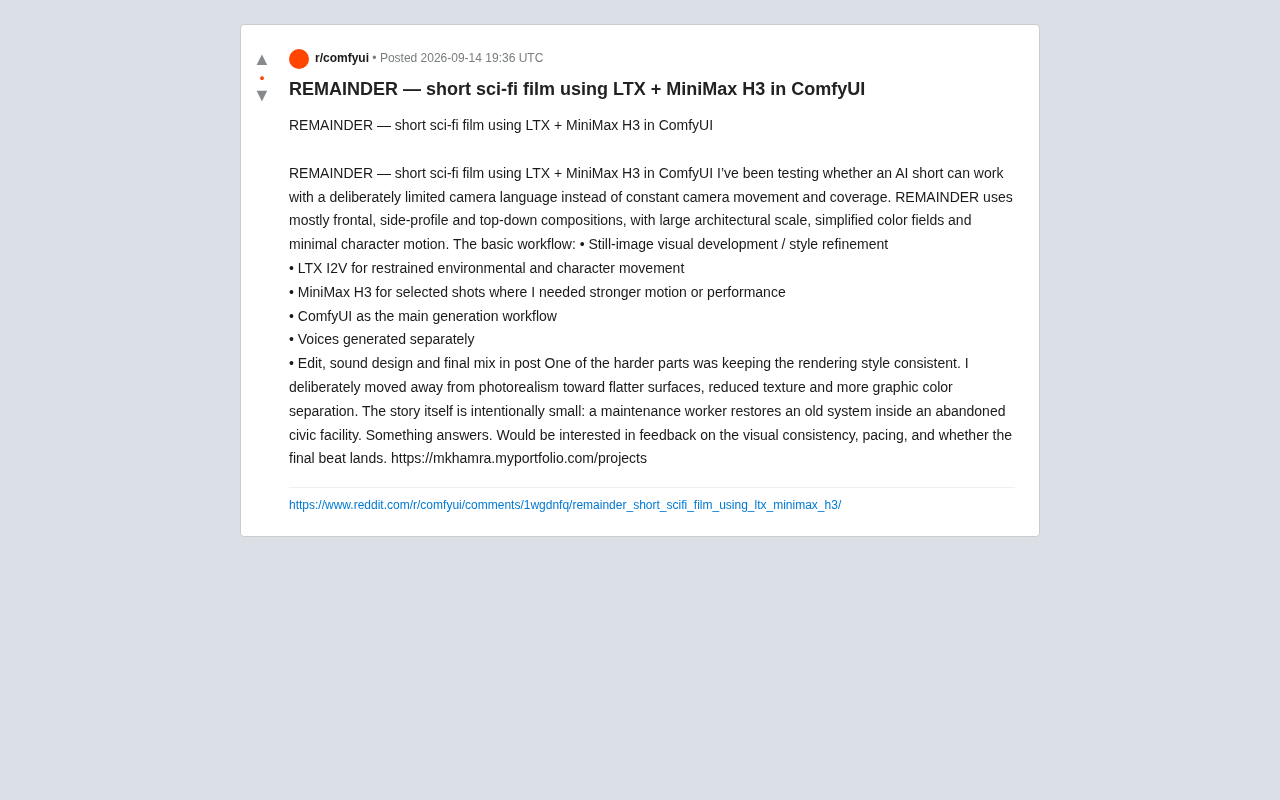
Building an AI Sci-Fi Short with LTX + MiniMax H3: Restrained Cinematography in ComfyUI
Sci-fi short REMAINDER uses LTX, MiniMax H3, and ComfyUI with restrained cinematography and flat aesthetics to solve visual consistency in AI filmmaking.
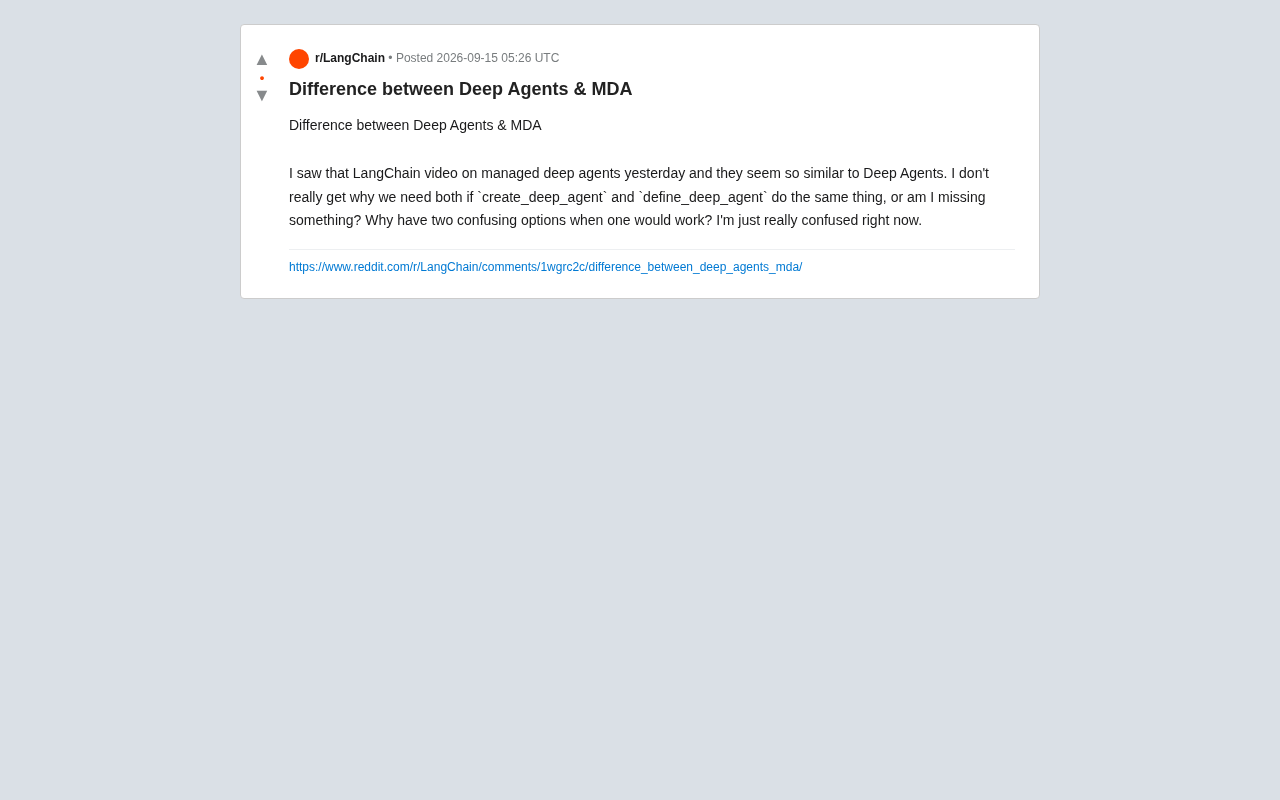
LangChain Deep Agents vs. MDA: Clearing Up the Confusion for Developers
What's the difference between LangChain's Deep Agents and MDA (Managed Deep Agents)? We break down create_deep_agent vs. define_deep_agent and help developers choose.
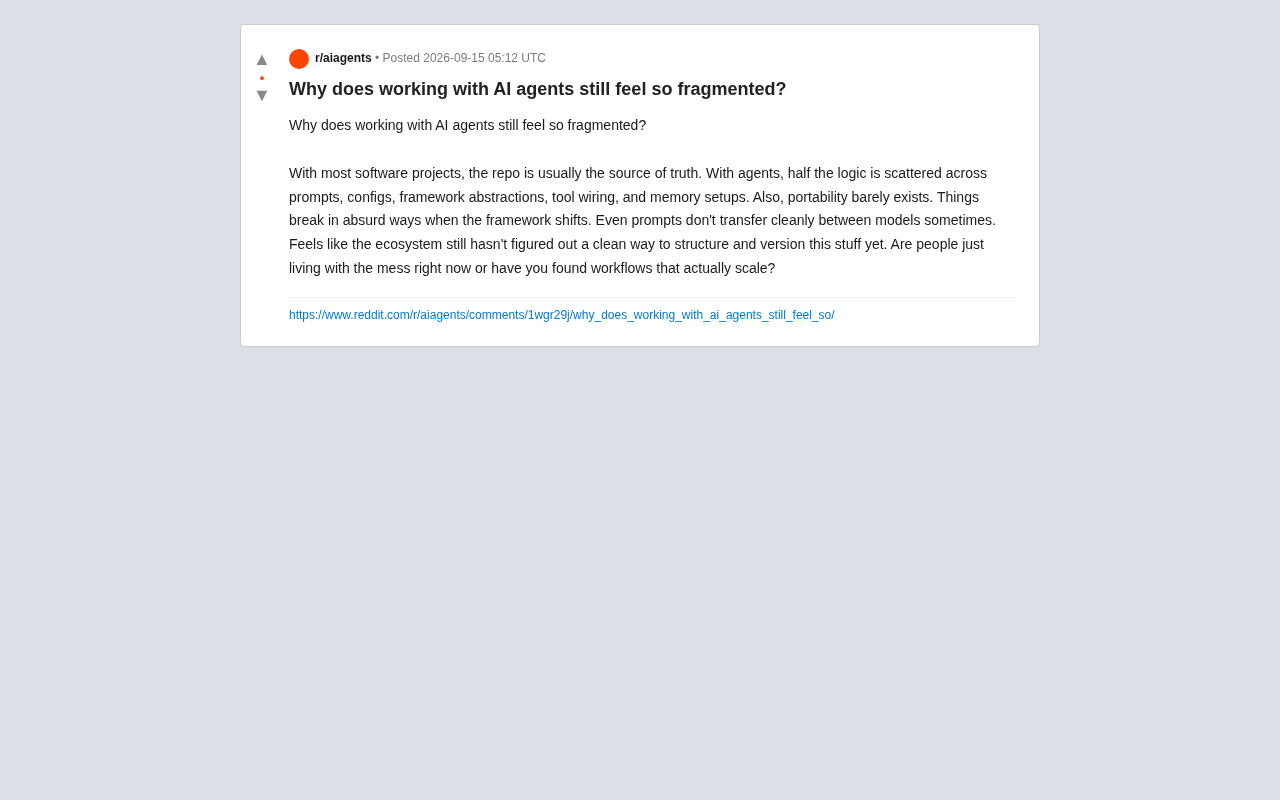
Why Is AI Agent Development So Fragmented? The Real Causes and How to Work Around Them
Why does AI Agent development feel so fragmented? Logic scattered across prompts, configs, and frameworks makes portability nearly impossible. Here's why — and how to cope.