Linux Creator Uses Claude Code to Write Kernel? AI Programming Controversy and Practice

Linus Torvalds was reported to use Claude Code to assist Linux kernel development, sparking heated discussions on AI programming and human-machine collaboration.
The article reports that Linux creator Linus Torvalds created a new branch with a "with LLM" label in the Linux kernel repository and admitted in the Patch description that he used Claude Code to complete core code, testing, review, and documentation. This move contrasts with his previous criticism of AI programming as a marketing gimmick. The UP host claimed a threefold performance improvement, but it lacks official benchmark confirmation, and the community remains cautious. The article also introduces the practice of deploying Claude Code to US cloud servers to avoid bans and discusses its compliance and security risks. Overall, AI programming tools are evolving from toys to productivity tools, but human-machine collaboration and code review remain key.
Title
Linux Creator Uses Claude Code to Write Kernel? AI Programming Controversy and Practice
Meta Description
Linux creator Linus Torvalds was reportedly using Claude Code to write kernel code, sparking AI programming controversy. This article reviews the event details, analyzes performance improvement data, and shares cloud development anti-ban tips, exploring the future trends of AI programming.
Article Content
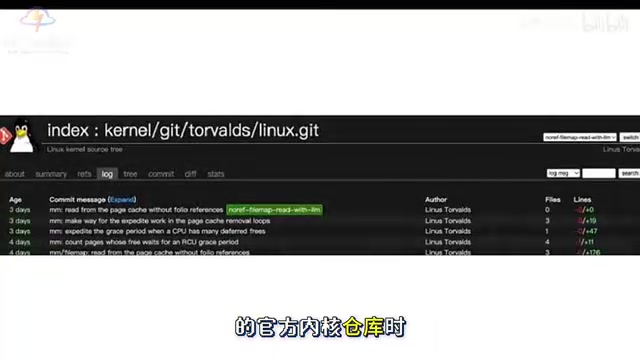
Recently, the tech world was abuzz with a piece of news: an unusual new branch appeared in the Linux kernel repository, with a commit message that prominently stated "with LLM." Even more surprising, the creator of this branch is none other than Linux's father, Linus Torvalds himself. According to a Bilibili UP host, Linus openly admitted in the latest Patch description that everything from core code, test cases to change review and documentation was completed by him with Claude Code. This news quickly sparked heated discussions, especially since Linus had repeatedly publicly criticized AI programming as a marketing gimmick.
Event Review: Linus's AI Programming Practice
According to cross-verification by the Bilibili UP host and the YouTube channel "Tech Insights," a branch named "noref_file_map_lead_with_llm" indeed exists in the Linux kernel repository, and its commit records show that a large amount of code was AI-assisted. The Patch description explicitly states: "From core code, test cases to change review and documentation, all completed by me with Claude Code." This detail has been forwarded in multiple technical communities, but as of now, Linus himself has not further commented on the public mailing list.
This practice contrasts sharply with Linus's past remarks. He once said at a tech conference: "AI programming is 90% marketing and 10% actual value." Now that he personally uses AI tools, it seems to confirm that the 10% value is expanding. However, some developers point out that Linus may only be using AI as an auxiliary tool, with core decisions still under his control. This "human-machine collaboration" model may be the correct way to approach AI programming.
Linux Kernel and Git Branch Mechanism: The Linux kernel is one of the world's largest open-source collaboration projects, using Git for version control. In the kernel repository, a branch is an independent line of development created by a developer based on a certain commit, used to isolate experimental changes. Linus Torvalds himself is not only the founder of the kernel but also the creator of Git, so his act of creating a branch in the kernel repository carries special symbolic significance. Normally, official kernel changes must go through mailing list review and be merged into the mainline, and experimental commits on personal branches are not equivalent to official endorsement. The branch named "noref_file_map_lead_with_llm" has "llm" in its name, which stands for Large Language Model, hinting at AI involvement. Understanding this background helps readers distinguish between "the existence of a branch" and "code being merged," avoiding misinterpreting experimental exploration as the official direction of the kernel.
Performance Tripled? Data Interpretation and Controversy
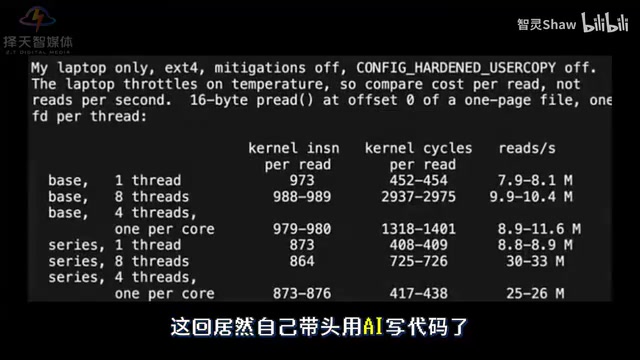
The UP host claimed in the video that after using Claude Code, "kernel performance tripled." This claim has not been confirmed by official benchmarks. According to a discussion by another well-known developer on Hacker News, the performance improvement may come from code optimization assisted by AI, but a threefold increase requires specific scenarios and test data to support it. Currently, the code of this branch has not been merged into the mainline, and the performance data lacks detailed reports.

Multi-source information shows that AI programming tools can indeed improve efficiency on specific tasks, but the phrase "tripled performance" may have a marketing flavor. A kernel maintainer commented on the mailing list: "AI-generated code requires strict review, and performance improvement depends on specific changes." Therefore, readers should remain rational about this data and wait for more actual test results.
Credibility of Benchmarks and Performance Claims: In operating system kernel development, claims of performance improvement must be based on reproducible benchmarks, such as Phoronix Test Suite, lmbench, or the kernel's built-in perf tools. These tests need to specify hardware configuration, workload, kernel version, and compilation options, and undergo peer review. The so-called "performance tripled" is difficult for the technical community to accept without these details. Historically, the gains from many kernel optimizations (such as scheduler improvements and file system adjustments) are usually in the single digits to tens of percentage points, and a threefold increase often implies extreme optimization or measurement bias in specific scenarios. Therefore, readers should focus on whether there are public test scripts, comparative data, and reproduction steps, rather than drawing conclusions based solely on verbal claims.
Anti-Ban Tips: Cloud Development Environment Deployment
The UP host also shared an "anti-ban trick": buying a US server and moving the Claude Code development environment to the cloud. This not only allows remote running of Claude and deployment of Agents but also enables building network architectures for AI automation. More attractively, US servers can obtain payment permissions for US SaaS, trying to earn money by connecting to report promotion alliances.

This practice has sparked discussions in the developer community. Supporters believe that a cloud development environment can avoid local IP bans and use overseas servers to obtain more stable API access. Opponents point out that this may violate the terms of service and pose data security risks. A Reddit user commented: "Using a US server to run AI tools can indeed bypass some restrictions, but in the long run, compliant use is the right way."
Claude Code and API Access Restrictions: Claude Code is an AI programming assistant launched by Anthropic, providing services through APIs or integrated development environments. Anthropic has clear geographical and compliance restrictions on API usage, and some countries or regions may not be able to access it directly. Deploying the development environment to a US server essentially uses an overseas IP to bypass geographical restrictions, but this may violate the terms of service and lead to account bans. In addition, cloud environments involve uploading code and data; if sensitive information is included, there is a risk of leakage. Developers should prioritize officially supported access methods and pay attention to updates to Anthropic's usage policies. For enterprise users, data residency and compliance requirements also need to be assessed.
The Future of AI Programming: Tool or Replacement?
Linus's practice has added fuel to the AI programming controversy. From multi-source information, AI programming tools are evolving from "toys" to "productivity tools." Tools like Claude Code and GitHub Copilot show potential in code generation, review, and documentation writing, but core architecture design still relies on human engineers.
According to the GitHub Octoverse report, the adoption rate of AI-assisted programming continues to rise, but developers' concerns about code quality have not diminished. Linus's case shows that even top programmers will use AI as an auxiliary means rather than relying entirely on it. In the future, the focus of AI programming may shift from "can it replace humans" to "how to collaborate between humans and machines."
For ordinary developers, when trying tools like Claude Code, they should focus on code review and testing, avoiding blind trust in AI output. At the same time, the deployment of cloud development environments requires careful assessment of compliance. The wave of AI programming has arrived, but harnessing it still requires human wisdom.
One-line Summary
Linus Torvalds was reported to use Claude Code to assist Linux kernel development, sparking heated discussions on AI programming and human-machine collaboration.
Paragraph Summary
The article reports that Linux creator Linus Torvalds created a new branch with a "with LLM" label in the Linux kernel repository and admitted in the Patch description that he used Claude Code to complete core code, testing, review, and documentation. This move contrasts with his previous criticism of AI programming as a marketing gimmick. The UP host claimed a threefold performance improvement, but it lacks official benchmark confirmation, and the community remains cautious. The article also introduces the practice of deploying Claude Code to US cloud servers to avoid bans and discusses its compliance and security risks. Overall, AI programming tools are evolving from toys to productivity tools, but human-machine collaboration and code review remain key.
Related articles

Free Unlimited Claude Code Solution: Agnes AI + CC Switch Setup Guide
No paid subscription needed — pair the free AI platform Agnes AI with the open-source tool CC Switch to provide a backend for Claude Code, enabling unlimited free calls to text, image, and video models. This guide covers the full setup, test results, and usage boundaries.

A Complete Zero-Cost Guide to Getting Started with Claude Code for Beginners in China
A beginner's guide to Claude Code for users in China: two installation methods (command line and IDE plugin), full configuration steps for replacing the official API with the free domestic LongCat model, and a hands-on demo of building a small tool with natural language, plus tips.

When the NSA Gets Involved: The AI Supply Chain Crisis Behind Open-Source CVEs and API Key Hijacking
Multiple open-source projects disclosed severe CVEs in one day, PHP flaws alarmed the FBI, and Railway and OpenCode were breached with API keys stolen. This article breaks down the vulnerability window, AI-accelerated exploitation, and the AI supply chain crisis behind the API key black market, with a developer defense checklist.