Linux Kernel's AI Civil War: Anti-AI Activist Elected to TAB, Torvalds Scraps AI Disclosure

Anti-AI figure elected to kernel TAB, Torvalds scraps AI disclosure requirement, conflict escalates.
The Linux kernel community's conflict over AI-generated code has entered a new phase. Anti-AI activist Laurent Pinchart has been elected to the kernel Technical Advisory Board (TAB), arguing that generative AI in open source lacks ethical justification and that his goal is to stop AI. Almost simultaneously, the community removed the `Assisted-by` tag rule for disclosing AI assistance, making AI involvement hard to quantify—AI-related patches already exceeded 20% in October, with actual levels possibly 40%–60%. Top maintainers including Torvalds and Greg Kroah-Hartman embrace AI tools. The conflict has spread to projects like GNOME; analysts expect AI's share to keep rising and the anti-AI camp to be unable to reverse the trend, though it may fork the kernel.
The Linux kernel community is in the throes of a fierce civil war over AI. Anti-AI activist Laurent Pinchart has been elected to the kernel Technical Advisory Board (TAB), while Linus Torvalds has scrapped the requirement to disclose AI usage in code submissions. These two developments, occurring almost simultaneously, mark a new phase in the conflict over AI-generated code.
Anti-AI Crusader Enters the Decision-Making Layer
According to the YouTube channel Lunduke Journal, Laurent Pinchart publicly stated after being elected to the Linux kernel TAB that using generative AI in free and open source software development has "no ethical justification," and accused AI of being used to "undermine democracy." His proposed talk for the Open Source Summit, titled "How to Resist Generative AI," was rejected, after which he declared he would pursue "Plan B"—joining the kernel Technical Advisory Board, because his goal is to stop AI.
The TAB is an elected position, with members chosen by a vote of kernel maintainers. Pinchart's election means a significant number of senior kernel developers endorse his stance. When longtime developer Theodore Ts'o asked on the mailing list, "Does it really matter whether high-quality contributions are AI-generated?" Pinchart responded directly, "It matters to me," and described the use of LLMs as "almost nauseating."
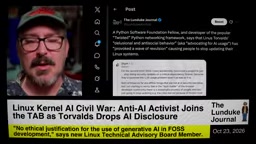
The Linux Kernel Technical Advisory Board (TAB) is an elected advisory body of the kernel community. Its members are voted in by kernel maintainers at the annual summit and are typically senior developers serving concurrently. The TAB's responsibilities include coordinating community disputes, organizing maintainer summits, and advising Linus Torvalds on technical direction—but it does not have the power to directly veto patches or overturn maintainers' decisions. In other words, the TAB is a platform with agenda-setting and opinion-shaping influence, not a governing body with real authority. For this reason, what Pinchart can achieve through his TAB seat is mainly to shape the discussion framework and influence community norms, rather than directly blocking AI-related code from entering the kernel. Understanding this is essential to judging the real significance of his election.
Torvalds Scraps AI Disclosure Requirement
Almost in sync with Pinchart's election, the kernel community submitted a change on October 20 that removed the previous rule requiring developers to tag AI assistance with the Assisted-by label. The rule, in effect since mid-January, required any code submission generated with AI tools to note the tool's name.
According to Lunduke Journal, citing conclusions from the maintainer summit, the requirement has been completely deleted. This means it will be difficult to accurately tally the proportion of AI involvement in kernel patches going forward. Previous data showed that AI-related patches already accounted for over 20% of all incoming patches in October, while community estimates put the actual proportion at perhaps 40% to 60%.
Linus Torvalds himself, along with Greg Kroah-Hartman and Theodore Ts'o—the three most prolific kernel developers—have all embraced AI tools to varying degrees. Torvalds has even been accused of frequently submitting code patches entirely generated by AI.
The Assisted-by tag is a trailer in kernel commit messages, formatted like Assisted-by: tool-name, used to declare that AI assistance was used in writing the patch. The Git trailer mechanism is itself part of the kernel collaboration process; besides Signed-off-by (developer certification) and Reviewed-by (reviewer confirmation), there are various tags such as Co-developed-by and Tested-by used to record the contribution chain. What made Assisted-by unique is that it involved no legal certification—it was solely for disclosing tool usage. With the tag removed, AI involvement no longer leaves a machine-tallyable trace, and the community can only rely on sample estimates or voluntary disclosure by developers.
Chain Reactions Across the Open Source World
This conflict is not confined to the kernel. The GNOME Foundation is likewise split over AI: some developers advocate actively using AI to clean up code, port features, and accelerate testing, while some elected board members are nearly vehemently opposed, with arguments even descending into profanity.
Glyph, a Python Software Foundation fellow and Twisted framework developer, publicly criticized Torvalds' actions as "delusional and antisocial," claiming they triggered "a wave of antipathy toward Linux" that led people to stop updating their systems. But Lunduke Journal points out that this claim lacks survey data or usage statistics to support it.
fork in the open source context refers to copying an independent branch from an existing codebase, to be developed by a new maintenance team under different principles. Forking does not violate open source licenses, but it is costly: it requires rebuilding a maintainer team, CI infrastructure, and downstream distribution trust, while facing long-term merge conflicts with upstream. Historically successful forks such as LibreOffice (split from OpenOffice) arose mostly from governance or licensing disagreements rather than a single technical stance. If the anti-AI camp chooses to fork the Linux kernel, its core challenge is that the kernel ecosystem's hardware vendor support, distribution adoption, and patch backflow all depend heavily on upstream—a non-AI version would likely become a niche branch.
The Reality Behind the Divide
The pro-AI side, represented by the Linux Foundation and top-level maintainers, believes AI is an irreversible engineering reality. Opponents reject it on ethical and political grounds; Pinchart explicitly lists "getting people to stop using AI" as one of his life goals.
Lunduke Journal's assessment is that AI's share of kernel development will continue to climb, possibly approaching 80% by year's end, and the anti-AI camp's protests cannot change this trend. Some opponents may choose to fork the kernel and create a non-AI version.
The channel also offers an observation: the group of developers leaning politically left overlaps heavily with the anti-AI group, while center-right projects such as Brave and Omarchy have recently grown rapidly. This polarization could gradually diminish the anti-AI camp's influence in the open source community—though this correlation judgment comes from a single source and still needs more evidence.
Editorial View
The core contradiction in the kernel community is this: AI assistance has become the de facto standard, but with the disclosure mechanism removed, the community has lost the basis for quantitative discussion. Pinchart's entry into the TAB means the anti-AI voice has gained an institutional channel, but the TAB's advisory nature limits its actual veto power. In the short term, the quarrels will continue; in the long term, the efficiency competition in code output will determine who holds the discursive upper hand.
incoming patches refers to the set of new patches awaiting review on maintainers' mailing lists, one of the common metrics for gauging kernel development activity. The figure that AI-related patches exceed 20% typically comes from tallying the Assisted-by tag in commit messages or specific tool attribution patterns. Since that tag has now been removed, similar statistics will lose their data source in the future, leaving only indirect methods such as code style analysis, developer surveys, or self-reporting by tool vendors. This means the debate over "how much kernel code AI actually contributes" will degenerate from a quantifiable factual question into a matter of competing stances—and this is precisely the most noteworthy side effect of removing the disclosure mechanism.
One-line Summary
Anti-AI figure elected to kernel TAB, Torvalds scraps AI disclosure requirement, conflict escalates.
Paragraph Summary
The Linux kernel community's conflict over AI-generated code has entered a new phase. Anti-AI activist Laurent Pinchart has been elected to the kernel Technical Advisory Board (TAB), publicly arguing that using generative AI in open source development lacks ethical justification and that his goal is to stop AI. Almost simultaneously, the community removed the rule requiring developers to disclose AI assistance with the Assisted-by tag, making AI involvement hard to quantify—previously, AI-related patches already exceeded 20% in October, with the actual proportion possibly reaching 40% to 60%. Top-level maintainers including Torvalds and Greg Kroah-Hartman have all embraced AI tools. The conflict has spread to open source projects such as GNOME. Analysts believe AI's share will continue to climb and the anti-AI camp cannot reverse the trend, but may choose to fork the kernel.
Related articles

M&M's Spent Millions Replacing Artificial Blue Dye — Why Is It So Hard?
Mars spent millions trying to replace artificial blue dye in M&M's with spirulina, but thick material clogs pipes and residue risks mold, forcing a full production-line rebuild. Here's the engineering behind the reformulation.
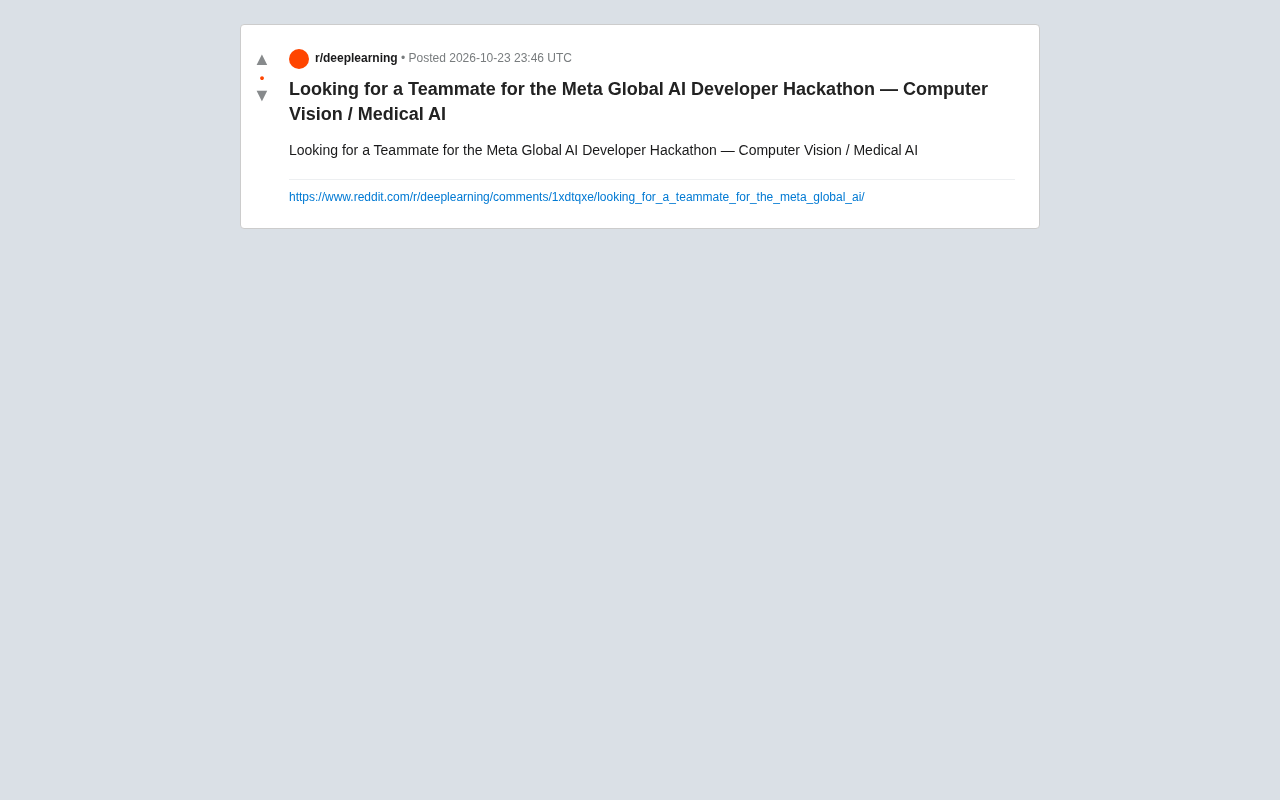
Teammate Wanted for Meta Global AI Developer Hackathon: Computer Vision & Medical AI
A Reddit developer seeks teammates for the Meta Global AI Developer Hackathon, focusing on computer vision and medical AI. This article analyzes the track logic, skills-complementarity needs, and topic selection strategy behind this teaming signal.
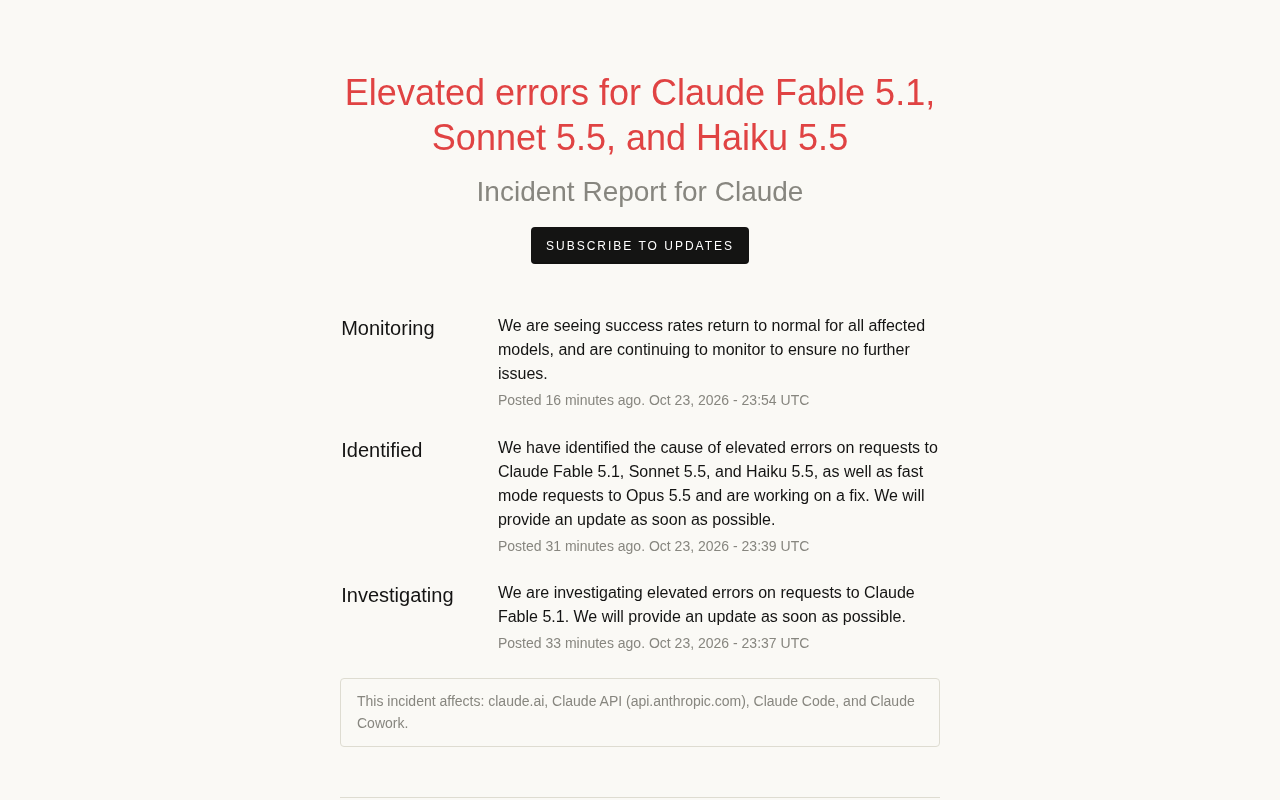
Multiple Claude Models Hit by Errors: A Postmortem of Fable 5.1, Sonnet 5.5, and Haiku 5.5
Claude Fable 5.1, Sonnet 5.5, Haiku 5.5, and Opus 5.5 fast mode saw elevated errors; Anthropic identified and resolved the issue in 17 minutes. This postmortem covers the timeline, the technical reasons for the multi-model cascading failure, and practical lessons for retry and degradation strategies.