Linux Wayland Desktop Sees a Skeuomorphic Design Revival

A Wayland-based Linux desktop project tries to revive skeuomorphic design, sparking nostalgia and technical debate on Hacker News.
This article introduces a Wayland-native Linux desktop project discussed on Hacker News that aims to bring skeuomorphic design back. It reviews skeuomorphism's decline after the rise of flat design, analyzes Wayland's compositor flexibility and performance challenges, and highlights two community reactions: support for differentiated visual richness and concern over rendering and GPU costs. It also notes the trend of reintroducing depth and material in mainstream design.
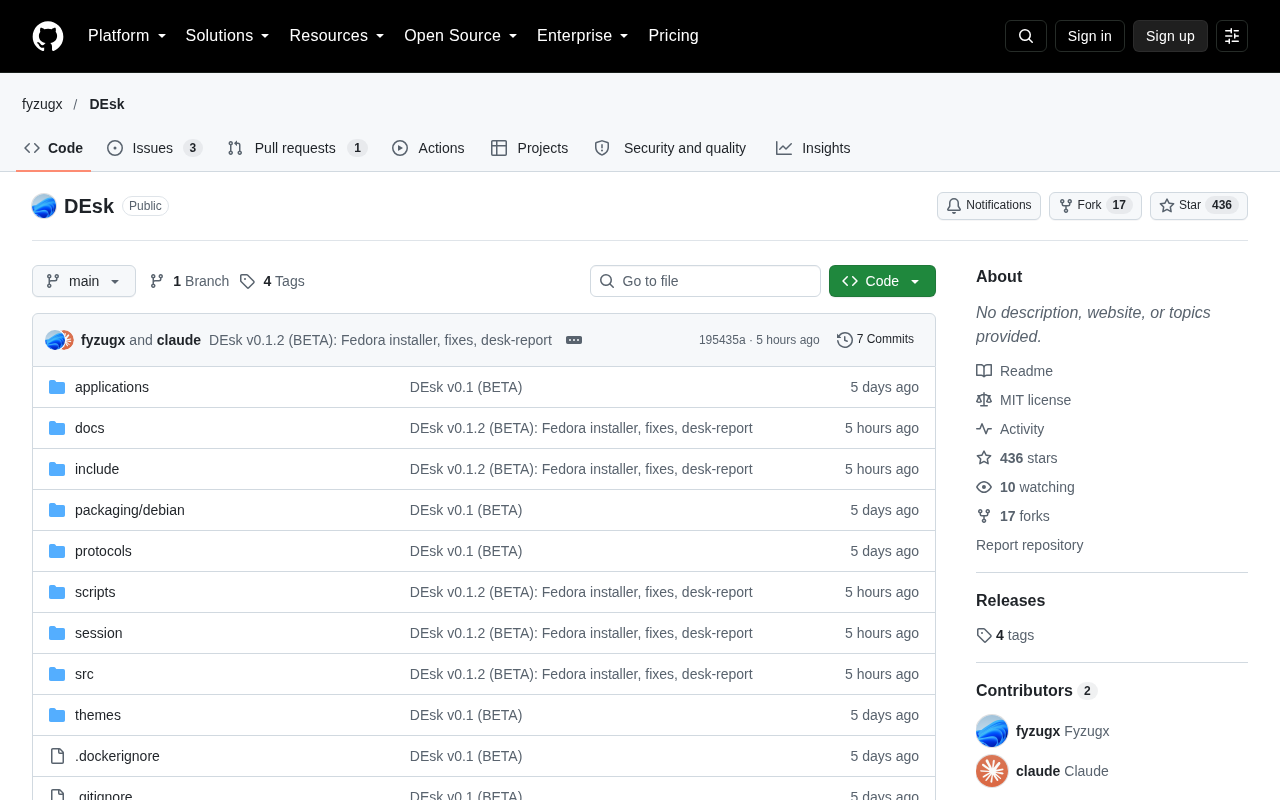
Linux desktop environments have long been dominated by flat design, with mainstream desktops like GNOME and KDE Plasma pursuing minimalism and a modern feel. But a project recently discussed on Hacker News is trying to bring skeuomorphic design back to the Wayland desktop, offering Linux users a completely different visual experience.
Why Skeuomorphic Design Is Gaining Attention Again in the Linux Community
Skeuomorphic design was once the signature style of early versions of Apple's iOS and Mac OS X. By mimicking real-world materials, lighting, and textures, it gave digital interfaces a physical quality. With the rise of iOS 7 and Material Design, flat design became mainstream, and skeuomorphism was for a time regarded as an outdated design language.
In the Linux desktop world, however, skeuomorphism has always had its adherents. Some users miss the visual richness of the early GNOME 2, Windows 7 Aero, and Mac OS X Leopard eras, arguing that flat design has sacrificed information hierarchy and recognizability. This Wayland desktop project is aiming precisely at that unmet need.
Combining a Native Wayland Desktop with a Skeuomorphic Style
The project's core idea is to build a desktop environment on top of the Wayland display server protocol that natively supports skeuomorphic visuals. As an alternative to X11, Wayland has already become the default option in major distributions such as Fedora and Ubuntu, and its compositor architecture offers greater flexibility for custom visual styles.
According to information discussed on Hacker News, this desktop environment adopts designs that mimic real materials across window decorations, icons, controls, and more. Buttons feature gradients and shadows, window borders simulate metal or wood textures, and the overall visual effect is close to early macOS or Windows 7.
The key difference between Wayland and X11 lies in the architectural model. X11 uses a client-server model, where clients send drawing instructions directly to the X server, and the compositor (such as Compton) is usually an optional add-on layer. Wayland, by contrast, makes the compositor the core of the display server, and clients hand off rendered results to the compositor for unified composition through buffer sharing (such as the wl_surface protocol). This means effects like window decorations, shadows, and blur are no longer drawn by clients themselves, but must be implemented through compositor protocols (such as xdg-decoration and layer-shell). This change has a twofold impact on skeuomorphic design: on one hand, centralized compositor control makes globally consistent materials and lighting styles easier to achieve; on the other hand, traditional X11 effect libraries (such as XRender-based shadows) cannot be ported directly and must be redeveloped for Wayland's rendering pipeline (such as EGL and Vulkan).
Skeuomorphism comes from the Greek words skeuos (container) and morphē (shape), and refers to imitating the materials, textures, and interaction metaphors of real objects in digital interfaces. Its typical features include leather stitching, brushed metal, glass highlights, the raised feel of physical buttons, and shadows and gradients based on real-world logic. The advantage of skeuomorphism is that it lowers the cognitive barrier—users can intuitively understand what a control does because it already has a counterpart in reality. But its drawbacks are also obvious: decorative elements consume rendering resources and can easily look redundant on high-resolution screens. After iOS 7 shifted to flat design in 2013, skeuomorphism declined for a time, but in recent years, with the return of acrylic materials in Fluent Design and the glassy textures of visionOS, designers have begun to reexamine the role of depth and material in information hierarchy.
Community Reaction: Nostalgia and Technical Discussion Side by Side
The comment section on Hacker News presents two voices. Some users welcome this visual style, arguing that modern desktops are too homogeneous and that skeuomorphism offers a differentiated choice. One comment noted that on touchscreens and hybrid input devices, controls with clear physical metaphors are actually easier to understand.
Another part of the discussion focuses on the technical side, exploring the performance overhead of implementing complex visual effects in a Wayland environment. Wayland's compositor model differs from X11's, and some traditional ways of implementing visual effects need to be redesigned. Community members exchanged views on issues such as the rendering pipeline, GPU acceleration, and memory usage.
The performance overhead of Wayland compositors is one of the core technical challenges facing a skeuomorphic desktop. Under the Wayland architecture, each window's visual effects (such as shadows, blur, and rounded corners) are usually calculated in real time by the compositor through GPU shaders. Skeuomorphic design makes heavy use of multi-layered gradients, noise textures, and dynamic lighting, which increases per-frame draw calls and video memory bandwidth usage. For example, simulating a brushed metal texture may require high-resolution texture maps, while real-time shadows require additional depth buffers and blur passes. For integrated graphics or older GPUs, these effects can lead to frame rate drops or input lag. Optimization directions mentioned in community discussions include pre-rendering static materials into texture atlases, using compute shaders to batch-process blur, and reducing unnecessary repaint regions through protocol extensions (such as wp_viewporter). In addition, Wayland lacks X11's global coordinate system, so some visual effects that depend on absolute screen positions (such as shadows across windows) require additional interfaces from the compositor, further increasing implementation complexity.
Practical Use Cases for a Skeuomorphic Desktop
From a practical standpoint, skeuomorphic design is not just nostalgia. For users who stare at screens for long periods, moderate textures and shadows can reduce visual fatigue; for scenarios that require quickly identifying what controls do, physical metaphors can shorten the learning curve.
This project also reflects a characteristic of the Linux desktop ecosystem: diversity. Unlike Windows and macOS, where a single vendor determines design direction, Linux users can freely choose a desktop environment that matches their own aesthetic. From minimalist i3 and sway to feature-rich KDE, and now to this skeuomorphic Wayland desktop, the range of choices continues to expand.
Implications for Linux Desktop Design Trends
After a decade of flat design dominance, the design world has already begun to reflect on it. Microsoft's Fluent Design and Apple's visionOS have both reintroduced depth, material, and lighting elements on top of flat design. This Wayland skeuomorphic desktop project can be seen as an echo of this trend in the open-source community.
For developers, the project demonstrates the potential of the Wayland protocol for visual customization. For users, it offers a new option beyond mainstream desktops. For the design community, it serves as a reminder: the choice of design language should not be held hostage by a single trend, and diverse coexistence is the mark of a healthy ecosystem.
One-line Summary
A Wayland-based Linux desktop project attempts to revive skeuomorphic design, sparking nostalgia and technical discussion on Hacker News.
Paragraph Summary
This article introduces a Wayland-native desktop project hotly discussed on Hacker News that seeks to bring skeuomorphic design back to the Linux desktop. It first reviews the rise and fall of skeuomorphism from early iOS to the flat design era, noting that the Linux community has always had a demand for visual richness. It then analyzes the flexibility that Wayland's compositor architecture offers for custom visual effects, while also bringing performance and implementation challenges. Community reactions fall into two camps: one welcomes a differentiated choice and argues that physical metaphors are easier to understand on hybrid input devices; the other focuses on technical issues such as the rendering pipeline and GPU acceleration. The article also explores the practical value of skeuomorphism in reducing visual fatigue and shortening the learning curve, and notes that the project echoes the trend in mainstream design languages such as Fluent Design and visionOS to reintroduce depth and material, reflecting the diversity of the Linux desktop ecosystem.
Related articles

Uber Deploys ChatGPT Work Company-Wide: AI in the Workplace Enters the Scaled Implementation Phase
Uber deploys ChatGPT Work to 30,000+ employees, extending it from engineering to all roles. We analyze its expert-engineer pairing, end-to-end automation, and questions of AI control and power concentration—insights for scaling AI in the workplace.

Shift at Midnight Hands-On: When "ID Verification" Becomes Alien Hunting
Shift at Midnight blends ID verification with horror survival in a four-player co-op game. We break down its inspection mechanics and chaotic humor.

Zelensky Recounts the Outbreak of War: I Need Ammunition, Not a Ride
Zelensky recalls the first day of war in a YouTube interview: farewell to family, rejecting Biden's evacuation offer with "I need ammunition, not a ride," and how Bucha shaped his stance on compromise and peace talks.