Lyft Joins the Robotaxi Race: AI Competition in Mobility Heats Up
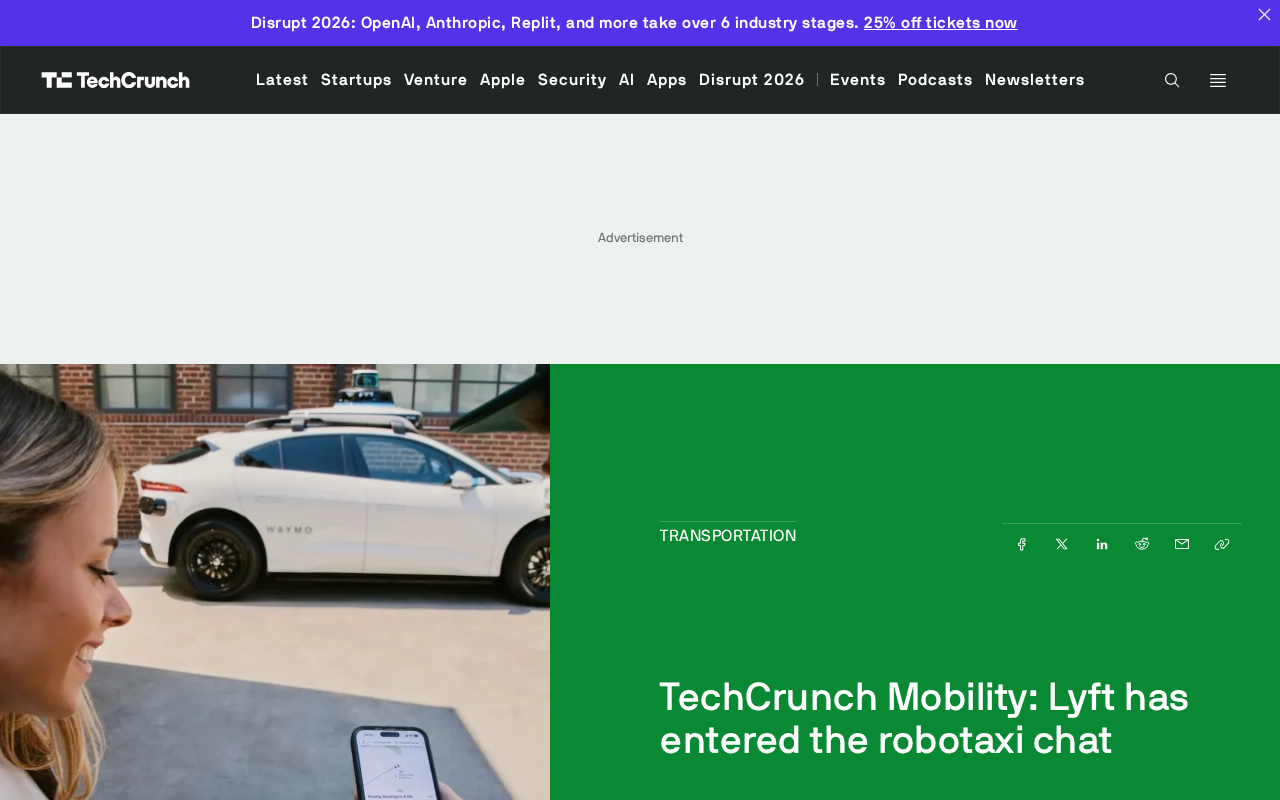
Lyft officially joins the robotaxi race, stepping up AI-driven competition with Waymo and Uber.
Ride-hailing giant Lyft has officially announced its entry into the robotaxi space, signaling a significant strategic shift toward AI-driven future mobility. As perception, decision-making, and planning technologies continue to mature, robotaxis have moved from concept to partial commercial deployment, with Waymo, Cruise, and Uber already staking out their positions. Lyft's entry further heats up competition, though turning intent into reality still requires overcoming hurdles in safety validation, regulatory approval, cost control, and public trust. Whether it builds in-house or partners with existing players will define its trajectory in this race.
Lyft Enters the Autonomous Taxi Space
The robotaxi race is gaining another heavyweight contender. According to TechCrunch Mobility, ride-hailing giant Lyft has officially signaled its entry into the robotaxi space, marking a strategic pivot for the company toward the future of mobility and AI applications.
For Lyft — which has long competed head-to-head with Uber in the ride-hailing market — joining the autonomous taxi conversation is no accident. As AI technology continues to mature across perception, decision-making, and planning, robotaxis have gradually moved from proof-of-concept to commercial deployment, making them an unavoidable topic in the mobility industry.
How AI Is Reshaping the Mobility Industry
TechCrunch Mobility's coverage underscores that AI's role in the future of transportation is more critical than ever. At its core, autonomous driving is a complex AI systems engineering challenge — from multi-sensor fusion for environmental perception, to real-time path planning, to dynamic responses to complex urban traffic conditions. Every layer depends heavily on machine learning and algorithmic optimization.
For ride-hailing platforms, robotaxis represent a fundamentally different business model. Traditional ride-hailing relies on a massive network of human drivers, whereas a scaled autonomous fleet has the potential to dramatically reduce per-unit operating costs, improve vehicle utilization, and redefine the relationship between the platform and its supply of vehicles. This is precisely why virtually every mobility company cannot afford to ignore this trend.
Multi-sensor fusion is the core technical approach for autonomous driving perception systems, typically combining LiDAR, cameras, millimeter-wave radar, and ultrasonic sensors to integrate environmental data from multiple dimensions into a unified 3D world model. LiDAR can precisely measure distance and generate 3D point clouds but comes at a high cost; pure vision approaches (such as Tesla's FSD) rely on large-scale image data and deep learning models to reconstruct spatial information. At the path planning layer, the system must complete multi-level decisions — from global routing to local obstacle avoidance — within milliseconds, while continuously handling long-tail scenarios such as pedestrians crossing unexpectedly, construction detours, and abnormal weather conditions. The degree to which these edge cases are covered is a key indicator distinguishing the maturity of different autonomous driving systems, and the fundamental reason why safety validation costs remain high prior to commercial deployment.
Competitive Landscape and Strategic Considerations
Lyft's entry makes competition in the robotaxi space even more intense. Waymo and Cruise have already launched commercial operations in select cities, while Uber has staked its position in autonomous mobility through partnerships. Lyft's decision to make a clear statement at this juncture is both a response to industry trends and a necessary move to secure a place in the minds of investors and users alike.
That said, there is still a considerable distance between making a statement and actually delivering on the ground. Safety validation, regulatory approval, cost control, and building public trust are all unavoidable challenges. Whether Lyft chooses to develop its own technology or enters through partnerships with existing autonomous driving companies will directly determine its positioning and pace in this race.
Waymo is currently the most commercially advanced robotaxi operator, having spun off from Google's self-driving project in 2016. Waymo One has opened paid ride-hailing to the public in cities including San Francisco and Phoenix, accumulating over 20 million autonomous miles. Cruise, a subsidiary of General Motors, once operated fully driverless commercial services in San Francisco, but had its California operating permit revoked in 2023 following an accident and accusations of withholding information, after which it significantly scaled back operations. Uber sold its in-house autonomous driving division ATG to Aurora for $3.2 billion in 2018, subsequently pivoting to a platform model by integrating autonomous vehicles from partners like Waymo and Motional into its ride network. These three companies' divergent paths — proprietary technology development, platform partnerships, and rebuilding after an accident setback — form the industry reference points that Lyft must consider as it enters the space.
Signals Worth Watching
For readers following the future of mobility, Lyft's moves are worth tracking closely. Key indicators to watch include: the cities and timeline for its robotaxi service launch, its choice of technology partners, and how it balances and integrates its existing ride-hailing business with an autonomous vehicle fleet.
As more players enter the arena, competition in the robotaxi industry will no longer be purely a technology contest — it will be a comprehensive test of operational efficiency, regulatory compliance, and user experience. The AI-driven transformation of mobility is accelerating from vision to reality.
Related articles
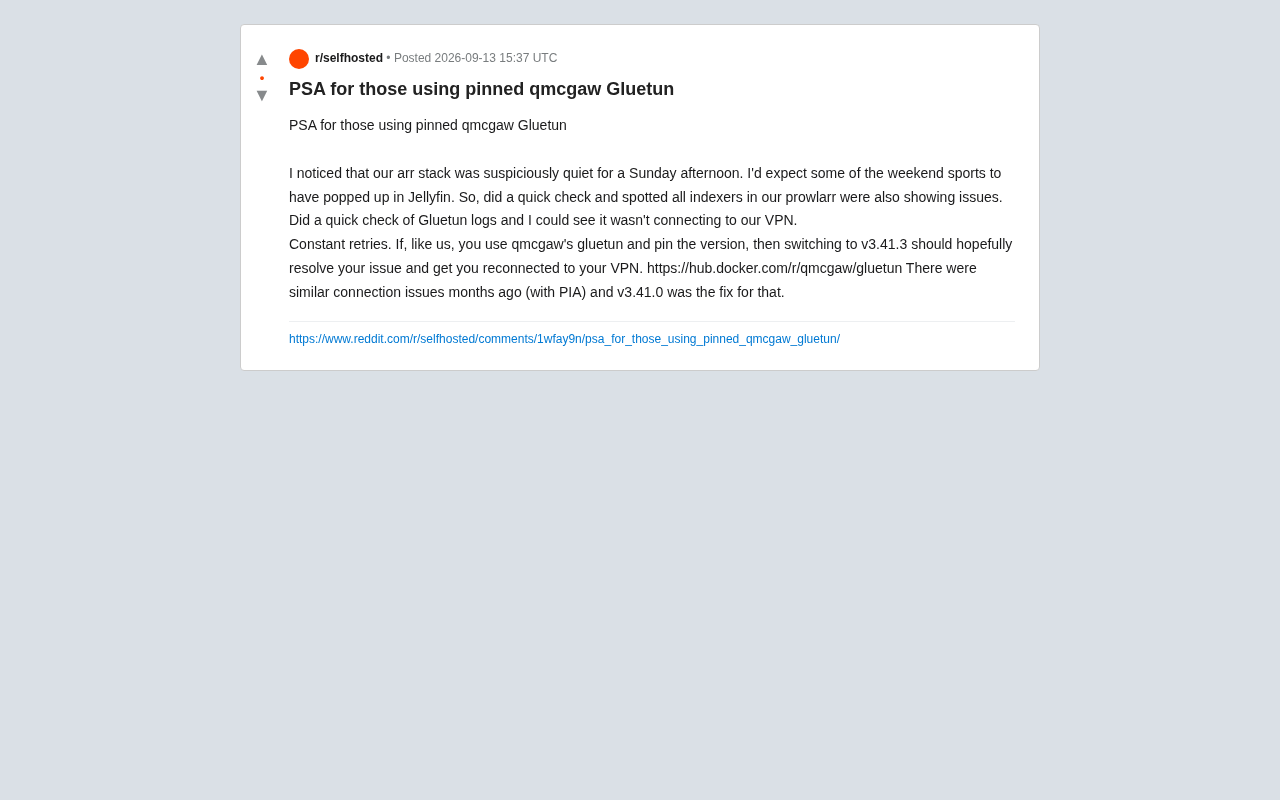
Gluetun VPN Disconnection Troubleshooting: Version-Pinned Users Should Upgrade to v3.41.3
Gluetun version-pinned users may face silent VPN disconnections breaking their arr stack. Learn how upgrading to v3.41.3 fixes the issue and tips to avoid it.
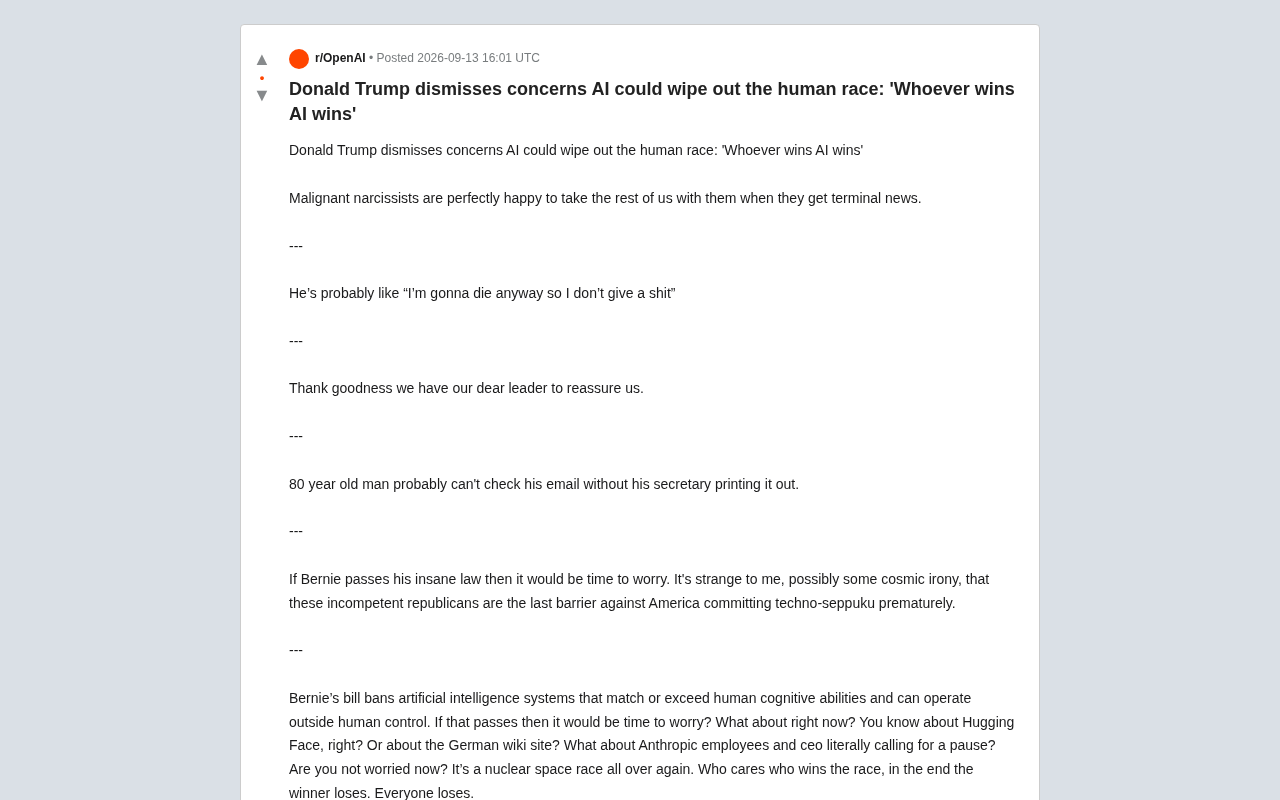
Trump Downplays AI Extinction Risk: 'Whoever Wins AI Wins' Sparks Controversy
Trump downplays AI extinction risks with 'Whoever wins AI wins,' sparking fierce debate over whether AI safety is an urgent reality or a future hypothetical.

David Sacks on AI Regulation: Frontier Models Don't Need Mandatory Legislative Constraints
David Sacks argues OpenAI and Anthropic can self-regulate frontier model development without external legislation. A look at the logic, controversy, and governance dilemmas involved.