Macklemore Dropped from Ed Sheeran Tour, Triggering Chain of Withdrawals Amid Political Controversy

Macklemore's "Free Palestine" moment got him cut from Ed Sheeran's tour and sparked a political firestorm.
Guest performer Macklemore was removed from Ed Sheeran's U.S. tour after making pro-Palestinian statements onstage, with venues reportedly refusing to host him. The move triggered solidarity withdrawals from artists including Finneas and Lucas Graham, and reignited debate over Macklemore's past antisemitism allegations — raising questions about celebrity apology credibility and the distinction between antisemitism and anti-Zionism. The episode also highlights the growing structural impossibility of political neutrality for megastars like Sheeran.
How It Started: A Chain Reaction Sparked by "Free Palestine"
Ed Sheeran's U.S. tour has been swept into an unexpected political storm. The flashpoint was guest performer Macklemore, who made a pro-Palestinian statement onstage — saying he wanted to "stand on stages and in stadiums across America and say two words that mean the world to me: Free Palestine."
Macklemore was subsequently removed from the remaining U.S. dates of Sheeran's tour. According to the tour's organizers, multiple venues indicated the shows could not go on if Macklemore remained on the bill. The decision set off a domino effect: artists including Aaron Rowe, Lucas Graham, and Finneas announced they were pulling out in solidarity with Macklemore and the Palestinian people.
A tour that was supposed to be about music has since become a very public debate about political expression, artistic freedom, and the Israeli-Palestinian conflict.
The Controversy: Past Allegations and the Credibility of Celebrity Apologies
What makes this situation complicated is Macklemore's history. He was previously accused of antisemitism after performing in a costume widely seen as reinforcing offensive stereotypes about Jewish people. He later apologized, but for some, that incident remains a data point suggesting underlying antisemitic attitudes.
The renewed discussion of that episode touches on a broader question: how much should we trust a celebrity's apology?
Commentators have noted that it largely depends on "how much you believe — or don't believe — a celebrity apology." Some have pointed out that when that incident occurred, the concept of a "celebrity apology" may have carried more genuine weight than it does today. That's part of why assessments of Macklemore remain sharply divided.
The Core Distinction: Antisemitism vs. Anti-Zionism
A point repeatedly stressed throughout the discussion is the need to distinguish between antisemitism and anti-Zionism. Macklemore himself has argued that his criticism of Israel as a state is not the same as criticizing Jewish people as a people.
As commentators have put it: "There is a distinction between being anti-Israel or anti-Zionist and being antisemitic." This means it's entirely possible for someone to have done something with antisemitic undertones years ago, apologized for it, and now be making a critique that falls under anti-Zionism — a criticism of the Israeli government's actions rather than of Jewish identity. The two can coexist without canceling each other out.
Some commentators have offered a personal read of Macklemore: that he is "sincere to a fault," that saying what he means is simply who he is, and that this authenticity is the core of his entire artistic project. On that basis, they're inclined to believe the apology was genuine, and that his criticism of Israel targets the actions of the Israeli government rather than Jewish people as such.
Zionism is a Jewish nationalist movement that emerged in late 19th-century Europe, centered on the goal of establishing a Jewish homeland in the historical territory of Palestine. The founding of the State of Israel in 1948 is regarded by many Zionists as the historical fulfillment of that movement. Anti-Zionism critiques this political movement and its concrete practices — including the displacement of Palestinian Arabs during Israel's founding (known as the Nakba, or "catastrophe"), and Israel's subsequent occupation policies in the West Bank and Gaza. Proponents argue that anti-Zionism is a legitimate critique of a political movement, fundamentally distinct from antisemitism, which is rooted in ethnic or religious prejudice. Critics, however, contend that in practice the line between the two is frequently blurred, and that certain modes of criticizing Israel can objectively reinforce bias against Jewish people. This conceptual debate remains one of the most contested issues in international politics and academia — and it is precisely within this unresolved tension that the Macklemore controversy unfolds.
Ed Sheeran's Dilemma: Staying "Politically Neutral" Is Getting Harder
Ed Sheeran responded by saying the decision to remove Macklemore came from the promoters and venues, and emphasized that he has always tried to keep his concerts free from politics. But that response exposes the structural bind that megastars increasingly find themselves in.

Commentators have noted a growing trend: artists of this scale and reach are being pushed to take sides. The reason is straightforward — they wield enormous influence, and when you say something in a stadium, tens of thousands of people feel it immediately. A similar dynamic played out during the 2024 U.S. election with Taylor Swift.
For artists like Sheeran who want to stay entirely out of politics, that kind of absolute neutrality is becoming harder and harder to maintain. This episode has thrust him into a debate far larger than music — one about the limits of political speech, the freedom of artistic expression, and the Israeli-Palestinian conflict itself.
Taylor Swift's experience during the 2024 U.S. election is a useful reference point for understanding this dilemma. In the final stretch of the campaign, she publicly endorsed Democratic candidate Kamala Harris, signing off as a "childless cat lady" — a wry self-reference widely read as a direct response to attacks from the Republican side. Her endorsement instantly sent platform traffic surging and drew fierce backlash from conservatives, including Elon Musk. The episode made clear that for a superstar with hundreds of millions of followers, both silence and speech carry political weight — and "saying nothing" is itself read as a stance. This is the structural trap Sheeran faces: once a tour reaches a certain scale, the relationships between an artist, venues, sponsors, and political pressures inevitably grow complicated, and the pure desire to "just make music" becomes harder and harder to sustain.
A Debate That Goes Beyond the Concert Tour
The significance of this episode has long since outgrown a simple lineup change. It reflects the broader tension that emerges when public figures, the live entertainment industry, and geopolitical issues collide: venues apply pressure out of commercial and security concerns, artists withdraw out of conscience, and the headliner at the center tries to maintain a neutrality that is becoming increasingly untenable.
Whatever one thinks of Macklemore's past and present, this controversy has made one thing clear: on today's biggest stages, silence itself can no longer be sustained as a position.
Related articles

What Is Cursor? Core Differences Between This AI Coding Tool and Traditional IDEs
What is Cursor? This guide explains the AI-native code editor built on VS Code, how it compares to traditional IDEs, and its integration with Claude, DeepSeek, and Gemini.
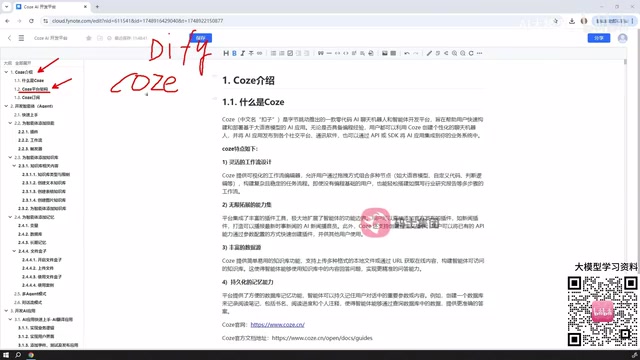
Coze 3.0 Beginner's Guide: A Complete Overview of Agents and AI Applications
A beginner's guide to Coze 3.0: covering agents, AI applications, workflows, and plugins on ByteDance's AI platform, plus a comparison with Dify.

Setting Up the DeepSeek Harness Environment: A Complete Guide to Node.js Installation and Configuration
A beginner-friendly guide to setting up the DeepSeek Harness environment: Node.js installation, Add to PATH, redirecting npm global and cache directories, and configuring system environment variables.