Magenta Solar Panels: A Smart Solution for Agrivoltaics
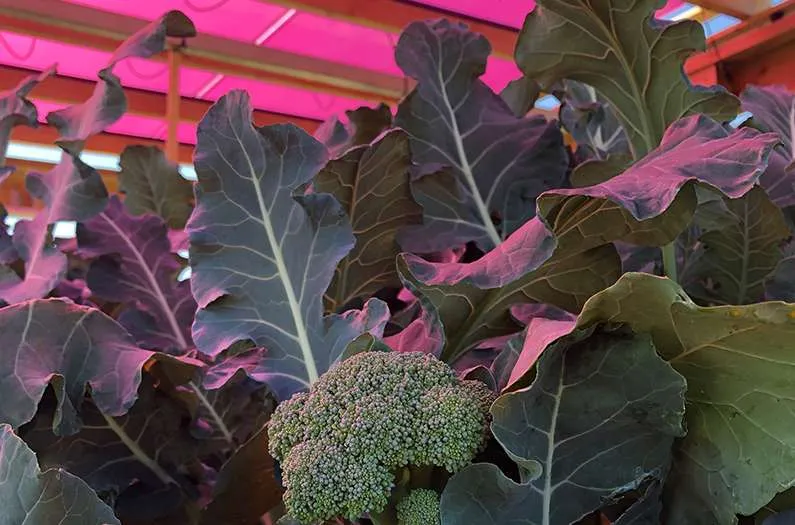
Magenta solar panels use spectrally selective design to turn agrivoltaics' light competition into a band allocation problem.
The article explores the "magenta solar panel" concept from Hacker News, noting that agrivoltaics' core conflict is spectral overlap between plant photosynthesis and silicon photovoltaics in red and blue-violet bands. The magenta approach uses selective coatings or special cell structures so panels mainly absorb green-yellow light plants barely use, leaving red-blue light for crops. Its cleverness lies in turning a linear light-transmittance trade-off into a spectral allocation problem, though cost and crop adaptability remain barriers.
Agrivoltaics has long faced an awkward trade-off: solar panels block sunlight and reduce crop yields; leave light for the crops and power generation efficiency drops. The "magenta solar panel" concept that sparked discussion on Hacker News attempts to satisfy both sides with a counterintuitive optical design—it doesn't chase maximum power generation efficiency, but instead actively "picky-eats" the spectrum.
The Essence of the Problem: Plants and Solar Panels Compete for the Same Slice of Light
The core conflict in agrivoltaics lies in spectral overlap. Plant photosynthesis primarily absorbs red light and blue-violet light, while conventional silicon-based solar panels happen to be sensitive to the visible light band as a whole—the two compete directly in the same band. Traditional approaches mitigate this through physical layout—raising panels, increasing spacing, adjusting tilt angles—which is essentially "splitting light" rather than "using light," yielding only limited improvements in land utilization.
The magenta approach takes a different angle: since plants need specific bands, let the solar panels specifically absorb the portion of light plants don't use, and "yield" the light plants need. The magenta appearance is precisely the external manifestation of this selective transmission/reflection design—the panel looks reddish-purple, indicating it reflects or transmits red and blue light components rather than swallowing everything.
The Quantitative Basis of Photosynthetically Active Radiation (PAR) and Spectral Overlap
Plant photosynthesis does not utilize the entire solar spectrum but is mainly concentrated in the 400–700 nanometer band, known as photosynthetically active radiation (PAR). The absorption peaks of chlorophyll a and b are roughly in the blue-violet region at 430–450 nm and the red region at 640–680 nm, while absorption in the green band (approximately 500–570 nm) is relatively low—which is also why leaves appear green. Conventional crystalline silicon photovoltaic cells have a spectral response range of roughly 300–1100 nm, with high response across the visible spectrum, thus highly overlapping with the PAR band. Understanding this is the key to understanding the agrivoltaics conflict: the so-called "competing for light" is not broadly competing for sunlight, but head-on competition within this narrow 400–700 nm range. The selective design of the magenta approach is essentially "band carving" within this range—leaving green-yellow light for power generation and red-blue light for crops, thereby reducing direct conflict between the two at the physical level.
Where Does Magenta Come From: The Technical Logic of Selective Spectrum
According to analysis by technically savvy readers in the Hacker News discussion, such approaches typically involve spectrally selective coatings or special cell structures that allow photovoltaic devices to maintain high response to bands with low plant utilization—such as green and yellow light—while partially transmitting or reflecting red and blue light. Magenta is a visual byproduct, not the result of deliberate dyeing.
The appeal of this approach lies in redefining "sacrificing power generation efficiency" from a drawback into a design variable. In conventional agrivoltaics, the higher the light transmittance, the less power is generated—a linear trade-off. Spectrally selective approaches attempt to "have both" in specific bands, theoretically escaping the linear trade-off.
Technical Pathways for Spectrally Selective Coatings and Semi-Transparent Photovoltaics
There are typically two technical pathways to achieve spectral selectivity. The first is spectrally selective coatings or filter films: adding dyes, multilayer dielectric films, or nanoparticles to module glass or encapsulation layers so that specific bands are reflected or absorbed while others are transmitted—magenta is precisely the visual effect of red and blue light being partially reflected into the human eye. The second is semi-transparent/selective absorption cell structures: for example, using amorphous silicon thin films, semi-transparent perovskite modules, or organic photovoltaics, controlling the transmission spectrum by adjusting bandgap and film thickness. The common feature of both pathways is sacrificing some photoelectric conversion efficiency in exchange for transmission of specific bands, with the cost characterizable by a "transmittance–efficiency" curve. Compared with traditional semi-transparent modules that simply increase transmittance, the key difference of spectrally selective approaches is that they don't leak light uniformly but selectively leak the light plants need—thus delivering higher agricultural benefits per unit of transmittance, which is the technical basis for theoretically escaping the linear trade-off.
Consensus and Divergence Across Multi-Source Discussions
Discussions around this topic have formed cross-verification across multiple technical communities. Creators focused on agrivoltaics on Bilibili and YouTube generally recognize selective spectrum as an important direction for agrivoltaics, considering it more targeted than thin-film approaches that merely pursue transmittance.
Divergence centers on economics and practicality. One camp argues that spectrally selective modules cost more to manufacture than conventional modules, and combined with the efficiency loss, the numbers only work out in high-value crop scenarios; another camp emphasizes that agricultural yield increases and composite land returns should be included in the overall accounting—looking only at module efficiency underestimates the solution's value. Other comments note that different crops have significantly different spectral requirements, and magenta panels are not a "universal solution"—they need to be matched to specific crops.
Another single-source observation mentions that such panels actually have an unexpected advantage in landscape and public acceptance—the magenta appearance feels closer to "agricultural infrastructure" than "industrial infrastructure" compared with traditional dark blue panels. This claim has not been corroborated by other sources and is for reference only.
Economic Accounting Framework for Agrivoltaics
The frequently recurring question of "whether the numbers work out" actually involves the composite benefit accounting method for agrivoltaics. Conventional photovoltaic projects use Levelized Cost of Energy (LCOE) as the core metric, while agrivoltaics needs to incorporate agricultural output into the same framework, commonly using Land Equivalent Ratio (LER) or system composite yield to measure total output per unit of land. Spectrally selective modules, due to efficiency loss and manufacturing cost premiums, typically have higher generation-side LCOE than conventional modules; but if the agricultural side increases yield due to improved lighting, or can grow high-value crops, system-level returns may surpass conventional. The essence of the divergence lies in the accounting boundary: comparing only module efficiency leads to an "uneconomical" conclusion, but including agricultural yield increases and composite land returns may reverse it. Moreover, the lack of crop-matching databases makes such accounting difficult to standardize, which is the practical reason why this solution can only be piloted in high-value crop scenarios in the short term.
Why It's Called "Smart"
What's smart is not how new the optical technology itself is—selective spectrum is not a new concept in academia—but that it redefines the optimization goal of agrivoltaics. The past approach was "generate as much power as possible while ensuring agriculture"; the magenta approach asks: can solar panels eat only the portion of light that plants don't? This transforms a resource competition problem into a spectral allocation problem.
For practitioners, the insight is: the next-generation competitiveness of agrivoltaics may not lie in mounting structures and tilt angles, but in band design at the material level. Of course, from concept to scaled deployment, cost, durability, and crop-matching databases are all unavoidable hurdles.
Quick Takeaways
- Magenta comes from spectrally selective design, not dyeing—the core is making solar panels avoid the bands plants primarily absorb
- This approach transforms the "transmittance–power generation" linear trade-off of agrivoltaics into a band allocation problem
- Multi-source discussions recognize the directional value but show clear divergence on cost recovery and crop adaptability
- Applicability is likely limited to high-value crops and specific scenarios, and full replacement of conventional solutions is unlikely in the short term
One-line Summary
Magenta solar panels use spectrally selective design to transform agrivoltaics' competition for light resources into a band allocation problem.
Paragraph Summary
The article centers on the "magenta solar panel" concept hotly discussed on Hacker News, pointing out that the core conflict in agrivoltaics is the spectral overlap between plant photosynthesis and silicon-based photovoltaics in the red and blue-violet bands—traditional approaches of raising panels and increasing spacing merely split light rather than use it. The magenta approach uses spectrally selective coatings or special cell structures to make solar panels primarily absorb green-yellow light that plants barely use, leaving red-blue light for crops—the magenta appearance is the visual byproduct of this selective transmission/reflection. Its cleverness lies in transforming the linear trade-off of "higher transmittance means less power" into a spectral allocation problem. Multi-source discussions recognize the technical direction but diverge on manufacturing costs, efficiency loss, and crop adaptability, with short-term deployment more likely in high-value crop scenarios.
Related articles

KIKUmap: Manage Your Claude and ChatGPT Conversations with Mind Maps
KIKUmap is a macOS menu bar app that visualizes Claude and ChatGPT conversations as mind maps with real-time status. Free and open source.

Hugging Face Executive Warns: Cyberattacks Are Eroding the Openness of Open-Source AI
Hugging Face executive Irene Solaiman warns that rising cyberattacks on open AI platforms may force stricter security limits, threatening the openness of the open-source community and affecting the developer ecosystem.

Google Cloud Launches Healthcare Version of Gemini: Integrating Clinical Data and Automating Workflows
Google Cloud releases healthcare version of Gemini, focusing on unified clinical data and automated workflows to reduce administrative burnout. Analysis of positioning, challenges, and the healthcare AI landscape.