Major Codex Voice Mode Upgrade: How Voice Programming Is Changing Development Workflows

Codex Voice Mode upgrade enables always-on ambient voice programming, fundamentally changing developer workflows.
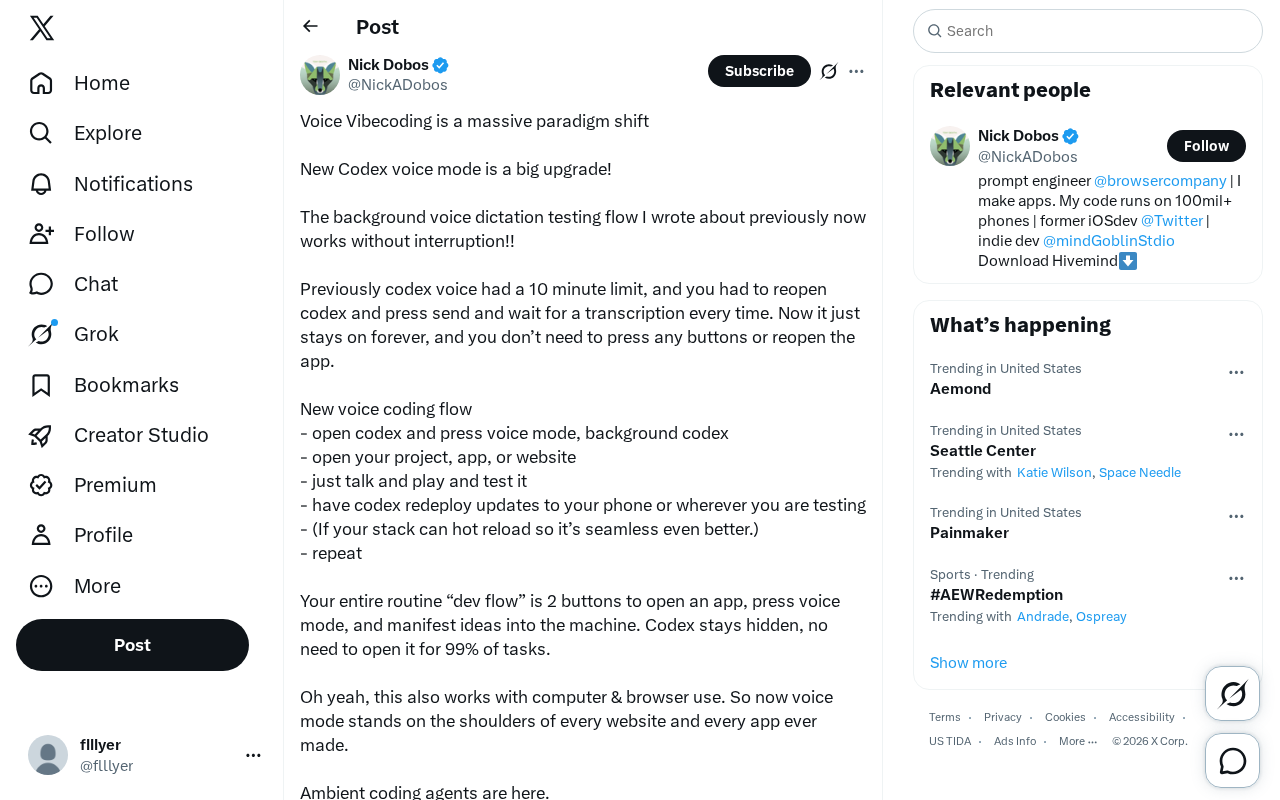
OpenAI's Codex Voice Mode has received a critical upgrade that eliminates the previous 10-minute time limit and disruptive workflow interruptions. The new always-on background operation transforms the tool into an ambient coding agent that continuously listens and responds. Combined with computer/browser use capabilities and hot reload support, developers can now maintain flow state while speaking ideas into existence through a simple two-button workflow.
Voice Programming: A Paradigm Shift Quietly Arriving
In the evolution of AI-assisted programming, we've grown accustomed to typing prompts and conversing with code assistants via keyboard. However, a developer's recent social media post reveals a far more radical direction—Voice Vibecoding is becoming a genuinely viable development paradigm.
The term "Vibecoding" was first coined by former OpenAI researcher and Tesla AI director Andrej Karpathy in February 2025. He defined it as an entirely new approach to programming: developers fully surrender to the "vibe," embrace exponential possibilities, and practically forget that code exists—no longer reviewing AI-generated code line by line, but completing development by describing intent, observing results, and providing feedback. The concept went viral in the developer community, precisely capturing the qualitative shift in the programming experience during the LLM era while touching on a sensitive issue: when developers stop reading and understanding every line of code, has the fundamental nature of "programming" already changed? Voice programming takes Vibecoding to its next extreme form—developers don't even need to sit at a computer and type; they can simply go for a walk while speaking their ideas aloud, and code will be automatically generated and deployed.
With OpenAI's Codex launching its new Voice Mode, this experience has reached a critical breakthrough. The author states plainly that this is a "massive paradigm shift," with the core insight being: developers no longer need to constantly switch between applications, click buttons, or wait for transcription—they can simply "speak" their thoughts into the machine as naturally as talking to themselves.
The Key Upgrade: From "Limited Duration" to "Never Interrupted"
Pain Points of the Old Codex Voice Mode
In previous versions, Codex's voice functionality had obvious usability barriers. According to the author, the old voice mode had a 10-minute time limit, and the workflow was extremely fragmented:
- Each use required reopening the Codex app
- Manually pressing the send button
- Waiting for voice transcription to complete
This "interrupt—restart—wait" cycle severely disrupted the flow state during programming. Flow state is a concept proposed by psychologist Mihaly Csikszentmihalyi in 1975, referring to a psychological state of complete immersion and intense focus that people enter when fully engaged in an activity. In this state, one loses track of time, and both productivity and creativity increase significantly. For software developers, flow state is particularly precious—research shows that programmers need an average of 15-20 minutes of uninterrupted focus to enter flow, and a single external interruption (such as switching apps or waiting for something to load) can completely break the state, requiring the same amount of time to recover. Therefore, the cost of each "interrupt—restart—wait" cycle in the old voice mode was far greater than it appeared on the surface—for creative work that depends on continuity and immersion, such interaction costs were nearly fatal.
Core Breakthroughs of the New Voice Mode
The upgraded voice mode completely resolves these issues. The author excitedly reports that the "background voice dictation testing flow" he previously described can now run without any interruption:
Now it can stay on forever, you don't need to press any buttons, you don't need to reopen the app.
This means voice programming has transformed from a tool that needs constant "waking up" into a continuously background-ready Ambient Coding Agent.
The concept of "Ambient Computing" traces back to Mark Weiser's 1991 vision of "ubiquitous computing," whose core idea is: the best technology is "invisible" technology—it blends into the everyday environment without requiring deliberate user operation or attention. Google made Ambient Computing a core strategy at its 2019 hardware launch event, emphasizing that devices and services should run continuously in the background and respond at any moment, rather than requiring users to actively wake and control them. In the programming context, this means the AI assistant is no longer a standalone tool requiring a window switch to use, but rather surrounds the developer's work environment like air, continuously sensing intent and responding instantly. This transformation from "on-demand invocation" to "always-on awareness" is where the true value of this upgrade lies.
The New Voice Programming Workflow
The author describes the complete loop of this new workflow in impressive simplicity:
- Open Codex and start voice mode, letting it run in the background
- Open your project, app, or website
- Talk while playing with and testing things
- Let Codex redeploy updates to your phone or whatever device you're testing on
- If your tech stack supports hot reload, the entire process becomes even more seamless
- Repeat the cycle
It's worth expanding on the importance of Hot Reload here. Hot reload is a key technology in modern frontend and mobile development that allows developers to instantly see changes in a running program after modifying code, without requiring a full recompilation and restart. This technology was first popularized in the frontend space by Webpack's Hot Module Replacement (HMR) mechanism, and Flutter later brought it to mobile development, achieving sub-second code update feedback. React Native's Fast Refresh and Vite's instant HMR are typical implementations of this concept. Hot reload is crucial for voice programming because it eliminates the waiting time in the traditional "modify code → compile → deploy → test" chain, allowing developers to see results on their device almost immediately after speaking a modification command, truly enabling a seamless "speak—see results—keep speaking" loop.
Two Buttons for Your Entire Development Routine
The most stunning aspect is how this workflow compresses operational costs. The author describes the entire development process as being simplified to a two-button operation: open an app, press voice mode, and then just "manifest" your ideas directly into the machine.
In this process, Codex itself is nearly invisible—for 99% of tasks, you don't need to open it to check anything. This experience of "tools receding into the background while intent drives directly" is precisely the concrete realization of ambient computing principles in the programming domain.
Standing on the Shoulders of "Every App"
This upgrade has another easily overlooked but highly imaginative dimension: the author points out that the new voice mode also supports computer & browser use.
Computer Use and Browser Use represent one of the most notable capability breakthroughs in AI during 2024. Anthropic was first to release Claude's Computer Use feature in October 2024, allowing AI models to directly view screenshots, move the mouse, click buttons, and type text—interacting with any graphical user interface like a human operator. OpenAI subsequently introduced similar capabilities in its products. The key to this technology lies in the maturation of Vision Language Models (VLMs)—AI no longer needs APIs or command-line interfaces to control software; instead, it completes tasks through the exact same path humans use: "see the screen, understand the interface, execute actions." This dramatically broadens AI's operational scope: previously AI could only control services with APIs; now it can control any software with an interface.
This means voice programming is no longer confined to code editors but can control virtually any software interface. In the author's words:
Now voice mode is standing on the shoulders of every website, every app ever built.
This is a remarkably powerful assertion. When a voice agent can both understand natural language commands and actually operate existing graphical interfaces and web pages, its capability boundary expands from "generating code" to "operating the entire digital world." Developers can use voice to direct it to click, fill in forms, test, and deploy, without needing to pre-write scripts or integrate APIs for each operation.
What Ambient Coding Agents Mean
A Fundamental Change in Interaction Paradigms
From a broader perspective, this Codex voice mode upgrade reflects a deep transformation that AI programming tools are undergoing. Over the past few years, the evolution of AI programming assistants has roughly followed this path: from "code completion" to "conversational programming" to "autonomous agent execution." The combination of voice plus always-on background presence represents yet another leap at the interaction layer.
Looking back at this evolution in detail: The first phase was statistics-based code completion, represented by TabNine (2018) and Kite, primarily offering line-level code suggestions. The second phase was marked by GitHub Copilot's launch in 2021, based on the OpenAI Codex model, achieving the ability to generate entire code blocks from comments and elevating AI from "completion assistant" to "conversational programming partner." The third phase emerged from 2024 onward with coding agents like Devin, Claude Code, and Cursor Agent Mode, which can autonomously plan tasks, edit multiple files, run tests, and iteratively fix issues without requiring step-by-step developer instructions. Now, the emergence of voice mode plus always-on background capability can be seen as the embryonic form of a fourth phase—the interaction interface regresses from text to voice, operational boundaries expand from the code editor to the entire operating system, and AI tools begin transforming from "assistants to be called upon" to "co-workers in the environment."
Keyboard input is fundamentally a "structured, attention-requiring" interaction method that demands developers stop other actions to type. Continuously active voice dictation, on the other hand, allows programming commands to occur in parallel with "testing, playing, and observing." This parallelism is precisely the key to maintaining flow.
A Realistic Assessment
Of course, as an early experience shared by a single developer, we need to maintain rational judgment. Voice programming still faces considerable challenges in real production environments:
- Speech recognition accuracy: Recognition precision for specialized terminology, variable naming, and similar scenarios still needs validation. For example, distinguishing between "camelCase" and "snake_case" variable names, and accurately recognizing programming language keywords versus homophonic everyday words, are challenges that speech recognition systems must overcome.
- Environmental adaptability: Usability in noisy environments is a practical concern. Background noise in open offices, coffee shops, and similar settings, as well as interference when multiple people use voice programming simultaneously, can seriously impact the experience.
- Complex logic expression: Certain precise program logic is difficult to convey clearly through speech. For example, when dealing with deeply nested conditions, complex data structure operations, or precise regular expressions, the ambiguity of verbal description may far exceed that of directly writing code.
Additionally, whether "talking to code" suits all types of development tasks is debatable—for low-level code requiring precise control, the keyboard may still be the more reliable choice; for rapid prototype validation, UI adjustments, and high-level feature descriptions, voice programming's advantages become much more apparent.
Conclusion
Regardless of its ultimate adoption level, the statement "Ambient coding agents are here" does point to a trend that is actively unfolding. When AI tools are smart enough, interaction is natural enough, and they can remain on standby in the background continuously, both the barriers to and methods of programming will be redefined.
This Codex voice mode upgrade may be just an early signal of this transformation. But the vision it demonstrates—"manifesting ideas with a single sentence"—is undoubtedly worth serious consideration from every developer watching the future of AI programming.
Related articles
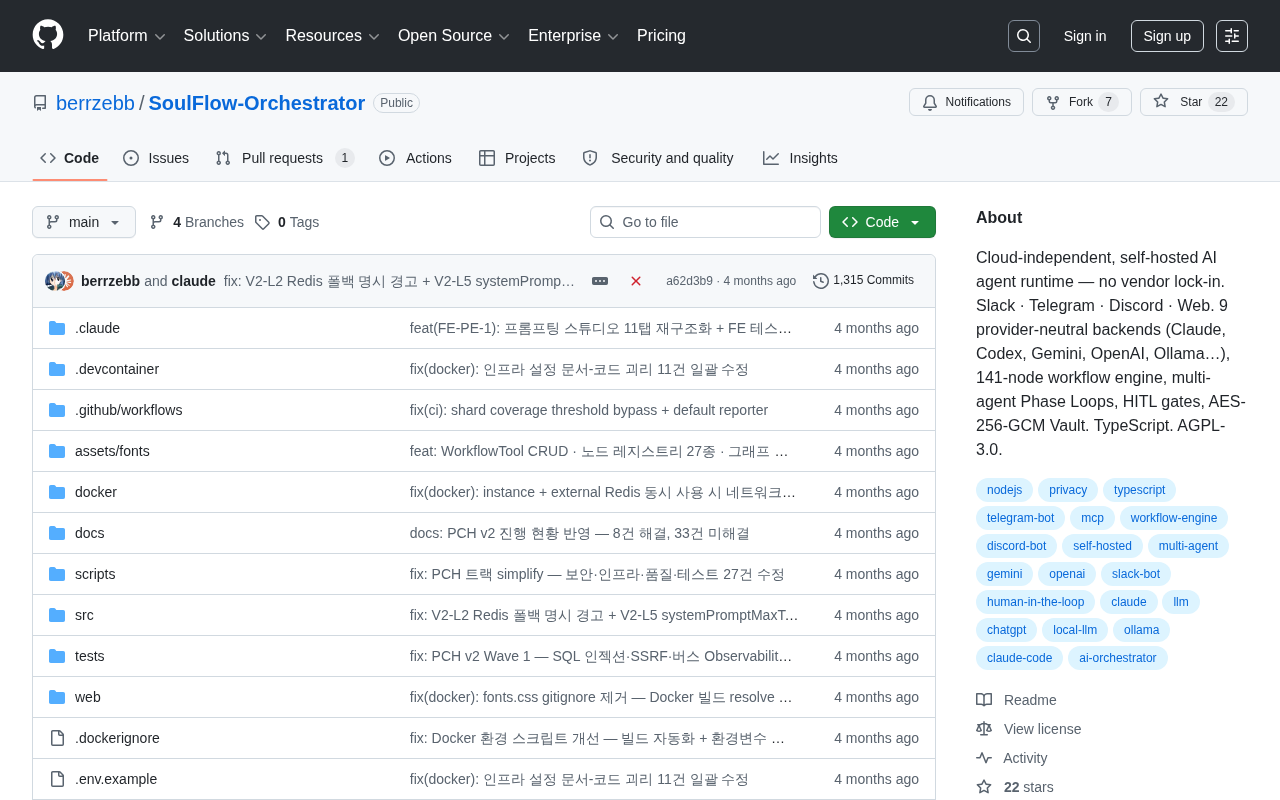
SoulFlow-Orchestrator: A Self-Hosted, Vendor-Lock-In-Free AI Agent Runtime
SoulFlow-Orchestrator is an open-source, self-hosted AI agent runtime with no vendor lock-in. Supports 9 neutral backends (Claude, OpenAI, Ollama), 141-node workflow engine, multi-agent loops, and HITL gates.
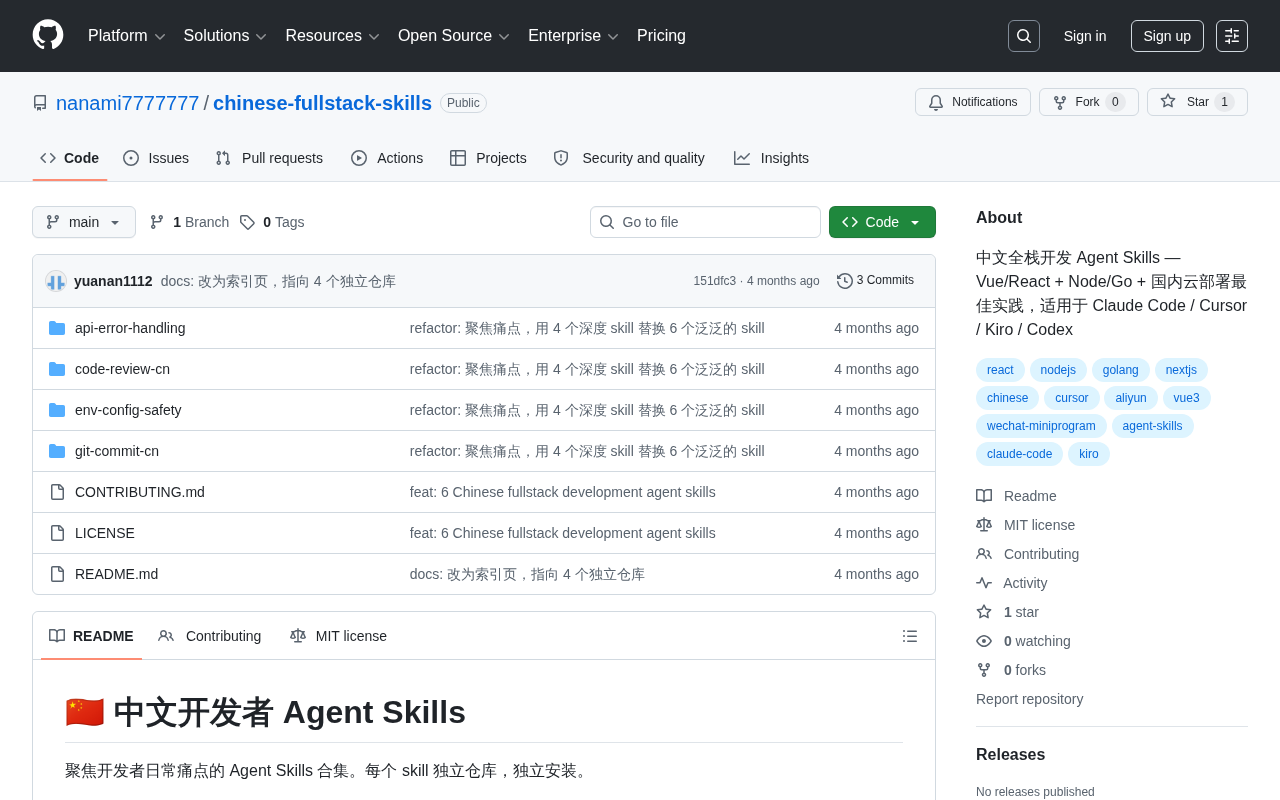
Chinese Full-Stack Agent Skills: A Skill Library Tailored for Domestic AI-Assisted Development
chinese-fullstack-skills is an Agent Skills library for Chinese full-stack development, covering Vue/React, Node/Go, and domestic cloud deployment best practices. Compatible with Claude Code, Cursor, Kiro, and Codex.
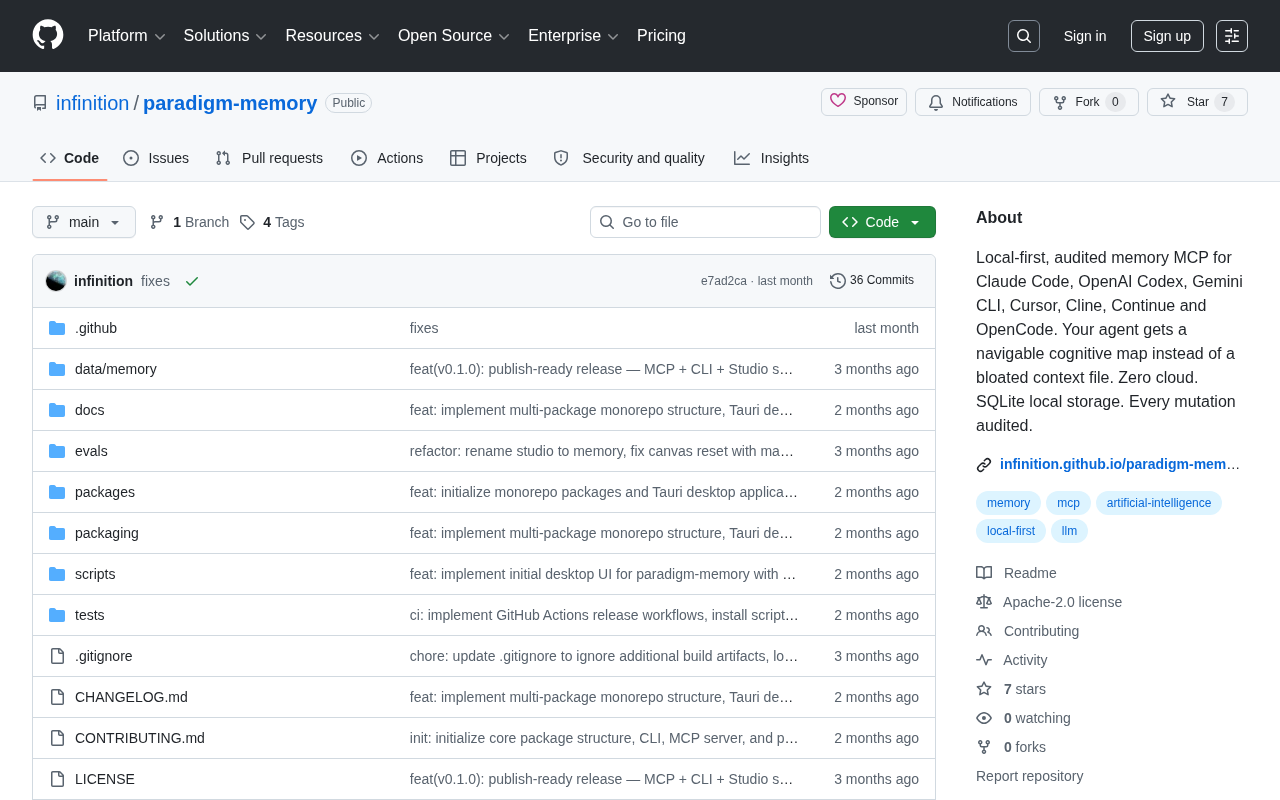
Paradigm Memory: A Local-First Memory System for AI Coding Assistants
paradigm-memory is a local MCP memory tool for Claude Code, Cursor, and Cline. It uses SQLite local storage, zero cloud, full audit trails, and a navigable cognitive map instead of bloated context files.