Marvell to Acquire Lumentum for $115 Billion, with Nvidia as a Shared Investor

Marvell plans to acquire Lumentum for $115B, with Nvidia's dual bet underscoring the strategic value of optical interconnect.
Marvell plans to acquire optical component maker Lumentum for $115 billion, which would make it one of the largest mergers in tech history. The article notes that Nvidia is a strategic investor in both companies—a rare relationship suggesting its push into optical interconnect and data center infrastructure is already well underway. Lumentum's optical module and laser capabilities would complement Marvell's data center networking chips, enabling vertical integration from chips to optical devices. The deal faces dual challenges of antitrust review and cross-business integration; if completed, it would squeeze small and mid-sized optical module vendors and could prompt competitors like Broadcom and Cisco to follow with acquisitions, reshaping the optical interconnect market.
A Chip Deal That Rewrites the History of Tech M&A
The semiconductor industry has once again seen a massive merger. Marvell plans to acquire Lumentum for $115 billion—if completed, the deal will become one of the largest mergers in tech history. According to an RSS source, the same strategic investor stands behind both parties: Nvidia.
This relationship elevates the deal beyond an ordinary industry consolidation. Nvidia's bet on both companies suggests that its布局 around optical interconnect and data center infrastructure may have been underway for some time, and the merger of Marvell and Lumentum could be the most critical piece of that puzzle.
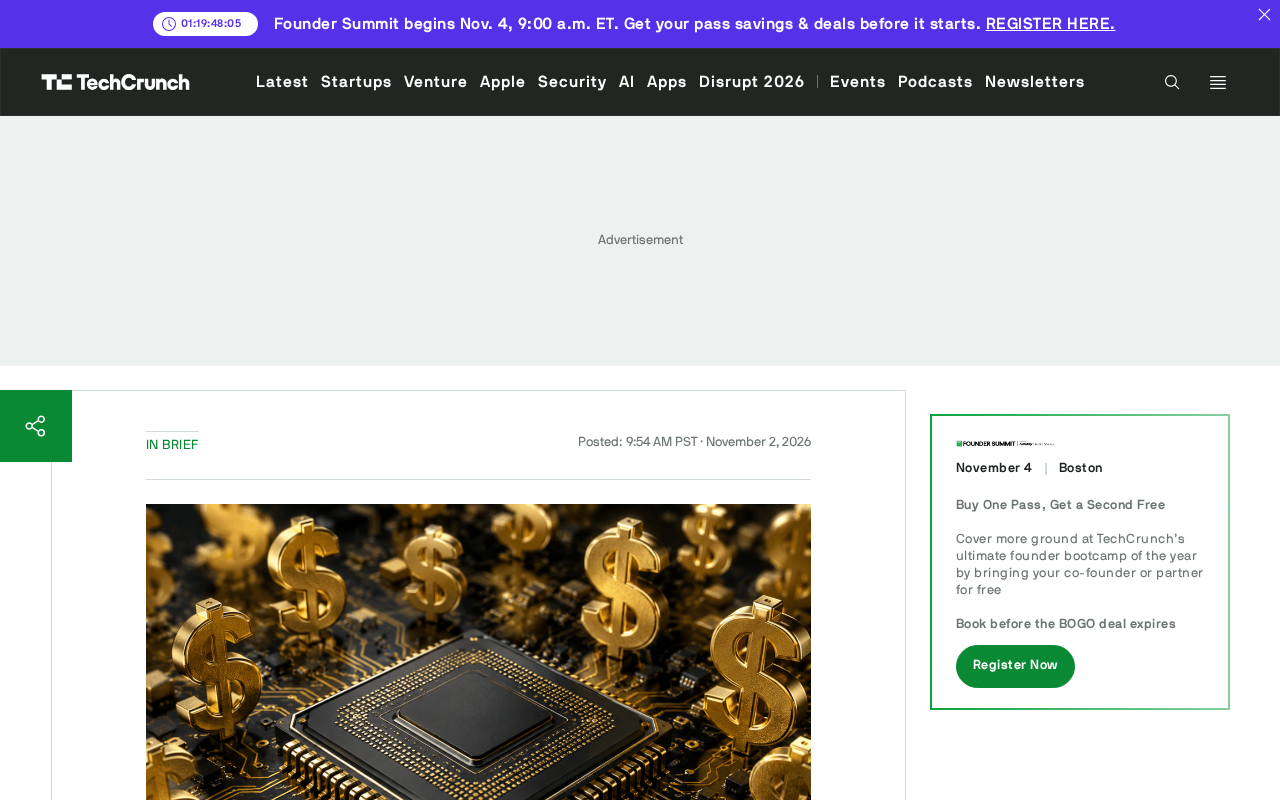
Why Lumentum: Optical Interconnect Becomes the Compute Bottleneck
Lumentum's core business is optical components and lasers, with products spanning data center optical modules, 3D sensing, and industrial lasers. In AI compute clusters, data transmission between GPUs is shifting from electrical to optical interconnect, and the bandwidth and power consumption of optical modules directly determine how efficiently a cluster can scale.
Marvell already has deep expertise in data center networking chips, storage controllers, and custom ASICs. Acquiring Lumentum would bring optical device capabilities in-house. Vertical integration from chips to optical modules would allow Marvell to occupy a more upstream position in the AI infrastructure supply chain and reduce its dependence on external optical suppliers.
The difference between optical and electrical interconnect is the key background for understanding this deal. Traditional data centers primarily rely on copper cables and electrical signals to transmit data. As speeds increase, electrical interconnect's bottlenecks in bandwidth density, transmission distance, and power consumption become increasingly obvious—signals attenuate quickly, crosstalk is severe, and long-distance transmission requires expensive retimers and equalizers. Optical interconnect converts electrical signals into optical signals via lasers, transmits them over fiber, and then converts them back into electrical signals. It offers high bandwidth, low loss, immunity to electromagnetic interference, and long transmission distances. In AI training clusters, thousands of GPUs need to frequently synchronize gradient parameters, generating enormous inter-node traffic. Optical modules (such as 800G and 1.6T pluggable optical modules and co-packaged optics, CPO) become the core components connecting switches and GPU servers. Optical modules already account for a significant share of total data center power consumption, and their bandwidth and energy efficiency directly determine how large a cluster can scale—this is the technical meaning of the article's statement that "optical interconnect becomes the compute bottleneck."
What Nvidia's Dual Bet Means
Nvidia is simultaneously a strategic investor in both Marvell and Lumentum—a rarity in large mergers. It sends two signals.
First, Nvidia's emphasis on optical interconnect is no less than its focus on GPUs themselves. As cluster scale grows, interconnect bandwidth and energy efficiency are becoming the ceiling on system performance. Whoever controls optical devices controls the rhythm of the next-generation data center.
Second, Nvidia may be playing the role of ecosystem organizer. By investing in key suppliers, it can influence the direction of the entire supply chain without directly acquiring them, while avoiding stricter regulatory scrutiny.
The distinction between strategic investors and financial investors helps clarify Nvidia's role. Financial investors aim to obtain financial returns and typically do not intervene in the investee's operating decisions. Strategic investors often come from the same industry chain, and their investment purpose is to obtain technological synergy, supply chain assurance, or ecosystem influence, potentially with board seats, priority supply rights, or technology cooperation terms attached. In large mergers, it is uncommon for a strategic investor to hold stakes in both the acquirer and the target, because this may raise conflict-of-interest concerns—for example, Nvidia as a shareholder of both parties could influence deal pricing or push for arrangements favorable to its own supply chain. In addition, strategic investment rather than direct acquisition is a common strategy for avoiding regulation: direct acquisitions trigger merger control review, while minority equity investments have lower thresholds in most jurisdictions. Nvidia influences the optical interconnect supply chain through capital ties while maintaining its asset-light positioning as a chip design company—this is the institutional background for understanding its role as "ecosystem organizer."
The Real Tests Facing the Deal
Semiconductor mergers at the hundred-billion-dollar level never end with a signed agreement. Antitrust review is the biggest uncertainty: Marvell and Lumentum have overlapping businesses in data center optical interconnect, and regulators may require divestitures or impose behavioral conditions.
Integration difficulty should not be underestimated either. The optical device business involves materials, wafer manufacturing, and packaging and testing, and its operating logic differs markedly from the chip design that Marvell excels at. The two companies' customer structures, R&D cycles, and supply chain management approaches will all need to be reconciled.
Whether the deal can close, and under what conditions, will directly affect the competitive landscape of the global optical interconnect market. For practitioners focused on AI infrastructure, the progress of this deal is worth tracking closely.
"Divestitures" and "behavioral conditions" in antitrust review are the two main remedies in merger regulation. Structural remedies require the merging parties to sell certain businesses or assets to maintain market competition—for example, divesting overlapping optical module product lines. Behavioral remedies do not change market structure but impose restrictions on the merged entity's behavior, such as commitments to continue supplying third parties, keep interfaces open, or not discriminate against competitors. In semiconductors, regulators around the world have tightened scrutiny in recent years: the U.S. FTC, the European Commission, and China's State Administration for Market Regulation all have jurisdiction over large chip mergers, and deals often require simultaneous approval in multiple jurisdictions. In addition, the difficulty of cross-business integration lies in the fact that optical devices are optoelectronic manufacturing involving compound semiconductor materials such as indium phosphide and gallium arsenide and wafer processes, with long R&D cycles and slow yield ramps—significantly different from Marvell's operating model centered on CMOS digital chip design. The risk of integration failure cannot be ignored.
Ripple Effects on the Industry
If the deal closes, Marvell will possess both networking chip and optical device capabilities, becoming one of the few vendors able to offer end-to-end interconnect solutions. This would squeeze the生存 space of small and mid-sized optical module companies and could prompt competitors such as Broadcom and Cisco to accelerate their own acquisitions in optical interconnect.
For cloud providers, rising supplier concentration may not be good news, but the performance optimization and cost reductions brought by vertical integration are equally attractive. In the second half of the AI compute race, victory may depend not only on process nodes and compute power but also on easily overlooked areas such as interconnect and packaging.
Related articles

9 AI Subscription Plans Compared: The Real Cost Per 100M Tokens Revealed
Bilibili creator tests 9 AI subscription plans from Volcano, Alibaba, Tencent, Baidu, Zhipu, Xiaomi, MiniMax and more, converting them all to real cost per 100M tokens, breaking down fixed-quota vs. three-tier coefficient billing and how caching, time-of-day discounts, and window limits affect actual quota.

Vibe Coding for Beginners: Expressing Intent Instead of Handwriting Code
What is Vibe Coding? A 137-episode Bilibili course defines it: the core is expressing intent, not writing code. This article analyzes Vibe Coding's productivity logic, target audience, and entry expectations to help beginners decide if it's worth learning.

LangChain Beginner's Guide: An Agent Development Roadmap from LangGraph to Deep Agents
Clarify the encapsulation relationship among LangChain, LangGraph, and Deep Agents, and master the learning path and selection logic for agent development frameworks—suitable for beginners in large model development.