Mass-Producing AI Short Dramas in Practice: Building a Continuous Production Workflow with Skills

How to build a reusable continuous AI short-drama production workflow using Skills
Through a real test producing an American campus AI short drama, this article explains how to solidify verified experience into reusable Skills for continuous production, and shares solutions to three key pitfalls: scene drift, wrong action direction, and noisy reference images. The core insight: the barrier isn't the model, but methodology solidification.
In today's increasingly crowded AI short-drama market, comic dramas, period pieces, xianxia fantasy, and urban romance have almost become standard fare. Bilibili creator Dai Shudi chose a differentiated path—producing American-style teen campus dramas aimed at overseas audiences. After two days of intensive testing, he not only completed two episodes of a live-action-feel AI short drama, but more importantly, developed a reusable continuous production workflow. This article systematically reviews his experiences and pitfall-avoidance tips.
It's worth clarifying first that AI short drama is an emerging content format that has exploded since 2024, alongside leaps in the capabilities of video generation models (such as Sora, Kling, Vidu, Runway, etc.). By leveraging text-to-video and image-to-video technologies, it dramatically compresses the production cost of traditional short dramas, which once required live filming, set construction, and post-production. In the domestic market, micro-dramas alone are already a hundred-billion-yuan sector, and AI's involvement has further lowered the barrier to content supply, causing all kinds of genres to rapidly proliferate and become homogenized. The overseas market (especially the North American paid short-drama ecosystem driven by platforms like ReelShort and DramaBox) offers differentiated space for outbound content, which forms the macro backdrop for the author's choice of the American campus genre.
Why Choose American Campus Dramas for Overseas Markets
The mainstream direction of domestic AI short dramas is already quite crowded. Rather than engaging in cutthroat competition within similar genres, it's better to try a different direction and go overseas. The author's core considerations in choosing American teen campus dramas were twofold: characters need not only good looks but also recognizability, and scenes need to make viewers instantly recognize that it's the same school.
The plot design is deliberately restrained. The first episode introduces the campus and main characters from the female lead's perspective; in the second episode, the female lead accidentally captures a hidden side of Tiffany's boyfriend, a campus celebrity, and during their argument, an accidental soul swap occurs. The plot isn't mind-bending, because the focus of this round of testing wasn't telling a complex story, but first getting the characters, scenes, and continuous production workflow up and running.
The author cuts straight to the point: Generating a single beautiful shot isn't hard; what's hard is that by the second or third episode, viewers still see the same group of people, the same campus, and the same visual style. This is precisely the key threshold for AI short dramas to move from "can generate" to "can mass-produce."
In fact, "consistency" is the most core technical bottleneck of current generative video. A Diffusion Model essentially works by progressively denoising random noise into an image on each generation. Even with identical prompts, each sampling result differs. This causes the same character's face, hairstyle, and clothing to drift between shots, and the architectural structure of the same scene to change randomly. Industry countermeasures include character reference-image locking (Reference/IP-Adapter), LoRA fine-tuning, first-frame control, and ControlNet structural constraints—understanding this is key to grasping the logic behind many of the author's operations discussed later.
Skills: Turning Verified Experience into Production Assets
The first episode started completely from scratch: character reference images, campus scenes, character voices, overall style, storyboard, and shot breakdowns all had to be determined item by item. The author emphasizes that the real time-consuming part isn't clicking "generate," but continuously making choices—what the female lead looks like, which fixed areas the campus has, what voice each character uses, whether the visuals lean toward teen-idol drama or realistic cinematic feel. Once these are not fixed, subsequent shots will keep "drifting."
After completing the first episode, the author used LibTV's Agent to organize the verified character settings, scene references, style rules, and operation steps into a Skill. Here we need to understand the mechanism of Agent and Skill: an Agent (intelligent agent) is an AI system that can understand intent, break down tasks, call various tools, and autonomously execute multi-step operations; a Skill is akin to a savable, reusable "skill pack" that bundles and solidifies character settings, style constraints, reference images, and operation steps. This follows the same lineage as "configuration as code" in software engineering and "template libraries" in prompt engineering—solidifying one-time verified experience into transferable assets.
By the second episode, he only needed to type a rough plot direction into the dialog box. After invoking the Skill, the Agent generated a complete script and organized the dialogue duration, shot type, composition, and camera movement for each shot.
The results were immediate: the second episode was split into nine shots, and the final cut used eight of them. Most materials were usable on the first generation, with only the last shot requiring one extra draw. The author clarifies an important insight—the efficiency gain isn't because AI suddenly got smarter, but because the Skill reused the settings, reference images, and constraints already established in the previous episode. It didn't have to re-guess who the characters are, what the campus looks like, or what style the visuals should use.
In other words, what a Skill saves is the verified repetitive work, not completing an entire drama for the creator. Character settings, plot direction, and key shots ultimately remain under the creator's control.
AI Character Design: How to Combat Homogenization
Characters can't be left entirely to AI to decide. The author's initial setting for the female lead was "a somewhat rebellious, strong-willed cool girl," but the versions the Agent generated were either too sweet or looked like common campus-drama templates—none had the feel he wanted.
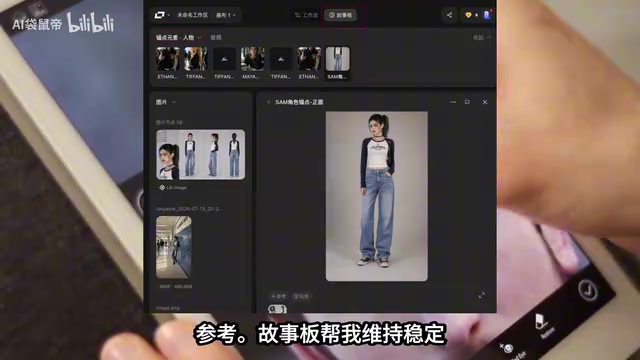
This exposes a common flaw in current AI character generation: the features are all delicate and the skin is clean, but when you put several people together, you can hardly remember who's who. This "average face" phenomenon stems from the distribution preferences of the model's training data—the model tends to generate the statistically most "standard" and "pleasing" faces, which paradoxically flattens out individualized features. The author's countermeasure: when designing a protagonist, don't just write "pretty," "young," "high school girl," but describe the hairstyle, clothing, body posture, facial expression habits, and even her demeanor standing in a crowd more specifically. The more specific the prompt, the more it pulls the model away from the "average" toward uniqueness.
In practice, he used the "anchor element" feature in the storyboard, selecting the character to be modified, re-describing them in the input box, and regenerating. The storyboard helps maintain stability, while when a character truly needs to change, the decision remains in human hands.
Three Typical Pitfalls in AI Short Dramas and Their Solutions
The first episode didn't go as smoothly as the second, and the author stepped into three typical pitfalls—this section is arguably the most valuable hands-on experience in the entire article.
Pitfall One: Scene Drift
The opening was meant to use a continuous shot to introduce characters and tour the entire campus, but during actual generation, one second it was on the sports field, and as the camera moved, the architectural structure suddenly changed, even entering an unrelated environment. The root cause was that each shot only received the single phrase "American campus," and AI's interpretation differed every time. This is precisely a direct manifestation of the "no spatial memory" characteristic of diffusion models mentioned earlier—the model doesn't know where the previous shot was filmed, nor does it understand the real spatial relationships between buildings.
The solution is to switch to a canvas workflow: first, generate an aerial view of the entire campus to determine the spatial relationships between teaching buildings, sports fields, parking lots, and main entrances; second, based on the aerial view, generate a nine-grid reference image that breaks the campus into different areas and camera positions. The author's insight is precise—the aerial view doesn't suddenly give AI spatial memory; its role is to provide all shots with the same geographic basis. To depict continuous space, don't let each shot start from scratch.
Pitfall Two: Wrong Action Direction
One shot required a best friend to make a "shush" gesture while looking at the camera, but the actual generation had her finger pointing to the left of the frame and her not looking at the camera. The author initially thought the video model didn't understand, but upon returning to the canvas workflow to check, discovered that—the action direction in the reference image was already wrong to begin with.
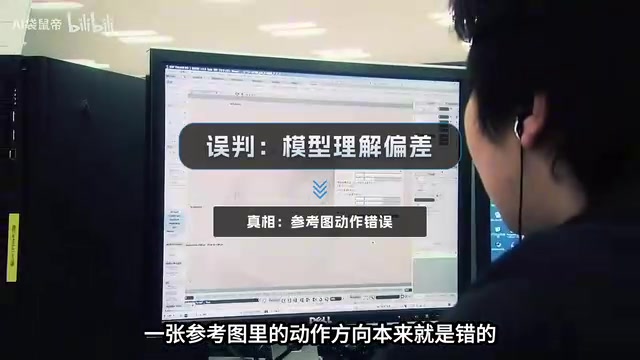
From this comes a troubleshooting principle: when a video has a problem, don't necessarily re-draw immediately. First, check upstream along the generation chain—whether the script is clearly written, whether the reference image is correct, whether the character's gaze, body orientation, and gestures are consistent. If the upstream is already wrong, the video model is likely just faithfully replaying the error. This actually aligns with the classic "Garbage In, Garbage Out" principle in AI pipelines: in the image-to-video chain, the image is the input anchor for the video, and any defect at the input end will be faithfully amplified by downstream stages.
Pitfall Three: Reference Images with Too Much Noise
Scene images and character images were generated using leap image, and when encountering shots with many characters and complex architectural detail, obvious digital noise appeared: over-sharpening, HDR plastic texture, unnatural high saturation. Looking at a single image, it might be acceptable, but once fed as a reference image into subsequent video models, these texture problems get amplified into screen flickering, texture drift, or inconsistency between frames. This is because the video model interprets the high-frequency details of the reference image differently during frame-by-frame generation, and unstable information like noise gets "jittered" out along the temporal dimension, forming visible flickering.
The author tested two processing methods. The first was to generate a line drawing or clay model first, then re-render with nano banana, but in live-action-feel short-drama testing, this easily loses the photographic texture, making visuals lean toward 3D animation. The second was to preserve the original image structure and only do a single restrained image-quality cleanup—not changing the buildings, not changing camera positions, not redesigning the scene, only reducing digital noise, over-sharpening, plastic texture, and artificial HDR feel. Testing showed the second method was more stable.
Solidifying Experience into a Reusable Workflow
After completing the first episode, the author didn't just save the final video, but organized the character settings, scene references, voices, visual style, and the aforementioned problem-solving methods together into a Skill: continuous scenes require establishing a global reference first, action errors require checking upstream reference images, and complex scene images should undergo image-quality cleanup before entering the video model. These are the experiences that can truly be reused in the next episode.
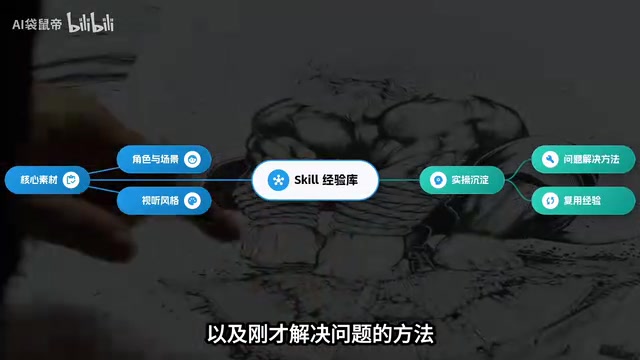
After all shots were completed, the author directly had the Agent do a preliminary edit and add bilingual subtitles, importing professional editing software only when finer pacing, sound effects, or color grading were needed. Additionally, LibTV has a Skill Hub where you can invoke Skills organized by other creators. The author understands it as a "workflow template library"—it can't guarantee you'll directly get the ideal final cut, but it lets you start from a verified process instead of facing a blank slate every time. The value of Skill Hub lies in introducing a community collaboration mechanism, allowing individual trial-and-error experience to be shared across creators, thereby reducing the entire industry's cost of repeated exploration. This shares the same logic as open-source code repositories and Prompt communities.
Conclusion: The Barrier Isn't the Model, but Methodology Solidification
After completing two episodes, the author's biggest takeaway is: The truly tricky part of AI short dramas isn't generating a beautiful shot, but whether characters, scenes, voices, and style can remain stable throughout. It's normal for the first episode to be a bit slow, because what you're making isn't just one video, but establishing the assets and rules that every subsequent episode will reuse.
The advice for beginners is also very practical: don't directly challenge a full-length film. You can first make a 30-second continuous scene, or first get a short storyline with only two or three fixed characters up and running. After completing the first episode, don't just keep the final cut—save the effective prompts, character references, scene map, and failure conditions together. Whether the second episode can be faster and more stable is what truly shows whether this workflow is up and running.
As the author says—the barrier to AI short dramas isn't necessarily which model you use; more important is whether you can organize an accidentally successful generation into a production method that can be used repeatedly. This viewpoint may well be the core divide between AI content creation moving from "dabbling" to "productivity."
Key Takeaways
Related articles
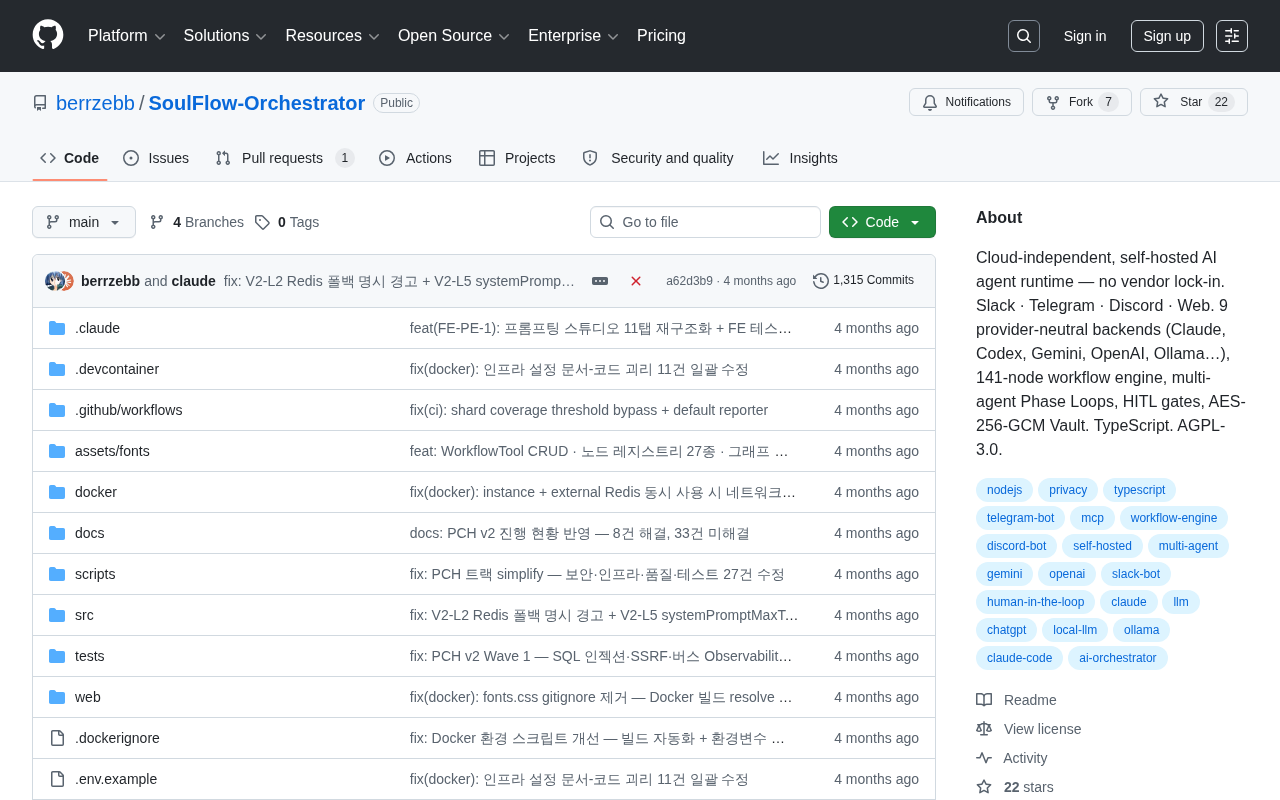
SoulFlow-Orchestrator: A Self-Hosted, Vendor-Lock-In-Free AI Agent Runtime
SoulFlow-Orchestrator is an open-source, self-hosted AI agent runtime with no vendor lock-in. Supports 9 neutral backends (Claude, OpenAI, Ollama), 141-node workflow engine, multi-agent loops, and HITL gates.
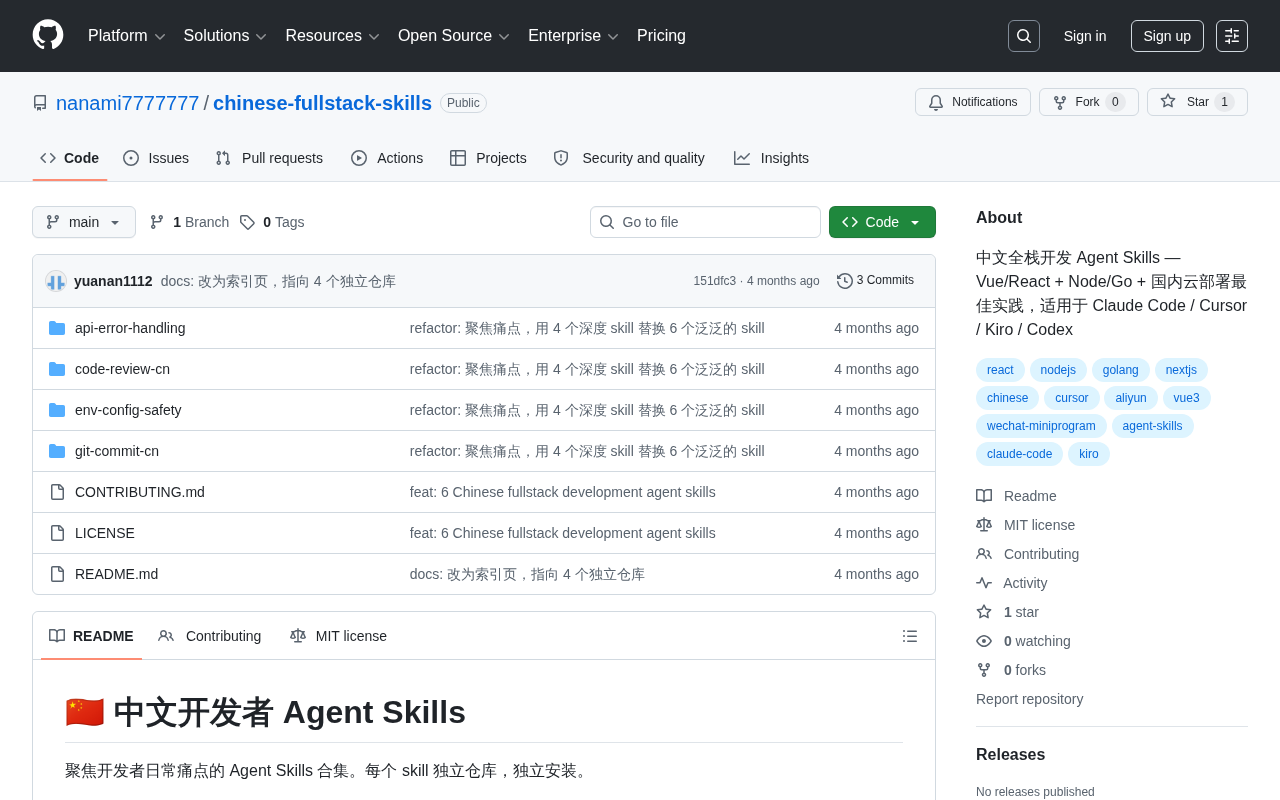
Chinese Full-Stack Agent Skills: A Skill Library Tailored for Domestic AI-Assisted Development
chinese-fullstack-skills is an Agent Skills library for Chinese full-stack development, covering Vue/React, Node/Go, and domestic cloud deployment best practices. Compatible with Claude Code, Cursor, Kiro, and Codex.
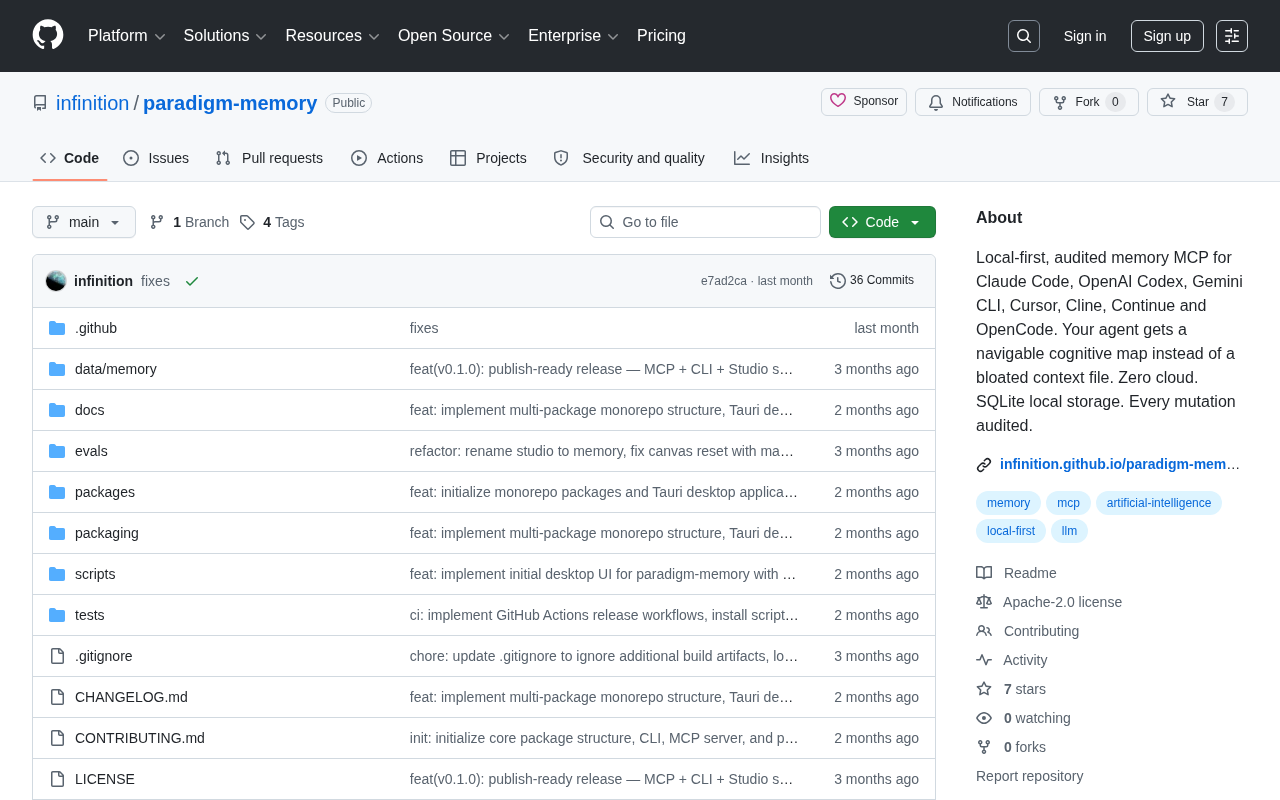
Paradigm Memory: A Local-First Memory System for AI Coding Assistants
paradigm-memory is a local MCP memory tool for Claude Code, Cursor, and Cline. It uses SQLite local storage, zero cloud, full audit trails, and a navigable cognitive map instead of bloated context files.