Mazama Energy's Supercooled Drill Bit Takes On Geothermal Drilling Challenges

Khosla-backed Mazama Energy uses supercooled drill bits to boost geothermal drilling speed and depth, aiming to cut geothermal power costs.
Mazama Energy, backed by Khosla Ventures, claims its "supercooled" drill bit technology tackles the core bottleneck of geothermal drilling. Conventional bits wear out rapidly in hot rock, and frequent replacements raise per-well costs, while drilling dominates geothermal capex. Mazama's approach actively cools the bit to slow wear and extend time between trips, enabling faster, deeper drilling and lowering final electricity costs. Compared with system-level EGS or plasma drilling, this hardware innovation has a lower barrier, but field validation is still needed and no performance data was disclosed.
Geothermal energy has long been viewed as an ideal source of clean baseload power, but high drilling costs and low efficiency have constrained its large-scale development. Khosla-backed startup Mazama Energy claims to have found a new approach: using supercooled drill bits to drill faster and deeper, thereby reducing the ultimate cost of geothermal power generation.
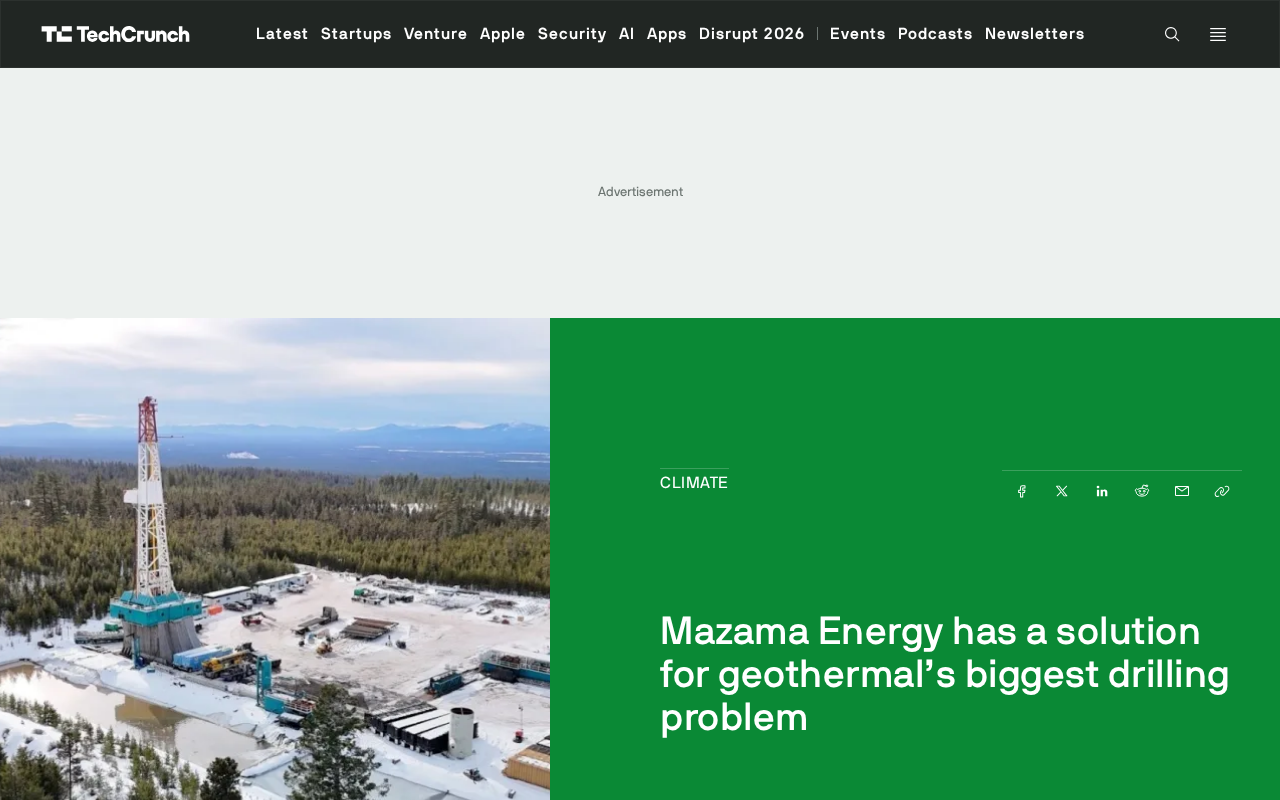
The "Hard Bone" of Geothermal Drilling
The core pain point of geothermal development lies in drilling. Conventional drill bits wear out extremely quickly in high-temperature rock formations, and frequent bit replacements not only slow progress but also keep per-well costs high. The industry generally agrees that drilling accounts for the majority of capital expenditure in geothermal projects. Mazama Energy's entry point is precisely this bottleneck—if a drill bit can maintain performance under extreme heat, both drilling depth and speed can be unlocked.
According to the original report, Mazama Energy has developed a new approach to "supercooled" drill bits that makes the drilling process faster and deeper. Although the report does not disclose specific technical details, this idea aligns with the industry's exploration of drill bit thermal management: actively cooling the bit to lower its operating temperature, slow wear, and extend the time between trips.
Baseload Power and the Role of Geothermal Energy
Baseload power refers to power sources in the grid that supply continuously and stably, without fluctuating with weather or time of day, typically provided by nuclear, coal-fired, or large hydropower plants. Wind and solar, due to their intermittent output, require accompanying storage or backup power to maintain grid stability. Geothermal energy uses underground heat reservoirs to generate power and is unaffected by day-night cycles or seasons; in theory it can run 24 hours a day without interruption, making it a scarce source of clean baseload power. However, geothermal projects require extremely high upfront investment in exploration and drilling, and resource distribution is limited by geological conditions, which has kept its levelized cost of electricity above wind and solar for a long time and slowed its scaling.
How Supercooled Drill Bits Change the Cost Structure
Improvements in drilling efficiency translate directly to power generation costs. Faster drilling means less rig time and labor cost; deeper drilling capability allows projects to reach hotter, higher-quality formations, thereby increasing the power generation potential per well. Mazama Energy explicitly states that its goal is to "lower the cost of electricity," a positioning that targets the key obstacle to geothermal commercialization.
One detail worth noting: Khosla's support adds credibility to the company. As an investment firm focused on disruptive technologies, Khosla Ventures' energy sector bets are often seen as a bellwether. The fact that Mazama Energy has earned its backing suggests that the supercooled drill bit solution has passed initial screening for technical feasibility and market potential.
A Differentiated Path in the Geothermal Race
Current technological competition in geothermal is mainly concentrated on enhanced geothermal systems (EGS) and novel drilling methods. Some companies focus on directional drilling or plasma drilling, while Mazama Energy has chosen to start with drill bit cooling, which is a more fundamental hardware innovation. The advantage of this path is that it does not depend on a complete overhaul of existing drilling rigs; instead, it improves overall efficiency through improvements to key components, lowering the barrier to deployment.
Of course, the actual effectiveness of supercooled drill bits still needs field validation. Laboratory conditions differ greatly from real formation conditions, and long-term reliability of the bit under high temperature and high pressure, as well as the energy consumption and complexity of the cooling system, are all variables that will determine whether it can be commercialized. The original report did not provide specific performance data or test results, leaving a question mark over the technology's actual maturity.
Enhanced Geothermal Systems (EGS)
Enhanced Geothermal Systems (EGS) refer to geothermal development technologies that artificially modify low-permeability underground rock formations to make them economically exploitable. A typical approach is to drill two deep wells, inject high-pressure water underground to create a fracture network, and then extract water or steam heated by the rock formation from the other well to generate power. The core value of EGS lies in breaking traditional geothermal's dependence on natural hot water reservoirs, greatly expanding the range of developable geothermal resources. But its challenges are equally prominent: deep drilling, high fracturing costs, risks of induced microearthquakes, and long-term reservoir stability all need to be verified—and drilling is precisely the largest component of EGS cost structure.
Potential Impact on the Geothermal Industry
If supercooled drill bit technology proves scalable, its impact will extend beyond a single company. The cost curve of geothermal power generation could shift downward, enabling it to compete with solar and wind in more regions. Especially for deep geothermal resources, each step increase in drilling depth brings an order-of-magnitude increase in the amount of developable resources. Mazama Energy's effort is essentially opening the door to deeper resources for the geothermal industry.
From a broader perspective, geothermal is the only renewable baseload power source unaffected by weather, and its cost reduction is of strategic importance to grid stability. Whether Mazama Energy's supercooled drill bit can move from the lab to the oil field will determine whether it is a technology validation company or a driver of the geothermal cost revolution.
One-line Summary
Khosla-backed Mazama Energy uses supercooled drill bits to boost geothermal drilling speed and depth, aiming to lower geothermal power costs.
Paragraph Summary
Mazama Energy, backed by Khosla Ventures, claims its "supercooled" drill bit technology addresses the core bottleneck of geothermal drilling. Conventional bits wear out rapidly in high-temperature formations, and frequent replacements drive up per-well costs, while drilling accounts for most geothermal project capex. Mazama's approach is to actively cool the bit to slow wear and extend time between trips, enabling faster, deeper drilling, boosting per-well generation potential, and lowering final electricity costs. Compared with system-level routes like EGS or plasma drilling, this ground-level hardware innovation has a lower deployment barrier, but lab and real formation conditions differ greatly; cooling system energy consumption and long-term reliability still need field validation, and the original report disclosed no specific performance data.
Related articles
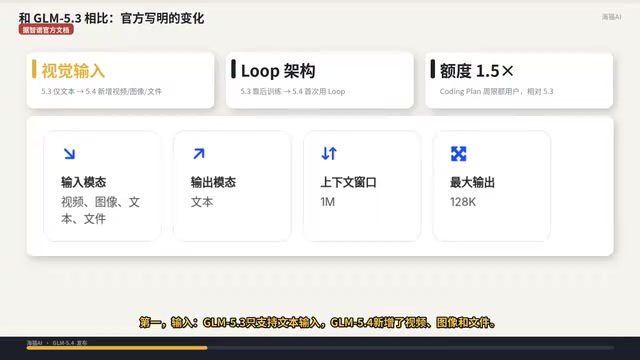
Zhipu GLM-5.4 Released: Loop Transformer Runs 28 Layers Twice
Zhipu releases GLM-5.4, the first Loop Transformer flagship: 28 layers run twice for 2-3T-equivalent intelligence, plus video and image input. API and open weights not yet released.

GLM-5.4 Coding Test 4.6x Slower? Unpacking the Loop Transformer Architecture
GLM-5.4 coding test took 431 minutes vs. competitor's 109, 4.6x more steps. We analyze its Loop Transformer architecture, KingBench4 score of 55.3, Max tier's 1.04M token cost, and tier selection advice.

Zhipu GLM-5.4 Quietly Released: A Debut for Loop Transformer Architecture
Zhipu GLM-5.4 quietly lands in coding plans: first Loop Transformer flagship with 750B params, 1M token context, AIM math up from 19.2 to 30.4, and native vision for coding from screenshots.