MCP Explained: How AI Agents Connect to Tools via the Model Context Protocol

MCP is Anthropic's open protocol that lets AI models call external tools and execute real-world multi-step tasks.
MCP (Model Context Protocol) is a standardized communication protocol that defines how large language models interface with external tools, applications, and data sources. Its core value lies in eliminating fragmented integration — developers no longer need custom adapter code for every tool, as AI models can invoke Gmail, control browsers, and complete bookings through a unified protocol layer. This transforms AI from passive text generators into Agentic AI capable of planning and executing multi-step operations. Mastering MCP is the essential foundation for entering AI Agent development.
What Is MCP (Model Context Protocol)
MCP (Model Context Protocol) is quickly becoming one of the core concepts in modern AI application development. As more AI tools get integrated into everyday workflows, understanding how AI models establish connections with external tools, applications, and data sources has never been more important. Without grasping how MCP works under the hood, developers will struggle to unlock the full potential of AI Agents.
Simply put, MCP is a standardized protocol that defines how AI models communicate with external tools and applications. It allows large language models to go beyond mere conversation — enabling them to actually call tools, read data, and execute actions.
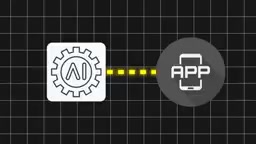
MCP was officially released and open-sourced by Anthropic in November 2024. It was designed to solve the problem of "fragmented integration" between AI models and external data sources or tools. Before MCP, every AI application had to build custom API adapter layers for each individual tool — a process that was costly to maintain and nearly impossible to reuse. MCP draws inspiration from the Language Server Protocol (LSP): just as LSP allows any code editor to interface with any language's syntax parser, MCP aims to establish a "build once, work everywhere" standard between AI models and the tool ecosystem. The protocol itself uses JSON-RPC 2.0 as its communication format and supports both local process communication (stdio) and remote HTTP/SSE transport, making it capable of invoking local file systems on-device as well as connecting to cloud-based services.
How MCP Helps AI Understand and Operate Tools
A practical example helps illustrate MCP's value. Imagine connecting an AI tool to an application like Gmail — the AI can read email content, understand context, and generate step-by-step summaries. That entire "connect → understand → process → output" flow is exactly what MCP supports behind the scenes.
MCP's role is to standardize this connection process: the AI model interfaces with external services through the protocol, retrieves the necessary contextual information, and then uses that information to complete tasks. Whether it's reading emails, organizing content, or generating structured summaries, MCP provides a unified channel for all of it.

This mechanism upgrades AI from a passive question-answering tool to an assistant capable of actively handling real-world tasks. The key insight is that the model doesn't need custom integration code written for every single tool — instead, it achieves standardized connectivity through the protocol layer.
From Chatbots to Agentic AI
Ordinary chatbots are limited to general text-based conversation. Agentic AI powered by MCP, on the other hand, can carry out far more complex real-world operations.
Consider the example of booking a flight: a regular chatbot would give you a text response with some suggestions, while an Agentic AI can actually complete a flight booking based on your specified time and budget. This is the fundamental difference between Agentic AI and traditional chatbots — the former can call tools and execute multi-step tasks, rather than simply generating text.

Achieving this capability relies on MCP's standardization of the tool-calling pipeline. The model uses the protocol to discover which tools are available, how to invoke them, and what parameters they require — transforming a single natural language instruction into a series of real-world actions.
The core characteristic of Agentic AI is its ability to execute a "plan → call tools → receive feedback" loop, often referred to academically as the ReAct (Reasoning + Acting) framework. Upon receiving a high-level goal, the model autonomously breaks it down into sub-tasks, calls the necessary tools in sequence, and dynamically adjusts subsequent steps based on each tool's output — until the goal is achieved. This is fundamentally different from the traditional "one question, one answer" conversational model, where each exchange is independent. In Agentic mode, the model must maintain state across multiple steps, handle exceptions, and make decisions. MCP's role in this process is to provide a unified "slot" for these tool calls — the model only needs to know which tools (Tools) and resources (Resources) a given MCP Server exposes, without worrying about underlying implementation details. This dramatically reduces the complexity of building multi-step automated workflows.
Learning Paths and Course Resources
The creator of the video, the PythonLife channel, also introduced their Full Stack Python Course, aimed at learners who want to systematically study these technologies. The channel emphasizes that many operations can be implemented with minimal code, highlighting Python's accessibility for AI development.

For learners looking to enter the AI Agent development space, understanding foundational protocols like MCP is the essential first step. Mastering the communication logic between models and tools is what enables you to build truly functional intelligent applications.
Summary
As a standardized protocol connecting AI models to external tools, MCP is a key concept for understanding modern Agentic AI. It expands AI's capabilities from pure conversation to real task execution — whether reading emails, generating summaries, or completing booking workflows. As the AI tool ecosystem continues to expand, mastering MCP will become an essential skill for AI application developers.
Related articles

Chain of Thought Isn't Just for AI: How Humans Can Use CoT to Improve Thinking Quality
Chain of Thought isn't just a prompt trick for large models. Starting from a Hacker News discussion, this article analyzes why CoT works for human thinking too, breaks down actionable ways to transfer it, and highlights the key differences between human CoT and machine CoT.
Cloudflare Teams Up with OpenAI: Closi…
Cloudflare Teams Up with OpenAI: Closing the Loop from Vulnerability Discovery to Defense with AI
Cloudflare uses OpenAI Daybreak to investigate security vulnerabilities and generate reviewable remediation plans, while developers use Codex to boost coding efficiency and quality.

Orca Multi-Agent Orchestration in Practice: A Guide to Parallel Collaboration with Claude and Codex
Orca is Stable AI's free open-source agent workbench supporting 34 agents like Claude Code and Codex in parallel. Learn its Git worktree isolation, multi-model orchestration, and mobile management.