MCP Protocol Explained: How AI Connects to Any Tool or Data Source

MCP is Anthropic's open protocol that gives AI agents standardized access to GitHub, databases, APIs, and more.
MCP (Model Context Protocol) is a standardized connection layer between AI and external tools, open-sourced by Anthropic. LLMs can only understand and generate text on their own — they can't directly access codebases, databases, or external APIs. MCP solves this with a client-server architecture: the AI host acts as the client, while tools are wrapped as MCP servers communicating via a unified protocol. Before MCP, developers had to write separate integrations for every tool, with no cross-platform compatibility. MCP replaces that fragmentation with one open standard, letting AI agents discover and invoke GitHub, databases, file systems, and search in the same way — evolving from "talking" to truly "acting."
What Is MCP? The Standard Interface Between AI and the Outside World
Imagine telling an AI: "Find the bug in my GitHub repo, check the database, and fix it." That sounds powerful — but how does AI actually access those tools? The answer is MCP.
MCP stands for Model Context Protocol. At its core, it's a standardized way for AI to connect with external tools and data. Large language models (LLMs) can understand your requests and generate code, but they can't inherently access your GitHub repository, database files, or APIs. MCP bridges that gap — it builds a standardized connection channel between AI and the tools around it.
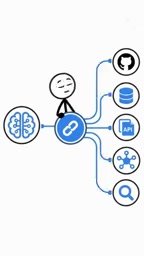
This seemingly simple role solves a fundamental challenge in deploying AI agents: no matter how powerful a model's reasoning is, if it can't reach real data and systems, it remains stuck in the realm of theory. MCP liberates models from isolated chat windows and enables them to actually operate within real-world environments.
MCP was proposed and open-sourced by Anthropic in late 2024. It uses a client-server architecture: the host program running the model (such as Claude Desktop or IDE plugins like Cursor) acts as the MCP client, while various tools (GitHub, databases, etc.) are wrapped as independent MCP servers that expose their capabilities. The two sides communicate via a standardized JSON-RPC message format, supporting both local process (stdio) and remote network (SSE/HTTP) transport. This open design means any developer can write an MCP server for their own service, making it immediately discoverable and callable by all compatible AI clients — no need to negotiate integration with a model provider separately.
How MCP Works: An AI Coding Assistant Example
Let's walk through a concrete scenario to understand how MCP operates. Say you're building an AI coding agent and you tell it: "Figure out why users are getting an error when they log in."
The AI can use an MCP Server to access your codebase, inspect relevant files, query the database, or call an API. Once it has the information it needs, it analyzes the problem, pinpoints the root cause, and suggests a fix. If you grant the right permissions, it can even make the code changes directly.

In this flow, MCP plays two roles at once: translator and dispatcher. The model expresses its intent; MCP converts that intent into concrete tool calls and returns the results to the model. This design evolves AI agents from "can only talk" to "can actually act" — and developers don't need to write custom glue code for every individual task.
Why MCP Matters: Ending Fragmented Integrations
MCP's real value lies in providing a standardized mechanism for tool discovery and invocation.
Before MCP, connecting AI to GitHub, a database, a file system, or a search engine meant building a completely different integration for each tool. The more tools you added, the higher the maintenance cost — and the more fragmented the integration logic became.

MCP replaces all those ad-hoc integrations with a single unified protocol. AI agents can "discover" and "use" different tools following the same rules, without caring about the underlying implementation differences of each tool. It's similar to what the USB standard did for peripherals — once a universal interface is established, the ecosystem can expand rapidly.
Before MCP, solutions like OpenAI's Function Calling and various agent frameworks (LangChain, AutoGPT, etc.) also attempted to solve the tool-calling problem — but they were mostly proprietary implementations tied to specific platforms, and incompatible with each other. Whenever developers switched models or frameworks, their existing tool integrations often had to be rewritten from scratch. MCP is different because it's an open transport-layer protocol that's model-agnostic. Whether the underlying model is Claude, GPT, or a locally hosted open-source model, any client that implements the MCP spec can reuse the same pool of tool servers. This "build once, use anywhere" property is the core reason MCP is seen as foundational infrastructure for the AI tool ecosystem.
What Tools Can MCP Connect To
With MCP, virtually any common development or data resource can become a tool that AI can operate:
- GitHub: Read repositories, inspect code, commit changes
- Databases: Query data, diagnose anomalies
- APIs: Call external services to retrieve real-time information
- File systems: Access and process local files
- Search: Retrieve relevant content
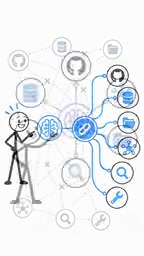
Once all these resources are brought under MCP's unified framework, the capability boundaries of AI coding agents expand dramatically. The AI is no longer an isolated code generator — it becomes an operator that can work across multiple systems and collaboratively complete complex tasks.
Conclusion
At its heart, MCP (Model Context Protocol) establishes a standardized connection layer between AI and external tools. It moves models beyond pure "understanding and generation" toward "perception and action" — and that's the critical step for AI agents to deliver real productivity. As more and more tools adopt this protocol, the world that AI can reach will keep growing.
Related articles
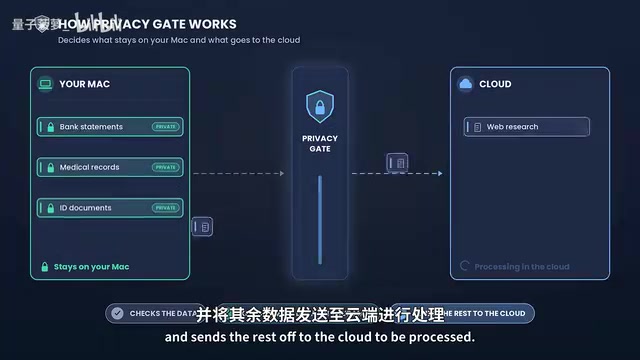
Perplexity Hybrid Compute Tested: Privacy Data Never Leaves the Mac
Perplexity Hybrid Compute tested: how PrivacyGate intercepts sensitive data, how local and cloud models divide work, model differences on 16GB vs 32GB Macs, and privacy protection in real scenarios like bank statements and medical records.
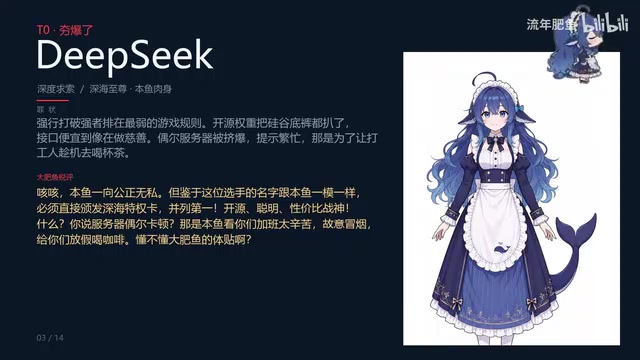
Big Fat Fish Roasts Mainstream LLMs at Home and Abroad: Doubao Takes the Crown, DeepSeek Tied for First
Bilibili creator Big Fat Fish roasts mainstream LLMs: Doubao tops for emotional value, DeepSeek ties first for open-source value, with ERNIE, Hailuo, Yuanbao, Kimi, Qwen, Kling, Claude, Gemini, and Grok each branded with a distinct persona.

How to Truly Test AI Agents Before Production? A Practical Testing and Monitoring Framework
BotGage founder Pramin Pradeep shares a three-step framework for testing AI Agents before production: Agent registration visibility, red teaming, and production observability — plus a real case cutting QA costs from $180K to $80K and an analysis of IT roles shifting to Agent supervisors.