MCP Tool Servers and AI Visibility: The New Battlefield Beyond SEO Rankings

SERP rank #1 is no longer enough — whether AI mentions your brand is the new visibility metric that matters.
As LLMs like ChatGPT and Claude become the primary gateway for information, traditional SEO's "rank #1" logic is breaking down. This article centers on a core premise: how often a brand is mentioned in AI-generated answers is a new visibility metric independent of Google rankings. It introduces MCP (Model Context Protocol) as the technical foundation for standardized agent-to-tool communication, and explains how typed JSON schemas and two-phase dry runs improve reliability and safety. For measurement, it proposes a fixed prompt panel with yes/no logging and retesting after model updates. The broader trend: marketing is shifting from SEO to GEO — from "where do I rank" to "does AI remember me."
When SERP Rank #1 Is No Longer the Answer
In the traditional SEO world, claiming the top spot on the search engine results page (SERP) was nearly synonymous with winning. But as large language models like ChatGPT and Claude become the new gateway through which users access information, that logic is being rewritten.
As one key insight puts it: If ChatGPT never names your brand, a number one SERP does not save you. This statement captures a reality that many businesses have yet to fully reckon with — whether an AI model proactively mentions your brand in its responses is emerging as an entirely new visibility metric, one that operates independently of your Google ranking.

This type of metric is referred to as "MCP Tool Server Agent News," and it stands in direct contrast to the traditional "Vanity Rank." Rather than measuring where you appear in a search engine, it measures how often — and in what way — you show up in AI-generated answers.
MCP: The Protocol Layer Connecting Agents and Tools
Understanding this new paradigm requires getting familiar with MCP (Model Context Protocol) — a standardized protocol that enables AI agents to communicate with external tools and data sources.
The technical components mentioned in the original content sketch out a coherent architectural vision:
- Agent News Agent: An intelligent agent responsible for fetching and organizing information
- MCP Tool Server Architecture: The tool server architecture that hosts capabilities callable by agents
- Tool Schemas and Integration: Structural definitions and integration patterns for tools
- Typed JSON Schemas: Explicitly typed JSON schemas that describe tool inputs and outputs

The value of this design lies in enabling AI agents to reliably invoke external capabilities through standardized tool descriptions, rather than relying on fragile natural language composition. Typed JSON schemas make tool calls predictable and verifiable, significantly reducing the risk of agent misuse or hallucination.
MCP was introduced and open-sourced by Anthropic in late 2024, with the goal of becoming the "USB-C port" of AI applications — a unified standard for communication between all AI models and external tools, databases, and APIs. Before MCP, every AI application had to write custom integration code for each data source, making maintenance costly and non-reusable. MCP abstracts this connectivity into a standardized server-client architecture: the MCP Server exposes tools and resources, while the MCP Client (typically an AI assistant or agent framework) discovers and invokes those capabilities. Developers only need to implement an MCP Server once for it to be callable by any model or agent that supports the protocol. Claude, Cursor, Windsurf, and other leading AI products now natively support MCP, and the ecosystem is expanding rapidly.
Two-Phase Dry Run: Making Tool Calls Safer
The original content places particular emphasis on the Two-Phase Dry Run mechanism. As the name suggests, it splits a tool call into two steps: first performing a "dry run" to verify that the call intent and parameters are sensible, then executing the real action only after confirmation.

For operations that trigger real-world side effects — such as writing data or sending requests — this rehearsal mechanism effectively prevents agents from taking erroneous actions due to misinterpretation. It's an increasingly important safety gate when building production-grade agent systems.
How to Actually Measure AI Visibility
Setting aside the architectural terminology, the practical methodology offered here is surprisingly simple — yet cuts right to the point:
- Run a fixed prompt panel — design a standardized, reproducible set of questions
- Log yes or no mentions — use binary tracking to record whether the model names your brand in its responses
- Repeat after model updates — because every model iteration can shift the distribution of answers

At its core, this process transforms "does AI know who you are" from a vague anxiety into a quantifiable, trackable metric. It acknowledges a critical truth: model outputs drift with version updates. Just because ChatGPT mentions your brand today doesn't mean the next version will do the same. Monitoring must therefore be continuous and periodic — not a one-time exercise.
The Mental Shift from SEO to GEO
Despite its brevity, this content points to a trend that is rapidly taking shape: the center of gravity for marketing and brand building is shifting from traditional search engine optimization (SEO) toward "generative engine optimization" — the art of getting yourself included in AI-generated content.
The core methodological shift is this — stop obsessing over vanity ranking numbers, and start tracking whether AI models genuinely remember and cite you. MCP tool server architecture, typed schemas, and two-phase dry runs are all technical mechanisms in service of a single goal: building reliable agent systems and continuously measuring real brand visibility in the AI era in a reproducible way.
It's worth noting that since the original source material was in short-form video format with limited information density, some technical details above represent reasonable extensions based on publicly available concepts. Specific implementations should still reference the official MCP specification.
GEO (Generative Engine Optimization) is a concept introduced in 2023 by researchers from Princeton University and other institutions. It refers to the strategic framework for optimizing content visibility within AI-powered generative search engines such as ChatGPT, Bing Copilot, and Perplexity. Unlike traditional SEO — which relies on backlinks, page authority, and keyword density — GEO focuses on whether content carries authoritative citations, structural clarity, factual density, and alignment with the distribution characteristics of model training data. Research shows that incorporating statistical data, citing authoritative sources, and using clear expository language can significantly increase the likelihood of being cited by generative engines. The field currently lacks mature industrial-grade tooling or unified measurement standards, though several SEO tool vendors (such as Semrush and Ahrefs) have begun adding AI visibility tracking features to their products.
Related articles

M&M's Spent Millions Replacing Artificial Blue Dye — Why Is It So Hard?
Mars spent millions trying to replace artificial blue dye in M&M's with spirulina, but thick material clogs pipes and residue risks mold, forcing a full production-line rebuild. Here's the engineering behind the reformulation.
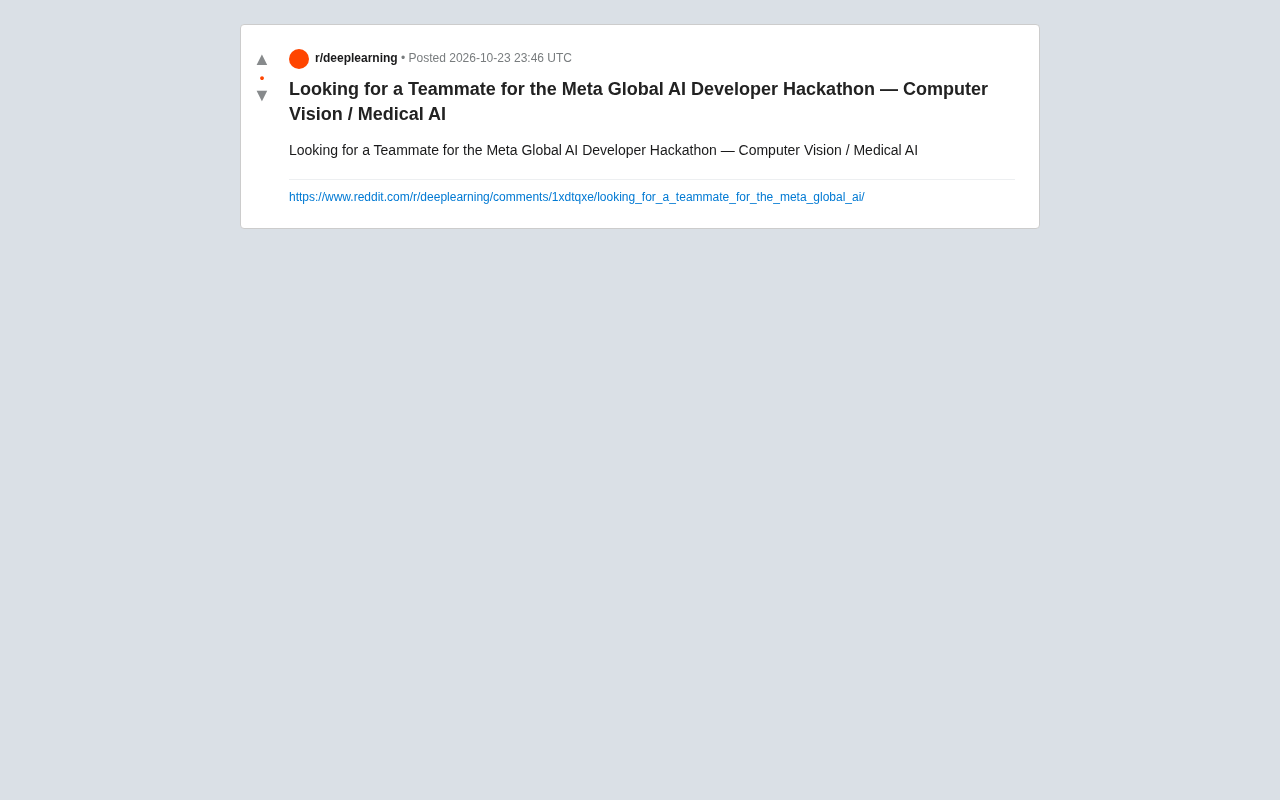
Teammate Wanted for Meta Global AI Developer Hackathon: Computer Vision & Medical AI
A Reddit developer seeks teammates for the Meta Global AI Developer Hackathon, focusing on computer vision and medical AI. This article analyzes the track logic, skills-complementarity needs, and topic selection strategy behind this teaming signal.
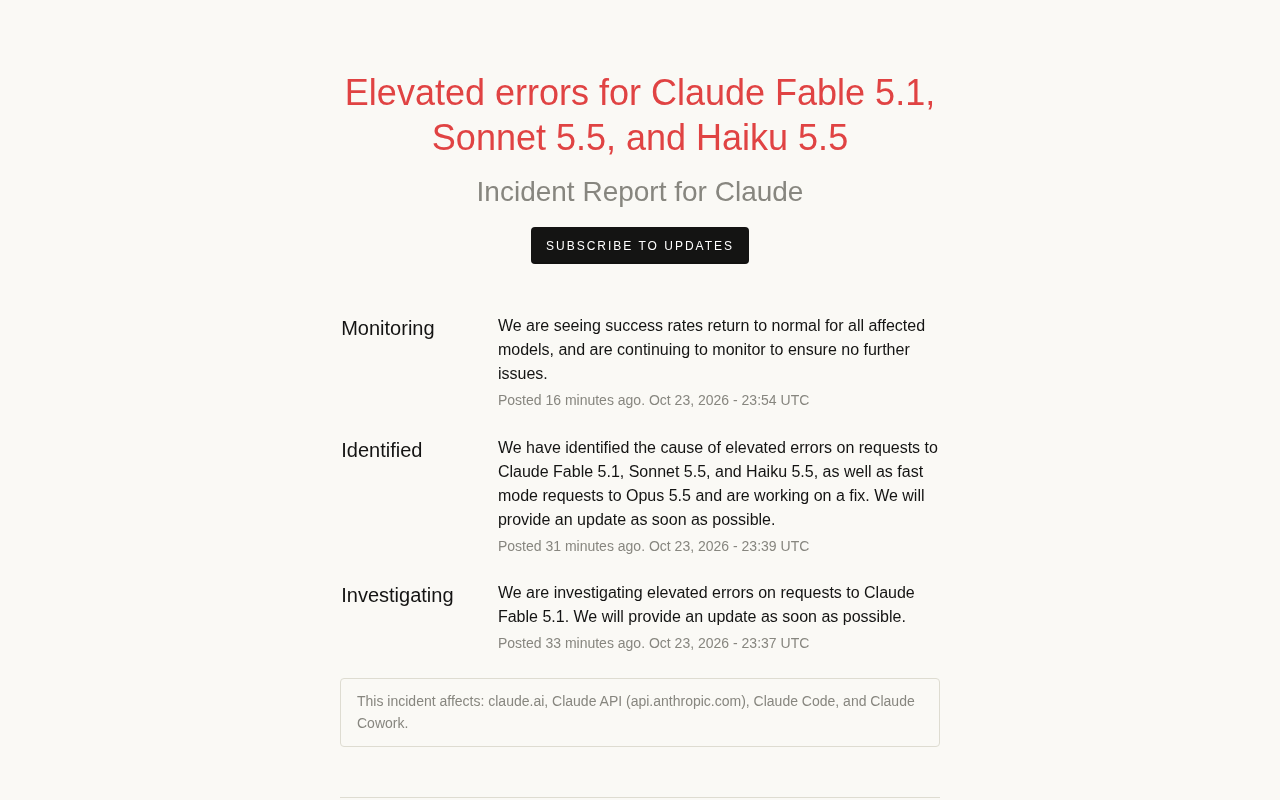
Multiple Claude Models Hit by Errors: A Postmortem of Fable 5.1, Sonnet 5.5, and Haiku 5.5
Claude Fable 5.1, Sonnet 5.5, Haiku 5.5, and Opus 5.5 fast mode saw elevated errors; Anthropic identified and resolved the issue in 17 minutes. This postmortem covers the timeline, the technical reasons for the multi-model cascading failure, and practical lessons for retry and degradation strategies.