Medium Launches TK: An Agentic Notebook That Connects to LLMs
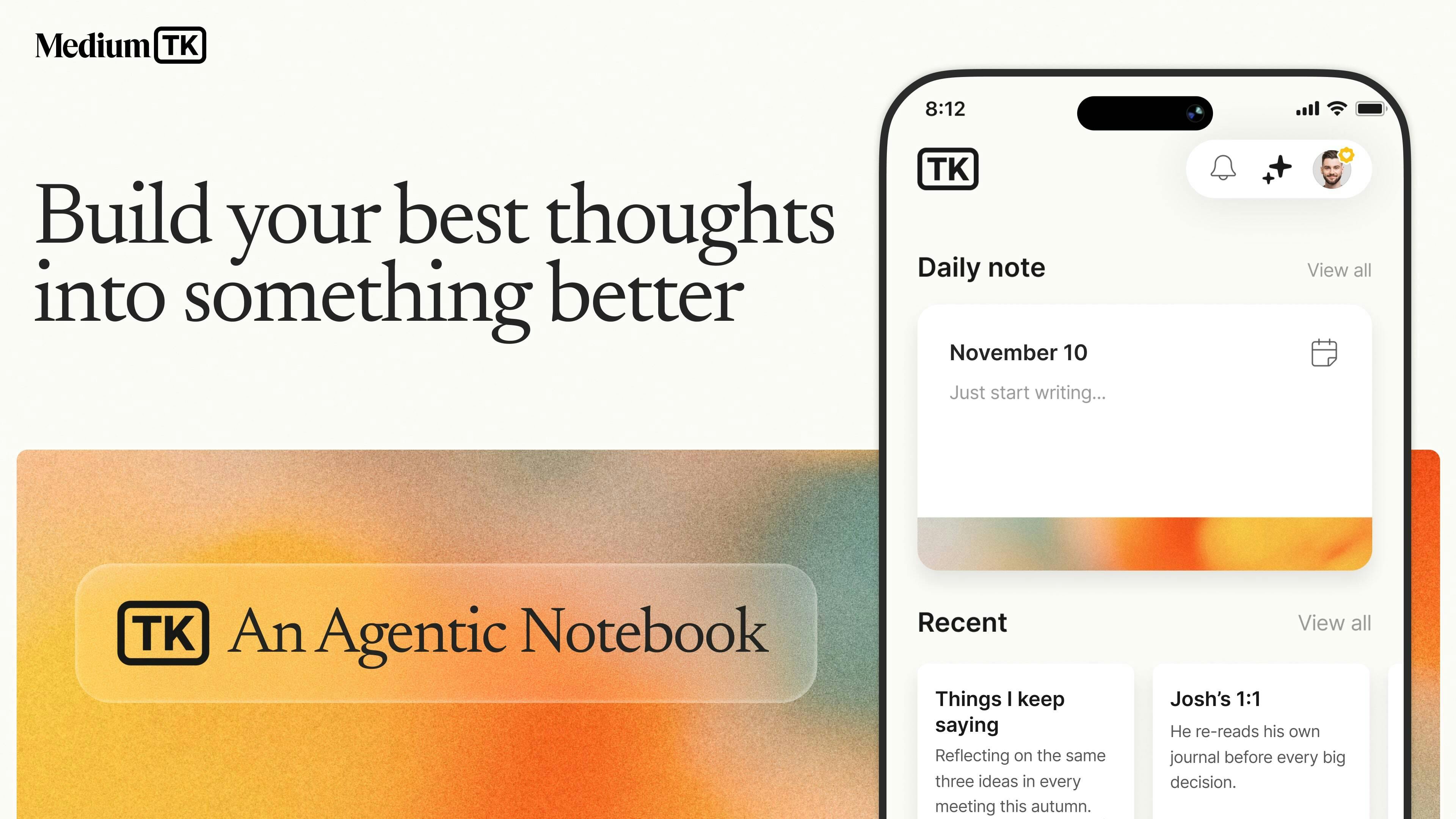
Medium launches TK, an agentic notebook that uses AI to connect recording, linking, and writing output.
Medium has released TK on Product Hunt, positioning it as an "agentic notebook" that aims to solve the long-standing gap between capture and output in note-taking tools. TK embeds AI directly into the writing scene, avoiding the need to switch to external chat windows and break flow. Its core capabilities fall into three layers: capturing and accumulating reusable material, having AI proactively connect notes and surface associations, and ultimately transforming accumulated thinking into writing that belongs to the user. The product also offers an MCP server that connects to external LLMs and AI tools, reducing lock-in concerns through openness. TK received 82 upvotes on Product Hunt, ranking 7th, with Medium CEO Tony Stubblebine as the maker. The article argues that the real test is whether AI can provide high-value prompts rather than noise when proactively connecting notes.
Medium is rethinking the role of note-taking tools. TK, which debuted on Product Hunt, defines itself as an "agentic notebook"—its goal isn't to be yet another place to store ideas, but to let ideas grow continuously with AI assistance and ultimately become writing that belongs to you.
What Problem It Aims to Solve
One starting question the Medium team posed was: "What if every thought had the chance to become something extraordinary?" This actually points to a long-standing gap in note-taking tools: there's no continuous path between capture and output. TK's positioning is to keep AI directly at the writing scene—you first record scattered inspirations, including those shower thoughts and forgotten old notes, then let AI help connect them, surface new possibilities, and let existing knowledge keep accumulating.
The key is "not interrupting flow." The problem with many tools is that when you want to invoke AI, you must first leave your current writing environment, switch to another chat window, and re-explain the context. TK's design philosophy is to eliminate this step.
"Flow" was proposed by psychologist Mihaly Csikszentmihalyi, referring to the state of high concentration when a person is fully immersed in an activity—easily broken in writing by interface switching, context rebuilding, and other interruptions. The cost of context switching isn't just operational time; it's also the need to re-explicitly express the implicit premises in your mind to the AI, which consumes working memory and weakens the continuity of thought. Therefore, embedding AI into the writing scene rather than opening a separate chat window is essentially about reducing this cognitive burden—a common design direction for AI writing tools in recent years.
What the Agentic Notebook Actually Does
TK's described core capabilities can be broken down into three layers:
- Capture and Accumulate: Treat what you record as a reusable pool of material, not a one-time draft.
- Connect and Surface: Let AI proactively discover connections between notes and point you toward directions you haven't yet seen.
- Transform into Writing: Turn accumulated thinking into finished text, with the official emphasis that the output is "undoubtedly your own," not generic AI-speak.
These three points point to the same logic: the value of notes isn't in storage volume, but in whether they can be continuously called upon to drive new output.
Openness: The MCP Server Is the Real Differentiator
TK has built-in community features and offers an MCP server that can connect to your commonly used LLMs and AI tools. This deserves separate discussion.
In the current product landscape, MCP (Model Context Protocol) means TK doesn't need to be the sole AI entry point. Your note data can serve as a context source, read and used by external models and tools. For users, this reduces concerns about being locked into a single product; for Medium, it's a smarter strategy—rather than competing on model capabilities, it occupies the "personal thinking data" layer.
However, it should be noted that currently public information only mentions the existence of the MCP server, without disclosing specific connection methods, supported scope, or permission control details. How this works in practice will require further product information.
MCP (Model Context Protocol) is a protocol proposed and open-sourced by Anthropic at the end of 2024, aimed at providing a standardized way to connect AI applications with external data sources and tools. It's often compared to "USB-C for the AI world": the model side doesn't need to develop separate integrations for each data source, and the data source side only needs to implement the protocol once to be read and called by multiple LLM clients. For note-taking products, supporting MCP means users' historical records can be directly accessed by external models as structured context, rather than relying on the product's built-in Q&A interface. This also makes it possible to "keep data in place while freely switching models"—an important technical signal for judging whether a tool is truly open.
Launch Data and Positioning
TK received 82 upvotes and 3 comments on Product Hunt, ranking 7th, categorized under Productivity, Notes, and Artificial Intelligence. The maker is Tony Stubblebine (CEO of Medium).
For a new product from an established content platform, these numbers aren't explosive, but they reflect more about the product's current stage than its final positioning. Medium itself has a large community of writers and content assets, and TK is more like an extension tool for this audience rather than a general-purpose note-taking app for the mass market.
A Direction Worth Watching
The term "agentic notes" is being used by more products, but most remain at the level of "AI summarization + Q&A." What makes TK worth watching is that it puts three things on the same chain: recording, connecting, and producing—and opens outward through MCP.
The real test is whether AI can give sufficiently valuable prompts when proactively connecting notes, rather than creating noise. This determines whether it becomes a boost to writing or just another blank input box that gets opened. TK is still at an early stage, but the question it raises—how should note-taking tools participate in the thinking process—is valuable for similar products.
Related articles

How Do Cursor, Devin, TRAE, and Copilot Compare on Price? Calculate Your Credits Before You Compare Monthly Fees
Side-by-side comparison of individual and team pricing for Cursor, Devin Desktop, TRAE, and Copilot, breaking down credit rules, third-party model inclusion, overage billing, and practical methods for measuring usage before paying, setting spending caps, and choosing the right tool.
Copilot Retires Three Models: Pro Users Left With Only One Alternative
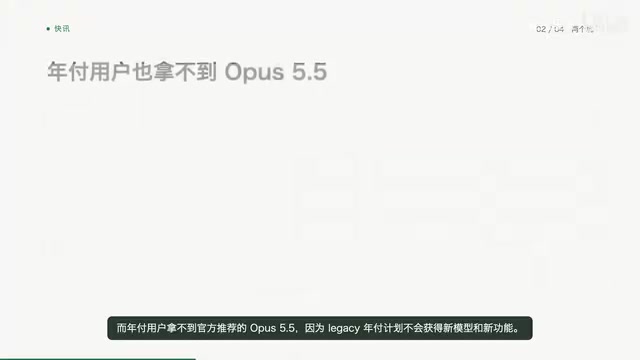
GitHub Copilot retires Claude Opus 4.8, Claude Opus 5, and GPT-5.6 Tera on Nov 16 across Chat, code completion, and Agent mode. Pro users have only GPT-6 Luna left; Legacy annual plans miss Opus 5.5; admins must enable replacements manually.
Gemini 4 Carbon Arrives: The LLM Race Enters the Era of Million-Token Context and Trillion-Parameter Open Source
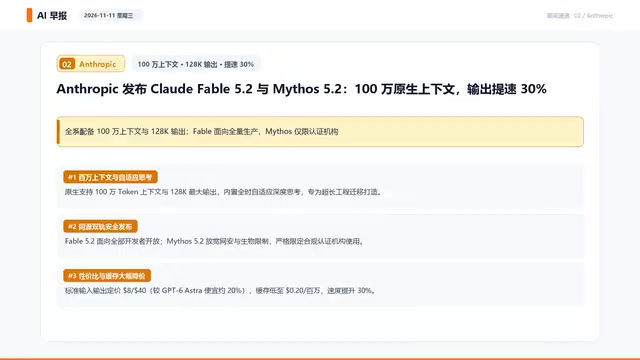
Google launches Gemini 4 Carbon and multi-agent tool Swarm; Anthropic debuts million-context Fable 5.2 and Mythos 5.2; OpenAI releases security-focused GPT-6 Cyber; Mistral and Kimi open-source trillion-parameter models — the LLM race accelerates across the board.