Medley: A Deep Dive into the Multi-Agent Orchestration Plugin for Claude Code

Medley turns Claude Code into a multi-agent orchestration platform for complex development tasks.
Medley is a free Claude Code plugin that transforms complex development goals into live task graphs through a /mission command. It orchestrates multiple AI agents (including Codex) to work collaboratively, supports BYOK model access via OpenRouter for flexible model selection, and builds review-iteration cycles into the workflow. This represents the next paradigm in AI programming: from single-session assistants to team-level orchestration.
When a Single Session Isn't Enough
As AI programming tools become increasingly prevalent, Claude Code has become a daily companion for many developers. However, anyone who has used it extensively shares a common pain point: the limitations of a single session. When tasks are complex enough—spanning multiple files, multiple modules, or requiring extended continuous reasoning—a single AI session often falls short. Context loss, task interruptions, and lack of coordination are persistent frustrations for developers.
This limitation fundamentally stems from the "Context Window" mechanism of large language models. Every model has an upper limit on the number of tokens it can process in a single interaction—even Claude 3.5's 200K context window can easily be exhausted when facing a real-world project with dozens of files and thousands of lines of code. More critically, as context length increases, the model's ability to retrieve information from middle positions degrades significantly (the "Lost in the Middle" problem), leading to declining reasoning quality. This is why even when the theoretical context is large enough, complex tasks still need to be decomposed across multiple sessions.
Medley was born to solve exactly this problem. As a free Claude Code plugin, it quickly gained traction after launching on Product Hunt, earning 298 votes and ranking 4th on the daily leaderboard, categorized under Productivity and Artificial Intelligence. Its core proposition is straightforward: Designed for work that exceeds what a single session can handle.
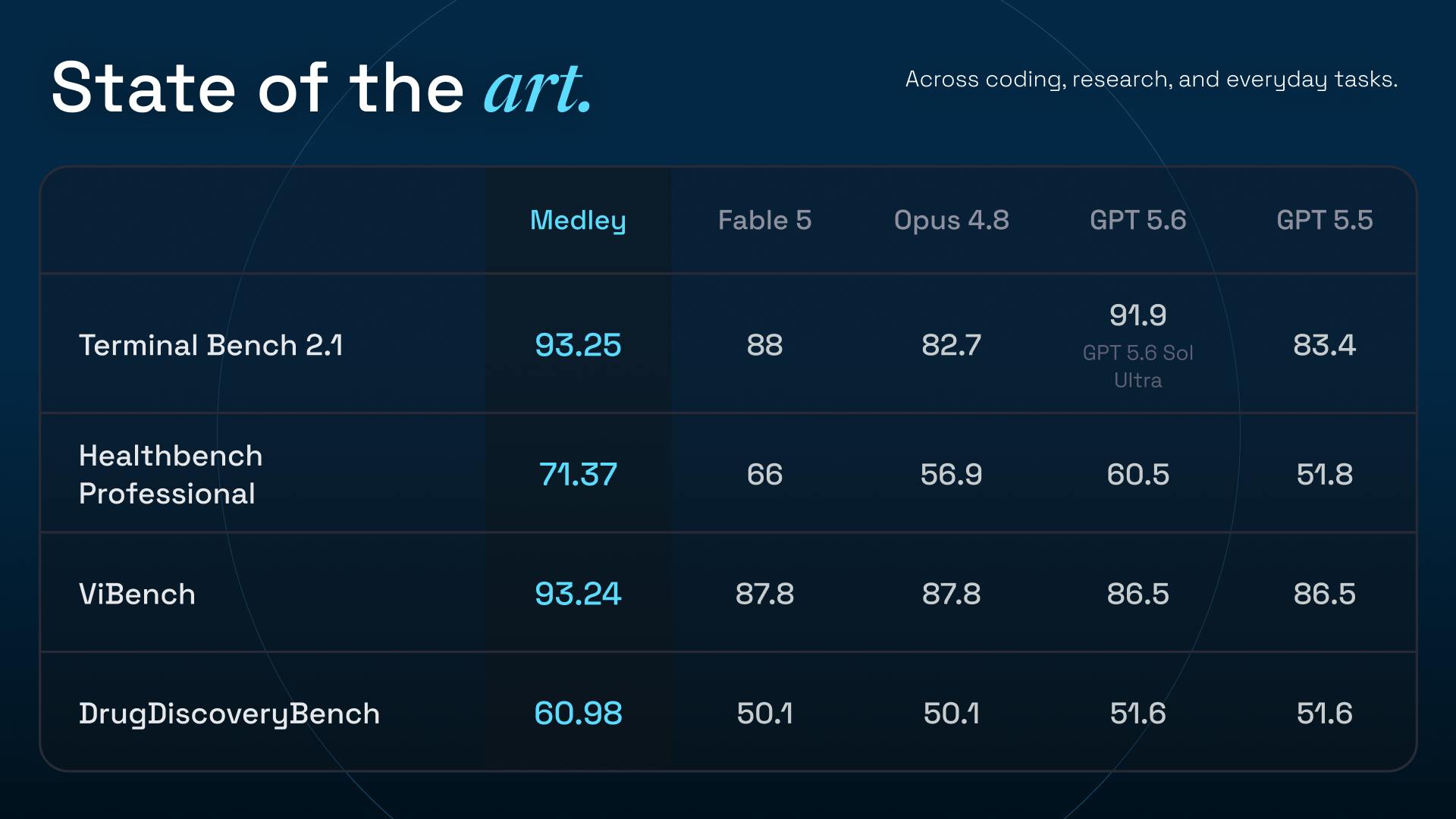
From "Tasks" to "Agent Teams": Medley's Core Mechanism
Medley's usage logic revolves around one core command—/mission. Developers simply input this command and describe a desired outcome to the system, and Medley transforms it into a live task graph.
Visual Decomposition via Task Graphs
The key innovation here is "graph-based decomposition." Traditional AI programming assistants are linear and conversational—you ask a question, it gives an answer. Medley breaks down a macro-level goal into a visualized network of task nodes, making the structure of complex work immediately clear.
From a technical perspective, the task graph is essentially an application of Directed Acyclic Graphs (DAGs). In software engineering and project management, DAGs are widely used to represent dependency relationships between tasks—certain tasks can only begin after their prerequisites are completed. This concept is already mature in CI/CD pipelines (such as GitHub Actions, GitLab CI) and data flow orchestration tools (such as Apache Airflow). Medley introduces this concept into AI programming, allowing each task node to be independently assigned to different agents for execution while ensuring correct execution order through the graph structure. The advantage of this structured approach over linear conversation is that it can identify which subtasks can run in parallel and which have strict sequential dependencies, enabling more efficient resource scheduling.
This design not only improves task manageability but also gives developers a clear view of the entire workflow's progress and dependencies.
Multi-Agent Collaborative Work Mode
Taking it a step further, Medley can coordinate multiple "workers" to collaborate. It doesn't just invoke Claude Code—it also supports other work units like Codex, forming a genuine "agent team." Each agent handles different branches of the task graph, with the system providing unified orchestration.
Multi-agent collaboration isn't an entirely new concept; its theoretical roots trace back to Distributed Artificial Intelligence (DAI) research. But in the past two years, as LLM capabilities have leaped forward, Multi-Agent architectures have entered a period of practical explosion. Representative frameworks include Microsoft's AutoGen, Stanford's Generative Agents, and CrewAI. The core idea behind these systems is that a single LLM has capability limits, but through role specialization (e.g., one agent for code writing, one for testing, one for code review) and information-passing protocols, single-model bottlenecks can be overcome. Medley incorporates different AI models like Codex as "workers" into its orchestration system, essentially bringing the Multi-Agent paradigm to everyday development tools rather than leaving it in academic research or proof-of-concept demonstrations.
This multi-agent collaboration model is one of the most closely watched technical directions in the AI Agent space—extending the capability of a single model into a collaborative, specialized system.
Review, Iterate, and Keep Going: Human-in-the-Loop Design
Medley's workflow isn't "one-click generation, hope for the best." It emphasizes a complete closed loop: Coordinate workers → Review the result → Keep going.
This design philosophy deserves recognition. In actual software development, AI-generated code or solutions often require human review and correction. By building "review" into the process as a native step, Medley ensures developers maintain control over the final output rather than passively accepting AI's results.
"Human-in-the-Loop" is a classic design pattern in machine learning and automation systems, emphasizing the preservation of human judgment at critical decision points. In AI programming scenarios, this design is particularly important because code generation carries three typical risks: code that is logically correct but violates architectural conventions; modifications that seem reasonable locally but conflict with other parts of the system; and security vulnerabilities or performance concerns. Research shows that fully automated code generation in complex projects typically has a first-pass accuracy below 70%. Therefore, systematizing the review step rather than relying on developer diligence can significantly reduce the risk of technical debt accumulation from "AI hallucinations."
After review, developers can continue iterating, allowing tasks to progressively approach ideal results through multiple cycles. This design balances efficiency with reliability.
BYOK Mode: A Flexible Model Selection Strategy
Another major highlight of Medley is its open model strategy. It adopts a BYOK (Bring Your Own Key) mode, connecting to various large models through OpenRouter, including Kimi, GLM, and others.
OpenRouter is an LLM API aggregation platform that unifies APIs from dozens of model providers (including OpenAI, Anthropic, Google, Meta, as well as domestic providers like Kimi/Moonshot and Zhipu GLM) into a single standardized interface. Developers only need to connect to one endpoint to flexibly switch between underlying models. This "model routing" design addresses the practical problem of fragmentation in the current LLM ecosystem: different models have different strengths for different task types—Claude excels at long-text reasoning, GPT-4o performs outstandingly in multimodal tasks, and GLM-4 may have advantages in Chinese code comprehension. Through OpenRouter, Medley allows users to select the optimal model based on the characteristics of specific subtasks, implementing a so-called "Model Mixture" strategy that achieves the best balance between cost and effectiveness.
Why BYOK Matters for Developers
This design brings several values:
- Cost control: Developers use their own API keys, connecting directly to model providers, avoiding markup from the plugin provider.
- Model freedom: Different tasks can be paired with different models. For example, domestic models like Kimi and GLM may offer better cost-effectiveness in Chinese-language scenarios or specific tasks, and developers can choose flexibly.
- Data sovereignty: Bringing your own keys means more transparent data flow, which is a bonus for teams concerned about privacy and compliance.
Through the OpenRouter aggregation layer, Medley effectively positions itself as a "model-agnostic" orchestration layer rather than a closed tool locked to a single vendor. This open approach is particularly pragmatic in today's fragmented LLM ecosystem.
A Signal of Paradigm Evolution in AI Programming Tools
Medley's emergence reflects a paradigm evolution underway in AI programming tools. The first generation solved "code completion," the second generation solved "conversational programming," and the new generation represented by Medley is advancing toward "task-level orchestration" and "multi-agent collaboration."
Specifically, the first generation of AI programming tools is represented by GitHub Copilot (released in 2021), whose core function is line-level or block-level auto-completion based on code context—essentially an enhanced IntelliSense. The second generation, represented by Cursor, Aider, and Claude Code, introduced conversational interaction—developers can describe requirements in natural language, and AI makes modifications across complete files or even multiple files, supporting code explanation, refactoring, and debugging. The third generation centers on task orchestration, where the developer's role shifts from "step-by-step guide" to "goal setter" and "quality reviewer." This evolution path is highly consistent with the escalation of abstraction levels in software engineering: from assembly to high-level languages, from manual deployment to CI/CD, from writing code to orchestrating AI—each leap enables developers to work at a higher level of abstraction.
From a broader perspective, this marks a shift in the developer-AI relationship from "one-on-one assistant" to "one-to-many team commander." Developers are no longer prompting AI line by line but issuing a high-level mission and then overseeing an AI team to complete it. This role transformation may be an important trend in future software development workflows.
Of course, as a newly launched free plugin, Medley still needs to prove itself in real-world usage: the accuracy of task decomposition, the stability of multi-agent coordination, and performance in large real-world projects are all critical factors in determining its value. But regardless, the direction it points toward—evolving AI from a "tool" into a "team"—is undoubtedly worth close attention from every developer interested in AI programming.
Summary
With its "mission-driven" philosophy, Medley brings task graph visualization, multi-agent collaboration, and open model connectivity to Claude Code. It precisely addresses the core pain point of limited single-session capabilities while ensuring output reliability through built-in review and iteration mechanisms. For teams and individuals who regularly handle complex development tasks, this is a free tool worth trying.
Key Takeaways
Related articles
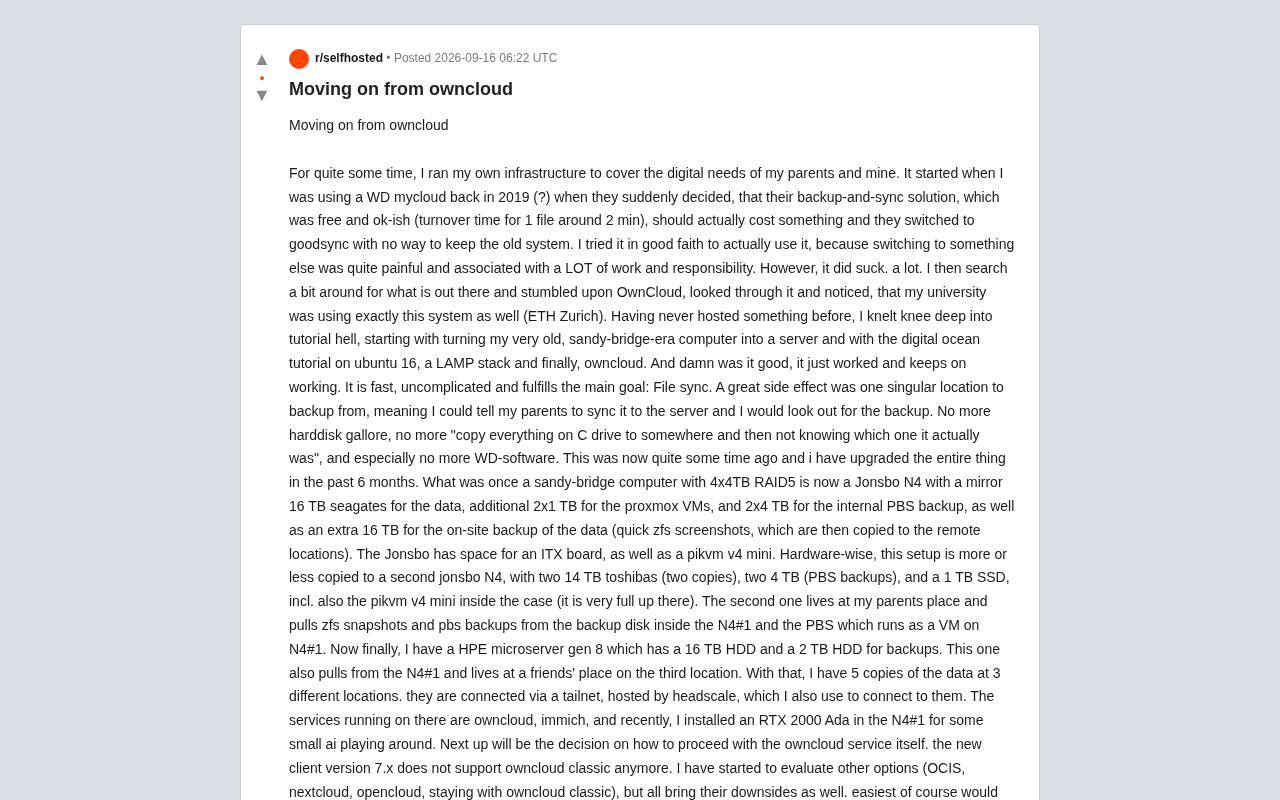
Moving On from ownCloud: Building a 5-Copy, 3-Location Home NAS Backup System
A Reddit user's journey from WD MyCloud to a 5-copy, 3-location ZFS+Proxmox home NAS, and the hard choices facing ownCloud Classic users as the official client drops support.
What Are Agent Skills? A Beginner's Guide from Understanding to Customization
What are Agent Skills? This guide breaks down the Skill concept, its role in ecosystems like Claude Code, and a three-step learning path from understanding to customization.
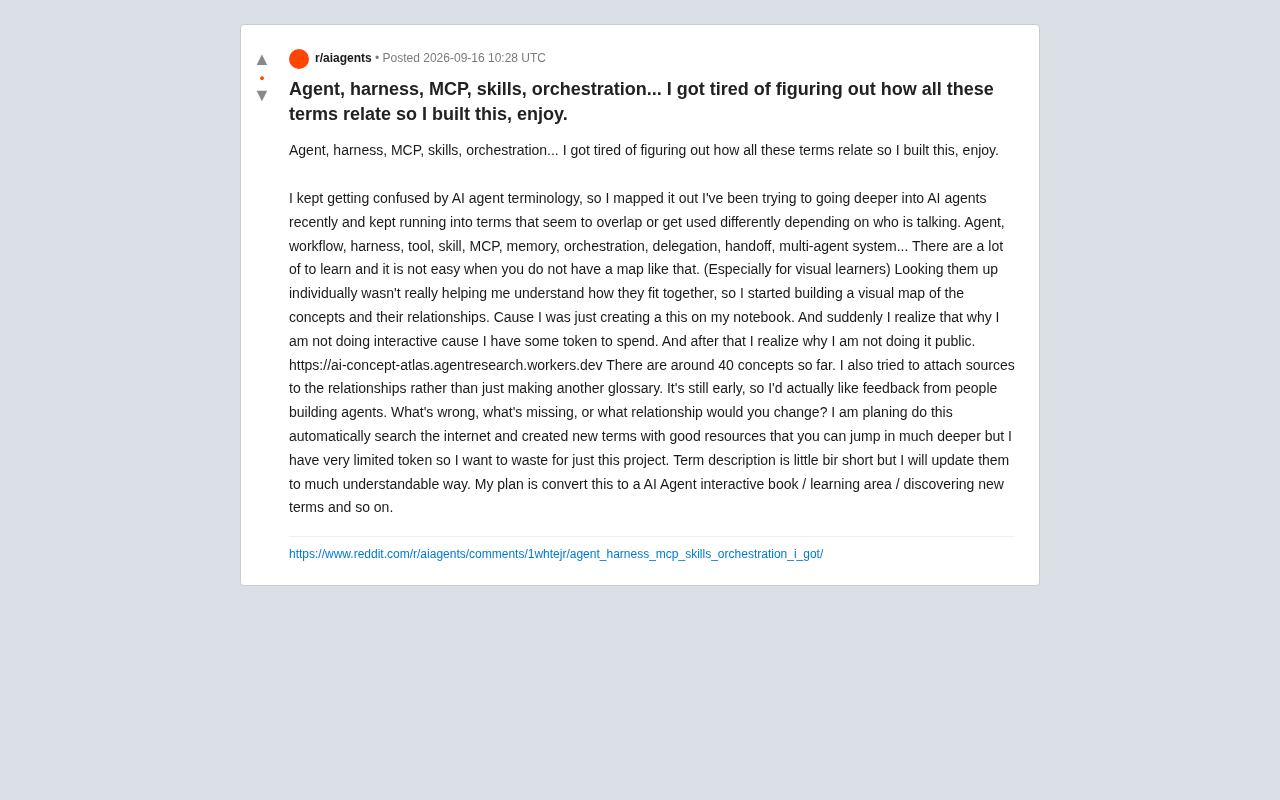
AI Agent Terminology Too Confusing? One Interactive Concept Map to Untangle 40+ Core Terms
Confused by AI Agent terms like MCP, harness, orchestration, and skills? AI Concept Atlas is an interactive map visualizing 40+ concepts and their relationships, with cited sources.