Meta Launches WhatsApp Business MCP Server, Letting AI Agents Handle Tedious Setup Tasks
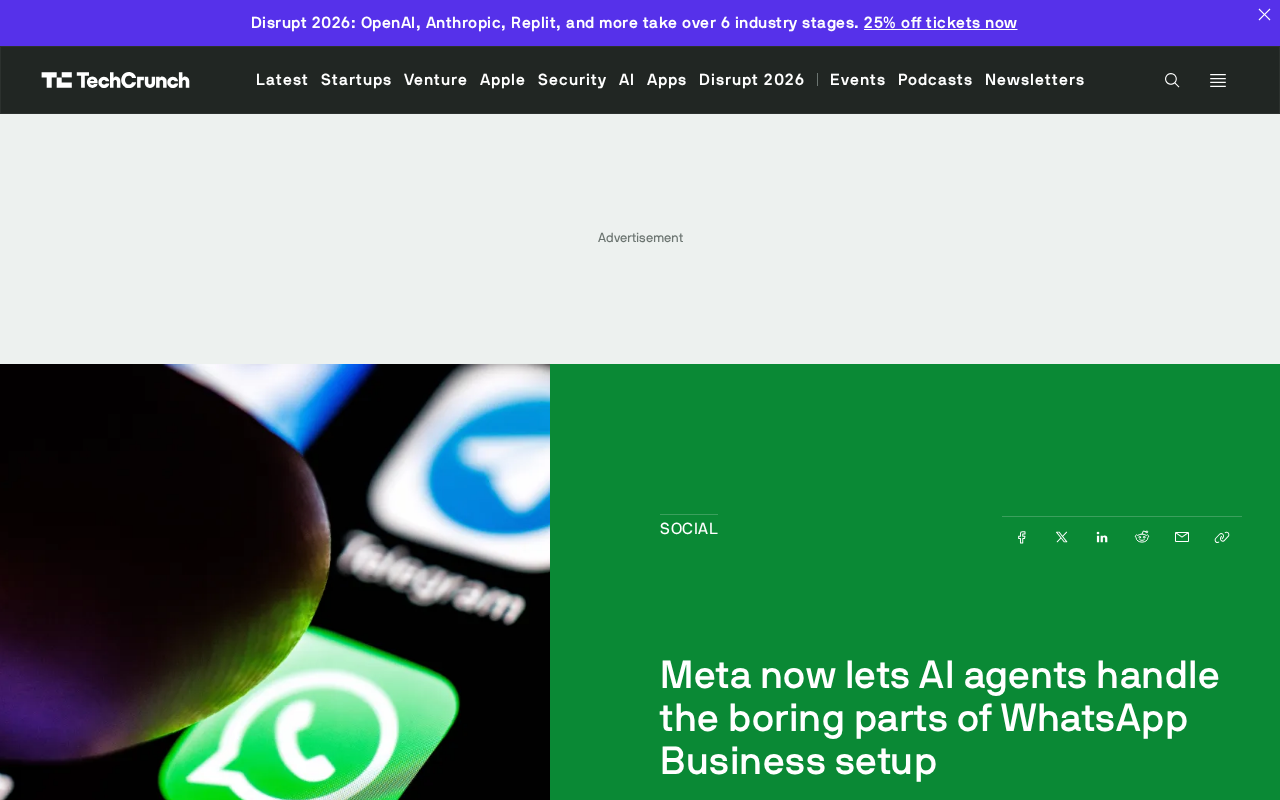
Meta launches a WhatsApp Business MCP server so AI coding agents can handle repetitive API setup tasks.
Meta has introduced a WhatsApp Business MCP server that leverages the open Model Context Protocol standard, allowing leading AI coding agents — including Claude, Cursor, Codex, and ChatGPT — to directly operate the WhatsApp Business platform and automate tedious tasks like account setup, message template creation and submission, message testing, and troubleshooting. Developers can now delegate work that once required extensive documentation reading and manual debugging to an AI agent using plain natural language, dramatically lowering the barrier to WhatsApp Business API integration. This is another prime example of the MCP ecosystem landing in a real commercial product, reflecting the broader trend of AI coding assistants expanding from writing code into ops configuration and system integration.
Meta has rolled out a practical developer-focused update for the WhatsApp Business ecosystem: a brand-new WhatsApp Business MCP server that lets developers hand off platform configuration, message templates, testing, and troubleshooting to AI coding agents like Claude, Cursor, Codex, and ChatGPT.
What Problem Does the MCP Server Solve?
For any developer who has integrated with the WhatsApp Business API, the initial setup is often the most time-consuming and error-prone part of the process. From account verification and Webhook configuration to creating message templates and submitting them for review, every step involves extensive documentation and repeated debugging. The work isn't technically complex — it's just painfully slow.
Meta's newly launched MCP (Model Context Protocol) server targets exactly these "boring but necessary" repetitive tasks. Through a standardized protocol interface, AI agents can directly understand WhatsApp Business's configuration logic and handle most of the manual work on behalf of developers.
MCP (Model Context Protocol) is an open standard proposed and open-sourced by Anthropic in late 2024, designed to solve the problem of fragmented connections between AI models and external tools or data sources. Before MCP, whenever a developer wanted an AI assistant to interact with an external system, they had to write custom integration code for that specific system — costly to build and hard to reuse. MCP's core idea is similar to the USB standard: once a platform (like WhatsApp Business) publishes an MCP-compliant server, any MCP-compatible AI client can communicate with it directly, no extra adaptation needed. This "connect once, use everywhere" architecture is precisely why Meta chose MCP as its open interface.
Supports Leading AI Coding Tools
One of the standout features of this MCP server is its broad tool compatibility. Developers can use whichever AI coding assistant they're most comfortable with, including Anthropic's Claude, the Cursor IDE, and tools like Codex and ChatGPT.
As an open protocol, MCP's core value lies in bridging different AI models with external systems. This means developers don't need to build separate adapters for each tool — as long as a tool supports MCP, it can directly invoke WhatsApp Business capabilities and complete configuration and debugging within the developer's own workflow.
Tasks Covered
According to Meta's documentation, the MCP server can assist with the following types of work:
- Setup: Automate account onboarding and environment configuration
- Messaging Templates: Create, manage, and submit message templates for review
- Testing: Validate message sending and receiving during development
- Troubleshooting: Identify and diagnose issues that arise during integration
WhatsApp Business Message Templates are one of the platform's core mechanisms and deserve a closer look. Because WhatsApp enforces strict controls on commercial messaging, any business-initiated message sent to users must use a pre-approved template reviewed by Meta — a process that typically takes anywhere from a few hours to several days. Templates must be filled out in a prescribed format, including content category, language, variable placeholders, and more. Any non-compliant submission gets rejected and must be resubmitted. This process has long been tedious and error-prone for developers. The MCP server enables AI agents to automatically check template format compliance, fill in required metadata, and submit on the developer's behalf — significantly reducing the back-and-forth caused by formatting issues.
What This Means for Developers
Bringing AI agents into concrete commercial platform configuration workflows reflects a broader industry trend: AI coding assistants are evolving beyond just "writing code" and extending into "ops configuration" and "system integration" scenarios.
For small businesses and independent developers, tools like this are especially significant. Work that previously required reading through documentation and manually configuring options one by one can now be delegated to an AI agent via natural language instructions, freeing developers to focus on the actual business logic. This not only lowers the barrier to entry for the WhatsApp Business API, but also objectively accelerates the development cycle for commercial messaging applications.
Closing Thoughts
Meta's move is yet another compelling example of the MCP ecosystem being applied to real commercial products. As more and more platforms begin offering standardized interfaces for AI agents, the way developers work is quietly shifting — those repetitive, tedious, yet unavoidable tasks are increasingly being handed off to AI. For practitioners keeping an eye on AI-powered development and automation, this is a trend well worth watching.
Related articles
LynnReal-Omni: 32B Unified Video Diffusion Model Goes Open Source with Multi-Task Coverage in Four Steps
LynnReal-Omni is a 32B unified video diffusion model on MiniMax H3, covering text-to-video, pose guidance, style transfer, restoration in 4 steps. Flash version generates 540p video in 377ms on one H100.

Anthropic Co-Founder: AI 'Kill Switch' May Need to Be Mandatory by Law
Anthropic's co-founder tells the BBC that AI 'kill switches' may need to be legally mandated. We analyze the industry logic, technical challenges, and the tension between regulation and innovation.

The AI Data Center Boom Is Colliding With Cities Scarred by Heavy Industry
The AI data center boom is clashing with post-industrial communities. Philadelphia's case reveals structural conflicts between AI growth, energy use, water, and environmental justice.