Meta Muse Wonder In-Depth Review: King of Long-Horizon Coding, But Less Versatile Than Opus 5.5

Meta Muse Wonder leads in long-horizon coding but doesn't take the overall crown, with factual knowledge as its weak spot.
Meta's Muse Wonder comes in a standard version and a subscription-only Full version with no API access; most news high scores come from Full. On the Artificial Analysis composite index, Full scores 56, behind Claude Opus 5.5's 58 and tied with Sonnet 5.5, while the standard version scores just 52. Full leads big on long-horizon coding SWE Marathon (57.5 vs. Opus's 46.3) and also wins legal-agency tests, though test conditions aren't fully uniform. Factual knowledge is a clear weakness: AA Omniscience scores only 30 vs. Opus's 46, and Opus or Astra beat it on Terminal Bench, OS World, and others. On cost, Wonder runs about $4.52 per task, below Opus's $6 but above Astra's $3.26, with Gemini 4 Argon lowest at about $2 at launch pricing. The verdict: Full suits long-running agentic coding, while the standard version offers middling value.
Two Versions — Don't Be Misled by the High Scores
Meta released its new AI model family Muse Wonder on October 12, billed as its most powerful model to date, purpose-built for personal and professional agent scenarios capable of executing long-running, multi-step tasks. But this model is not simply a "stronger GPT killer" — it actually comes in two versions, each with clear strengths and weaknesses. Based on independent benchmark data, this article breaks down Muse Wonder's real-world performance and compares it head-to-head with Claude Opus 5.5, GPT-6 Astra, and Gemini 4 Argon.

The Muse Wonder family has two members: the standard Muse Wonder and the more powerful MuseWonderFull. The standard version is available via the Meta API, OpenRouter, and all MuseCode plans; the Full version is exclusive to MuseCode's PowerPlan ($50/month) or MaximumPlan ($200/month) subscriptions and does not offer API pay-per-token billing. Meta has not disclosed its per-token price.
This creates a key trap: the high scores cited in news coverage usually belong to the Full version, which most developers cannot buy per token. So when you see "Muse Wonder scored XX," always confirm which version is being referenced.
API pay-per-token billing is the dominant commercial model for large models today: users pay based on the actual input and output tokens consumed, can freely integrate the model into any application, and are not locked into a specific client. Subscription models, by contrast, offer bundled quotas or unlimited usage for a fixed monthly fee, usually confined to the vendor's own product interface. The Full version being subscription-only with no API access means developers cannot embed it into their own pipelines — they can only use it inside MuseCode. Its unit cost is also "diluted" by the subscription fee, making direct per-token price comparisons with other models impossible, unlike the standard version. This is why the article repeatedly stresses confirming which version a score comes from — a model that cannot be purchased on demand has limited operational value for most engineering teams.
Plan tiers (PowerPlan at $50, MaximumPlan at $200) typically correspond to different usage quotas, concurrency limits, or feature permissions. Before subscribing, check whether the quota covers your actual call volume so a high-scoring model doesn't become unusable in production due to quota limits.
Core Features: Proactive Memory and Long-Task Agency
Muse Wonder emphasizes four capabilities. Proactive memory lets the model carry key information across conversations, sparing you from re-explaining your project each time. Proactive focus means persisting through hard problems by trying different paths and recovering from errors; Meta stresses that it seeks confirmation before important actions, balancing autonomy with controllability.
Agentic work is the centerpiece: the model can plan long tasks, dispatch subtasks to smaller sub-agents, and operate real software (browsers, desktop apps, mobile apps). Meta specifically names legal, financial, and health scenarios, plus coding tasks ranging from small games to full commercial applications. The context window is roughly 1 million tokens, enough to hold several long books or a large codebase. Input supports text and images (some sources say video and audio as well), while output is text-only — no image, audio, or video generation.
Pricing and Real Cost: Look Beyond List Price to Per-Task Overhead
On API pricing, Muse Wonder costs $4 per million input tokens and $20 per million output tokens, matching Claude Opus 5.5's list price. GPT-6 Astra lists at $10/$50, 2.5 times the other two. Gemini 4 Argon has a launch promo of $2/$10, but it ends November 30 and reverts to $4/$20 starting December 1.
List price only tells half the story. Artificial Analysis measured average cost per test task: Muse Wonder at about $4.52, Opus 5.5 at about $6, GPT-6 Astra at about $3.26 (thanks to far lower token usage), and Gemini 4 Argon at the lowest, about $2 (at launch pricing). The takeaway: Wonder is actually cheaper to use than Opus, but more expensive than Astra, and currently less economical than Argon.
Benchmark Results: Leading in Long-Horizon Coding, Second Tier Overall
On Artificial Analysis's composite Intelligence Index, Claude Opus 5.5 leads with 58. MuseWonderFull scores 56, tied with Claude Sonnet 5.5; GPT-6 Astra, Gemini 4 Argon, and Claude Fable 5.5 each score around 53; the standard Muse Wonder scores only 52, while Meta's previous-generation Muse Spark 1.3 scores 48. The Full version shows clear progress but does not surpass Opus.
The Full version's real edge is in long-horizon coding. On SWE Marathon, Full scores 57.5 and the standard version 53.1, while Opus 5.5 scores just 46.3 and GPT-6 Astra 42.5 — a substantial gap. But two caveats apply: Full's result was obtained under "Extra High Effort" settings, and each model ran on different coding tools rather than a unified environment, so this should be treated as a strong signal rather than a precise measurement. In a separate Deep SWE test run by an external team, Full scored 79.5 and the standard version 78.8, both ahead of Opus's 74.2 and Astra's 74.1.
The Harvey Lab legal-agency test is extremely rigorous: Full scores 13.1, far ahead of Astra's 8.6 and Opus's 4.2 (scores are low because all criteria must be met). In Meta's own table for business automation, Full scores 45.4, Astra 41.6, Opus 41.2, while the standard version at 39.1 trails both rivals. Artificial Analysis reports different numbers for what appears to be the same test, so treat these with caution. Even the top score means more than half of workflows fail — human review remains essential.
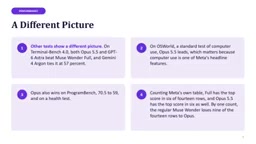
Other tests paint a different picture: on Terminal Bench 4.0, both Opus 5.5 and GPT-6 Astra outperform Full, with Gemini 4 Argon tied with Full at 57%; on the computer-use benchmark OS World, Opus leads — precisely one of Meta's flagship features; on Program Bench, Opus wins 70.5 to 59, and also leads on health tests. Tallying Meta's own table, Full takes the top score in 6 of 14 rows, while Opus 5.5 takes 10; the standard Muse Wonder loses to Opus in 9 of 14 rows.
Intelligence Index is a composite capability score maintained by Artificial Analysis that normalizes and weights multiple independent benchmarks (reasoning, coding, knowledge, agentic tasks, etc.) into a single number for easy cross-model comparison. Its value is the one-stop overview; its limitation is that the weights are set by the evaluator, so users with different task preferences may reach different conclusions — a high score doesn't mean the model is stronger in the specific scenarios you care about.
SWE Marathon-style benchmarks simulate long-running, multi-step software engineering tasks (e.g., modifying multiple files, repeatedly debugging, and maintaining context consistency), which is closer to real development workflows and often produces conclusions that diverge from single-turn coding benchmarks. Terminal Bench focuses on completing sequences of operations in a command-line environment, OS World evaluates computer operation in a graphical interface, and Program Bench assesses program-level reasoning and implementation. Each benchmark covers a different facet of agentic capability, which is exactly why the article shows the same model trading wins across different tests.
Also note that reasoning effort settings (such as Extra High Effort) significantly affect scores and cost: higher effort usually means longer chains of thought, more token consumption, and higher latency. Cross-model comparisons must align on this parameter, or the scores aren't comparable.
Clear Weaknesses: A Large Gap in Factual Knowledge
Factual knowledge is Muse Wonder's most obvious weakness. The AA Omniscience test rewards correct answers and penalizes incorrect ones: Full scores only 30 and the standard version 25, while Opus 5.5 scores 46, GPT-6 Astra 43, and Gemini 4 Argon 42. The gap is plain to see. The new model hallucinates less than Spark, but it genuinely "remembers less" than its rivals. If you need the model to answer factual questions from memory, be sure to build in an extra verification step.
Speed is decent: about 100 tokens/second at maximum reasoning effort, but the first token may take about 20 seconds — slow to start on hard problems, faster afterward.
AA Omniscience is a "penalizing" factual-knowledge benchmark: it doesn't just count correct answers, it also deducts points for confident wrong answers, so a low score often reflects a model's tendency to fabricate rather than admit ignorance. This type of test is directly related to the hallucination problem — a model generating plausible-sounding content without supporting evidence. A low score means the model's internally stored facts have narrow coverage or unstable recall, a real risk for Q&A, customer service, and retrieval-augmented scenarios that rely on the model answering "from memory." Practical countermeasures include connecting retrieval tools, requiring cited sources, and building in human or programmatic verification of key conclusions.
Head-to-Head Against the Three Major Competitors

Vs. Claude Opus 5.5: Opus is the stronger all-around model on independent indices, with a commanding lead in factual knowledge. The Full version wins on long-horizon coding, legal agency, and workflow automation. The standard Wonder API is priced the same as Opus but scores lower overall, only edging ahead on Deep SWE. For the best general-purpose model, Opus is the safer choice; if your work is confined to long-horizon coding projects within MuseCode, Full is worth testing seriously.
Vs. GPT-6 Astra: Full's index of 56 vs. Astra's 53, with a clear lead on SWE Marathon and Deep SWE. But Astra wins on Terminal Bench, has stronger factual knowledge, and costs less per task in independent testing — despite its much higher list price. The standard Wonder at 52 is slightly below Astra, so Astra is the better value for general scenarios, while Full is better suited to marathon coding.
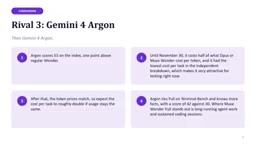
Vs. Gemini 4 Argon: Argon's index is 53, one point above the standard Wonder. Until November 30 its token price is half that of Opus/Wonder, and it has the lowest per-task cost in independent testing, making it highly attractive to test right now. After that, token prices will be on par, and per-task cost at equal usage is expected to double. Argon ties Full on Terminal Bench and leads on factual knowledge, 42 to 30. Full's unique advantage lies in long-running agentic sessions and sustained coding work.
Worth noting: MuseWonderFull ties Claude Sonnet 5.5 at 56 on the index — which shows Full is a contender snapping at the heels of the top tier, with a few clear strengths, rather than a runaway leader.
Who It's For and the Final Verdict
Good for: teams that need long-running agentic sessions to build software, review large document sets, or execute multi-step legal or financial work — MuseWonderFull is worth testing. Not for: users whose main needs are fast Q&A, strong factual knowledge, or image/video generation — other models are a better fit.
Final verdict: MuseWonderFull is a serious model and a leader in long-horizon coding, but it doesn't take the overall crown. The standard Muse Wonder is a solid, reasonably priced agentic model, but not the best value on the market. Meta has clearly reached the frontier, but gaps remain. Meta says a full safety report and additional evaluations will be released later, and many of the standout numbers come from its own tables — until more independent testing is available, we recommend comparing on your own real tasks: run Muse Wonder, then Opus 5.5, Astra, or Argon, and check cost and accuracy before deciding.
Related articles

Cursor AI Programming in Practice: Build a Student Management System from Scratch in 30 Minutes
A Bilibili creator demonstrates Cursor AI programming: generating a student management system in 30 minutes with natural language. Details on Agent mode, Claude selection, prompt techniques, and thresholds.

Top 20 AI Coding Tools Ranking: From Rock-Solid to Lackluster, a Scored Matrix
Bilibili creator releases top 20 AI coding tools ranking, tiered T0–T4 from rock-solid to lackluster, with Claude Code and Codex tied at T0. This article details the scoring dimensions (capability, reliability, robustness, durability, cost, domestic availability) and tool performances to help developers choose the right AI coding assistant.

Vibe Coding Systematic Tutorial: Master AI-Assisted Programming from Zero
A three-month Vibe Coding tutorial from a Bilibili creator covering Codex, ClaudeCode, and Cursor, from core logic to commercial project practice for beginners.