Meta Ordered to Pay $25 Billion in Cambridge Analytica Scandal, Sounding Alarm for Data Privacy Regulation

Meta ordered to pay $25 billion in Cambridge Analytica scandal, setting a record for civil data privacy damages
Meta was ordered by a court to pay $25 billion in damages in a case related to the Cambridge Analytica scandal, making it one of the most expensive judicial rulings in the data privacy field. The article reviews how Cambridge Analytica obtained data on tens of millions of Facebook users through a third-party app and notes that the ruling reflects a tougher judicial stance on platform failures in data protection. The $25 billion is equivalent to several quarters of Meta's net profit, will directly hit its financial statements, and may force it to tighten data-sharing policies, increase privacy compliance investment, and divert resources from its AI and metaverse strategy. The ruling sends a clear signal to the tech industry: misuse of user data will face severe accountability, and rising compliance costs will become the norm. The article also emphasizes that platforms should embed privacy protection into product design rather than relying on after-the-fact remediation.
Event Overview: A Massive Penalty Lands
According to an RSS source, Meta lost a case related to the Cambridge Analytica scandal and was ordered by a court to pay up to $25 billion in damages. The ruling stems from a recent trial centered on the social media giant's data privacy practices, marking a major legal action in the field of user data protection.
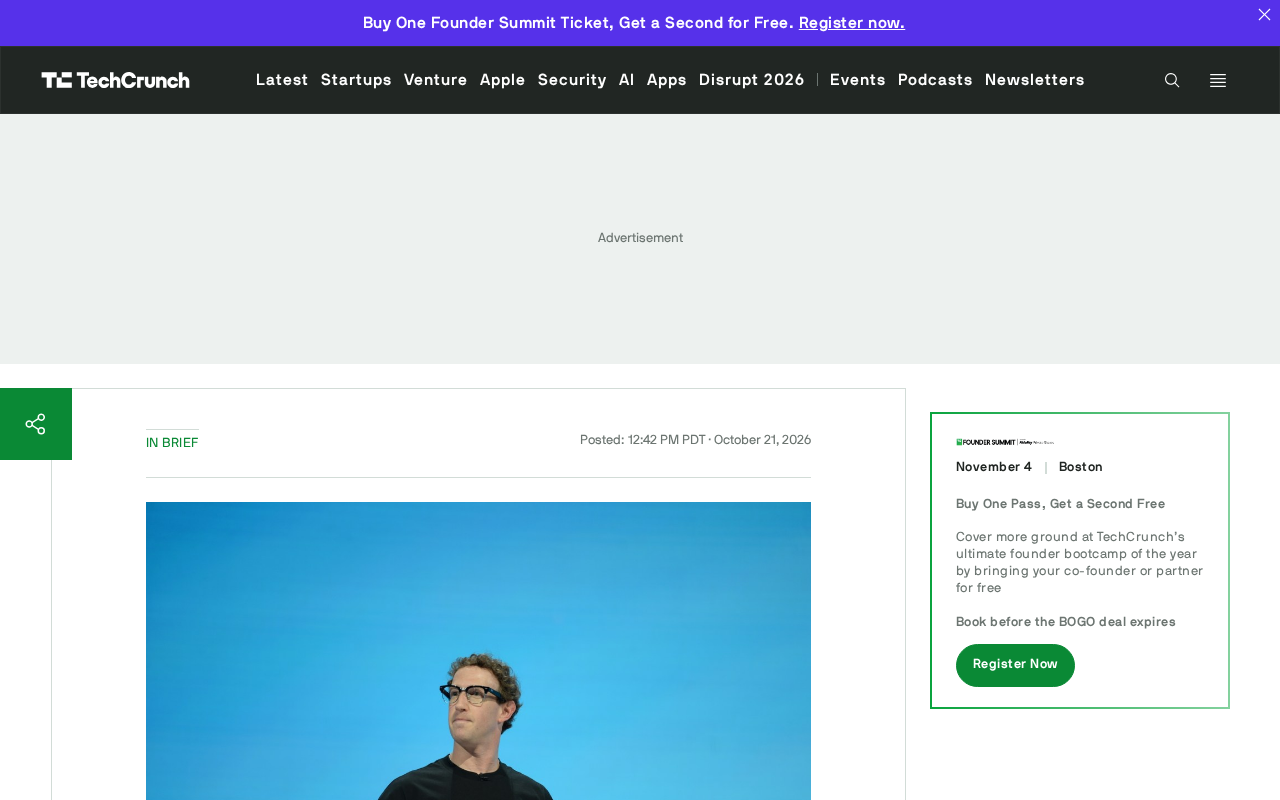
Although the original report did not disclose specific details of the trial, the $25 billion figure is enough to make it one of the most expensive judicial rulings in the data privacy field. Since it came to light, the Cambridge Analytica scandal has been a landmark case in global discussions of data ethics and platform responsibility, and this ruling will undoubtedly thrust the issue back into the spotlight.
Cambridge Analytica Scandal Revisited: A Textbook Case of Data Misuse
At the heart of the Cambridge Analytica incident was a political consulting firm's improper acquisition of tens of millions of Facebook users' personal data, which was then used for targeted political advertising. The scandal not only exposed vulnerabilities in the platform's control over third-party app data access but also triggered a sharp decline in public trust toward tech giants.
Meta's massive damages ruling this time shows that the judicial system has adopted a tougher stance in holding platforms accountable for failures in data protection. Although Meta had previously suffered regulatory penalties and reputational damage from the scandal, the $25 billion civil damages award is far larger in magnitude than anything before and may set a benchmark for similar lawsuits going forward.
Cambridge Analytica was a British political consulting firm founded in 2013 that provided data analysis services to Donald Trump's 2016 campaign and the Brexit camp. Its data acquisition path was not a direct hack of Facebook; instead, it collected data on users and their friends through a third-party personality quiz app called "this is your digital life," involving approximately 87 million Facebook users.
The incident was exposed in 2018 by a joint investigation by The Guardian and The New York Times, subsequently triggering a U.S. FTC investigation, congressional hearings, and the #DeleteFacebook movement. Cambridge Analytica declared bankruptcy in 2018. The scandal became a key catalyst for global data privacy legislation, directly driving the implementation of GDPR and the introduction of privacy laws in multiple U.S. states.
Financial and Strategic Impact on Meta
$25 billion is equivalent to several quarters of Meta's net profit, and this payout will directly hit its financial statements. The more far-reaching impact is that it may force Meta to further tighten its data-sharing policies and increase investment in privacy compliance.
Strategically, Meta has been heavily pushing AI and metaverse businesses in recent years, and the massive damages may divert its resources and heighten investors' concerns about legal risks. At the same time, the ruling may prompt other tech companies to reassess their own data processing procedures to avoid similar legal consequences.
The difference between civil damages and regulatory fines is worth noting: regulatory fines are imposed by administrative agencies such as the FTC and DPAs, usually calculated according to statutory formulas; civil damages are awarded by courts in class actions or individual lawsuits and often include punitive damages, with amounts that may far exceed administrative fines. Meta was previously fined $5 billion by the FTC over the Cambridge Analytica incident (2019), the largest privacy fine in FTC history at the time, but it differs significantly in nature and magnitude from the $25 billion civil damages in this report.
Civil damages rulings also typically come with injunctive relief or compliance monitoring requirements for companies, whose enforcement intensity and duration may be more binding than a one-time fine. For publicly listed companies, civil damages can also trigger securities-law disclosure obligations and investor litigation risk.
Industry Impact: A Signal of Tightening Data Privacy Regulation
The ruling sends a clear signal to the entire tech industry: user data is not a free asset, and misuse or negligence will come at a high cost. Regulations such as the EU's General Data Protection Regulation (GDPR) have already brought regulatory pressure to the European market, while this U.S. civil damages ruling demonstrates another path to accountability.
For social platforms that rely on user data for advertising monetization, rising compliance costs will become the norm. Companies need to build stricter data governance frameworks and improve transparency to rebuild user trust.
The General Data Protection Regulation (GDPR) is a comprehensive data protection regulation that took effect in the EU in May 2018, replacing the 1995 Data Protection Directive. Its core principles include data minimization, purpose limitation, storage limitation, integrity and confidentiality, and accountability. GDPR grants users rights such as access, rectification, erasure (the right to be forgotten), and data portability, and requires companies to notify regulators of data breaches within 72 hours.
Violating companies can be fined up to 4% of global annual turnover or €20 million, whichever is higher. GDPR's "extraterritorial effect" clause makes it applicable to all organizations processing data of EU residents, regardless of where they are registered. This regulation has become a template for global privacy legislation, influencing Brazil's LGPD, California's CCPA, and others.
Rethinking User Trust and Platform Responsibility
The essence of the Cambridge Analytica scandal was the platform's loss of control over user data. This ruling once again reminds users that their personal information may be used for unexpected purposes. Platforms have a responsibility to ensure that data collection and use comply with legal and ethical standards.
Meta's case shows that the cost of remediation after the fact is far higher than prevention beforehand. Tech companies should embed privacy protection into product design rather than treating it as an afterthought. For users, raising awareness of data protection and paying attention to platform privacy policies is equally important.
Conclusion
Meta's $25 billion damages ruling over the Cambridge Analytica scandal is a milestone in the history of data privacy protection. It not only changes the legal and financial landscape Meta faces but also sets clearer boundaries of responsibility for the entire industry. Under data-driven business models, how to balance innovation and privacy will be a question every tech company must answer.
(This article is based on a single RSS source; specific trial details and the basis for the ruling await further verification.)
Related articles

5 Practical Ways Real Estate Agents Can Use AI to Boost Efficiency (2026 Edition)
How can real estate agents use AI to boost efficiency? Based on a YouTube walkthrough, this breaks down five methods — ChatGPT for listing descriptions, Canva for marketing materials, forms for open house leads, Zapier for automated follow-up, and seller meeting prep — and flags risk boundaries like fair housing laws, photo authenticity, and price verification.

Grok Bot vs ChatGPT Agent: Which AI Agent Is More Powerful?
How does Grok Bot differ from ChatGPT Agent? This comparison examines how they work: Grok Bot has a cloud computer and runs persistently inside tools to execute multi-step tasks automatically; ChatGPT Agent operates web pages in a browser and is more mature at general tasks. Includes selection advice.

Walmart Agent Gateway: AI Shops for You Automatically—Why Is Amazon Going the Opposite Way?
Walmart's Agent Gateway lets ChatGPT, Gemini and other AI assistants access its product catalog to search, compare and add to cart, with spending limits and per-purchase approval. Amazon blocks external AI agents—two retail giants, opposite paths. Currently US-only, India may follow.