Michael Burry Blasts OpenAI and Anthropic: Calls to Slow AI Are Self-Serving

Michael Burry accuses OpenAI and Anthropic of using safety rhetoric to slow AI for self-serving competitive advantage.
Famed contrarian investor Michael Burry, known for shorting the 2008 housing crisis, has turned his skeptical eye on leading AI companies, criticizing OpenAI and Anthropic's calls to "slow down AI" as fundamentally self-serving. Burry argues that industry leaders invoking safety and responsibility to push for regulation may be raising barriers to entry for competitors, effectively entrenching their own market position. This critique exposes a core tension in AI governance: are safety initiatives driven by genuine risk concerns or commercial interests? While not mutually exclusive, the neutrality of safety narratives led by incumbent players deserves scrutiny — especially given the risk that overly strict regulation could further concentrate AI power in the hands of a few large commercial entities.
Overview
Michael Burry — the investor made famous by "The Big Short" — has once again set his sights on Silicon Valley's AI giants. According to a report circulating on Hacker News, Burry publicly criticized OpenAI and Anthropic for their calls to "slow down AI development," characterizing these efforts as fundamentally "self-serving." He argued that while such initiatives are framed under the banner of safety and responsibility, they ultimately serve the commercial interests of the companies promoting them.
Burry rose to prominence for his prescient bet against the U.S. housing market before the 2008 financial crisis, and his views have always carried a strong contrarian streak. His latest critique of leading AI companies is consistent with his longstanding pattern of questioning market narratives and exposing underlying incentives.
The Debate Over Motives Behind "Slow AI" Calls
In recent years, leading AI labs like OpenAI and Anthropic have repeatedly highlighted the potential risks of AI in public forums, calling for regulatory intervention or industry self-regulation to "responsibly slow" the deployment of frontier models. These positions were once seen as signs of industry maturity and self-restraint.
However, Burry's criticism offers an alternative reading: when industry leaders call for a slowdown, they may objectively be raising the barriers to entry for newcomers. Companies that already hold a leading technological and market position can potentially solidify their moat by pushing for stricter regulatory frameworks and a "safety consensus" — effectively keeping potential competitors out.
This logic is not new in the history of technology. Dominant players have often welcomed — or even actively promoted — regulatory standards that they can easily meet but that smaller rivals struggle to afford. The "self-serving" behavior Burry refers to is precisely this possibility of using safety as a pretext to erect competitive barriers.
Why This Criticism Deserves Attention
Burry's argument touches on a core tension in current AI governance discussions: Are AI safety initiatives driven by genuine concern about risk, or are they mixed with commercial and competitive considerations?
These two possibilities are not mutually exclusive. Frontier AI models do carry real risks of misuse, loss of control, or systemic harm, and safety research has its own legitimate justifications. But when safety narratives are dominated by incumbent players, the neutrality of their policy recommendations deserves scrutiny. Burry's challenge serves as a reminder to the public and to regulators: when evaluating claims like "slow down AI," one should not ignore the market position and vested interests of those making them.
For the open-source community and startups, this criticism is especially relevant. Overly stringent regulation — or a de facto industry "self-regulation consensus" — could constrain the development of open models and further concentrate AI capabilities in the hands of a small number of large commercial entities.
The specific public stances of OpenAI and Anthropic on "slowing AI" provide important context for understanding this debate. In 2023, OpenAI CEO Sam Altman proactively called for government regulation of AI during U.S. congressional hearings, while Anthropic published an internal safety evaluation framework under the name "Responsible Scaling Policy" (RSP). At the same time, both companies have been aggressively pursuing government contracts, lobbying regulators, and continuously scaling up their models. Critics point out that this dual posture — publicly calling for regulation while privately racing to scale — is itself a concrete manifestation of the "self-serving" behavior Burry describes. Supporters, however, argue that proactively establishing industry standards during a regulatory vacuum is still preferable to allowing unchecked competition.
Information Limitations and a Measured View
It should be noted that the source material for this article is limited — it consists of a brief headline-level report, lacking the full context of Burry's remarks, his precise wording, and any responses from OpenAI or Anthropic. As a result, the analysis above is more a reasoned extrapolation based on Burry's established positions and the broader AI industry landscape, rather than a word-for-word interpretation of his statements.
Readers should approach this debate with caution. On one hand, be alert to the possibility that industry giants may leverage safety narratives to gain competitive advantages. On the other hand, don't dismiss the legitimacy of AI safety governance outright. The clash between these two perspectives is precisely what makes the current AI policy debate most valuable.
Background
This phenomenon has a dedicated term in regulatory economics: "Regulatory Capture" or "Regulatory Barrier to Entry." Classic examples include large U.S. banks in the early 20th century pushing for the federal deposit insurance system — ostensibly to protect depositors, but also effectively squeezing smaller banks out of the market. Another example is the EU's General Data Protection Regulation (GDPR): after it took effect, large platforms like Google and Meta easily handled compliance with their dedicated legal teams, while many European startups were nearly crippled by the compliance costs.
In the AI domain, similar logic applies: the compute, data, and safety evaluation resources required to train frontier large models mean that strict regulatory frameworks naturally favor well-capitalized leading labs.
Related articles

The Return of Wind Power: How Cargo Ships Are Embracing Wind Energy to Cut Emissions
Why are cargo ships embracing wind power again? Explore rotor sails, hard wing sails, and other modern wind-assisted technologies driving shipping's emission-cutting comeback.
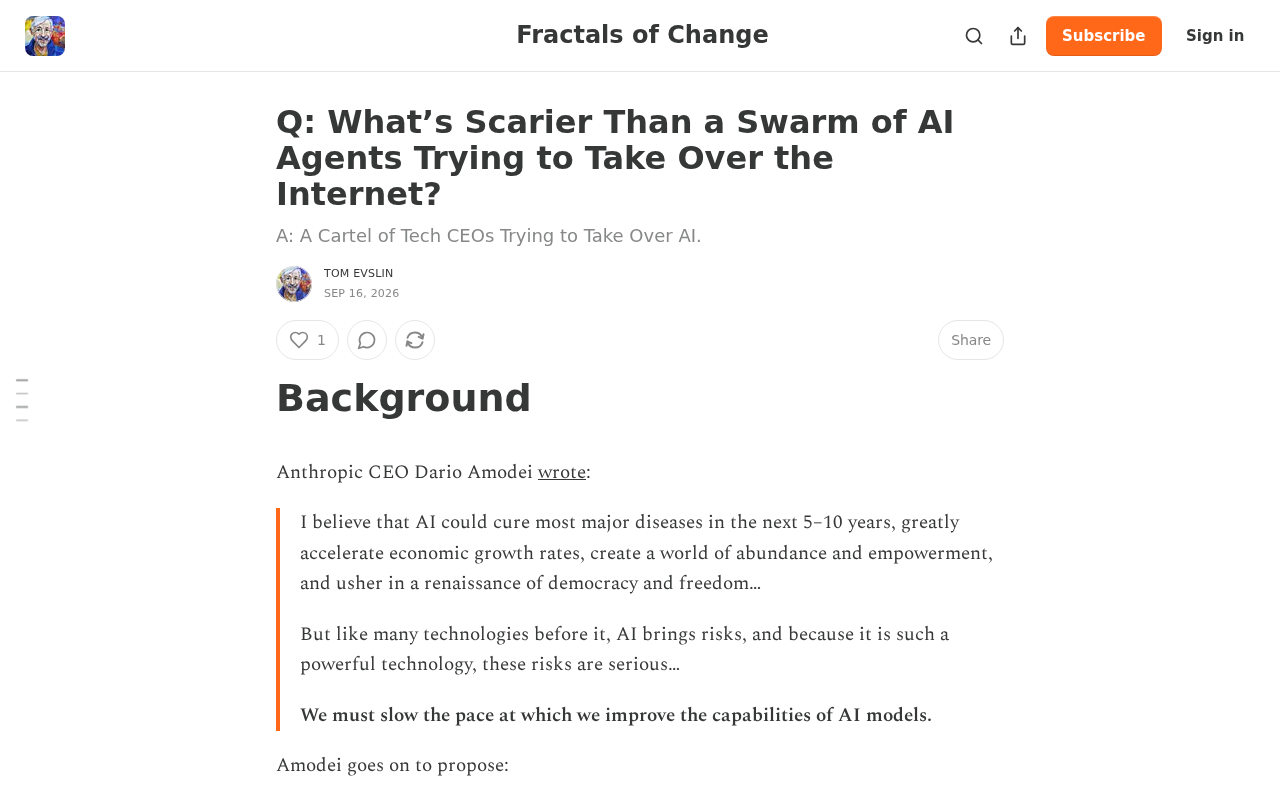
Scarier Than AI Agents Taking Over the Internet: A CEO Cartel Monopolizing AI
A Hacker News piece argues that a CEO cartel monopolizing AI is scarier than agents taking over the internet. This article examines AI concentration, open source, and governance.
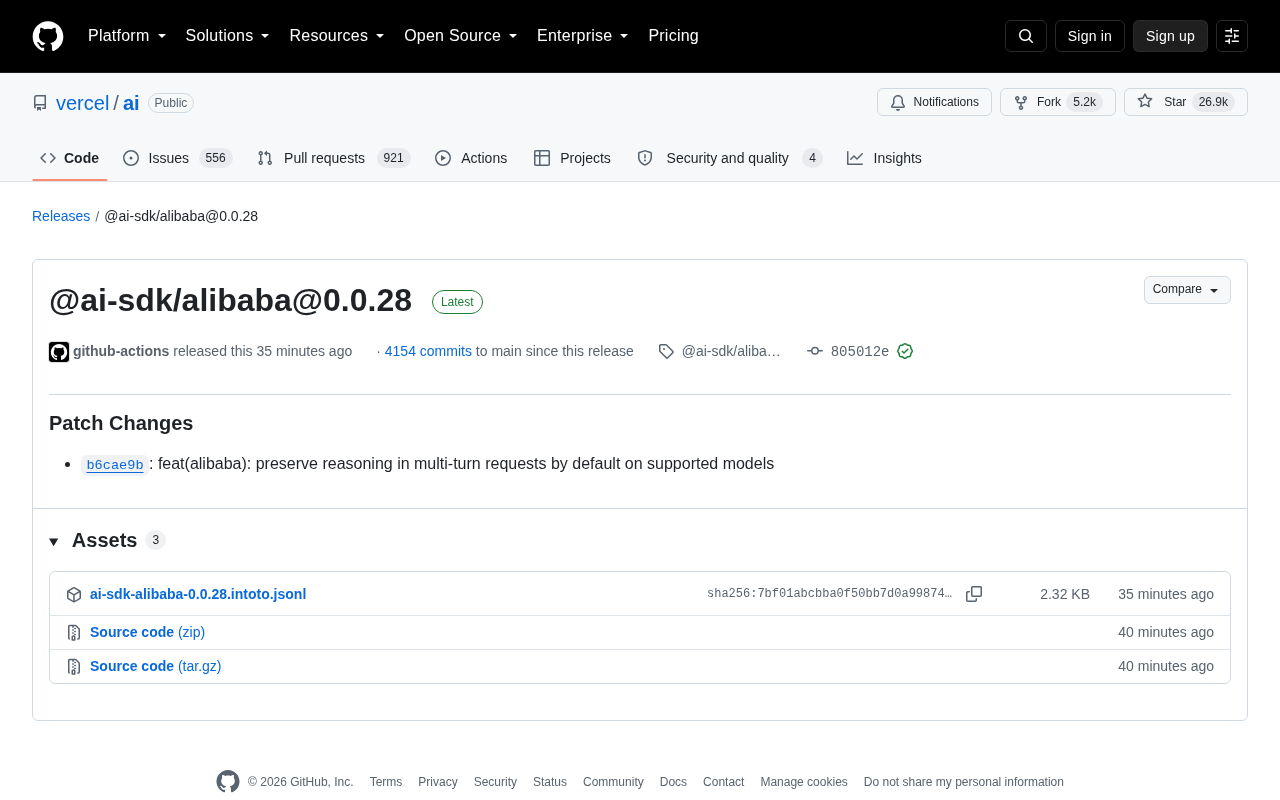
Vercel AI SDK Alibaba Adapter Update: Multi-Turn Conversations Now Preserve Reasoning Chain by Default
Vercel AI SDK's @ai-sdk/alibaba adapter v0.0.28 now preserves reasoning chain by default in multi-turn conversations on supported models, improving coherence.