Micron CEO Warns: Memory Supply Will Be Far Tighter in 2027 and 2028 Than in 2026

Micron CEO warns memory supply will tighten further in 2027–2028, driven by surging AI demand for HBM.
Micron Technology's CEO has publicly stated that memory supply will be significantly tighter in 2027 and 2028 than in 2026. The root cause is exponentially growing AI demand for HBM, which consumes far more wafer area than standard DRAM and is crowding out DDR5 capacity. This structural imbalance is hard to resolve quickly — new fabs take years to build, and AI infrastructure investment shows no signs of cooling. Consumers may face higher costs for PC and smartphone memory, while enterprises will see increased pressure on data center budgets. The article also cautions that CEO statements carry commercial motivations, and historical DRAM cycles have seen many forecasts fall short.
Micron Signals Incoming Memory Shortage
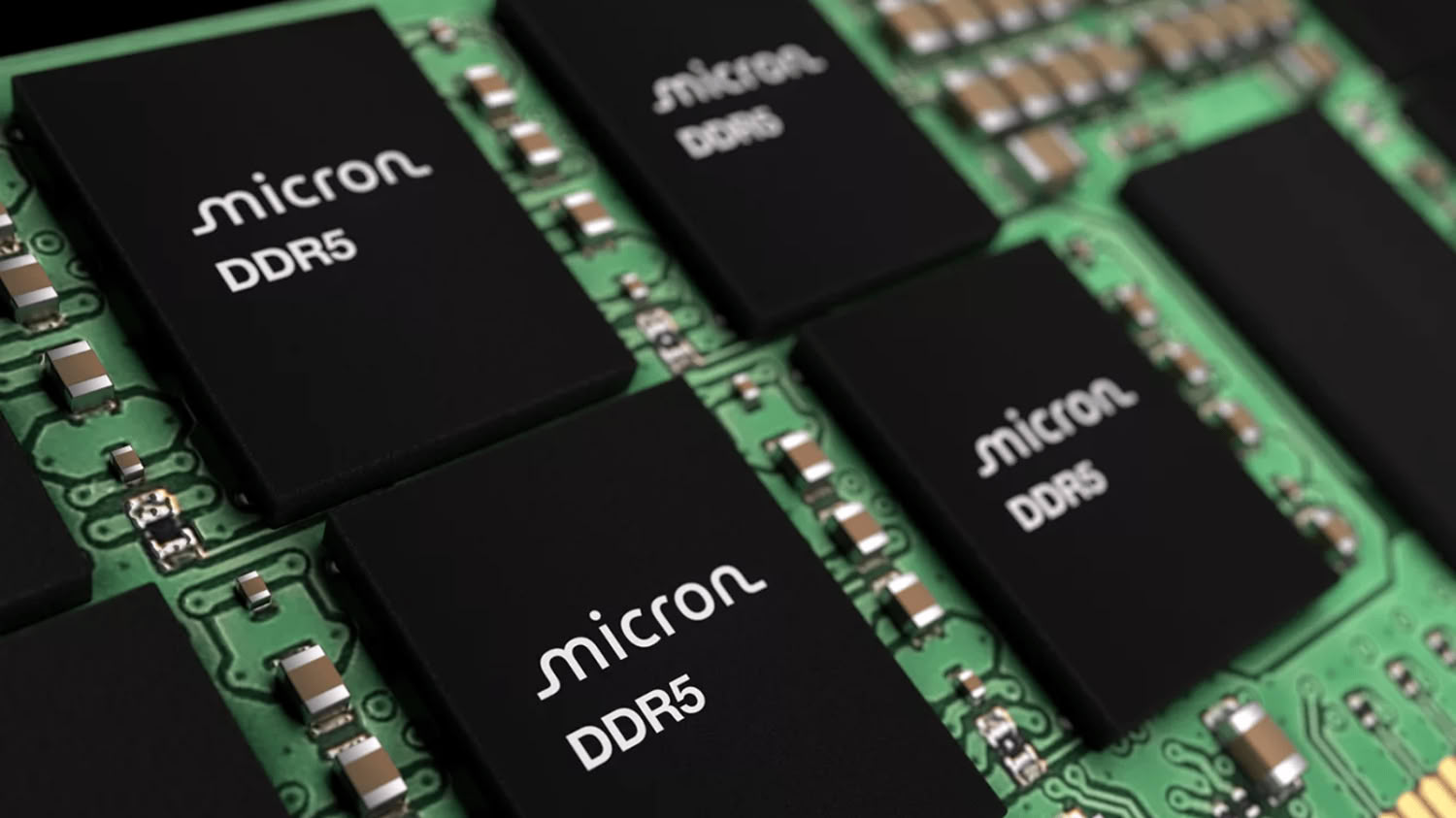
Micron Technology's CEO recently made a statement that should put the entire PC, server, and AI hardware industry on alert: memory supply in 2027 and 2028 will be significantly tighter than in 2026. This assessment cuts right to the heart of today's storage market — against the backdrop of explosive AI compute demand, the supply-demand imbalance in DRAM and High Bandwidth Memory (HBM) may not be a short-term blip, but a structural problem that persists for years.
The news sparked lively discussion on Hacker News, drawing 231 upvotes and 276 comments — a clear sign of the tech community's intense concern over where memory prices are headed. For anyone who needs to procure memory — whether data center operators, PC manufacturers, or everyday consumers — this is a warning signal that calls for early action.
Why Will Supply Keep Getting Tighter?
The supply-demand dynamics of the memory industry are deeply tied to the long-cycle nature of semiconductor manufacturing. Building or expanding a DRAM fab takes years and massive capital investment, meaning capacity simply cannot respond quickly when demand surges. As demand for HBM in AI training and inference climbs exponentially, manufacturers are shifting an ever-larger share of their capacity toward the higher-margin HBM products.
This triggers a chain reaction: HBM is fundamentally built on DRAM process technology, and producing HBM consumes significantly more wafer area per unit of output. In other words, every additional HBM unit produced means less capacity available for standard DDR5 memory. The Micron CEO's forecast implies this capacity-squeeze effect will only intensify over the next two years, not ease.
AI Demand Is the Core Driver
Virtually every major memory maker — Micron, Samsung, SK Hynix — is prioritizing advanced capacity for HBM. AI servers have an unprecedented appetite for memory bandwidth and capacity; a single high-end AI server can be configured with multiple terabytes of memory. The sustained nature of this demand means standard DRAM supply will remain under pressure for the foreseeable future.
The manufacturing-level competition between HBM and standard DDR5 deserves a closer look. Producing HBM requires vertically stacking multiple DRAM dies using Through-Silicon Via (TSV) technology and packaging them with a logic die — a process that not only consumes far more wafer area, but also requires dedicated advanced packaging lines. Currently, only SK Hynix, Samsung, and Micron are capable of mass-producing HBM. SK Hynix holds a first-mover advantage and supplies the majority of HBM for NVIDIA's A100/H100 series. Because AI accelerators have essentially inelastic demand for HBM — NVIDIA's H100 GPU ships with 80GB of HBM3, and the GB200 NVL72 rack system totals 13.5TB of memory — all three manufacturers have redirected their flagship DRAM capacity almost entirely toward HBM, directly compressing the supply flexibility available for consumer and enterprise standard memory.
Real-World Market Impact
If Micron's forecast proves accurate, the most immediate consequence will be sustained memory price increases. For consumers, that means higher costs for DIY PC builds, laptops, and smartphones. For enterprises, procurement budgets for servers and data centers will face mounting pressure.
From a supply chain perspective, a memory shortage ripples across the entire hardware ecosystem. PC manufacturers may be forced to raise prices or cut specs; rising infrastructure costs for cloud providers will ultimately be passed through to cloud computing pricing. For tech companies currently deploying AI infrastructure at scale, memory has transformed from a mere "component" into a critical variable shaping overall strategic costs.
Getting Ahead of the Curve Is Now a Rational Choice
For buyers with clear near-term requirements, the CEO's comments effectively amount to a veiled "stock up early" recommendation — if supply is tighter and prices are higher in 2027 and 2028, then locking in supply or signing long-term contracts during the relatively looser window of 2026 may be the smarter play. This also explains why such forecasts generate immediate market attention.
A Few Points Worth Keeping in Perspective
It's worth noting that public statements from CEOs often carry a degree of commercial positioning. As a memory supplier, emphasizing supply tightness naturally supports product pricing and investor confidence. Historically, the memory market has gone through repeated cycles of oversupply-driven price crashes followed by undersupply-driven price spikes, and any forecast's accuracy ultimately needs to be validated by time.
This measured skepticism was also reflected in the Hacker News discussion — some commenters argued that such predictions need to be weighed against actual capacity data and demand growth rates, rather than simply accepted at face value from a single vendor. That said, regardless of whether the forecast fully materializes, the upward demand trend for AI-driven memory is already industry consensus.
The cyclical patterns of the DRAM industry provide an important reference point for interpreting this forecast. Historically, DRAM prices surged sharply between 2016 and 2018 as smartphone and server demand converged, then collapsed by more than 60% in 2018–2019 due to overcapacity. The root cause of this "hog cycle" dynamic: manufacturers aggressively expand capacity at price peaks, and new supply typically comes online just as demand softens, creating a supply-demand mismatch. What's different this time is that HBM's technical barriers and advanced packaging bottlenecks are slowing capacity expansion far more than in a typical DRAM cycle — which lends some support to the view that supply will remain persistently tight. However, Samsung's planned large-scale HBM capacity expansion, along with continued progress from Chinese mainland manufacturers (such as CXMT) in standard DRAM, represent variables that could disrupt these predictions.
Conclusion
At its core, the Micron CEO's statement is setting the tone for a new memory cycle defined by AI demand. Capacity shifting toward HBM, standard DRAM supply tightening, and rising price pressure — these elements collectively define the fundamental outlook for the storage market over the next two years. For every participant in the supply chain, understanding this trend and adjusting procurement and investment strategies accordingly is far more important than passively absorbing the impact of price swings.
Related articles
2026 AI Coding Tools Comparison: Claude, ChatGPT, Gemini — Which Is the Best?
A 2026 comparison of five mainstream AI coding tools — Claude Code, ChatGPT Codex, Gemini, DeepSeek, and GitHub Copilot — on real projects, pricing, and code quality, to help you decide where that $20/month should go.

ChatGPT Codex Can Clone Any Software? Testing the Risks and the Truth
YouTube shorts claim ChatGPT Codex or Claude Code can clone Adobe, Excel, and Figma for lifelong free use. We break down the feasibility, legal risks, and DM-funnel tactics—and explain what AI coding tools are truly good for.

Kilo Code Is Free to Install but Charges for API: Cost Estimation and Configuration Guide
Kilo Code is free to install, but connected AI models are billed per token. This guide covers VS Code extension and CLI setup and shows how to estimate API costs.