Microsoft and NVIDIA Usher in a New Chapter for Windows: A Signal for the AI PC Era

Microsoft and NVIDIA announce a new chapter for Windows, signaling a shift of AI from cloud to local PC.
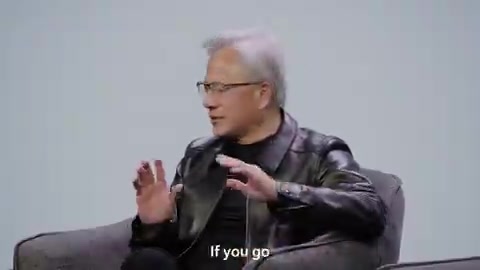
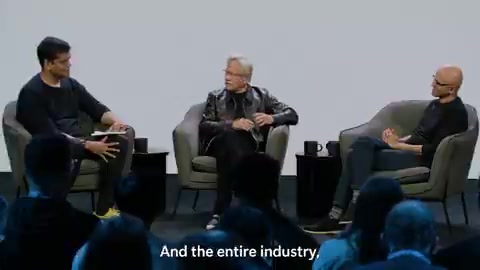
Microsoft tweeted that it is partnering with NVIDIA to "kick off the next chapter for Windows," with Jensen Huang and Microsoft AI lead Sriram Krishnan both in attendance. The article interprets this as a signal that AI capabilities are moving from the cloud to personal devices — requiring deep OS-hardware collaboration on drivers, runtimes, and model optimization. The high-profile participation suggests a strategic, not routine, partnership. The article also urges caution, noting that no product details or technical roadmap were disclosed.
The Signal Behind a Tweet
A recent tweet from Microsoft caught the tech world's attention. It read: "Great to partner with NVIDIA as we kick off this next chapter for Windows," and specifically thanked NVIDIA CEO Jensen Huang and Microsoft AI lead Sriram Krishnan (@sriramk) for their participation in the day's event.
Despite its brevity, the tweet carries signals worth examining closely. Deeper collaboration between these two tech giants on Windows — the world's largest desktop operating system platform — likely points to AI capabilities being embedded more deeply at the OS level.

The Strategic Significance of the Microsoft–NVIDIA Partnership
Microsoft controls the world's largest desktop OS ecosystem, while NVIDIA is the undisputed leader in AI compute and GPUs. Their partnership is nothing new — on the cloud side, Azure has long deployed NVIDIA GPUs at scale to support AI training and inference. But this tweet's emphasis on "the next chapter for Windows" suggests the collaboration may be shifting focus from the cloud toward end-user devices.
As the AI PC concept heats up, coordination between OS vendors and chip makers becomes increasingly critical. NVIDIA's GPUs don't just play a central role in data centers — they're also a key source of local AI inference compute in consumer PCs. If Microsoft wants to integrate local AI features into Windows at scale, deep collaboration with NVIDIA on drivers, runtimes, and model optimization is practically unavoidable.
What is an AI PC? An AI PC is a personal computer that integrates a dedicated AI acceleration unit (NPU, or Neural Processing Unit) alongside the CPU, enabling efficient local execution of AI inference tasks — such as image generation, speech recognition, and real-time translation — without uploading data to cloud servers. Intel, AMD, Qualcomm, and NVIDIA have all launched AI acceleration solutions for PCs. Microsoft, through its Copilot+ PC program, has established software benchmarks for this hardware category: devices must achieve NPU performance of at least 40 TOPS (Trillion Operations Per Second) to unlock the full suite of AI features in Windows, including Recall (a timeline-style screen memory retrieval tool) and live caption translation. This standard effectively ties the OS's functional boundaries to chip specifications, elevating the relationship between Microsoft and chip vendors from simple hardware sales to a joint definition of the ecosystem.
What the Key Figures Signal
The two individuals named in the tweet are telling. Jensen Huang's presence at a Microsoft event speaks to the seniority of this collaboration. Sriram Krishnan's participation as a key leader in Microsoft's AI efforts further confirms that AI is the central theme.
When the leadership of an OS company and an AI chip company appear together and jointly announce "the start of a new chapter," it's rarely routine corporate PR — it's more likely a coordinated move around a strategically significant product or platform capability.
Who is Sriram Krishnan? Sriram Krishnan previously held roles at Twitter, Microsoft Azure, and a16z (Andreessen Horowitz). In early 2023, he served as a White House AI policy advisor, contributing to the U.S. government's AI strategy, before returning to Microsoft in a senior AI role. With deep experience across AI policy, developer ecosystems, and commercial deployment, his role within Microsoft is closer to "AI strategy integrator" than a purely technical lead. The fact that Microsoft named him in this tweet signals that the collaboration is positioned as a cross-functional strategic initiative — not merely an engineering or product-level handshake.
Potential Impact on the AI PC Landscape
From an industry perspective, this type of partnership reinforces a clear trend: AI is gradually moving from the cloud down to personal devices. Local AI inference offers distinct advantages in privacy protection, response latency, and offline availability — and realizing these benefits requires tight co-optimization between the OS and hardware.
For everyday users, this could mean future versions of Windows will ship with stronger native AI features and more efficient access to NVIDIA GPU acceleration. For developers, a unified platform and runtime could lower the barrier to building local AI applications.
Local vs. Cloud AI Inference Local and cloud AI inference differ fundamentally in their technical approaches. Cloud inference relies on large-scale GPU clusters in data centers; latency is constrained by network round-trip time (typically in the hundreds of milliseconds), and user data must leave the local device. Local inference stores model weights in device memory and runs computation directly on a local GPU or NPU — latency can drop to single-digit milliseconds, and data never leaves the device, fundamentally eliminating privacy risks. However, local inference faces significant constraints: consumer-grade hardware has far less VRAM and compute than data centers, requiring model quantization (e.g., INT4, INT8 precision), distillation, or purpose-built edge architectures to run within acceptable power and cost limits. This is precisely why OS vendors and GPU makers must collaborate deeply at the driver, runtime, and model format levels.
A Note of Caution
It's worth stressing that all of the above interpretation rests on a single tweet with limited information. Microsoft disclosed no specific product details, technical roadmap, or timeline in that post. The tweet is more of a public expression of strategic positioning — the real substance will require official follow-up announcements.
With information still scarce, overreaching conclusions about the exact form this collaboration will take is unwise. What is clear, however, is that this public show of alignment between Microsoft and NVIDIA reaffirms the irreversible direction: the deep integration of AI with operating systems and AI with hardware.
Conclusion
The phrase "kick off this next chapter for Windows" reflects the broader PC industry's evolution toward AI-driven computing. However this Microsoft–NVIDIA partnership ultimately manifests in product form, it's worth watching closely. As more details emerge, the question of what this collaboration means for Windows users and developers will be one of the most compelling storylines to follow.
Related articles

Amphibious Transforming Drone: Beyond 100x Power Savings, What Are the Real Needs?
Is the amphibious transforming drone just a gimmick? Starting from the 100x power difference of the M4 Morphobot, explore real application scenarios and thesis topic ideas, analyzing boundary conditions where pure drones and pure ground robots both fail.

Warhound Raises $200 Million: Genetically Engineered "War Dogs" Paired with Anduril Gear
Warhound raises $200M, backed by Ben Lamm and Palmer Luckey, to genetically engineer dogs for military and law enforcement use and equip them with Anduril gear. This article analyzes its technology direction, funding logic, and ethical controversy.

Claude API Comes to Google Cloud: IAM Integration and SDK Access Guide
Anthropic hosts the full Claude API on Google Cloud with IAM-controlled permissions and unified billing. This guide covers the Vertex AI and Anthropic-hosted entry points, IAM role configuration, and SDK access.