Microsoft QDK for Chemistry: An Open-Source Framework Bridging Quantum and Classical Chemical Computing

Microsoft open-sources QDK for Chemistry, enabling modular quantum-classical hybrid workflows for molecular simulation.
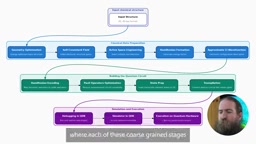
Microsoft Quantum has released QDK for Chemistry, an open-source library designed to close the software gap between domain chemists and quantum algorithm developers. It modularizes the full quantum chemistry workflow — from molecular structure input, geometry optimization, SCF calculations, and active space selection, to fermion-qubit encoding, circuit construction, and hardware execution — with each stage exposed as an independent customization point via standardized data interfaces. The team particularly favors Quantum Phase Estimation (QPE) for fault-tolerant hardware, positioning quantum computers as targeted accelerators within classical HPC pipelines rather than general-purpose replacements.
Microsoft's quantum team has released an open-source library called QDK for Chemistry, aiming to bridge the gap between domain scientists and quantum algorithm developers. As an extension of the Microsoft Quantum Development Kit (QDK), it integrates chemistry-specific functionality directly into the broader quantum development toolchain — reflecting Microsoft Quantum's clear vision of how practical quantum computing can be realized.
Why Build a Chemistry-Specific Quantum Development Library
David Williams-Young, Principal Quantum Software Architect at Microsoft Quantum, outlined the core motivation: quantum computers genuinely hold transformative potential for chemistry, materials science, and other physical simulation domains — but truly usable quantum applications won't emerge from thin air. They'll only materialize through deep integration of quantum technology with modern high-performance computing, machine learning, and artificial intelligence.
This reflects a key philosophical stance: the hybrid computing model. In this model, quantum computers are not replacements for general-purpose computing, but rather "critical accelerators" that handle the specific problems they're best suited for, while classical computing handles the rest. This positioning is deliberately measured, and aligns more closely with the actual capability boundaries of current quantum hardware.
The challenge is that the software ecosystems of domain science and quantum algorithm development are fragmented. While both sides have mature, robust software solutions, attempts at interoperability between them are rare and hard to maintain. QDK for Chemistry addresses exactly this pain point: treating interoperability as a core design feature rather than an afterthought.
A Typical Workflow: From Molecular Structure to Quantum Circuit
The best way to understand the library's value is through a representative workflow that incorporates both classical and quantum computing components.
Starting from a Domain Description
Chemistry researchers typically start with a domain-specific problem description — in chemistry, this is usually a 2D or 3D molecular structure sourced from experiments, databases, or other quantum chemistry pipelines. While this representation captures the problem itself, a substantial amount of work remains before it can be mapped onto a quantum computer.
Generating Classical Data
Before reaching the quantum computer, a complex series of classical computations must be performed to generate the data needed to express the problem in the language of quantum algorithms. For chemists, this typically involves several common steps:
- Geometry optimization
- Self-consistent field (SCF) calculations
- Active space selection
- Generating bridging data connecting classical and quantum algorithms — such as constructing an active-space Hamiltonian and classical approximations of quantum states to serve as initial guesses for quantum algorithms
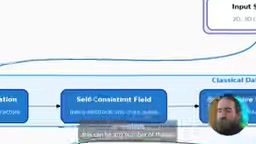
Active space selection is a key step in quantum chemistry for reducing computational scale. Real molecules have a large number of electronic orbitals, but only a small subset of "active" orbitals — typically those with energies near the frontier orbitals (HOMO/LUMO) — have the greatest influence on chemical reactions and molecular properties. Active space methods partition the full orbital space into frozen core orbitals (always occupied), active orbitals (included in correlated calculations), and virtual orbitals (always empty), applying high-accuracy treatment only to the active portion. This dramatically reduces computational cost. The quality of this selection directly affects the number of qubits and circuit depth required by subsequent quantum algorithms: a larger active space yields greater quantum advantage, but resource requirements scale exponentially. Self-consistent field (SCF) calculations — commonly implemented as Hartree-Fock — are a prerequisite step that provides the initial orbitals and reference state for active space calculations, and their output of single-particle orbitals forms the basis for constructing the active-space Hamiltonian.
Translating into the Language of Quantum Algorithms
With these classical data in hand, the problem can be expressed in the language of quantum algorithms. David acknowledges this step is "intentionally left vague," since there are many ways to extract meaningful results from quantum physical simulation.
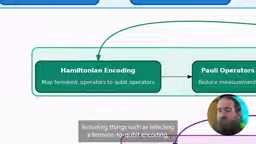
Microsoft Quantum's applications team personally favors Quantum Phase Estimation (QPE), viewing this class of algorithms as the most promising candidate for achieving "quantum utility" on scaled, fault-tolerant quantum computers. Other near-term algorithms broadly follow the same pipeline, including selecting a fermion-to-qubit encoding, domain-specific optimizations for state preparation circuits and qubit operators, and mapping high-level circuits to the native gate set of quantum hardware for execution.
Quantum Phase Estimation (QPE) is a core quantum algorithm used to estimate the phase corresponding to an eigenvalue of a unitary operator. In quantum chemistry, it is used to precisely extract the ground-state energy of a molecular Hamiltonian — exactly the task that becomes intractable for classical computers as molecular size grows. The basic idea of QPE is to repeatedly apply a time-evolution operator for the target system to an initial quantum state, then read out phase information via the quantum Fourier transform to infer the energy eigenvalue. It demands significant qubit counts and circuit depth, which is why it's generally viewed as an algorithm that requires fault-tolerant quantum hardware to deliver real advantages — rather than being a candidate for current noisy intermediate-scale quantum (NISQ) devices. This explains why Microsoft links QPE with "scaled, fault-tolerant quantum computers" rather than emphasizing near-term hardware applications. In contrast, the Variational Quantum Eigensolver (VQE) is better suited to current noisy hardware but faces limits in accuracy and scalability.
Back to Standard Quantum Software Engineering
Once the circuit for the chosen algorithm is obtained, the workflow enters the standard quantum software engineering stages exposed by the Microsoft QDK — debugging, simulation, and executing the circuit on quantum hardware.
Modular Design: Decoupling and Standardized Interfaces
The most noteworthy aspect of QDK for Chemistry is its design philosophy. The workflow described above is deliberately decomposed into discrete modules — and that decomposition is precisely the core idea: each stage is exposed as a customization point, coupled to others through standardized data interfaces.
This means that how a particular stage (such as active space selection) is implemented internally does not need to affect the internal mechanics of other stages. The final outputs of each step cumulatively influence quantum computing results, but implementation details remain isolated from one another.
This separation of concerns enables coverage across different user groups:
- High-level users: Can directly mix and match well-tested, robust components to solve problems without needing to dive into software compatibility issues or engineering details.
- Developers: With lightweight interfaces, experts can focus on the problems they care about without worrying about the implementation details of other parts of the software stack.
Microsoft hopes this will foster an innovation community centered around practical quantum applications.
Fermion-to-qubit encoding is the bridge that maps electron structure problems from the language of chemistry to the language of quantum computers. Electrons are fermions that obey the Pauli exclusion principle, and their quantum states are mathematically described using second-quantized creation and annihilation operators. Quantum computers, however, operate on qubits, requiring these fermionic operators to be translated into strings of Pauli operators on qubits. Common encoding schemes include the Jordan-Wigner transformation (a direct mapping that is intuitive but has poor locality) and the Bravyi-Kitaev transformation (a more compact representation with fewer gates). The choice of encoding scheme directly affects the gate count and depth of the resulting quantum circuit, which in turn affects error rates and execution costs on real hardware. This is one of the reasons QDK for Chemistry exposes encoding strategy as an independent customization point — different hardware architectures and different molecular systems may require different optimal encoding schemes.
What This Means for Developers
Overall, QDK for Chemistry represents a pragmatic approach to quantum software engineering: rather than overstating quantum computing's general-purpose capabilities, it embeds quantum computing within a broader classical scientific workflow as an accelerator for specific stages. The modular, standardized interface design lowers the barrier to cross-disciplinary collaboration and leaves room for each component to evolve independently in the future.
The project is open source and hosted at github.com/QDK-chemistry, with links to code and documentation available in the original video description. The Microsoft Quantum team has also previewed follow-up deep dives into individual components from other members of the applications team.
For researchers and developers exploring quantum chemistry simulation or interested in the practical path toward quantum-classical hybrid computing, this is an open-source framework well worth following.
Related articles

Qwen 4 First Test Leaks: Performance Rivals Opus 5.5, DeepSeek V4 Series Surfaces
Early Qwen 4 test outputs leak, with front-end generation said to rival Opus 5.5; DeepSeek V4 Mini, Flash, and Pro names appear in a code repo; Ant Group's Ling-3.1-flash surfaces too. Here's the latest on model tiering and on-device lightweight models.

OpenCode Makes DeepSeek V4.1 Flash Free, AI Daily Roundup
AI daily roundup: OpenCode makes DeepSeek V4.1 Flash free, StepFun Step5 Preview and Ling 3.1 Flash open-sourced, Grok Voice 3.0 tops speech leaderboard, Matrix Game 4.0 open-sourced, and the EU opens its first AI Act enforcement probe into OpenAI and Anthropic.

DeepSeek V4.1 Flash 1017 Released: Reasoning and Coding Upgrades, Search and Fetch API Now Available
DeepSeek releases V4.1 Flash 1017 with major gains in reasoning, coding, and agentic tasks, plus web search and fetch APIs at 5 yuan per 1,000 requests. Tencent Hunyuan open-sources High Memory 2.0, Perplexity open-sources multimodal decision models, and MOFCOM seeks comments on AI export catalog.