Microsoft's Four IQs Explained: Grounding Capabilities That Give AI Agents Context

Microsoft's four IQs are independent grounding channels giving AI agents enterprise context across knowledge, data, collaboration, and the web.
Foundry IQ, Fabric IQ, Work IQ, and Web IQ — introduced at Microsoft Build — are all grounding capabilities that connect AI agents to real data sources instead of static training knowledge. Each channel has a distinct role: Foundry IQ indexes unstructured documents in SharePoint via a search indexer; Fabric IQ exposes structured business data from OneLake in an agent-consumable way rather than as Power BI reports; Work IQ integrates Outlook, Teams, and other office apps so agents understand internal dynamics; and Web IQ provides real-time web search to fill timeliness gaps. Enterprises can mix and match channels to suit each agent's specific use case.
At Microsoft Build, one question kept coming up: what exactly are these four IQs? Microsoft has introduced four capabilities — Foundry IQ, Fabric IQ, Work IQ, and Web IQ — with similar names but distinct roles. To understand them, the key is to recognize what they share: they are all grounding capabilities, meaning different ways of providing context to AI agents.
What Is Grounding?
Grounding is what keeps an AI agent from "answering out of thin air." Instead of relying solely on static knowledge from training, a grounded agent generates responses based on real, reliable data sources. A standalone large model can only draw on what it learned during training, making it prone to hallucinations and outdated information. Grounding connects the agent to enterprise knowledge bases, business data, office collaboration systems, and even the live web — so it truly knows where to look.
Microsoft has broken this grounding framework into four independent channels, each corresponding to a different dimension: knowledge, data, office applications, and the web. This modular design reflects an honest acknowledgment that no single data source can meet the complex needs of enterprise-grade agents — different scenarios call for different context sources.
Technically, grounding maps directly to the core idea behind RAG (Retrieval-Augmented Generation). The basic approach: before a large model generates a response, relevant content is retrieved from external data sources and injected into the prompt as context, allowing the model to answer based on "just-in-time facts" rather than memory alone. The benefits are twofold: it significantly reduces the risk of hallucination, and it lets the model access up-to-date or proprietary data without retraining. By designing the four IQs as independent channels, Microsoft has essentially built separate retrieval pipelines for different enterprise data silos, ensuring each data type can be indexed and recalled in the most appropriate way.
What Each IQ Does
Foundry IQ: For Knowledge Bases
Foundry IQ operates at the knowledge layer. It targets content stored in knowledge bases, using a search indexer to index materials from systems like SharePoint. In short, when your enterprise documents and internal resources need to be understood and accessed by an agent, Foundry IQ is the channel. It answers the question: "How does an agent retrieve the right knowledge?"
The search indexer here plays a role similar to a traditional search engine's crawler and inverted index: it periodically crawls documents from content sources like SharePoint, splits text into vector embeddings, and stores them in a vector database. When an agent submits a query, the system converts the question into a vector as well and uses similarity search (such as cosine similarity) to find the most relevant document chunks, which are then fed into the large model to generate the final answer. This process lets agents "read" tens of thousands of unstructured enterprise documents without cramming everything into the model's context window — an approach that would be both costly and constrained by token limits.
Fabric IQ: For Business Data
Fabric IQ handles data stored in the OneLake catalog — the kind of structured business data you'd typically use to build Power BI reports.

There's a practical insight here: you wouldn't hand an agent a pile of Power BI reports, because they're meaningless to it. What an agent needs is the ability to access data in an agentic way, not human-readable visualizations. Fabric IQ exposes business data in a format that agents can actually consume and reason over.
OneLake is the unified data lake storage layer of the Microsoft Fabric platform — conceived as "OneDrive for data" — where an organization's structured data (sales records, financial statements, operational metrics) is centrally stored and consumed by tools like Power BI and Synapse Analytics. The key challenge for Fabric IQ is that agents consume data very differently from humans: people understand trends through charts and dashboards, while agents need to run semantic queries, perform dynamic aggregations, and even generate SQL to extract specific data slices. Fabric IQ therefore builds an "agent-friendly" access interface on top of OneLake data, translating natural language queries into structured data operations — rather than simply feeding the model a screenshot of a Power BI dashboard.
Office and Web: Work IQ and Web IQ
Work IQ: For Microsoft Office Applications
Work IQ can be thought of as the agentic version of all Microsoft apps — including Outlook, Teams, SharePoint, Word, and more. It gives agents access to email inboxes, Teams chat histories, and other everyday collaboration content.

The value here is in bridging the office environment. A huge amount of valuable context in any organization is scattered across emails and instant messages. Work IQ lets agents enter these otherwise closed collaboration systems to understand what's actually happening inside the organization.
Web IQ: For Real-Time Web Access
As the name suggests, Web IQ is aimed at the web. It's an ultrafast, agent-oriented web search capability that lets agents tap into real-time information.

With Web IQ, agents are no longer limited to internal enterprise data — they can find out what's happening in the outside world. This is especially critical for tasks that require the latest news, market intelligence, or current event context, filling the timeliness gap that internal data sources cannot address.
The Overall Logic Behind the Four Channels
Viewed together, Microsoft's design logic becomes clear: Foundry IQ handles knowledge, Fabric IQ handles business data, Work IQ handles office collaboration, and Web IQ handles the live web. Together, they cover the vast majority of context sources an enterprise agent might need, forming a complete grounding system.
For enterprises, this separation means mix-and-match flexibility — you can connect a specific agent to the data channels relevant to its purpose, without burdening every agent with all data sources. This reflects both architectural flexibility and Microsoft's broader understanding of enterprise AI adoption: the ceiling on an agent's value is largely determined by how rich and accurate the context it can access.
Related articles
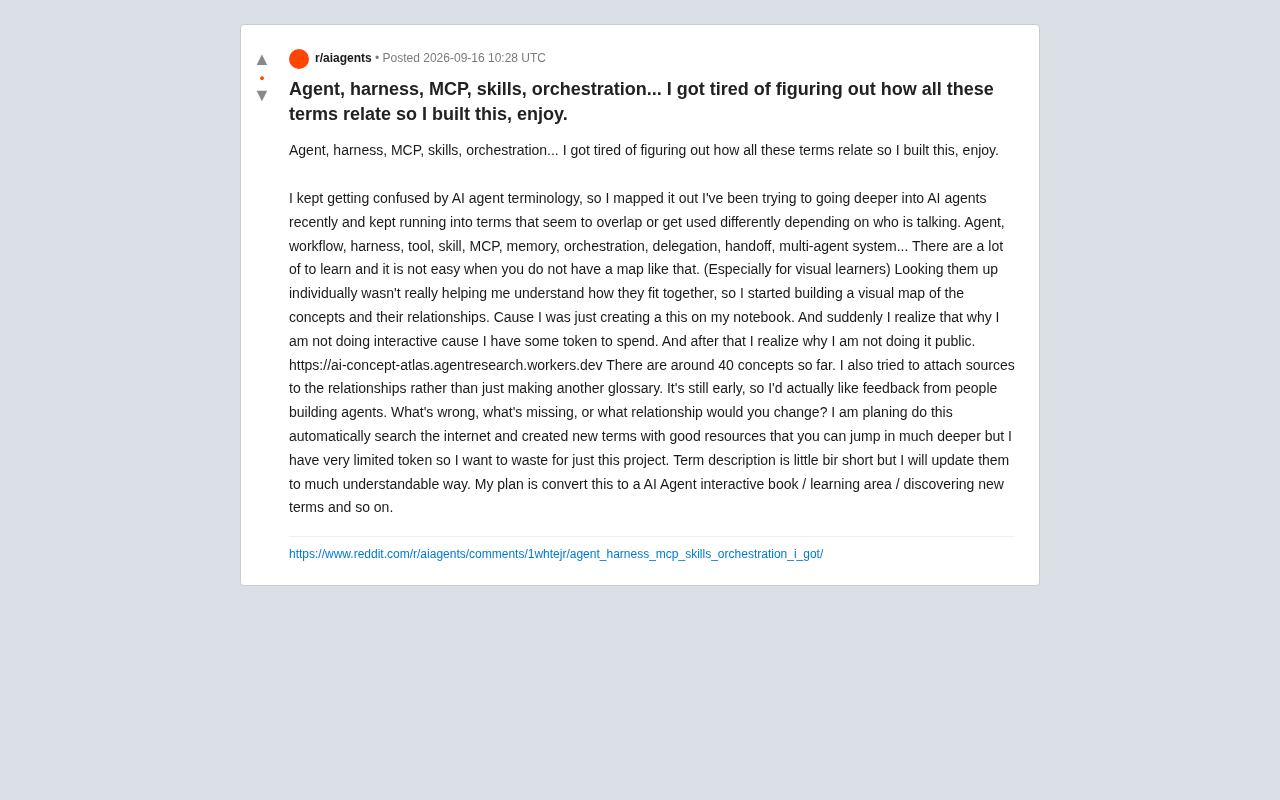
AI Agent Terminology Too Confusing? One Interactive Concept Map to Untangle 40+ Core Terms
Confused by AI Agent terms like MCP, harness, orchestration, and skills? AI Concept Atlas is an interactive map visualizing 40+ concepts and their relationships, with cited sources.
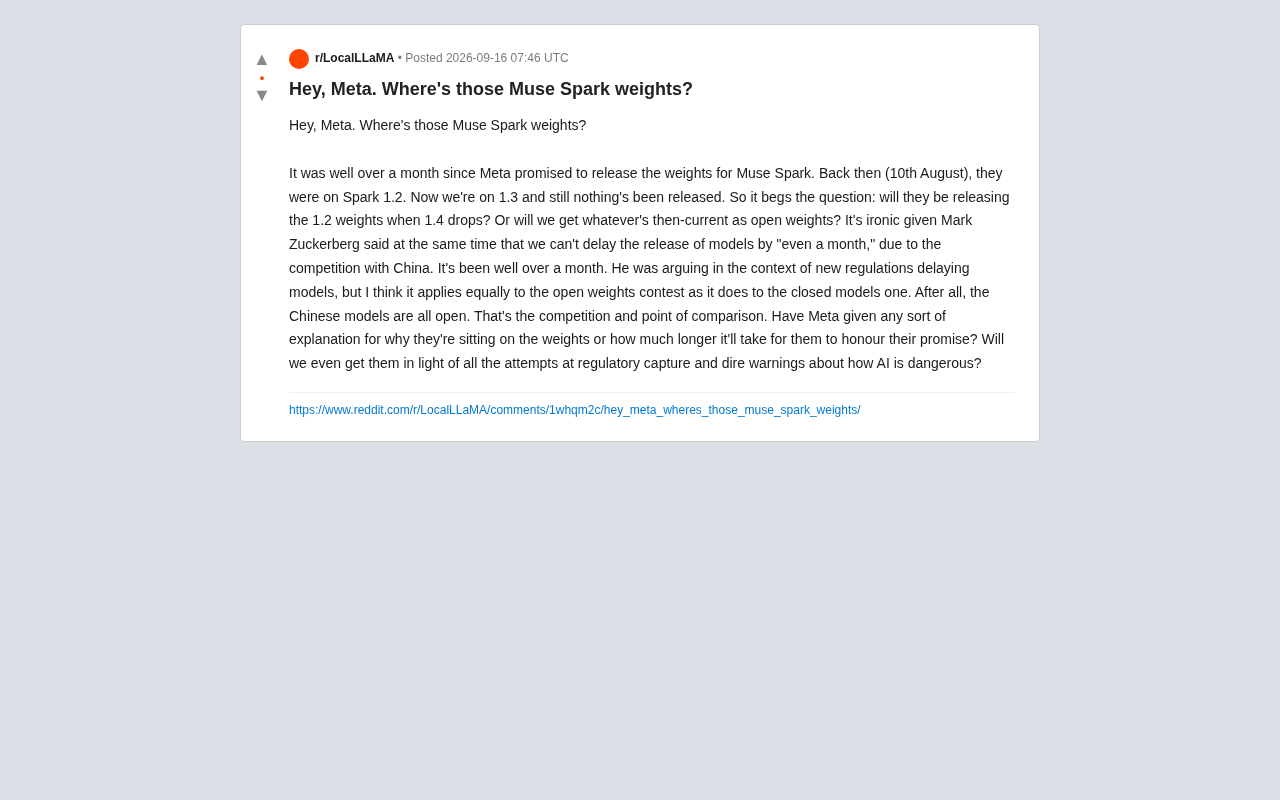
Meta's Broken Promise: Community Demands to Know Where the Muse Spark Weights Are
Meta promised to open-source Muse Spark model weights over a month ago, but still hasn't delivered. The community questions how this squares with Zuckerberg's "can't delay even a month" stance.
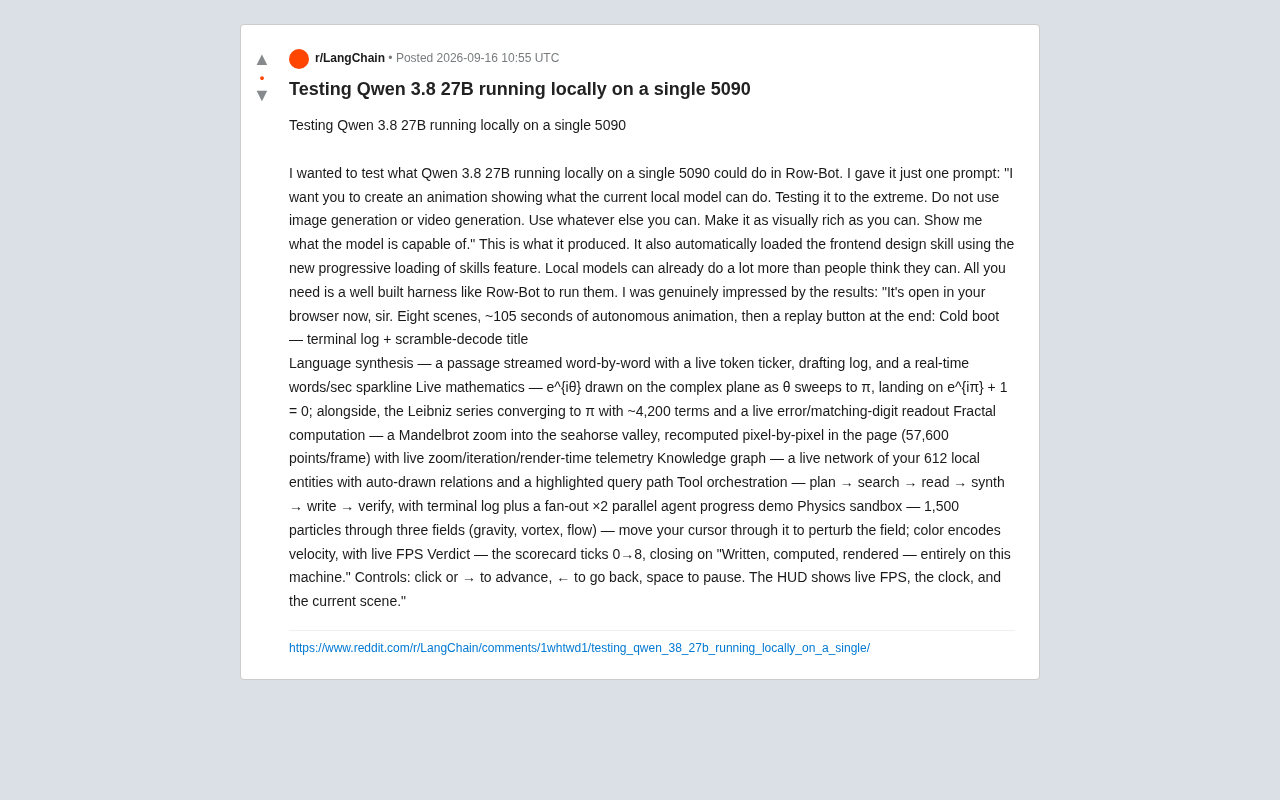
Running Qwen3 27B Locally on a Single RTX 5090: What Can It Actually Do?
A developer runs Qwen3 27B locally on a single RTX 5090 via the Row-Bot Agent framework, generating an 8-scene, 105-second interactive animation from one prompt — including real-time math, fractals, and physics.